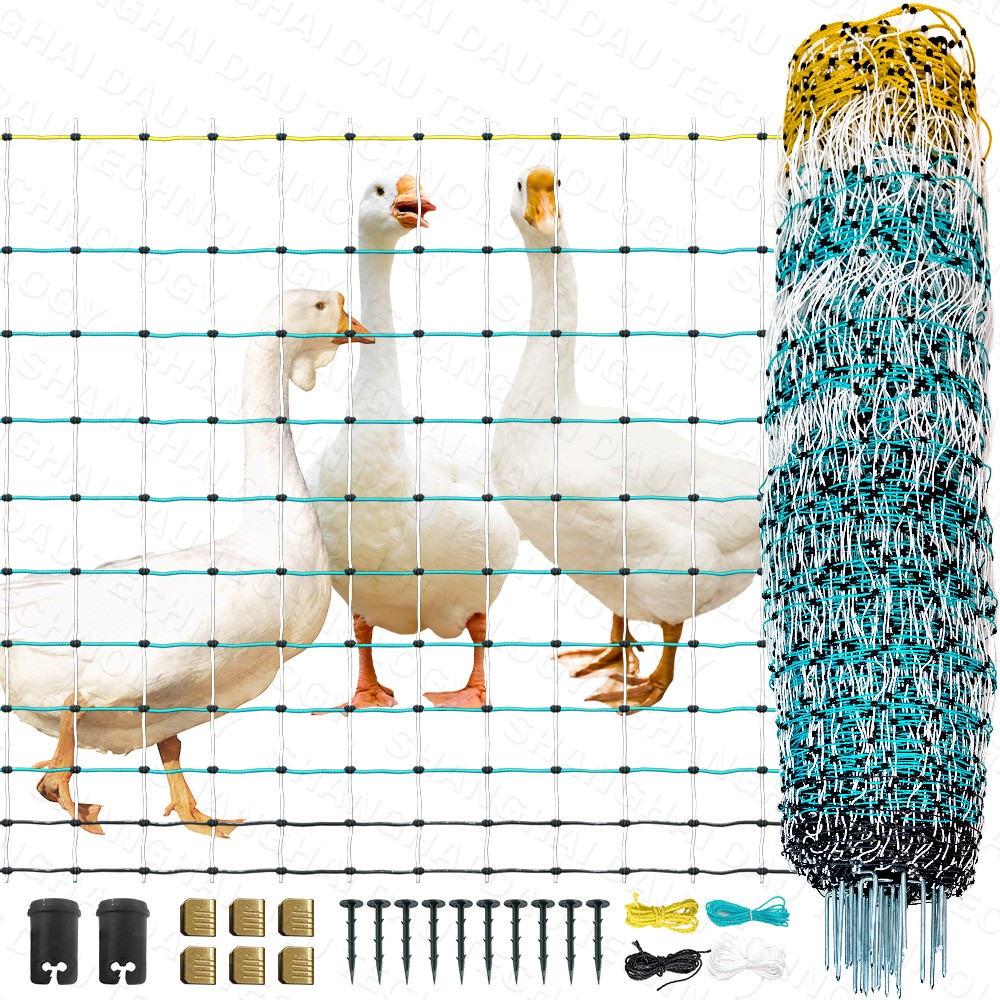

Photos from current listings. Actual item, color, and included accessories may vary.
Chicken Netting Buying Guide
Chicken netting splits into two distinct material systems: rigid welded-wire hardware cloth for predator-proof coop walls and floors, and flexible hexagonal poultry netting for light containment and garden use. The defining trade-off is mesh aperture versus wire gauge: smaller openings and thicker wire stop rats, snakes, and raccoons, while thin hex netting only stops chickens. Buy welded hardware cloth at 1/2-inch mesh and 19-gauge or heavier for permanent coops, and reserve hex netting for temporary runs where predation pressure is low.
Key takeaways
- Welded hardware cloth is specified by aperture and gauge: 1/2-inch mesh with 19-gauge wire resists raccoon and fox pulls, while 1/4-inch mesh at 23-gauge is lighter and best for keeping out rats, snakes, and small birds.
- Hot-dip galvanized-after-welding mesh carries a thick zinc layer over every weld point, giving multi-year rust protection; vinyl-coated (PVC) mesh adds a bonded black layer that extends life and hides the wire.
- Hexagonal poultry netting is woven from thin, flexible wire in small rolls and offers light containment only; it deforms under a determined predator and is not a substitute for welded cloth on coop walls.
At a glance
- Category
- Chicken Fencing & Egg Handling
- Last updated
- Nov 28, 2026
Current offers
Highlights
- Welded hardware cloth is specified by aperture and gauge: 1/2-inch mesh with 19-gauge wire resists raccoon and fox pulls, while 1/4-inch mesh at 23-gauge is lighter and best for keeping out rats, snakes, and small birds.
- Hot-dip galvanized-after-welding mesh carries a thick zinc layer over every weld point, giving multi-year rust protection; vinyl-coated (PVC) mesh adds a bonded black layer that extends life and hides the wire.
- Hexagonal poultry netting is woven from thin, flexible wire in small rolls and offers light containment only; it deforms under a determined predator and is not a substitute for welded cloth on coop walls.
- Roll geometry governs coverage: standard rolls run 50 ft or 100 ft long in heights from 24 to 72 inches, so perimeter length times wall height determines how many rolls a coop build needs.
Best use cases
- Permanent coop walls, doors, and buried predator skirts: choose 1/2-inch 19-gauge hot-dip galvanized hardware cloth in the height matching your wall framing, and skip hex netting entirely for these surfaces.
- Rodent- and snake-prone coops or brooder pens: step up to 1/4-inch mesh to block small invaders, accepting the lighter 23-gauge wire that must be stapled more frequently to framing.
- Temporary garden runs and light daytime containment: galvanized hexagonal poultry netting in green or floral finish works when animals are locked in a secure coop at night; do not rely on it against foxes or dogs.
- Wet, humid, or coastal climates: specify hot-dip galvanized or vinyl-coated welded cloth over bright electro-galvanized hex wire, which corrodes far faster in persistent moisture.
Buying tips
- Calculate coverage as perimeter in feet multiplied by wall height in feet; a 24-inch by 50-ft roll covers 100 sq ft, so a 40-ft perimeter at 24 inches needs about one roll plus overlap.
- Match gauge to threat: 19-gauge welded wire at 1/2-inch aperture is the minimum for overnight predator defense, while 23-gauge 1/4-inch mesh is for rodent exclusion and interior partitions.
- Insist on hot-dip galvanized after welding for outdoor use; the zinc coating flows over the weld joints, whereas pre-galvanized wire leaves exposed weld points that rust first.
- Buy vinyl-coated mesh for visible garden fencing and high-humidity sites; the PVC layer adds years of service life and the black finish blends into landscaping better than bare zinc.
Specs
| Mesh Type | Welded hardware cloth vs hex netting |
|---|---|
| Aperture | 1/4 in, 1/2 in, or hex weave |
| Wire Gauge | 19-23 ga welded; thin woven hex |
| Coating | Hot-dip galvanized / PVC-coated |
Related searches
What to check before buying
- Measure coop wall height, door openings, and total perimeter, then add 10-15 percent for overlap and framing wrap before choosing roll height and length.
- Confirm the mesh aperture clears your fastener heads and staples; 1/2-inch mesh accepts standard poultry staples, while 1/4-inch mesh needs narrower staples or screws with washers.
- Assess local predators: heavy raccoon, fox, or coyote pressure demands 19-gauge or heavier welded cloth plus a buried apron; light pressure tolerates hex netting for daytime only.
- Check climate exposure: standing moisture, coastal salt air, and fertilizer runoff shorten bare wire life, so specify hot-dip galvanized or PVC-coated mesh in those sites.
FAQ
Data sources: eBay / Amazon listings and product attribute feeds. Updated Nov 28, 2026.
Some links on this page are affiliate links. If you buy after clicking one, we may earn a commission at no extra cost to you. This does not change which products appear here or their order. Affiliate disclosure.