
Photos from current listings. Actual item, color, and included accessories may vary.
Chicken Nesting Box Buying Guide
A chicken nesting box is a dedicated, enclosed laying station that provides hens with a dark, private, and dry space to lay eggs, while making egg collection efficient and clean. The primary trade-off is between open, easy-access wood or plastic designs and roll-away metal systems that separate eggs from hens to prevent breakage and soiling. The clear decision rule: for small flocks (under 6 hens) and mild climates, a simple plastic or plywood box with a sloped roof works; for larger flocks, predator pressure, or high-humidity environments, choose a hot-dipped galvanized roll-away unit with ventilation and a sloped roof.
Median $115.99
Key takeaways
- Roll-away egg collection uses a sloped floor (typically 15-30 degrees) so eggs roll into an external tray, keeping them clean and unbroken; this is the key upgrade over flat-bottom boxes.
- Hot-dipped galvanized iron offers superior rust resistance compared to electro-galvanized or painted steel, especially in humid coops; look for a zinc coating thickness of at least 60 g/m² for durability.
- Ventilation holes (typically 0.5-1 inch diameter) are critical to reduce moisture and ammonia buildup, which prevents moldy nesting material and respiratory issues in hens.
At a glance
- Category
- Chicken Fencing & Egg Handling
- Last updated
- Nov 28, 2026
Current offers
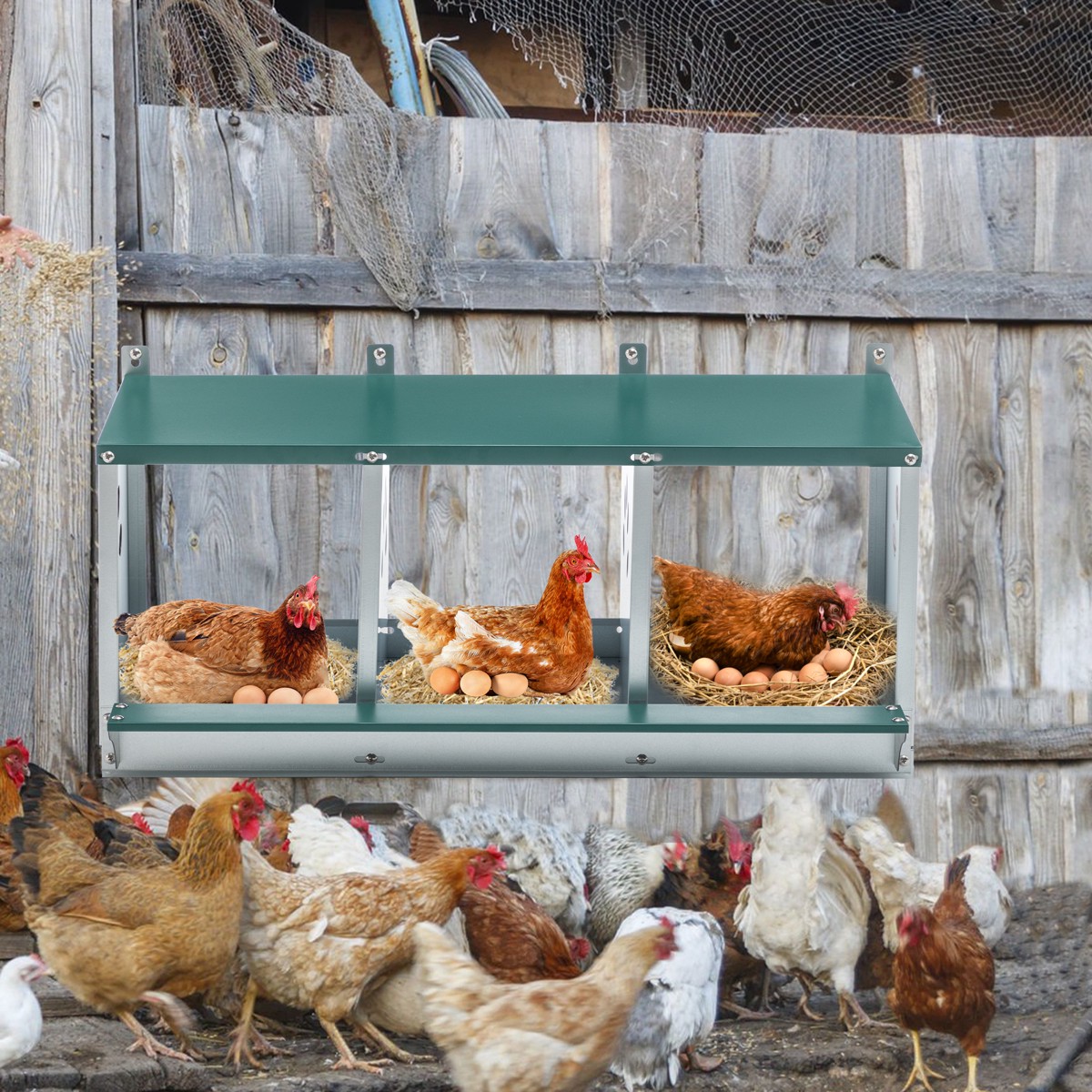 Metal Nesting Boxes for Chicken,3 Compartment Box,Galvanized steel for Hens, Easy to Assemble$99.99View on Mallflare
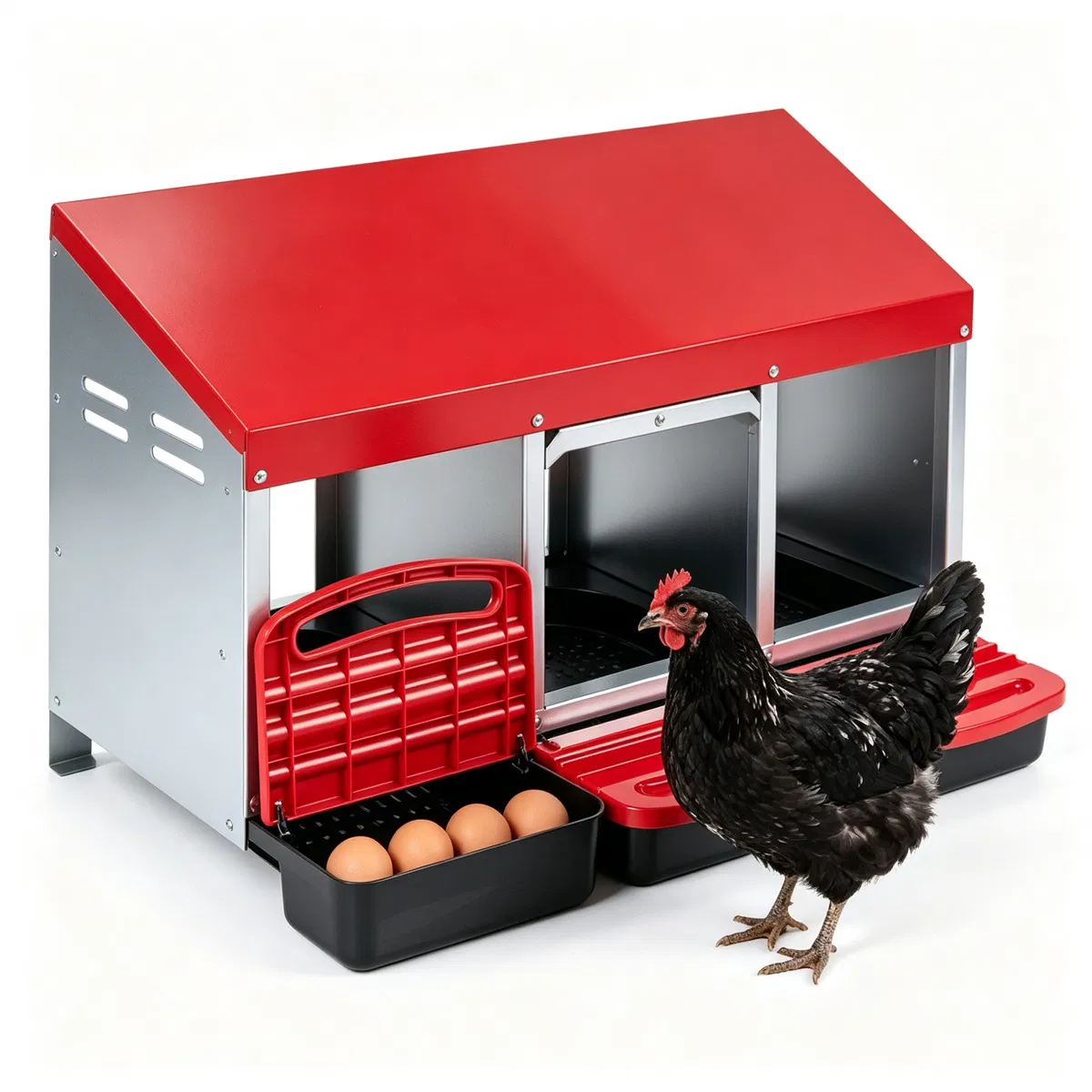 3-Compartment Chicken Nesting Box, Hot-Dipped Galvanized Iron Roll-Away Egg Collection Box, Anti-Rust Poultry Nest Box with Ventilation Holes & Sloped Roof for Coop Farm Use$131.99View on Mallflare
Highlights
- Roll-away egg collection uses a sloped floor (typically 15-30 degrees) so eggs roll into an external tray, keeping them clean and unbroken; this is the key upgrade over flat-bottom boxes.
- Hot-dipped galvanized iron offers superior rust resistance compared to electro-galvanized or painted steel, especially in humid coops; look for a zinc coating thickness of at least 60 g/m² for durability.
- Ventilation holes (typically 0.5-1 inch diameter) are critical to reduce moisture and ammonia buildup, which prevents moldy nesting material and respiratory issues in hens.
- A sloped roof sheds water and directs rain away from the nest opening; a minimum 15-degree slope is effective for most backyard coops.
Best use cases
- Best fit: Backyard flock of 6-12 hens in a humid climate — choose a hot-dipped galvanized roll-away box with ventilation holes and a sloped roof to prevent rust and keep eggs clean.
- Best fit: Small flock of 3-5 hens in a dry climate with easy coop access — a simple plastic or plywood open-front box is sufficient and easier to clean.
- Wrong fit: Large flock (20+ hens) with a single 3-compartment box — provide at least one nest per 4-5 hens; multiple boxes or larger units are needed to prevent crowding and egg breakage.
- Wrong fit: Coop with no predator screening — any nesting box must be inside a predator-proof coop; roll-away trays can attract rodents if eggs accumulate, so collect daily.
Buying tips
- Size each nest compartment at minimum 12x12x12 inches (30x30x30 cm) for standard breeds; larger breeds like Orpingtons need 14x14x14 inches or more.
- Provide one nesting box per 4-5 hens; for a flock of 10 hens, a 3-compartment box is adequate, but for 15 hens choose a 4-5 compartment unit or multiple boxes.
- Choose hot-dipped galvanized steel over painted or electro-galvanized metal for outdoor or humid coops; the zinc-iron alloy layer resists rust for years.
- Ensure the roll-away tray is easily accessible from outside the coop (e.g., through a hatch) to avoid disturbing hens during collection; a sloped floor angle of 20-25 degrees balances rolling without egg breakage.
Specs
| Material Grade | Hot-dipped galvanized / plastic / plywood |
|---|---|
| Egg Collection Type | Roll-away sloped floor vs flat manual |
| Ventilation | Holes present (0.5-1 in) vs none |
| Roof Design | Sloped (15°+) vs flat |
Related searches
What to check before buying
- Measure your coop wall space: a 3-compartment roll-away box typically requires at least 30 inches wide x 18 inches deep x 20 inches high; confirm clearance for the egg tray and roof slope.
- Check floor compatibility: mount the box securely on a level, sturdy surface (wall studs or floor) and ensure the roll-away tray aligns with an external collection door.
- Verify climate: in humid or rainy areas, choose hot-dipped galvanized steel with ventilation holes; in dry climates, plastic or wood is acceptable but must be cleaned regularly.
- Confirm companion parts: nesting material (straw or wood shavings) should be 2-3 inches deep; a predator-proof coop and daily egg collection are required for roll-away systems.
FAQ
Data sources: eBay / Amazon listings and product attribute feeds. Updated Nov 28, 2026.
Some links on this page are affiliate links. If you buy after clicking one, we may earn a commission at no extra cost to you. This does not change which products appear here or their order. Affiliate disclosure.