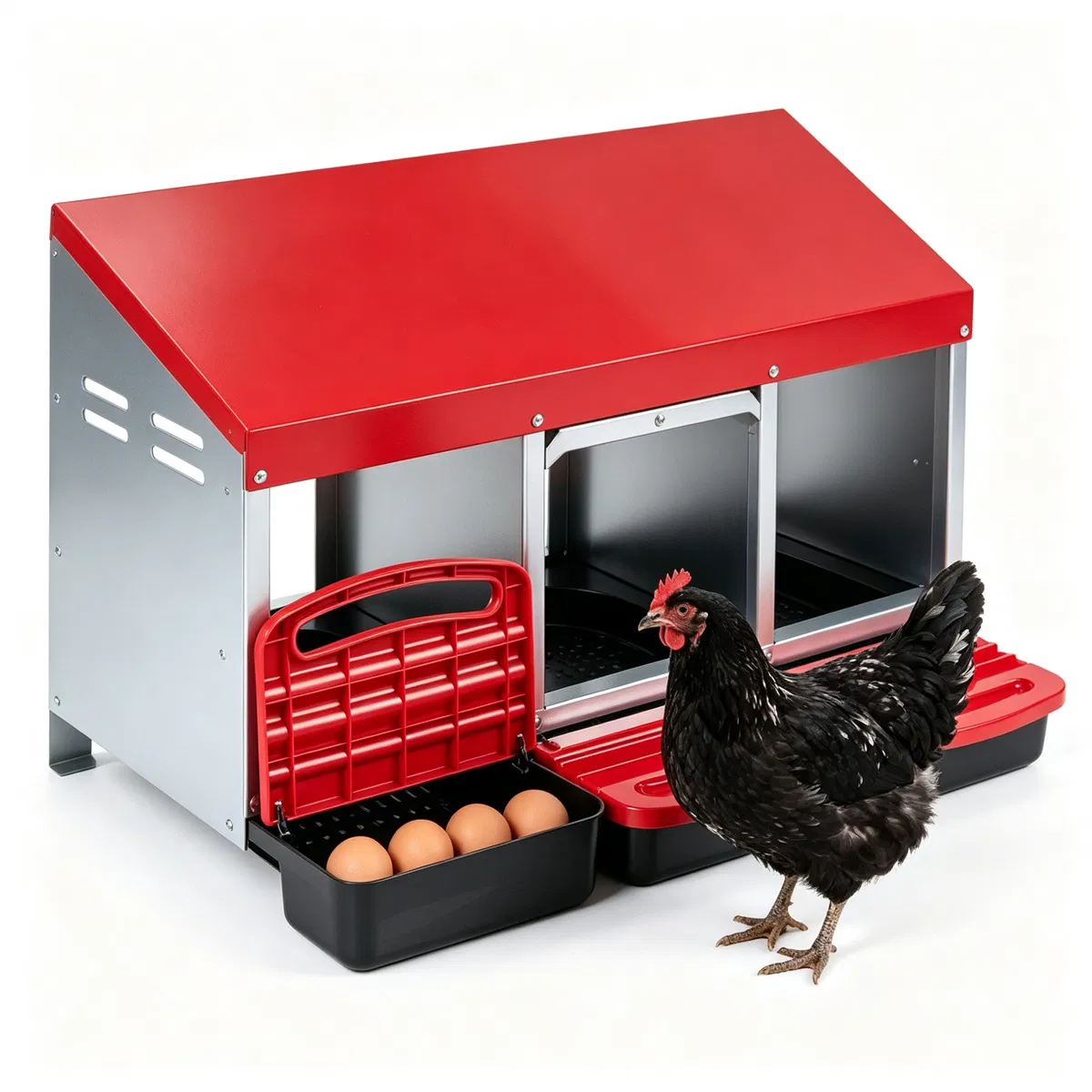

Photos from current listings. Actual item, color, and included accessories may vary.
Chicken Egg Nesting Box Buying Guide
A chicken egg nesting box is a dedicated, dry, private laying station that protects eggs from breakage, dirt, and predators while making collection efficient. The core trade-off is between open-front wooden or plastic boxes that are cheap but expose eggs to moisture and hens' feet, versus roll-away galvanized or HDPE designs that auto-separate eggs but demand correct slope and bedding discipline. The decision rule: buy a roll-away metal or food-grade plastic unit with a sloped floor and ventilation for flocks over 6 hens; choose simple open wood or plastic nest boxes only for small backyard flocks with daily collection.
Key takeaways
- Roll-away boxes use a 12-15 degree sloped floor and an egg tray lip so eggs roll clear of hens; flat-bottom boxes require deep bedding and daily egg removal.
- Hot-dipped galvanized steel (ASTM A123, 45-85 micron zinc) resists coop ammonia and rain far longer than electro-galvanized or powder-coated steel, which chips and rusts at cut edges.
- Food-grade HDPE plastic nest boxes are dishwasher-safe, mite-resistant, and never absorb moisture; untreated pine or plywood absorbs droppings and harbors red mites.
At a glance
- Category
- Chicken Fencing & Egg Handling
- Last updated
- Nov 28, 2026
Current offers
Highlights
- Roll-away boxes use a 12-15 degree sloped floor and an egg tray lip so eggs roll clear of hens; flat-bottom boxes require deep bedding and daily egg removal.
- Hot-dipped galvanized steel (ASTM A123, 45-85 micron zinc) resists coop ammonia and rain far longer than electro-galvanized or powder-coated steel, which chips and rusts at cut edges.
- Food-grade HDPE plastic nest boxes are dishwasher-safe, mite-resistant, and never absorb moisture; untreated pine or plywood absorbs droppings and harbors red mites.
- Ventilation holes and a sloped roof prevent condensation drips onto eggs; a 1:5 nest-to-hen ratio (minimum one 12x12 in nest per 5 hens) prevents crowding and egg eating.
Best use cases
- Best fit: backyard flocks of 6-30 hens in a fixed coop — pick a 3-4 compartment hot-dipped galvanized roll-away box with a sloped roof and rear egg tray for daily collection without entering the run.
- Best fit: small flocks of 2-5 hens or mobile tractors — choose a single or double food-grade plastic nest box with a hinged lid; skip heavy multi-compartment metal units that flex when moved.
- Wrong fit: open-bottom or wire-floor boxes — these let eggs contact droppings and crack; skip them even at low cost because egg loss and cleaning labor outweigh savings.
- Wrong fit: untreated wood boxes in humid climates — they swell, grow mold, and harbor mites; use HDPE or galvanized steel instead unless the box is sealed and removable for monthly sanitizing.
Buying tips
- Size each compartment at least 12x12x12 in (30x30x30 cm) for standard hens and 14x14x14 in for heavy breeds like Orpingtons; a 3-compartment box serves roughly 12-15 hens.
- Choose hot-dipped galvanized (zinc coating 45+ microns) or UV-stabilized HDPE over electro-galvanized and painted steel; cut edges on cheap boxes are the first rust point.
- For roll-away models, confirm a 12-15 degree floor slope and a front lip height of 2-3 in so eggs roll but hens can still enter; steeper slopes crack eggs.
- Mount boxes 18-24 in above the coop floor or litter line to deter rodents and keep eggs clean; add a 6-8 in predator-proof lip or latch if the coop opens to a run.
Specs
| Material Grade | Hot-dipped galvanized / HDPE / pine |
|---|---|
| Compartment Size | 12x12 in standard; 14x14 in heavy breeds |
| Egg Collection | Roll-away sloped tray vs flat-bottom |
| Nest-to-Hen Ratio | 1 nest per 5 hens (min 2 nests) |
Related searches
What to check before buying
- Measure coop wall space: a 3-compartment box needs about 36-40 in wide by 14-18 in deep, plus 12 in clearance for the egg tray and lid swing.
- Check mounting surface: metal boxes need two wall studs or a plywood backer; hollow coop paneling will tear out under a loaded 20-30 lb box.
- Confirm climate fit: galvanized steel suits humid or rainy coops; HDPE suits cold climates where metal feels colder and frosts; wood only in dry, mild regions.
- Verify companion parts: nesting pads or straw bedding, a latch or predator hook, and a removable egg tray sized to your collection routine.
FAQ
Data sources: eBay / Amazon listings and product attribute feeds. Updated Nov 28, 2026.
Some links on this page are affiliate links. If you buy after clicking one, we may earn a commission at no extra cost to you. This does not change which products appear here or their order. Affiliate disclosure.