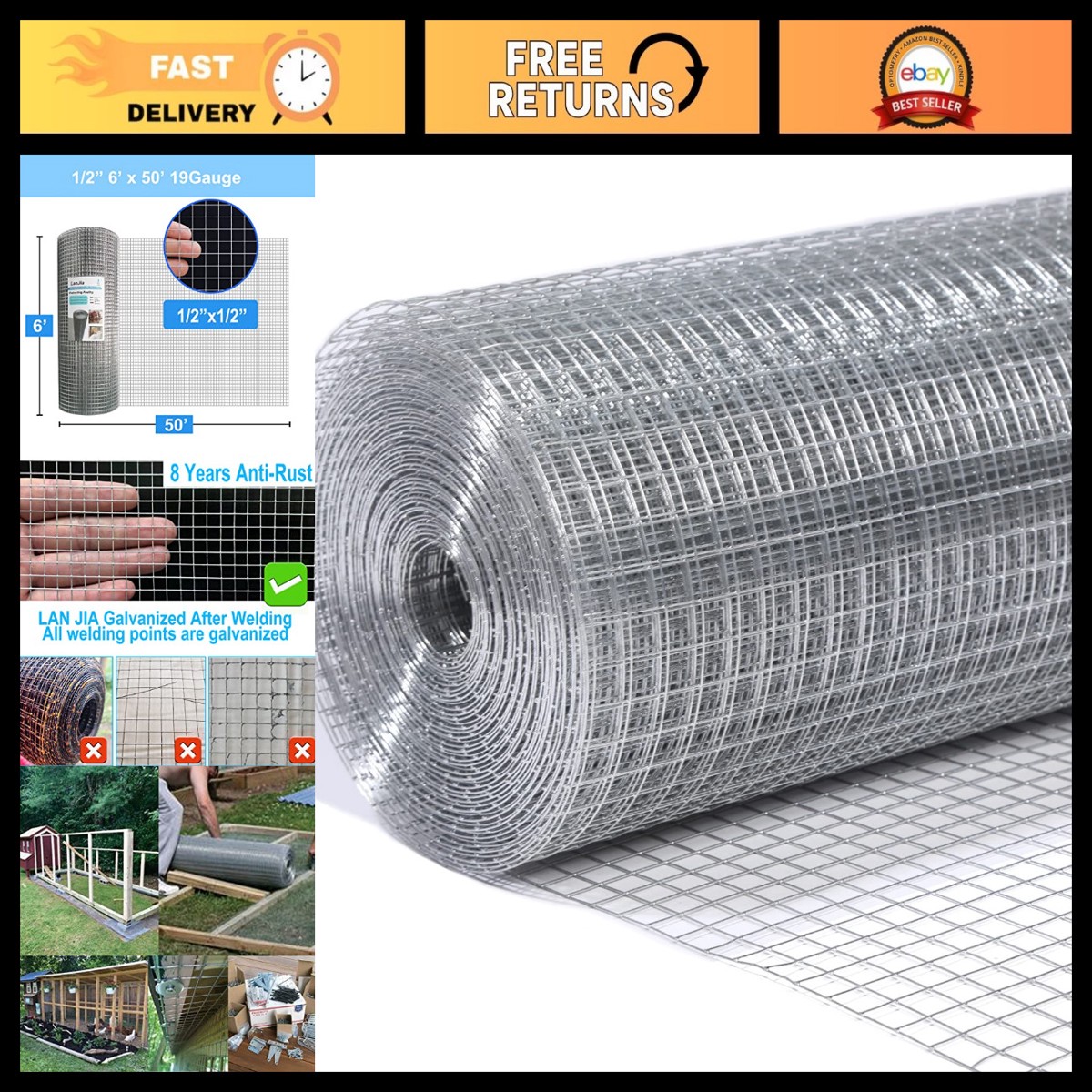

Photos from current listings. Actual item, color, and included accessories may vary.
Chicken Coop Mesh Buying Guide
Chicken coop mesh is welded or woven wire barrier sold by roll, specified by gauge, opening size, and coating. The core trade-off is bite-through resistance versus cost and light: thinner 19-gauge mesh with large 2x3-inch openings keeps birds in but lets predators and rodents through, while 16-gauge galvanized hardware cloth with 1/2-inch openings is the predator-proof tier. The decision rule: use 1/2-inch 16-gauge (or heavier) galvanized hardware cloth for any enclosure wall below 4 feet and for all floor and vent openings, and reserve lighter vinyl-coated 2x3 mesh for above-ground garden or decorative fencing only.
Key takeaways
- Wire gauge determines predator resistance: 16-gauge (approx. 1.6 mm) resists raccoon and fox bite-through; 19-gauge (approx. 1.0 mm) deforms under a determined predator and is containment-only.
- Aperture size is the rodent and snake barrier: 1/2-inch hardware cloth stops mice and snakes; 1x2-inch excludes most rats; 2x3-inch welded mesh passes rodents entirely.
- Galvanized (zinc-coated) mesh outlasts bare steel in wet climates; black PVC vinyl coating adds abrasion and rust protection but the coating can be chewed, exposing wire.
At a glance
- Category
- Chicken Fencing & Egg Handling
- Last updated
- Nov 28, 2026
Current offers
Highlights
- Wire gauge determines predator resistance: 16-gauge (approx. 1.6 mm) resists raccoon and fox bite-through; 19-gauge (approx. 1.0 mm) deforms under a determined predator and is containment-only.
- Aperture size is the rodent and snake barrier: 1/2-inch hardware cloth stops mice and snakes; 1x2-inch excludes most rats; 2x3-inch welded mesh passes rodents entirely.
- Galvanized (zinc-coated) mesh outlasts bare steel in wet climates; black PVC vinyl coating adds abrasion and rust protection but the coating can be chewed, exposing wire.
- Roll format is fixed by width x length: common widths are 24, 36, and 48 inches; 50-foot rolls suit coop walls, 100-foot rolls suit full run perimeters and floors.
Best use cases
- Best fit: burying a 1/2-inch 16-gauge galvanized apron 12-18 inches deep around the coop base to stop digging predators; skip vinyl-coated 2x3 mesh for this because rodents tunnel through.
- Best fit: covering coop windows and vents with 1/2-inch 19-gauge hardware cloth when the opening is above 4 feet and already framed; use 16-gauge on ground-level walls instead.
- Best fit: 2x3-inch 16-gauge PVC-coated welded mesh for above-ground garden trellis, plant protection, or a decorative top rail; it is not a predator barrier at ground level.
- Wrong fit: using 19-gauge 2x3 mesh as the full run perimeter at ground level—raccoons pull it open and rats pass through; upgrade to 1/2-inch 16-gauge.
Buying tips
- Match gauge to threat: 16-gauge or heavier for exterior walls and floors; 19-gauge is acceptable only for high vents and interior dividers above 4 feet.
- Choose aperture by pest: 1/2-inch stops mice and snakes; 1x2-inch stops rats; 2x3-inch is containment mesh only, not predator-proof.
- Calculate roll length: perimeter plus 10 percent overlap; a 24x8-foot run needs about 64 linear feet, so one 50-foot roll covers half—plan two rolls or a 100-foot roll.
- Pick coating by climate: hot-dip galvanized for humid or coastal areas; PVC-coated black mesh for visibility and abrasion resistance, accepting possible coating damage.
Specs
| Wire Gauge | 16 ga predator-proof / 19 ga light |
|---|---|
| Mesh Opening | 1/2 in rodent-proof / 2x3 in containment |
| Coating | Hot-dip galvanized vs PVC vinyl |
| Roll Format | 24/36/48 in wide x 50/100 ft |
Related searches
What to check before buying
- Measure coop wall height and run perimeter; confirm roll width (24, 36, or 48 inches) covers the wall in one pass with 2-inch overlap at framing.
- Check ground conditions: soft soil needs a buried apron or skirt; rocky ground needs mesh anchored with staples or a perimeter frame.
- Confirm fastener compatibility: 16-gauge mesh needs poultry staples or screws with washers; 19-gauge can be stapled with heavy-duty staples.
- Verify framing spacing: welded mesh sags between supports; plan posts or studs every 4 feet for 19-gauge and every 6 feet for 16-gauge.
FAQ
Data sources: eBay / Amazon listings and product attribute feeds. Updated Nov 28, 2026.
Some links on this page are affiliate links. If you buy after clicking one, we may earn a commission at no extra cost to you. This does not change which products appear here or their order. Affiliate disclosure.