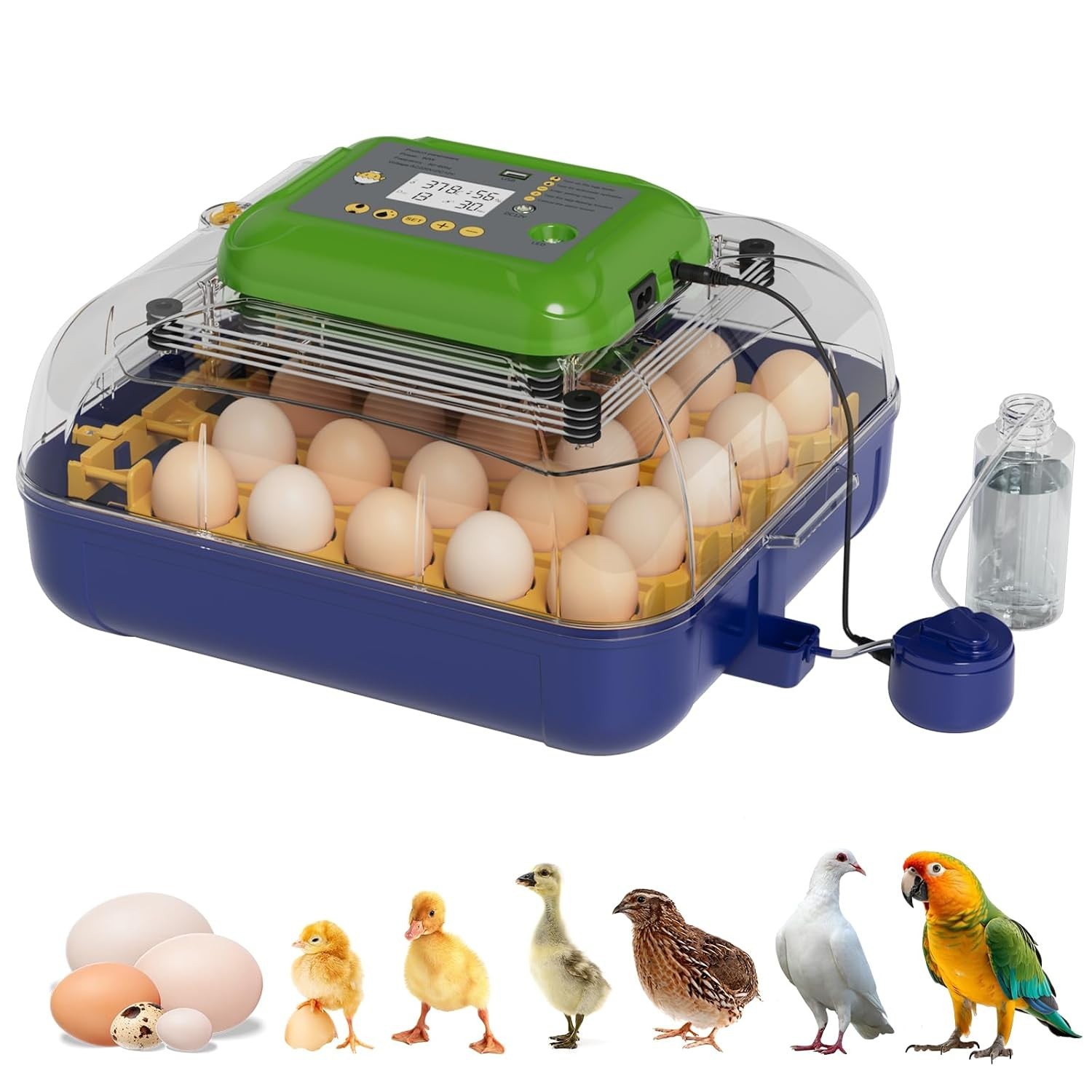

Photos from current listings. Actual item, color, and included accessories may vary.
Automatic Incubator Chicken Egg Buying Guide
Automatic egg incubators remove the single biggest hatch-killer — inconsistent turning — but capacity claims and turner designs vary wildly between budget trays and cabinet units. Buyers most often mis-size capacity against their actual flock, or buy a turner that cannot handle the egg size they plan to set. Decide your egg size, batch size, and whether you need a still-air or forced-air cabinet before comparing tiers.
Median $53.47
Key takeaways
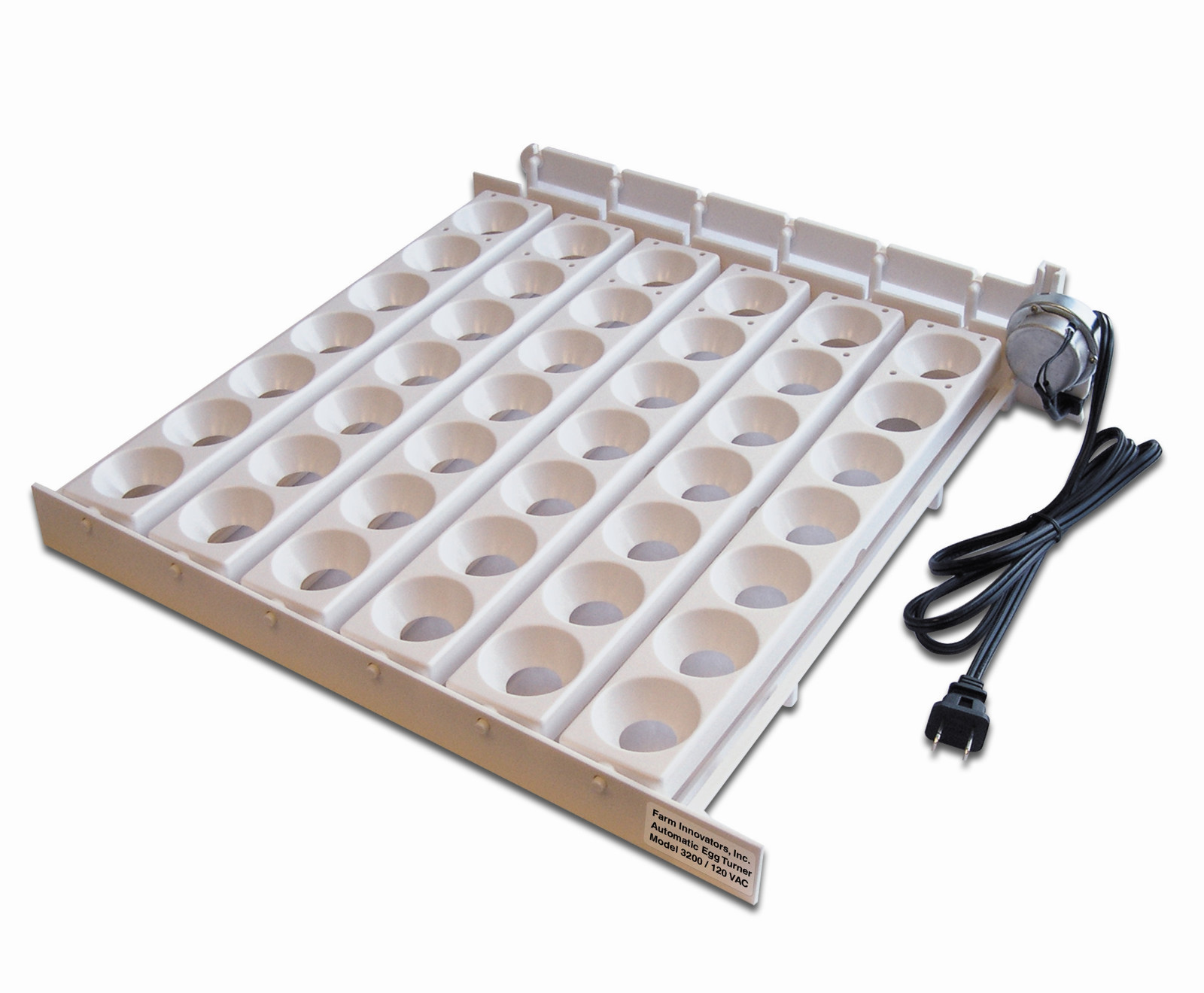
- Automatic turners use either a tilting tray platform or individual roller cradles; tilting trays handle mixed egg sizes better but shake loose in cheap builds.
- Forced-air (fan) circulation is the dividing line for hatch consistency — still-air incubators develop hot and cold zones that skew embryo development.
- Capacity ratings are usually quoted in chicken eggs; quail, duck, and goose eggs change the count because of cradle size and egg mass.
At a glance
- Category
- Chicken Fencing & Egg Handling
- Last updated
- Nov 28, 2026
Current offers
Highlights
- Automatic turners use either a tilting tray platform or individual roller cradles; tilting trays handle mixed egg sizes better but shake loose in cheap builds.
- Forced-air (fan) circulation is the dividing line for hatch consistency — still-air incubators develop hot and cold zones that skew embryo development.
- Capacity ratings are usually quoted in chicken eggs; quail, duck, and goose eggs change the count because of cradle size and egg mass.
- Digital PID-style thermostats with a separate hygrometer beat combined units; built-in humidity readouts on budget trays commonly drift.
Best use cases
- Best fit: a home flock owner setting 20–45 chicken eggs per batch should pick a forced-air cabinet or tray unit with a proven tilting turner and an external water channel.
- Best fit: a classroom or 4-H project hatching a single small batch should choose a compact 20–30 egg unit with a visible window and simple dial or digital setpoint.
- Wrong fit: anyone planning staggered hatches in one unit should skip single-zone tray incubators — they cannot hold separate humidity stages for lockdown.
- Wrong fit: buyers setting goose or duck eggs should skip incubators rated only for chicken egg cradles; large eggs need wider cradle spacing and a stronger turner motor.
Buying tips
- Size capacity to your largest expected batch plus 20% headroom — running a unit at its listed maximum reduces airflow and hatch rates.
- Prioritize forced-air fan circulation over still-air designs; the fan is what keeps temperature uniform across the tray.
- Check that the turner motor is rated for the full tray load and that cradles accommodate your egg size, not just chicken eggs.
- Choose a unit with a separate humidity tray or external water fill so you can top up during lockdown without opening the lid.
Specs
| Airflow Type | Forced-air fan vs still-air |
|---|---|
| Turner Drive | Tilting tray vs roller cradle |
| Egg Capacity | 20–45 chicken eggs typical |
| Temp Control | Digital thermostat, ±1°F target |
Related searches
What to check before buying
- Measure your set location: units need a stable, draft-free surface and clearance for the lid to open fully during turning.
- Confirm your power standard — most incubators are 110–120V for North America; 220–240V versions are separate models.
- Plan a calibrated separate thermometer/hygrometer; built-in readouts on budget units are frequently off by 1–2°F.
- Check that replacement egg cradles or turner trays are available for the model before buying, since cradle sizes are model-specific.
FAQ
Data sources: eBay / Amazon listings and product attribute feeds. Updated Nov 28, 2026.
Some links on this page are affiliate links. If you buy after clicking one, we may earn a commission at no extra cost to you. This does not change which products appear here or their order. Affiliate disclosure.