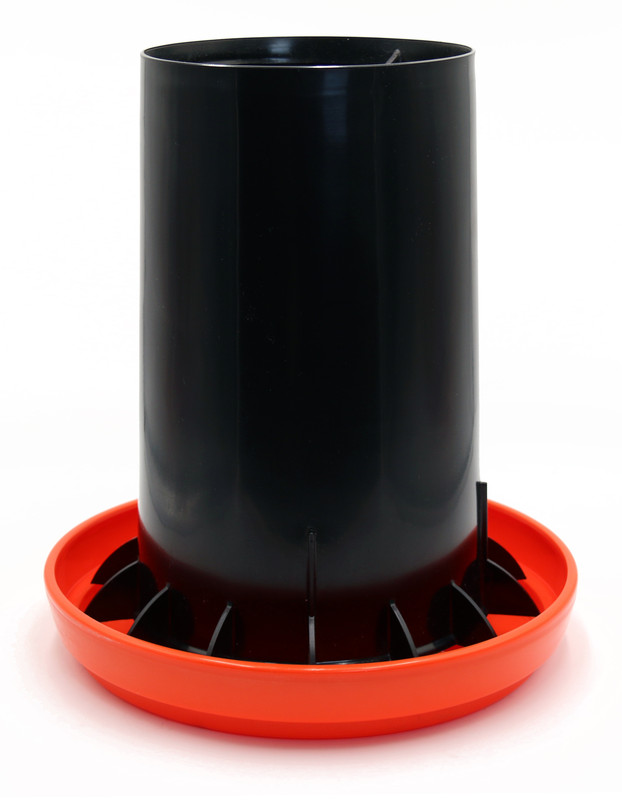

Photos from current listings. Actual item, color, and included accessories may vary.
Round Chicken Feeder Buying Guide
Round chicken feeders are gravity-fed or treadle-style units whose circular shape reduces feed waste and keeps the trough accessible from all sides. The primary trade-off is between open gravity designs that are cheap but invite rodents and spillage, and enclosed or treadle feeders that cost more but protect feed and limit wild-bird contact. The decision rule: buy a round feeder with a hood, a feed-flow adjuster, and rodent-resistant construction if you keep feed outdoors; choose a simple open round feeder only for covered, predator-secure coops with daily feed management.
Key takeaways
- Gravity round feeders rely on a center cone or baffle to flow feed into a circular trough; adjustable flow gaps of 1/8–3/8 inch control waste and suit different feed crumble sizes.
- Treadle feeders require a bird weight of roughly 2–4 lb to open and must be balanced so hens can trigger them while rodents and wild birds cannot; spring tension and treadle plate size are the key tuning points.
- UV-stabilized HDPE or galvanized steel are the durable shell materials; thin blow-molded plastic under about 1/8 inch wall thickness cracks in freezing temperatures and degrades within a few seasons.
At a glance
- Category
- Chicken Feeders & Waterers
- Last updated
- Nov 28, 2026
Current offers
Highlights
- Gravity round feeders rely on a center cone or baffle to flow feed into a circular trough; adjustable flow gaps of 1/8–3/8 inch control waste and suit different feed crumble sizes.
- Treadle feeders require a bird weight of roughly 2–4 lb to open and must be balanced so hens can trigger them while rodents and wild birds cannot; spring tension and treadle plate size are the key tuning points.
- UV-stabilized HDPE or galvanized steel are the durable shell materials; thin blow-molded plastic under about 1/8 inch wall thickness cracks in freezing temperatures and degrades within a few seasons.
- Capacity scales with flock size: a 10–12 inch diameter round feeder typically holds 5–10 lb of feed, while 16–20 inch models hold 20–40 lb; plan on about 0.25–0.33 lb of feed per adult hen per day to size refill intervals.
Best use cases
- Best fit: a covered run or coop with 4–12 hens and dry feed — pick a hooded gravity round feeder with a flow adjuster and hang it 6–8 inches above the ground to stop litter scratch-out.
- Best fit: a coop with confirmed rodent activity or wild-bird pressure — choose a treadle-style round feeder with a weighted treadle and a lock-out tab so feed stays closed between meals.
- Wrong fit: open round feeders in uncovered runs — rain and spilled feed create mold and attract pests; skip them unless the feeder sits under a solid roof and is emptied weekly.
- Wrong fit: tiny bantam-only flocks buying a large 40 lb treadle feeder — the treadle may not trigger reliably under 2 lb birds; choose a lighter-spring model or a small gravity feeder instead.
Buying tips
- Measure your feed crumble: flow gap should be about the size of a single pellet; too wide and hens bill out feed, too narrow and fine crumble bridges and stops flowing.
- Match capacity to flock: multiply hens by 0.3 lb per day and choose a feeder that holds at least 7 days of feed so you refill weekly rather than daily.
- For treadle feeders, confirm the treadle plate is at least 8×10 inches and the spring is adjustable; fixed heavy springs exclude lightweight pullets and young birds.
- Choose hanging hardware rated for the loaded weight — a 30 lb feeder needs a chain or cable rated well above that plus a swivel snap; thin twine stretches and tips the feeder.
Specs
| Feed Mechanism | Gravity flow vs treadle-activated |
|---|---|
| Shell Material | UV HDPE / galvanized steel |
| Capacity Range | 5–40 lb by diameter |
| Mount Type | Hanging chain vs floor-standing |
Related searches
What to check before buying
- Measure coop headroom and door width: a 20-inch-diameter round feeder needs about 24 inches of clearance and a door at least 24 inches wide to move in and out.
- Check floor type: on slatted or wire floors, mount the feeder on a solid platform or hang it so birds can stand flat while eating; loose dirt floors need a feeder placed on a paver to prevent tipping.
- Confirm feed type and moisture: crumble and pellet flow differently; in humid climates choose a feeder with a lid gasket or store feed separately to prevent caking in the trough.
- Verify predator and rodent pressure: if rats or wild birds access the coop, a treadle or enclosed feeder is required; open round feeders only work inside a fully enclosed, rodent-proof coop.
FAQ
Data sources: eBay / Amazon listings and product attribute feeds. Updated Nov 28, 2026.
Some links on this page are affiliate links. If you buy after clicking one, we may earn a commission at no extra cost to you. This does not change which products appear here or their order. Affiliate disclosure.