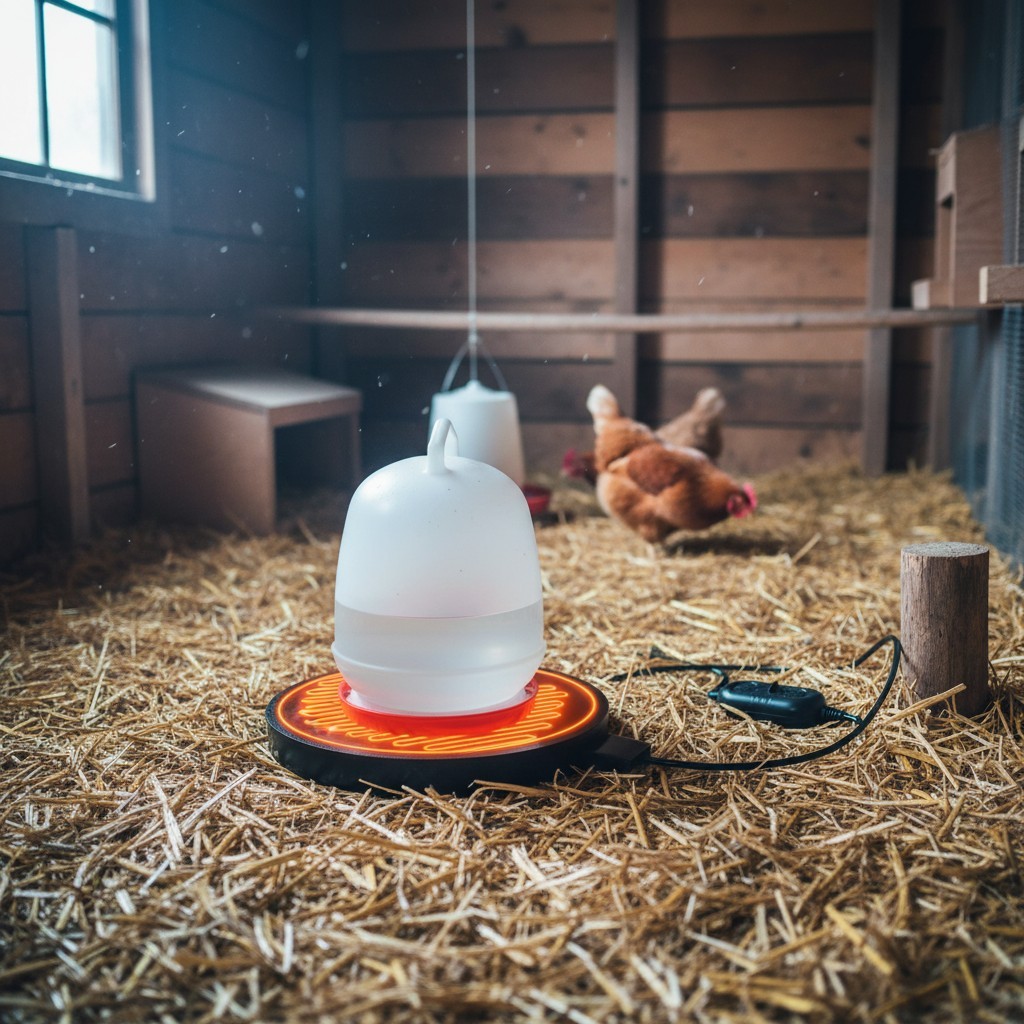

Photos from current listings. Actual item, color, and included accessories may vary.
Heated Chicken Waterer Buying Guide
A heated chicken waterer is a winter water-supply system that keeps drinking water liquid and accessible below freezing, using either a submerged heater element, a heated base, or an integrated heated bowl. The core trade-off is between heater wattage/thermostat control and safe, chew-resistant construction that survives coop conditions. Choose a thermostatically controlled unit rated for your lowest expected temperature; skip unregulated constant-on heaters and thin plastic bowls that crack or overheat.
Key takeaways
- Thermostatic control activates the heater only near freezing, cutting energy use and preventing scalding; unregulated heaters run continuously and risk overheating shallow water.
- Submersion heaters are rated by wattage per gallon: roughly 15–25 W per gallon for a 1–5 gallon bucket keeps water above freezing in moderate cold, with higher wattage needed for sustained single-digit temperatures.
- Heated bases warm a metal or thick plastic fount from below and avoid direct contact between electricity and drinking water, while submerged elements require sealed, waterproof housings.
At a glance
- Category
- Chicken Feeders & Waterers
- Last updated
- Nov 28, 2026
Current offers
Highlights
- Thermostatic control activates the heater only near freezing, cutting energy use and preventing scalding; unregulated heaters run continuously and risk overheating shallow water.
- Submersion heaters are rated by wattage per gallon: roughly 15–25 W per gallon for a 1–5 gallon bucket keeps water above freezing in moderate cold, with higher wattage needed for sustained single-digit temperatures.
- Heated bases warm a metal or thick plastic fount from below and avoid direct contact between electricity and drinking water, while submerged elements require sealed, waterproof housings.
- Chew-resistant cords and anti-tip bases matter in coops; exposed wiring and lightweight bowls are the most common failure points in unheated versus heated designs.
Best use cases
- Best fit: a small flock (1–5 birds) in a coop that dips below freezing overnight — pick a thermostatically controlled heated base or 1–5 gallon bucket heater with a chew-resistant cord.
- Best fit: a large flock or open run where water is accessed all day — choose a higher-wattage submerged heater or multiple heated founts sized to gallons per bird.
- Wrong fit: mild climates that rarely drop below freezing — skip heated units and use an unheated fount with regular refills to avoid unnecessary power draw and complexity.
- Wrong fit: coops without a GFCI-protected outdoor outlet — do not run any heated waterer until a safe, grounded power source is installed.
Buying tips
- Match heater wattage to volume and climate: about 15–25 W per gallon for light frost, and 40–60 W per gallon where temperatures stay below 10°F for hours.
- Choose a thermostat-controlled unit with an adjustable or fixed set point near 35–40°F; constant-on heaters waste energy and can overheat small water volumes.
- Prefer heated bases with metal or thick HDPE founts over thin plastic bowls; thin walls warp and crack under repeated freeze-thaw and heater contact.
- Confirm the plug and cord are outdoor-rated and long enough to reach a GFCI outlet; short cords force unsafe extension-cord runs in wet coops.
Specs
| Heater Type | Submersion element / Heated base |
|---|---|
| Wattage Tier | 15–60 W/gal by climate |
| Thermostat Control | Adjustable ~35–40°F set point |
| Fount Material | Metal / Thick HDPE vs thin plastic |
Related searches
What to check before buying
- Measure your coop's lowest winter temperature and outlet distance — heater wattage and cord length must match both before buying.
- Confirm the waterer fits your flock's daily consumption: plan roughly 0.5–1 quart per bird per day and size the reservoir accordingly.
- Verify a GFCI-protected, grounded outdoor outlet is within cord reach; heated waterers should never run on ungrounded or daisy-chained power.
- Check the fount material and base stability: metal or thick HDPE fount on a wide, anti-tip base resists tipping and chewing in active coops.
FAQ
Data sources: eBay / Amazon listings and product attribute feeds. Updated Nov 28, 2026.
Some links on this page are affiliate links. If you buy after clicking one, we may earn a commission at no extra cost to you. This does not change which products appear here or their order. Affiliate disclosure.