
Photos from current listings. Actual item, color, and included accessories may vary.
Automatic Chicken Feeder With Timer Buying Guide
Automatic chicken feeders with timers range from simple battery-powered auger or port-door units to gravity hoppers retrofitted with timed release gates; the core trade-off is clock reliability and feed-throughput accuracy versus capacity and weather sealing. Buyers should separate true timed-release mechanisms (motorized auger, solenoid port gate, or programmable hopper gate) from basic gravity feeders marketed as 'automatic' because they only refill by gravity and have no timer. The decision rule: a real timer feeder must specify a battery-backed clock, a feed-rate or run-time setting, and a motor/actuator rated for outdoor duty — anything less is a gravity feeder with a lid.
Median $234.94 · New listings
Key takeaways
- True timed feeders use a motorized auger or solenoid port gate driven by a battery-backed digital clock; gravity hoppers labeled 'automatic' have no timer and release feed only when birds peck.
- Port-count and capacity tiers split cleanly: 6-port box feeders suit 6–12 birds, while 25 lb (11 kg) galvanized hanging hoppers suit 10–15 birds with weekly refills; stainless 8–50 lb units scale to multi-coop use.
- Feed-accuracy depends on run-time granularity: programmable timers with 1–2 second actuation steps and 4–6 daily feed windows prevent overfeeding, while simple 12/24-hour interval timers dump a fixed ration per cycle.
At a glance
- Category
- Chicken Feeders & Waterers
- Last updated
- Nov 28, 2026
Current offers
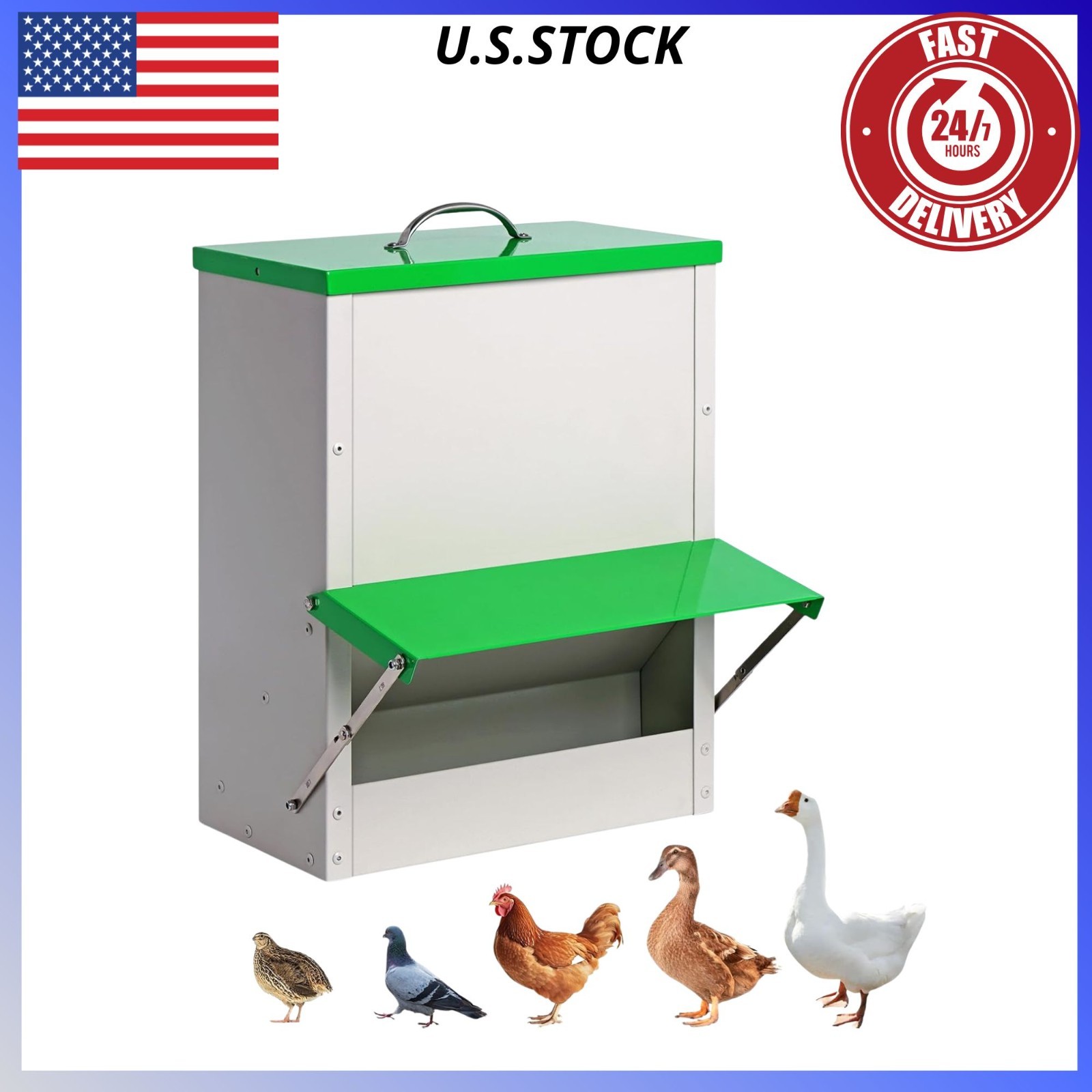 25lb Automatic Chicken Feeder Metal No Waste Poultry Feeder Waterproof Hanging$55.97View on eBay
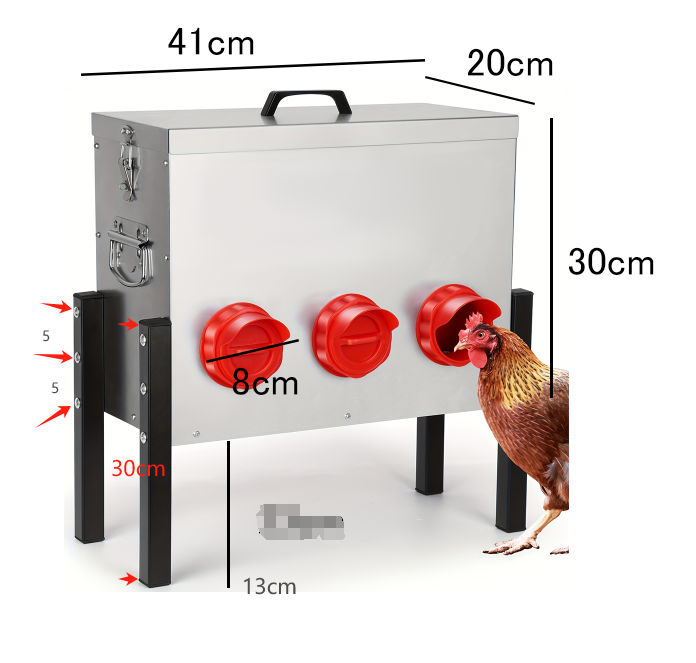 Automatic Chicken Feeder Box , 6 Feeding Ports, No Waste Poultry With Locking Lid And Adjustable Legs For Chickens, Ducks$42.99View on Mallflare
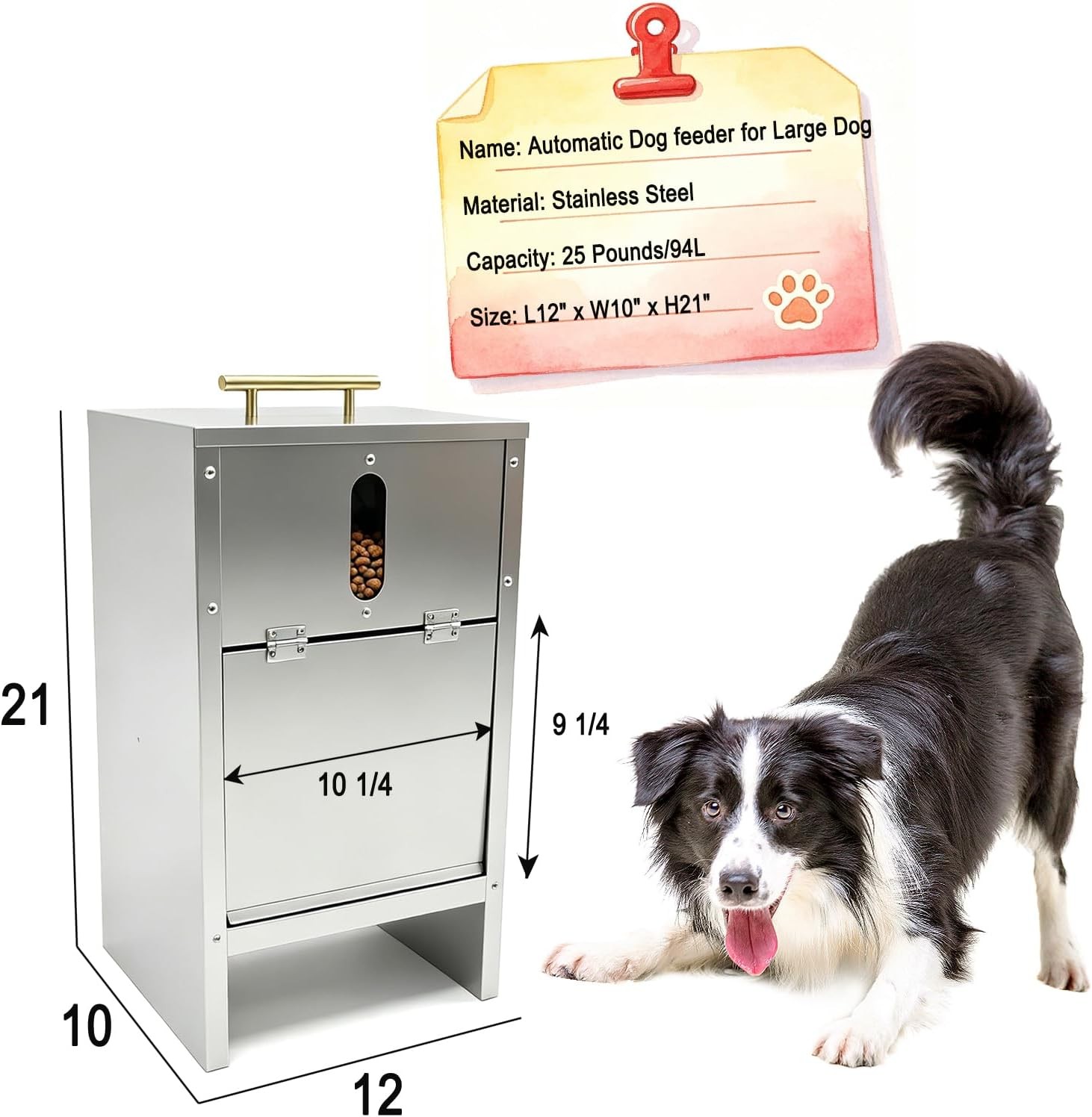 Stainless Steel Automatic Gravity Feeder 8-50Lb for Dog Chicken Duck Pet Poultry$72.99View on eBay
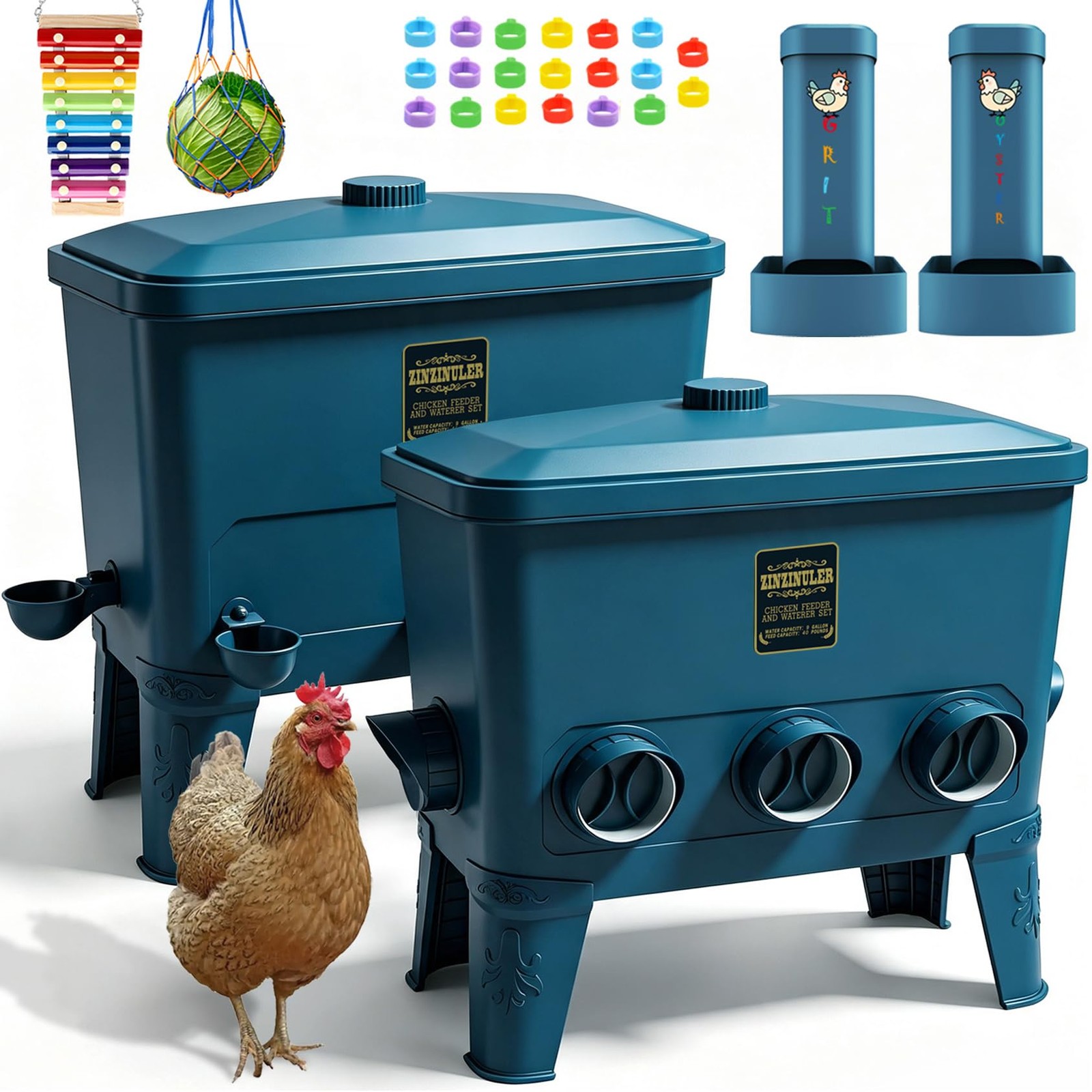 ZINZINULER Large Automatic Port Chicken Feeder and Cup Waterer Set - Chicken ...$205.19New · Last checked Nov 27, 2026View on eBay
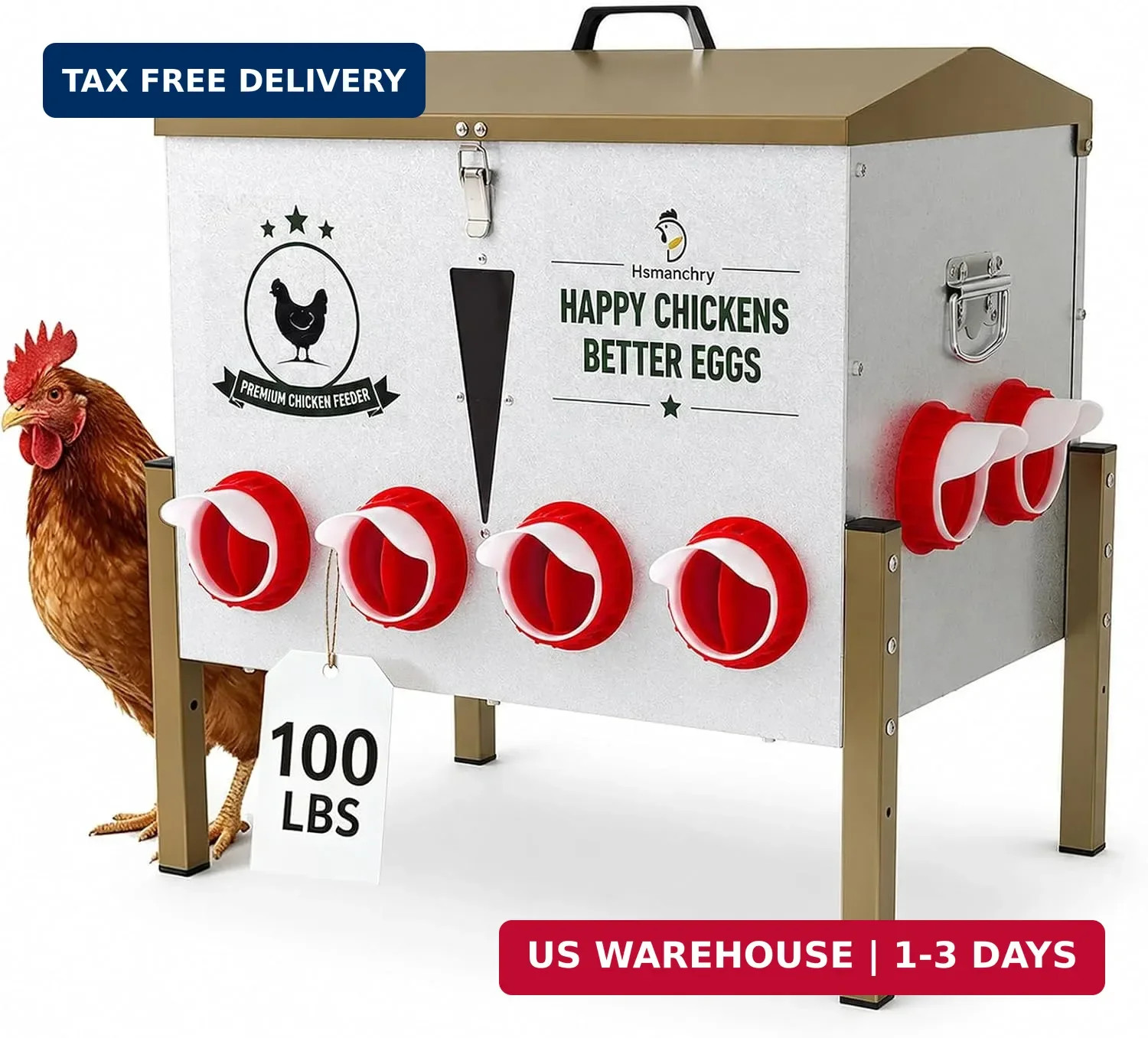 100 lb Automatic Chicken Feeder, 12-Port No-Waste Metal Feeder$211.99New · Last checked Nov 16, 2026View on eBay
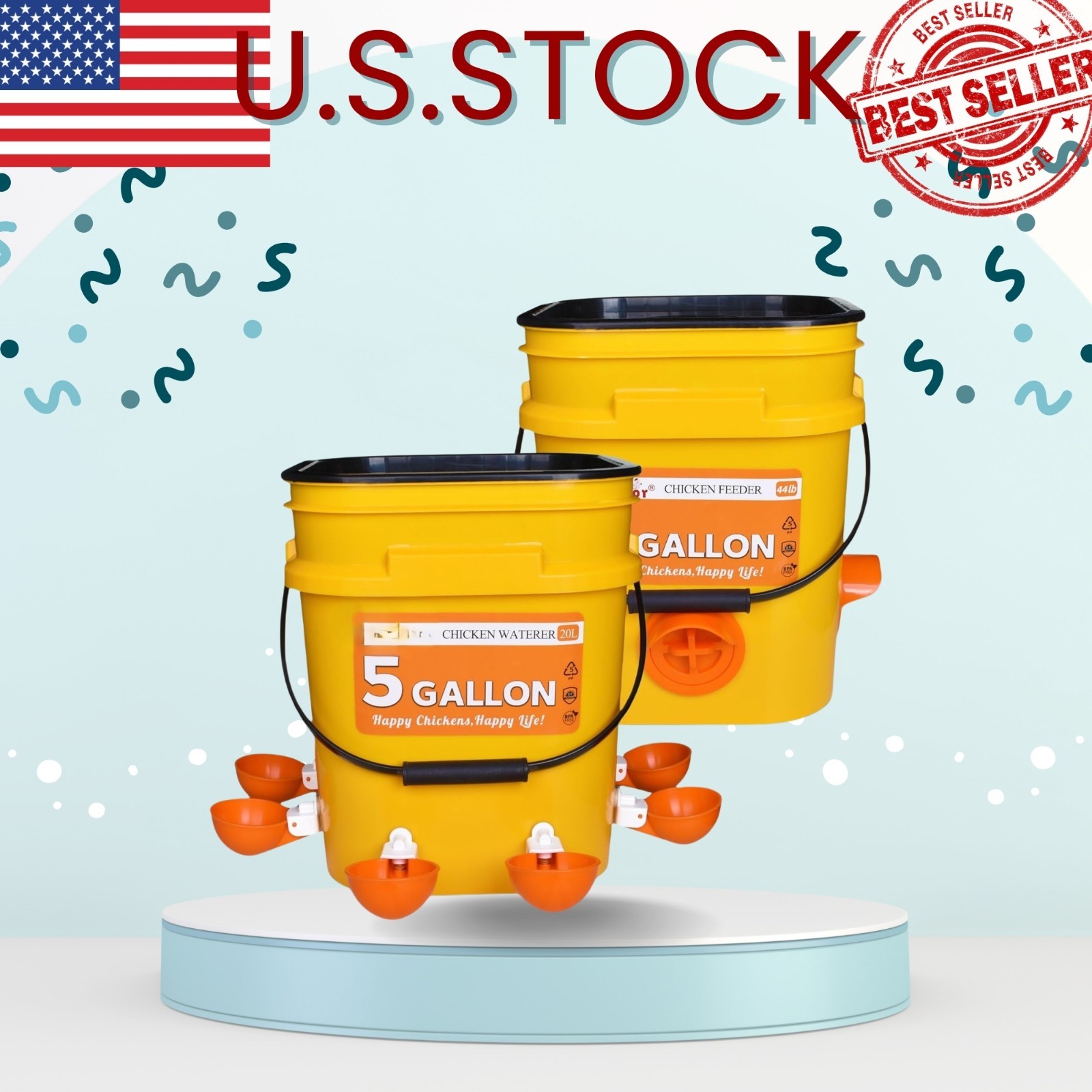 5 Gallon Automatic Chicken Feeder and Waterer Set No Waste 44 lbs$217.62New · Last checked Nov 16, 2026View on eBay
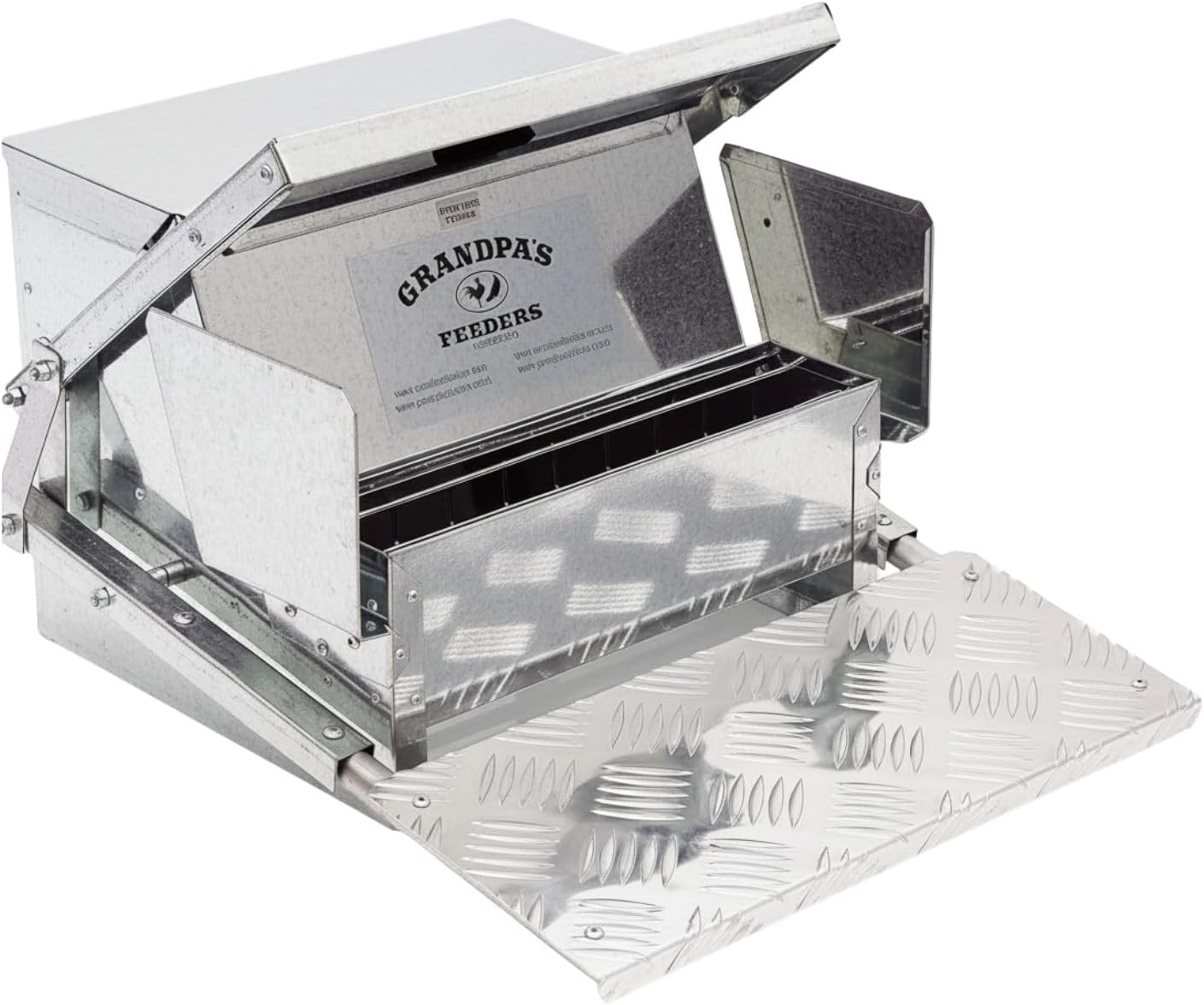 Grandpas Feeders Automatic Chicken Feeder - 20 Lbs No Waste Poultry Feeder, Rat$220.17New · Last checked Nov 16, 2026View on eBay
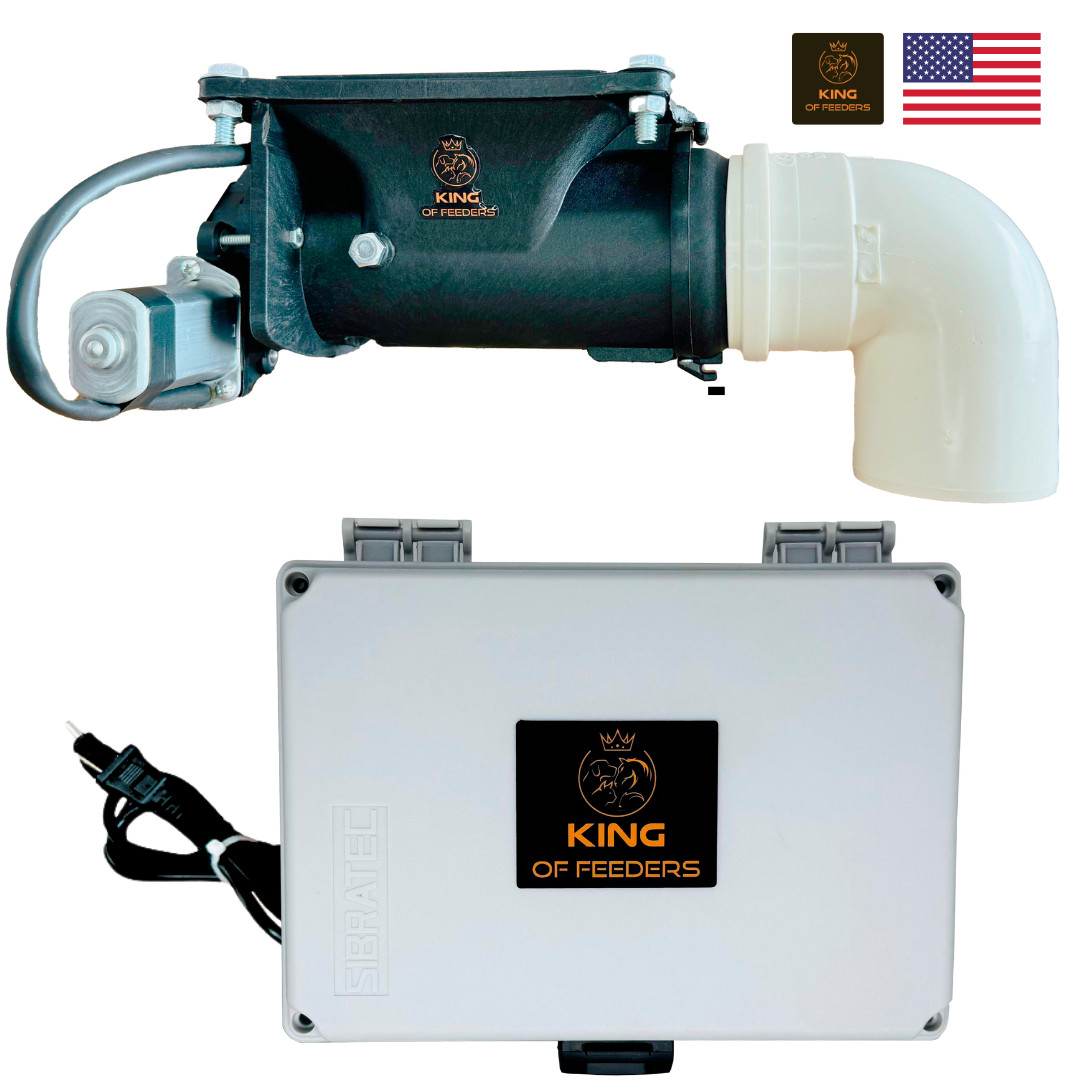 Chicken & Turkey Automatic Feeder – Dispenser System for Multiple Birds$222.88New · Last checked Nov 27, 2026View on eBay
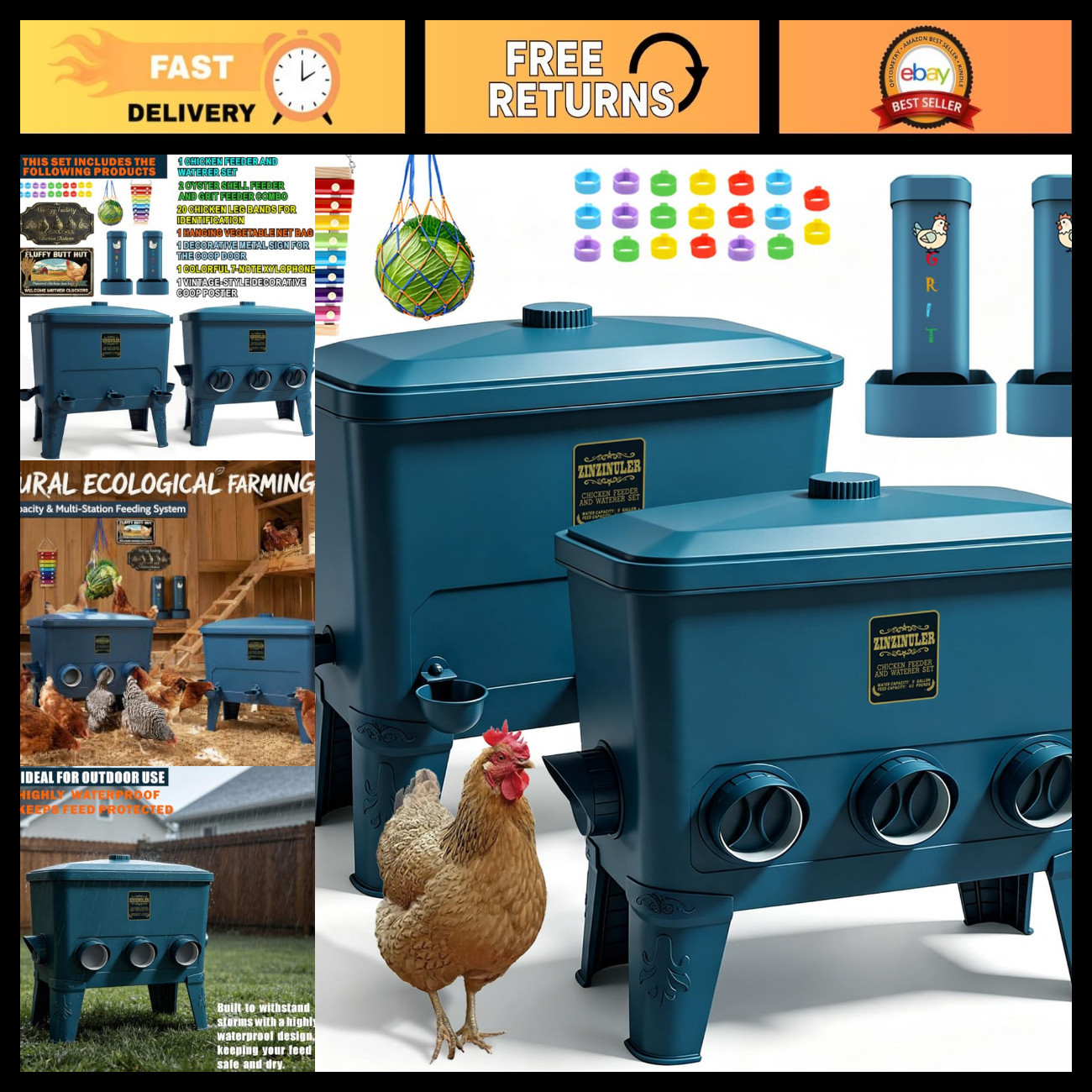 Large Automatic Chicken Feeder & Waterer Set - 9 Gallon, 50 lb Capacity, No Wast$246.99New · Last checked Nov 27, 2026View on eBay
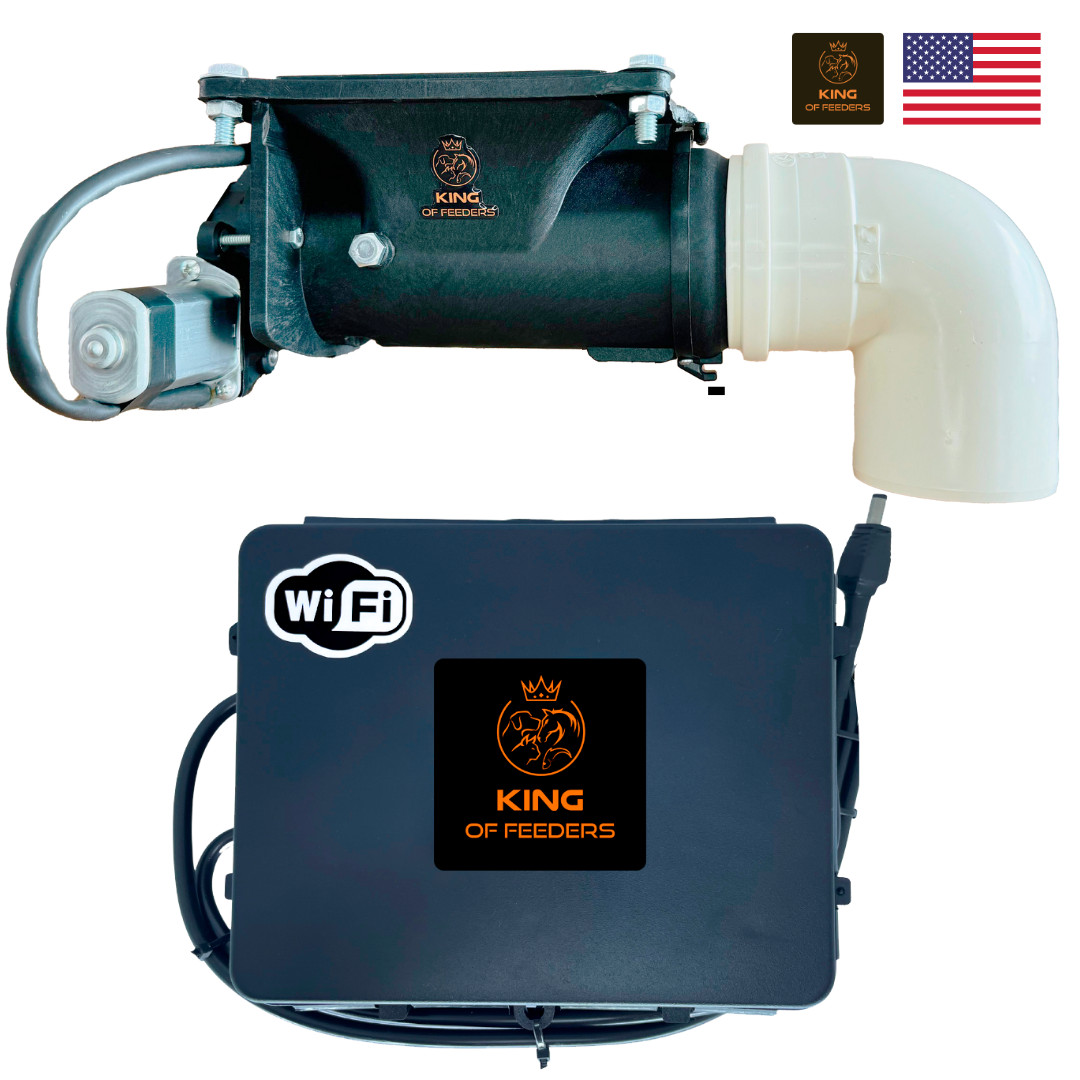 WiFi Automatic Feeder for Chickens – Smart Food Dispenser with Timer Control$256.48New · Last checked Nov 27, 2026View on eBay
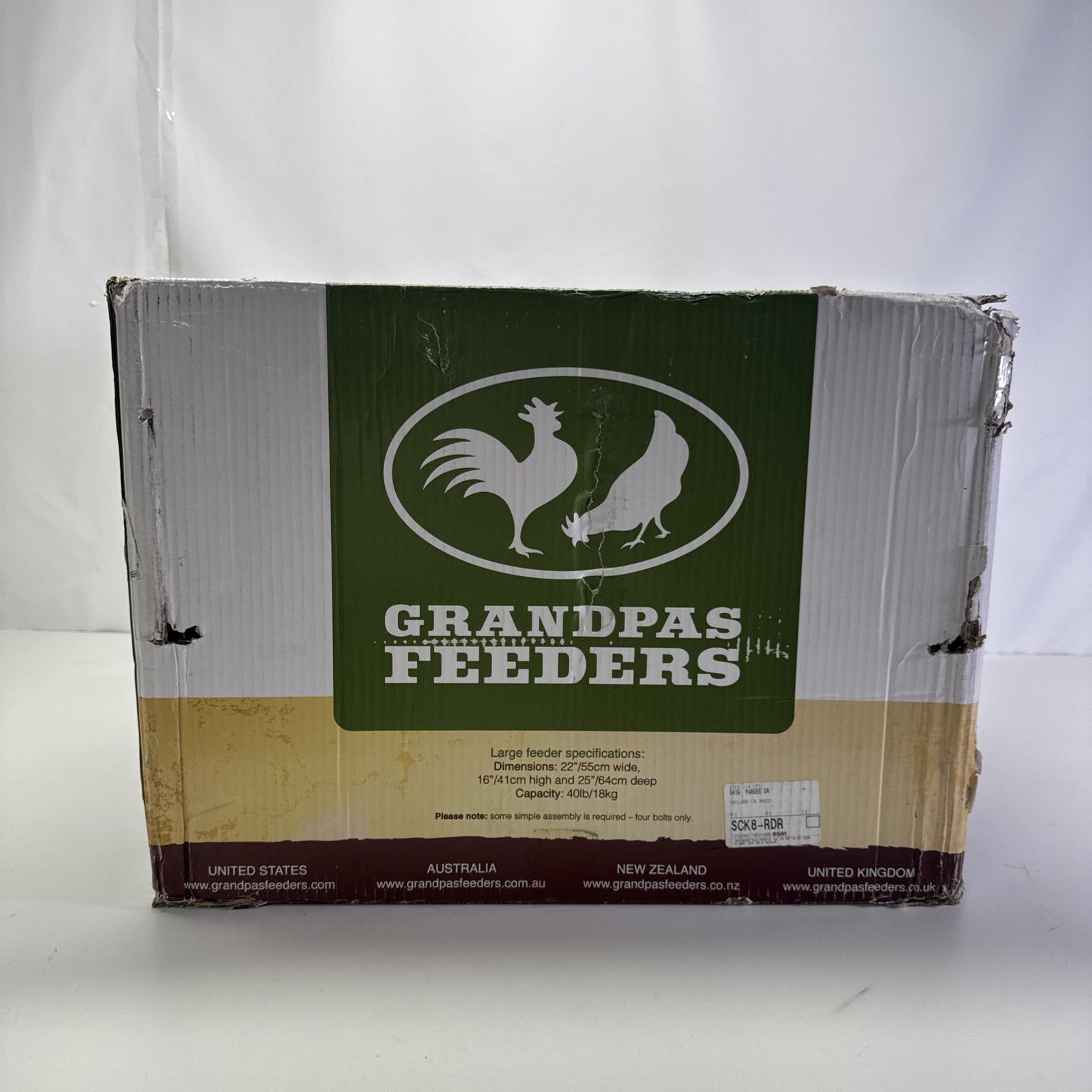 Grandpa's Feeders Automatic Chicken Feeder Large 40 lb Rat Proof Open Box$268.95New – Open box · Last checked Nov 27, 2026View on eBay
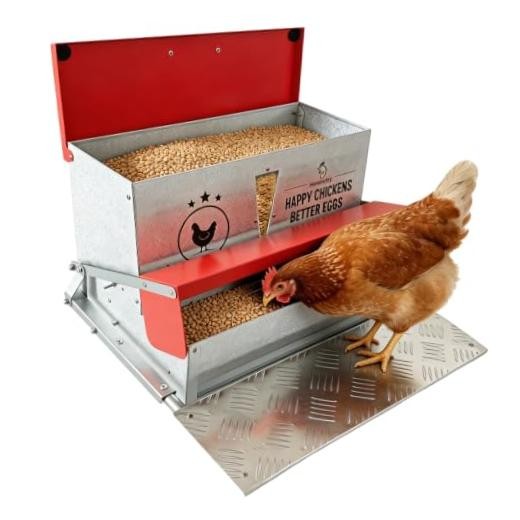 40 lb Automatic Chicken Feeder, Rat Proof Treadle No Waste - 40 lb 40 LBS$278.51New · Last checked Nov 27, 2026View on eBay
- Grandpas Feeders Automatic Chicken Feeder - 20 Lbs No Waste Poultry Feeder, Rat$304.07New · Last checked Nov 27, 2026View on eBay
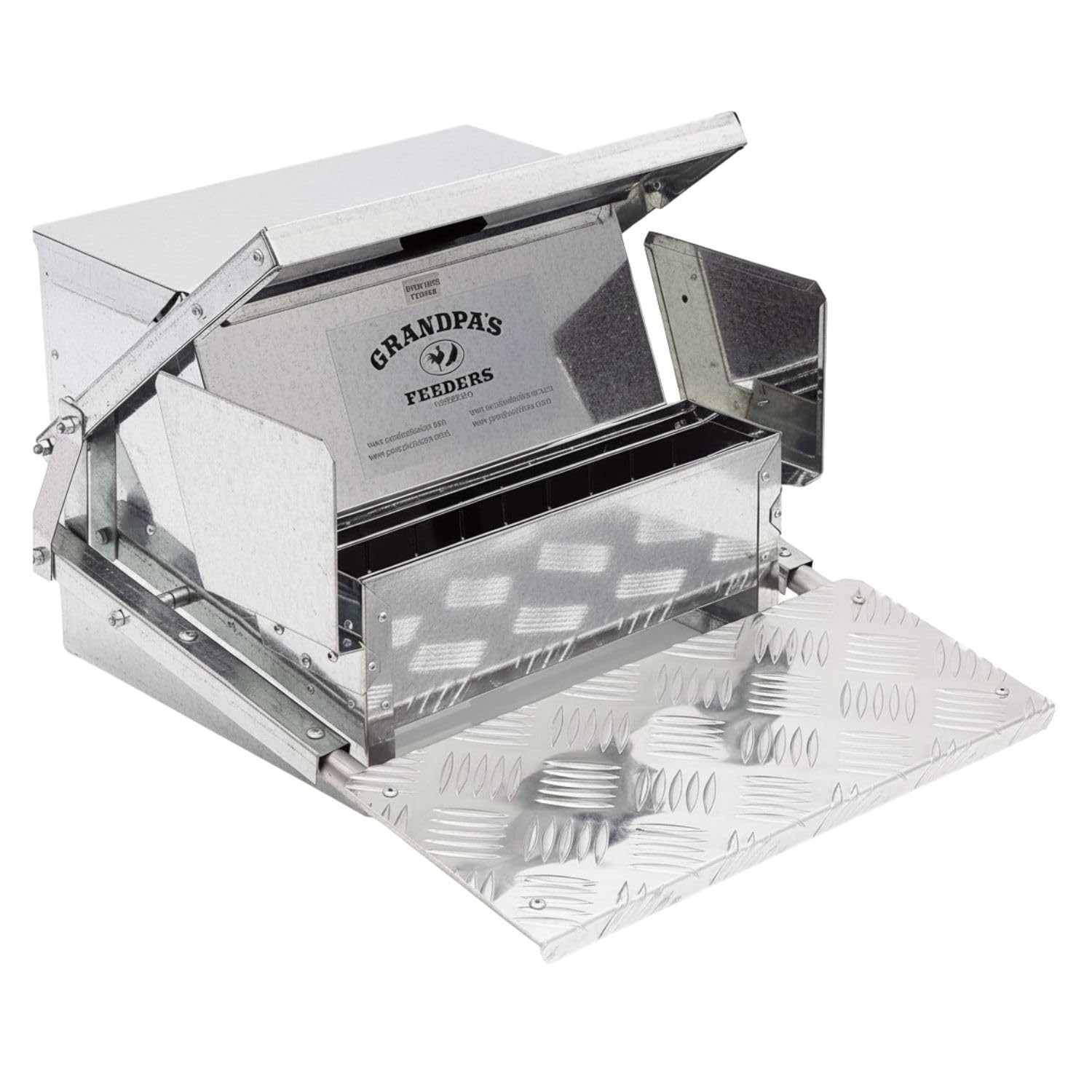 Grandpas Feeders Automatic Chicken Feeder 20 lb No Waste Rat Proof Treadle$362.99New · Last checked Nov 16, 2026View on eBay
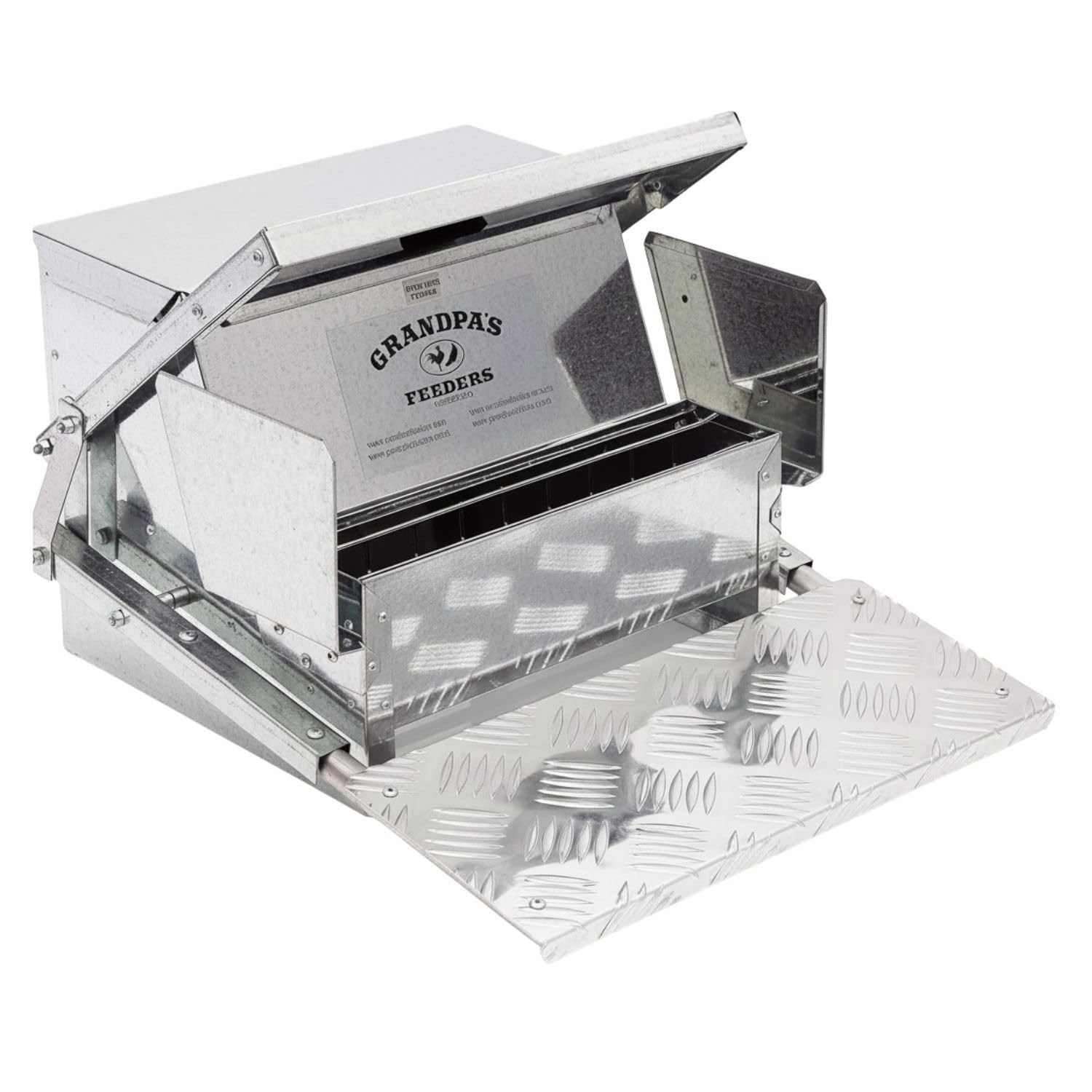 Grandpas Feeders Automatic Chicken Feeder 40 lbs No Waste Poultry Feeder, Ra...$370.40New · Last checked Nov 27, 2026View on eBay
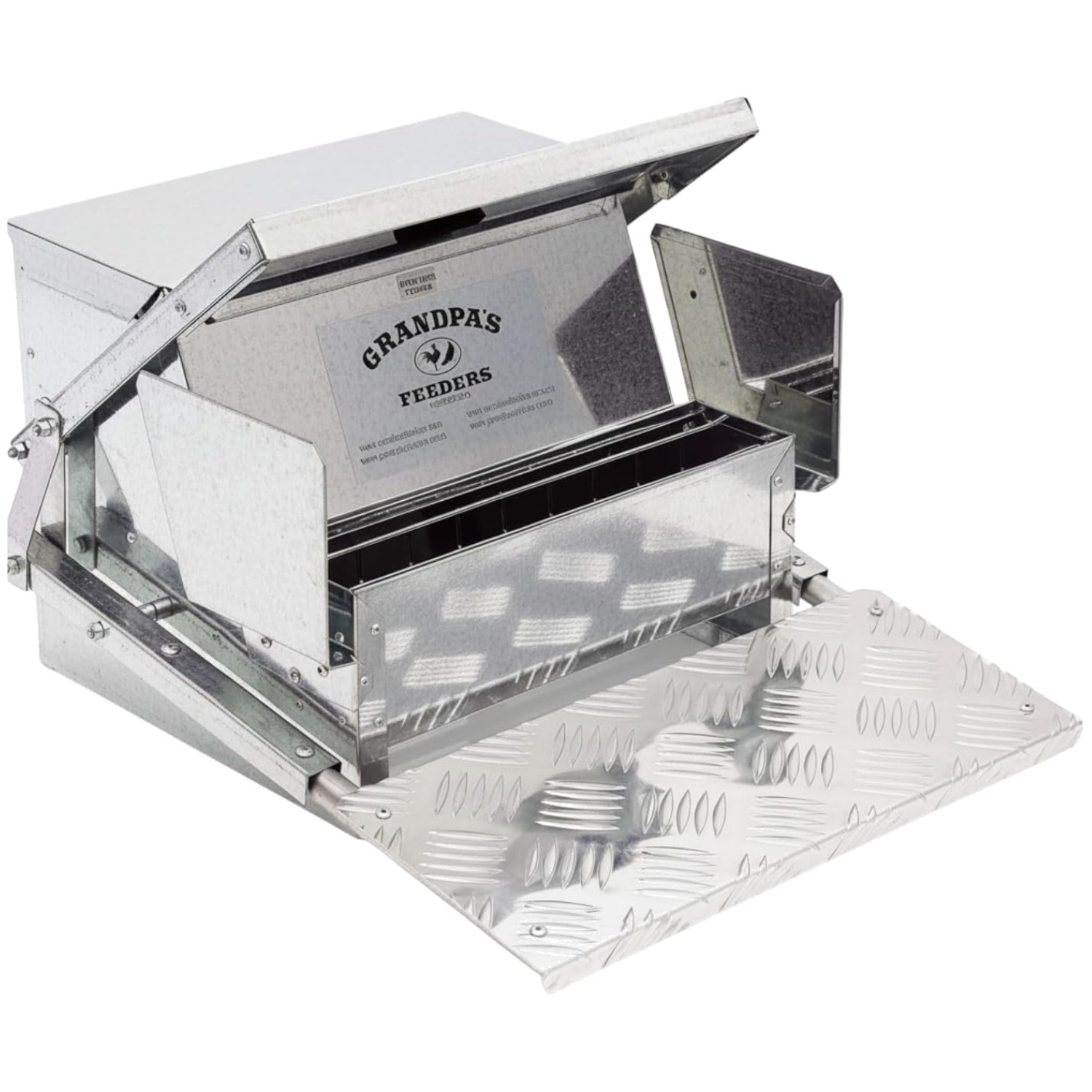 Grandpas Feeders Automatic Chicken Feeder - 40lbs Capacity$475.19New · Last checked Nov 27, 2026View on eBay
Highlights
- True timed feeders use a motorized auger or solenoid port gate driven by a battery-backed digital clock; gravity hoppers labeled 'automatic' have no timer and release feed only when birds peck.
- Port-count and capacity tiers split cleanly: 6-port box feeders suit 6–12 birds, while 25 lb (11 kg) galvanized hanging hoppers suit 10–15 birds with weekly refills; stainless 8–50 lb units scale to multi-coop use.
- Feed-accuracy depends on run-time granularity: programmable timers with 1–2 second actuation steps and 4–6 daily feed windows prevent overfeeding, while simple 12/24-hour interval timers dump a fixed ration per cycle.
- Weather durability is set by build grade — galvanized steel or aluminium hoppers with locking lids and sealed seams outlast plastic-only boxes; IP-rated battery compartments are required for reliable timer operation in rain.
Best use cases
- Best fit: small backyard flocks of 6–12 birds on a fixed morning schedule — pick a 6-port timed box feeder with a locking lid and adjustable legs to keep feed off wet ground and away from rodents.
- Best fit: 10–15 birds needing weekly refill cycles in open runs — choose a 25 lb galvanized hanging hopper with a timer gate; hang at crop height so birds eat without scratching feed into mud.
- Wrong fit: free-range or pastured setups where birds return at variable times — a timer feeder wastes feed at fixed windows; use a treadle or gravity feeder instead. Skip timer units for flocks under 4 birds where a simple gravity hopper is cheaper and equally reliable.
Buying tips
- Size capacity to flock: allow 0.25–0.3 lb (110–140 g) feed per bird per day; a 25 lb hopper feeds 10–12 birds for about a week, so match refill interval to your availability.
- Confirm the timer type: choose a digital programmable timer with battery backup and at least 4 daily feed windows; avoid mechanical interval timers that cannot align to daylight feeding schedules.
- Require a sealed motor/actuator and an IP-rated or gasketed battery compartment — unsealed timers fail within one rainy season regardless of hopper material.
- Match port size and count to bird type: 6 ports suit standard chickens; ducks and larger breeds need wider ports or open-trough gravity designs to prevent bill and head injuries.
Specs
| Timer Type | Digital programmable vs mechanical interval |
|---|---|
| Feed Mechanism | Motorized auger / solenoid gate / gravity |
| Capacity Tier | 6-port box to 25–50 lb hopper |
| Build Grade | Galvanized steel / aluminium vs plastic |
Related searches
What to check before buying
- Measure coop or run space and hanging height: hoppers need 12–18 in (30–45 cm) clearance below the feed port so birds eat comfortably without fouling the trough.
- Verify floor and climate: galvanized or stainless hoppers resist damp bedding and rain; plastic boxes crack in UV and freezing cycles, so choose metal for exposed outdoor runs.
- Confirm power: timer units run on D-cell or AA batteries — check battery count and expected runtime (typically 4–6 months) and that the compartment seals against rain.
- Check companion parts: locking lids, adjustable legs, and predator-resistant latches are separate requirements — confirm the feeder includes them rather than assuming.
FAQ
Data sources: eBay / Amazon listings and product attribute feeds. Updated Nov 28, 2026.
Some links on this page are affiliate links. If you buy after clicking one, we may earn a commission at no extra cost to you. This does not change which products appear here or their order. Affiliate disclosure.