
Photos from current listings. Actual item, color, and included accessories may vary.
Solar Chicken Door Buying Guide
A solar chicken door eliminates daily dawn/dusk manual coop duty, but success depends on matching the door's opening height to your flock size and the panel's daily yield to your latitude and shade. Cheapest kits use light-sensor-only logic and a small amorphous panel, while better units add timers, anti-pinch reversal, and a crystalline panel that keeps the battery charged through overcast weeks. Buying mistakes center on undersized openings, mounting the panel in coop shadow, and assuming a light sensor alone handles short winter days.
Median $111.99
Key takeaways
- Door logic tiers run light-sensor-only, light-sensor plus timer, and four-mode controller (sensor, timer, remote, manual) — the last is essential if you want to override dusk closure for late foraging.
- Panel wattage and cell type set autonomy: monocrystalline panels in the 3-6W range with a 2000-5200mAh lithium battery typically carry a week of cloudy weather; amorphous panels recover far slower.
- Anti-pinch reversal uses a current-limit or torque sensor in the actuator to reopen on obstruction — a key safety feature for mixed flocks with chicks or ducklings.
At a glance
- Category
- Chicken Coops & Runs
- Last updated
- Nov 28, 2026
Current offers
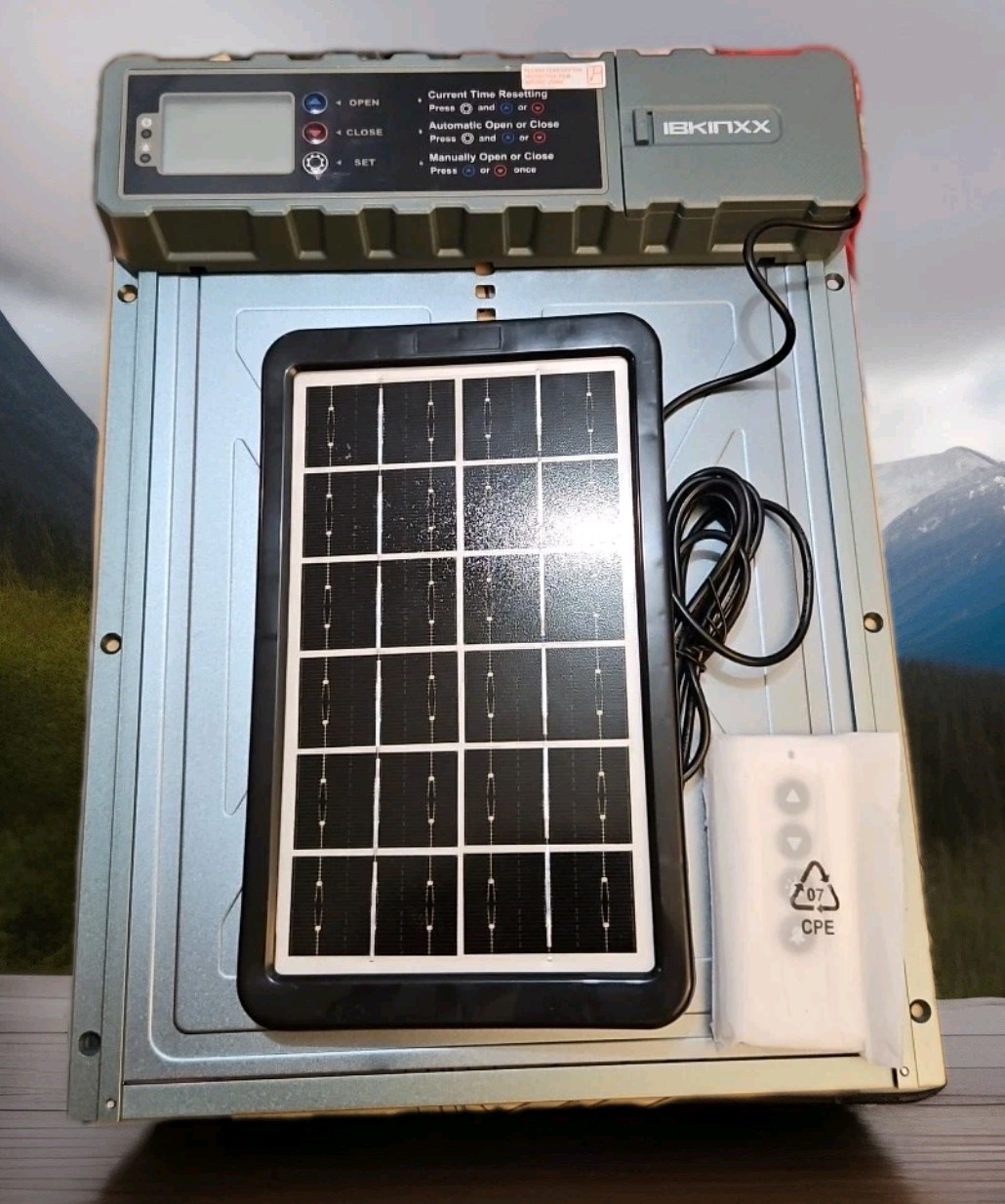 Solar Automatic Chicken Coop Door with Light Sensor Timer LCD Display$29.99View on eBay
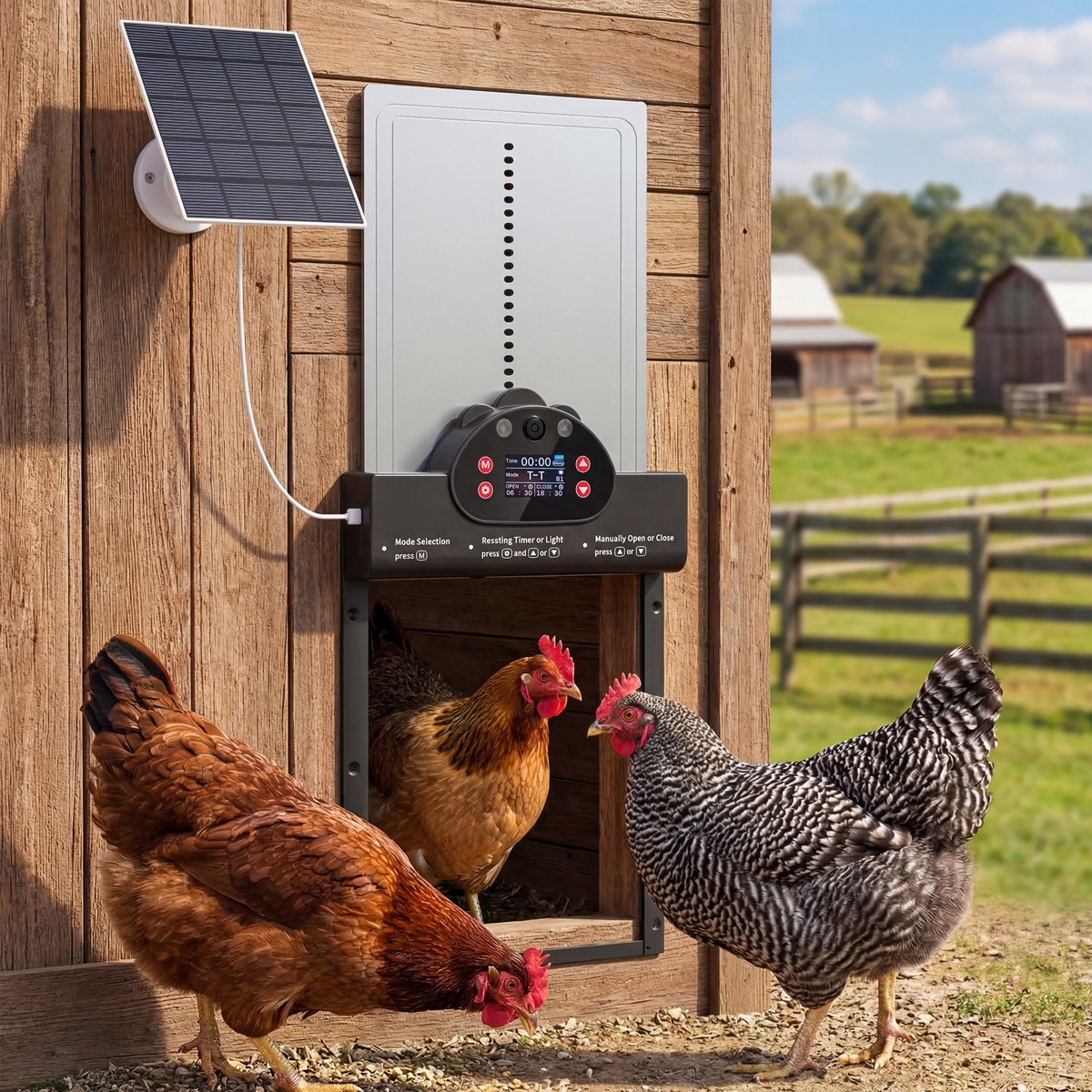 2K HD AI Camera Automatic Chicken Coop Door with APP Remote Control, WiFi Solar Powered 5200 mAh Large Battery$111.99View on Mallflare
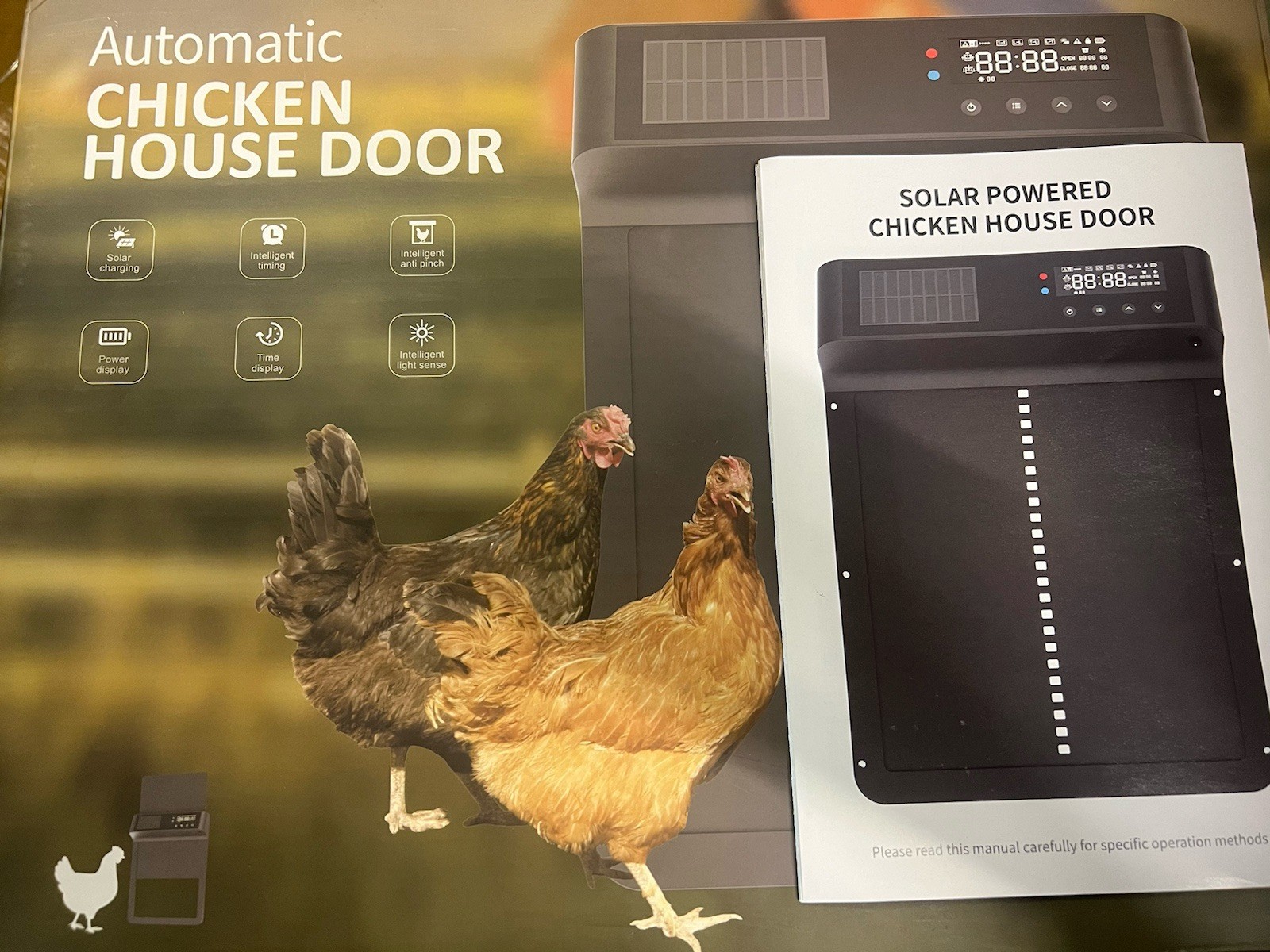 Automatic Chicken Door with Timer & Light Sensor- solar power 14.4x10.7$29.99View on eBay
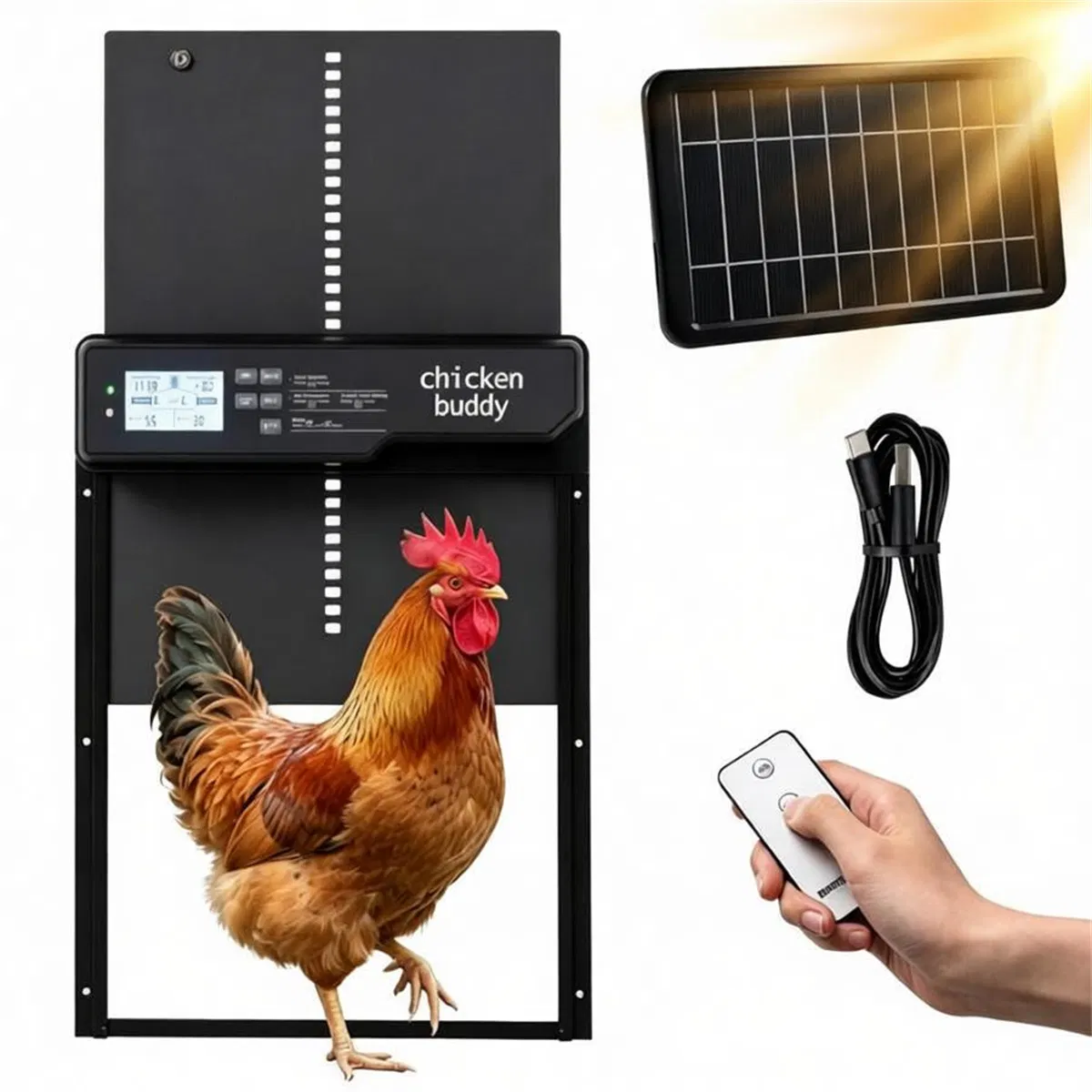 Solar Powered Automatic Chicken Coop Door with 4 Control Modes Light Sensor Timer Remote Manual, Anti-Pinch Weatherproof Aluminum Alloy Poultry Opener for Chickens Ducks Pigeons$141.99View on Mallflare
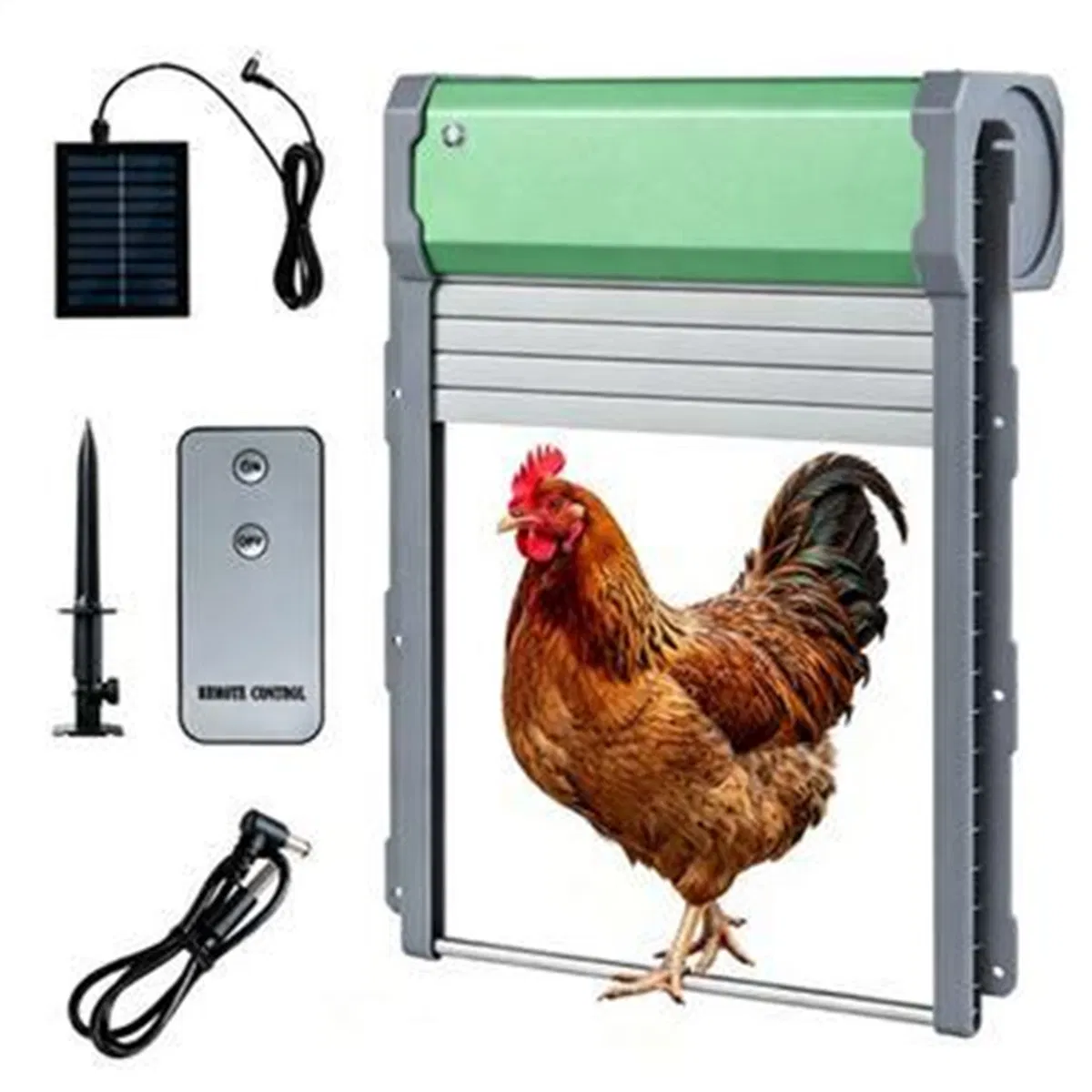 Solar Powered Automatic Chicken Coop Door with 4 Modes Light Sensor Timer Remote Control, Anti-Pinch Weatherproof Aluminum Opener for Chickens Ducks Rabbits Poultry$141.99View on Mallflare
Highlights
- Door logic tiers run light-sensor-only, light-sensor plus timer, and four-mode controller (sensor, timer, remote, manual) — the last is essential if you want to override dusk closure for late foraging.
- Panel wattage and cell type set autonomy: monocrystalline panels in the 3-6W range with a 2000-5200mAh lithium battery typically carry a week of cloudy weather; amorphous panels recover far slower.
- Anti-pinch reversal uses a current-limit or torque sensor in the actuator to reopen on obstruction — a key safety feature for mixed flocks with chicks or ducklings.
- Track and door construction separates durability grades: aluminum alloy sliding panels with sealed worm-gear actuators outlast plastic guillotine doors and exposed rack-and-pinion drives in freeze-thaw climates.
Best use cases
- Best fit: A backyard flock of 6-12 standard hens in a fixed coop with unshaded south/east roof — choose a solar kit with timer mode and a crystalline panel for reliable winter closure.
- Best fit: Off-grid or remote coops with no AC power — pick a self-contained solar door with an integrated lithium battery and LCD so you can confirm charge state without mains wiring.
- Wrong fit: A shaded coop under dense tree canopy — a solar door will brown out; use a mains-powered or larger-panel kit instead of expecting the included panel to recover.
- Wrong fit: A flock of heavy breeds (Brahma, Jersey Giant) or broad ducks — skip 12-inch openings and select a unit with a 14-inch-plus clear opening or a separate pop-door frame.
Buying tips
- Prioritize a timer mode over light-sensor-only logic if you live above 40° latitude, where winter dusk arrives before hens finish ranging.
- Choose monocrystalline panels over amorphous when the coop roof gets partial shade; the watt-per-area advantage shortens recharge time on gray days.
- Inspect actuator type — sealed worm-gear or screw-drive units resist bedding jam and ice better than exposed rack-and-pinion tracks.
- Avoid mounting the panel on the coop wall itself; run the included cable to a separate roof or fence-post mount that sees direct sun for at least six hours.
Specs
| Door Logic | Light sensor / timer / 4-mode remote |
|---|---|
| Panel Type | Monocrystalline vs amorphous 3-6W |
| Battery Autonomy | 2000-5200mAh lithium, 5-7 cloudy days |
| Clear Opening | 12-14 in height, aluminum vs plastic |
Related searches
What to check before buying
- Measure your existing pop-door or coop wall cutout: most solar kits need a flat mounting face of roughly 14x12 inches around the opening.
- Confirm the panel cable length reaches your sunniest mount point — typical leads run 6-10 feet, so plan a post or roof location before buying.
- Check the battery chemistry and capacity (lithium vs sealed lead-acid) for cold-climate operation; lithium holds charge better below freezing.
- Verify the door ships with a mounting template and all fasteners for wood or metal siding, since retrofits often need shimming on uneven coops.
FAQ
Data sources: eBay / Amazon listings and product attribute feeds. Updated Nov 28, 2026.
Some links on this page are affiliate links. If you buy after clicking one, we may earn a commission at no extra cost to you. This does not change which products appear here or their order. Affiliate disclosure.