
Photos from current listings. Actual item, color, and included accessories may vary.
Solar Chicken Coop Door Buying Guide
A solar chicken coop door is a self-powered automatic opener that uses a photovoltaic panel and battery to raise and lower a sliding door via light sensor or timer, eliminating manual dawn/dusk trips. The core trade-off is between thin plastic doors with weak gearmotors and aluminum-framed doors with anti-pinch sensing and adequate panel wattage for winter light. Buy aluminum with a 5W+ panel and anti-pinch for predator pressure; skip bare plastic units with 1-2W panels unless the coop is small and shaded only briefly.
Median $126.99
Key takeaways
- Door material determines predator resistance: 1.5-2mm aluminum alloy resists raccoon and fox clawing, while 2-3mm ABS plastic can crack at hinge points within a season.
- Panel wattage and battery capacity set winter reliability: 5W-10W panels with 2000-5200mAh Li-ion keep doors cycling through 2-3 overcast days, while 1-2W/1200mAh kits stall after one gray day.
- Control architecture splits into light-sensor/timer units (no WiFi, set-and-forget) and WiFi/app models with 2K cameras that need 2.4GHz coverage at the coop for remote scheduling.
At a glance
- Category
- Chicken Coops & Runs
- Last updated
- Nov 28, 2026
Current offers
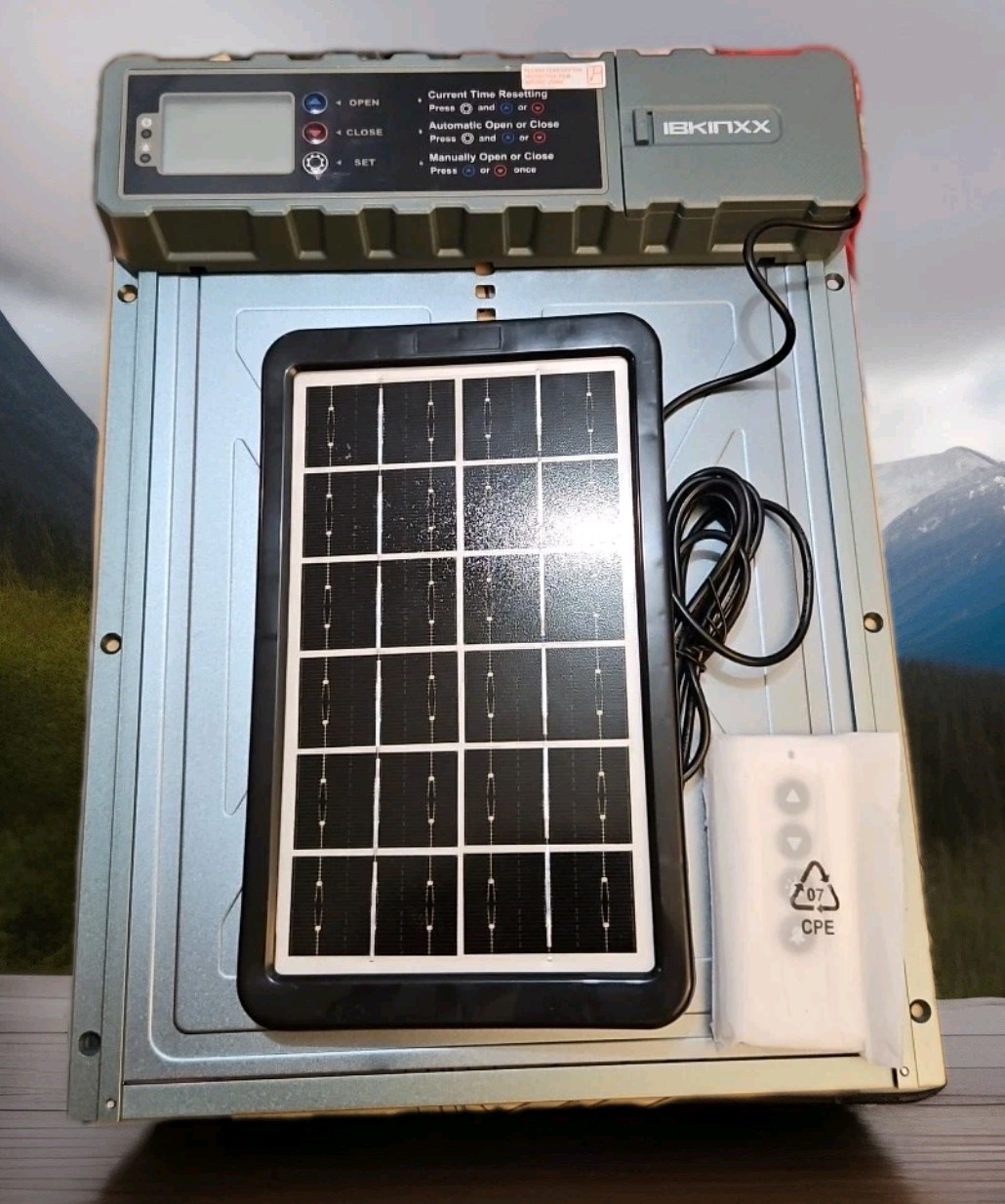 Solar Automatic Chicken Coop Door with Light Sensor Timer LCD Display$29.99View on eBay
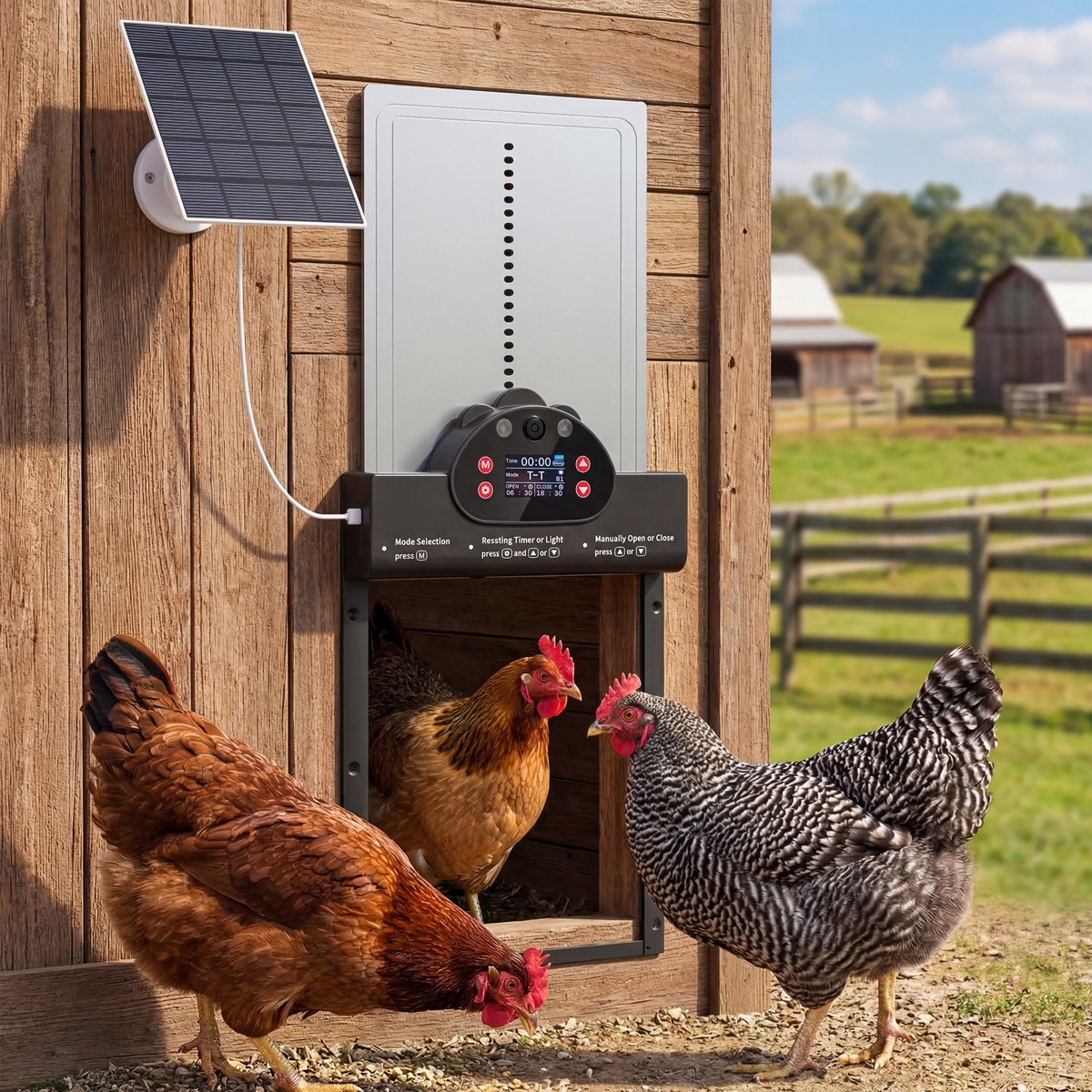 2K HD AI Camera Automatic Chicken Coop Door with APP Remote Control, WiFi Solar Powered 5200 mAh Large Battery$111.99View on Mallflare
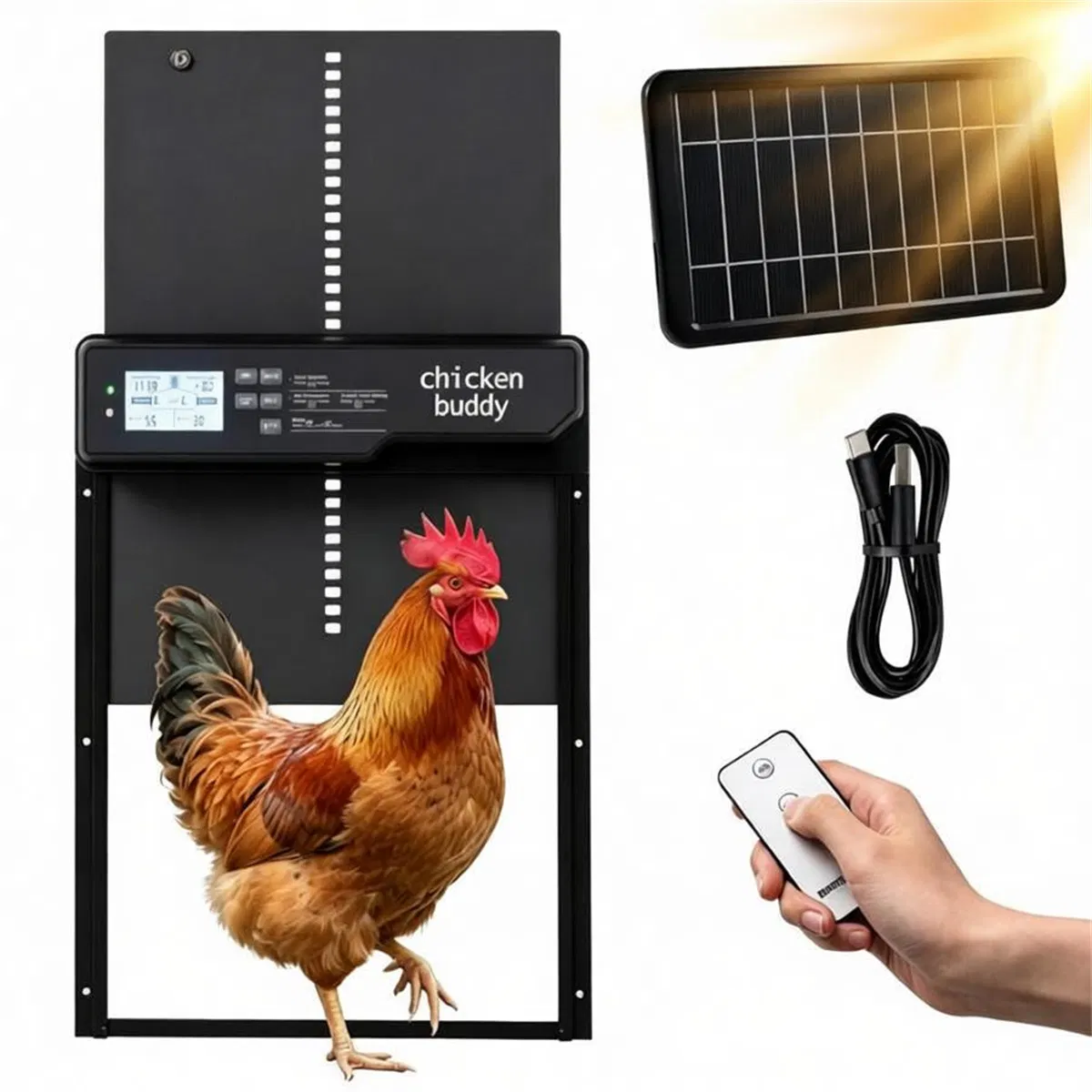 Solar Powered Automatic Chicken Coop Door with 4 Control Modes Light Sensor Timer Remote Manual, Anti-Pinch Weatherproof Aluminum Alloy Poultry Opener for Chickens Ducks Pigeons$141.99View on Mallflare
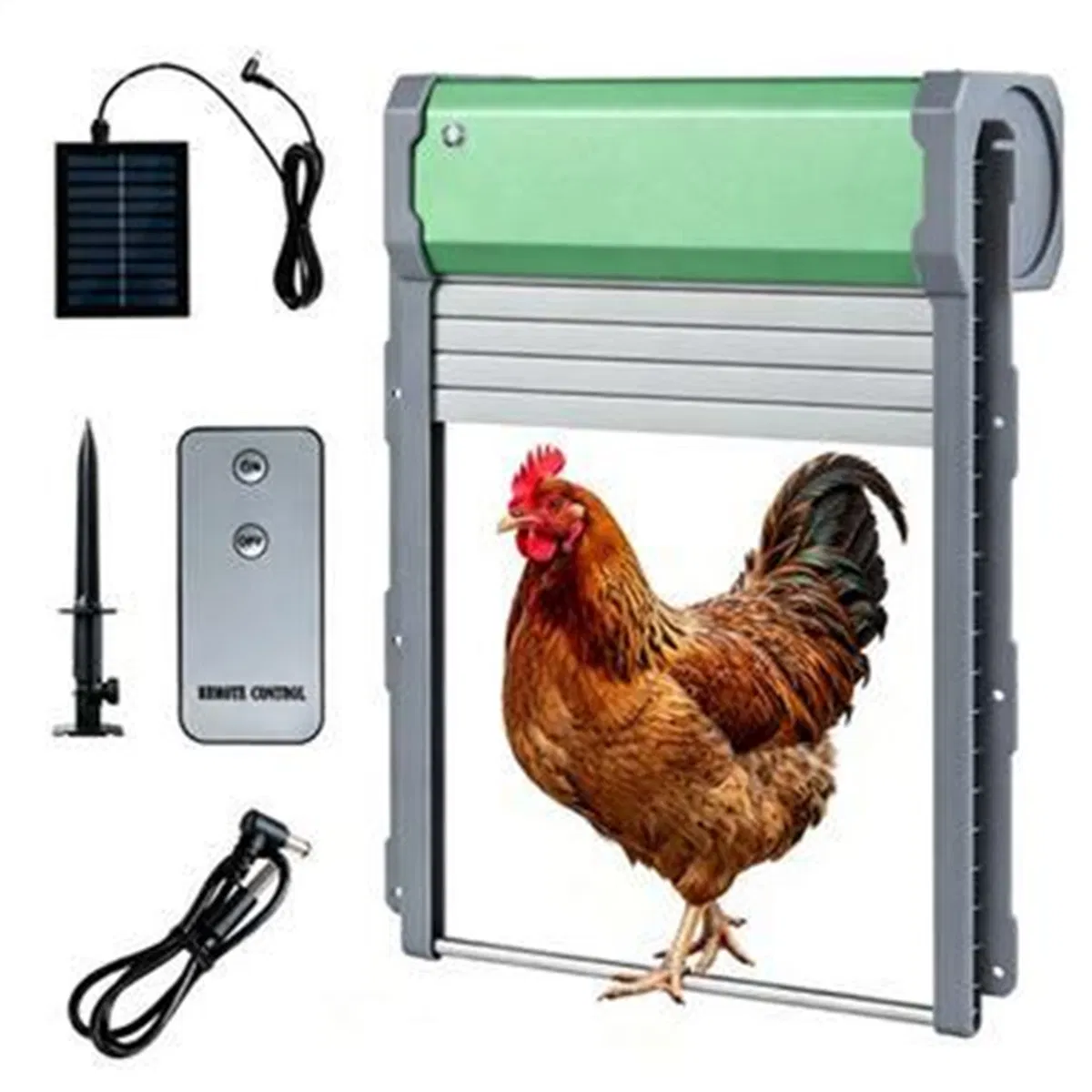 Solar Powered Automatic Chicken Coop Door with 4 Modes Light Sensor Timer Remote Control, Anti-Pinch Weatherproof Aluminum Opener for Chickens Ducks Rabbits Poultry$141.99View on Mallflare
Highlights
- Door material determines predator resistance: 1.5-2mm aluminum alloy resists raccoon and fox clawing, while 2-3mm ABS plastic can crack at hinge points within a season.
- Panel wattage and battery capacity set winter reliability: 5W-10W panels with 2000-5200mAh Li-ion keep doors cycling through 2-3 overcast days, while 1-2W/1200mAh kits stall after one gray day.
- Control architecture splits into light-sensor/timer units (no WiFi, set-and-forget) and WiFi/app models with 2K cameras that need 2.4GHz coverage at the coop for remote scheduling.
- Anti-pinch safety uses current-limit sensing or a pressure bar to reverse the door on obstruction; this matters most for flock owners with chicks or multiple birds crowding the pop hole.
Best use cases
- Pick a light-sensor + timer aluminum door for a standard backyard flock of 4-12 hens where the coop sits in open sun and you want zero app dependency.
- Choose a WiFi/app door with camera only if 2.4GHz signal reaches the coop and you need remote door status or predator footage; skip it in dead zones.
- Avoid solar doors entirely for coops under heavy tree canopy or in deep-winter latitudes with under 4 hours of direct sun; a mains-powered or manual door is the correct fit there.
- For ducks or rabbits, confirm the door height clears their posture and the anti-pinch threshold is low enough for smaller body mass before buying.
Buying tips
- Match panel wattage to latitude: 5W minimum for temperate zones, 10W for high-latitude or heavily shaded runs, since winter production drops 50-70% versus summer.
- Measure your pop hole before ordering: door frames typically require a 30x40cm or 25x30cm opening, and the unit mounts on the exterior face, so frame depth and wall thickness must clear the slider track.
- Battery capacity should be at least 2000mAh Li-ion for 7-10 days of autonomy; 5200mAh units suit cold climates where lithium loses 20-30% capacity below freezing.
- Choose 2.4GHz WiFi (not 5GHz-only) for app models; the camera and door controller almost universally use 2.4GHz for range through coop walls.
Specs
| Door Material | Aluminum alloy vs ABS plastic |
|---|---|
| Solar Panel | 1-2W basic / 5-10W reliable |
| Battery Reserve | 1200-2000mAh vs 5200mAh cold |
| Control Modes | Light sensor + timer + remote/app |
Related searches
What to check before buying
- Measure the pop hole opening and exterior wall face; confirm the door's mounting plate and slider track fit flat without hitting trim or siding.
- Verify solar panel cable length reaches from the coop roof to the controller; most kits ship 3-5m, so a large run may need an extension.
- Check that the coop receives at least 4-5 hours of direct sun on the panel location, or plan a 10W panel and larger battery.
- Confirm the door's anti-pinch sensitivity adjusts low enough for your smallest bird, and that the controller is rated for your local temperature range.
FAQ
Data sources: eBay / Amazon listings and product attribute feeds. Updated Nov 28, 2026.
Some links on this page are affiliate links. If you buy after clicking one, we may earn a commission at no extra cost to you. This does not change which products appear here or their order. Affiliate disclosure.