
Photos from current listings. Actual item, color, and included accessories may vary.
Solar Automatic Chicken Coop Door Buying Guide
A solar automatic coop door solves the twice-daily chore of opening and closing the pop hole, but performance hinges on door mechanism, sensor logic, and battery reserve rather than panel wattage alone. Shoppers often buy by panel size and overlook opening height, anti-pinch safety, and whether the controller supports manual override for power outages.
Median $126.99
Key takeaways
- Lifting doors use a motorized cord or rack to raise a panel vertically, while sliding doors run on side tracks — lifting types tolerate uneven frames better.
- Anti-pinch reversal uses current sensing or a limit switch to stop and reverse the door when obstruction is detected, preventing injury to birds and poultry.
- Light-sensor mode opens at dawn and closes at dusk; timer mode overrides seasonal daylight shifts, so dual-mode controllers suit year-round flocks.
At a glance
- Category
- Chicken Coops & Runs
- Last updated
- Nov 28, 2026
Current offers
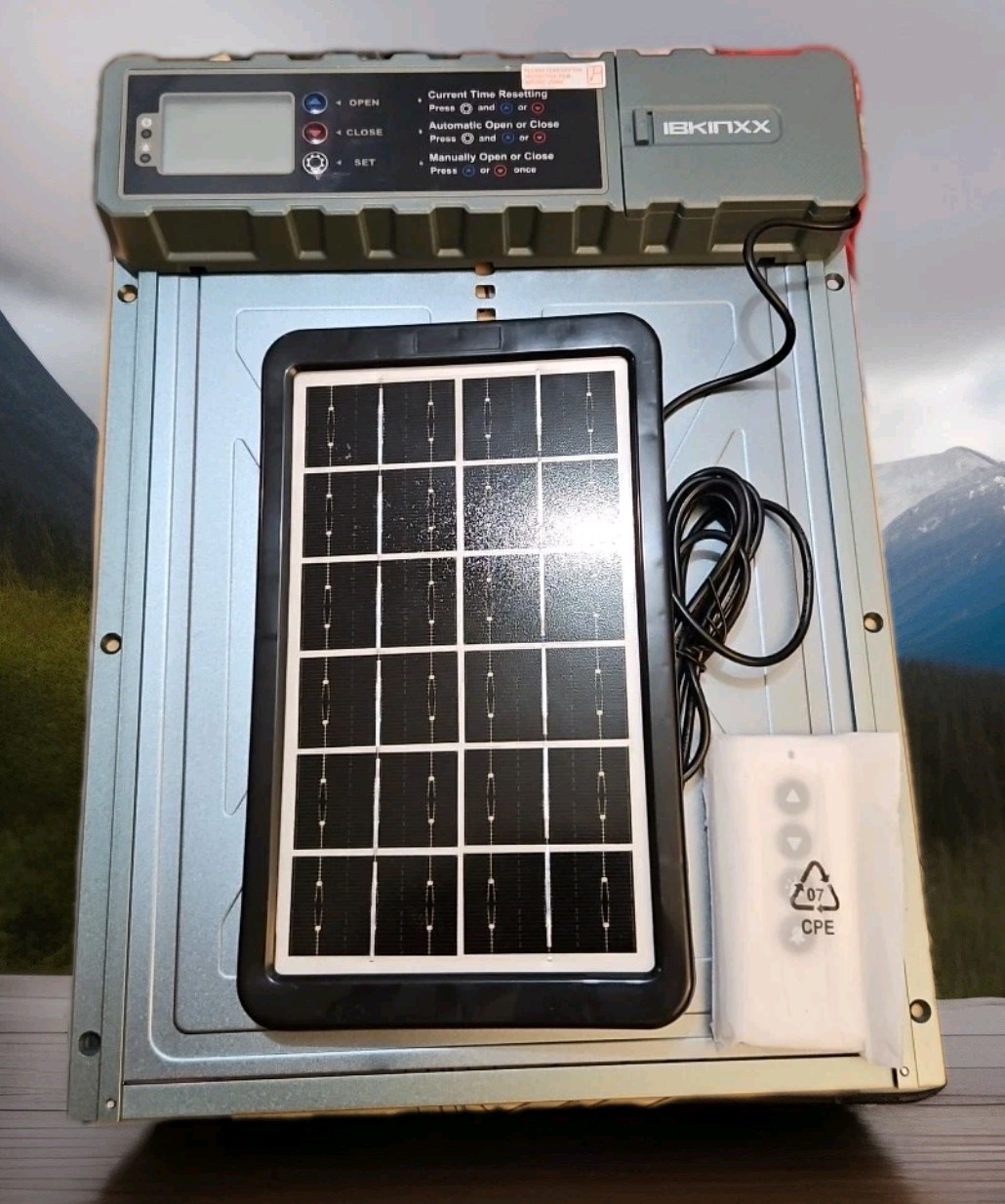 Solar Automatic Chicken Coop Door with Light Sensor Timer LCD Display$29.99View on eBay
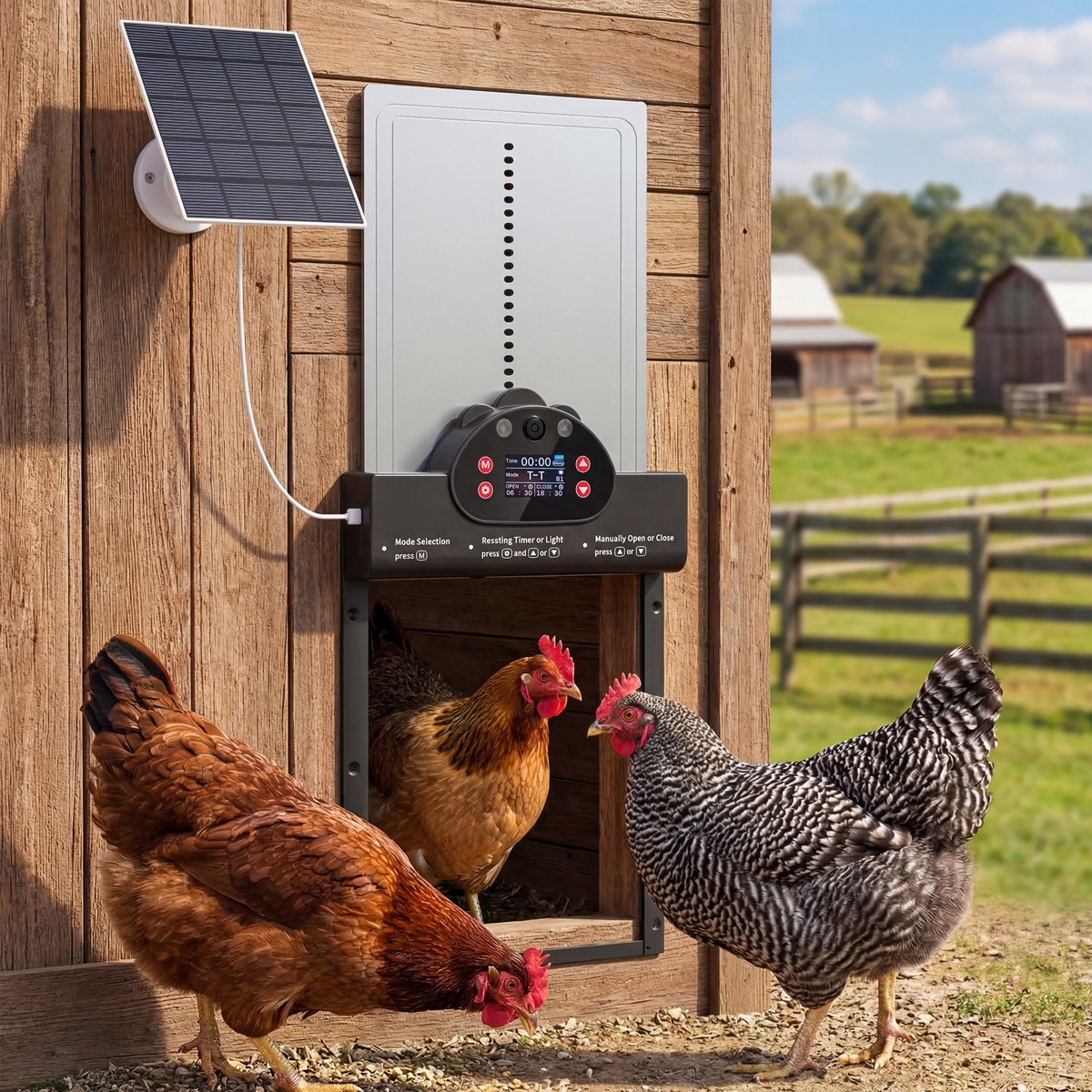 2K HD AI Camera Automatic Chicken Coop Door with APP Remote Control, WiFi Solar Powered 5200 mAh Large Battery$111.99View on Mallflare
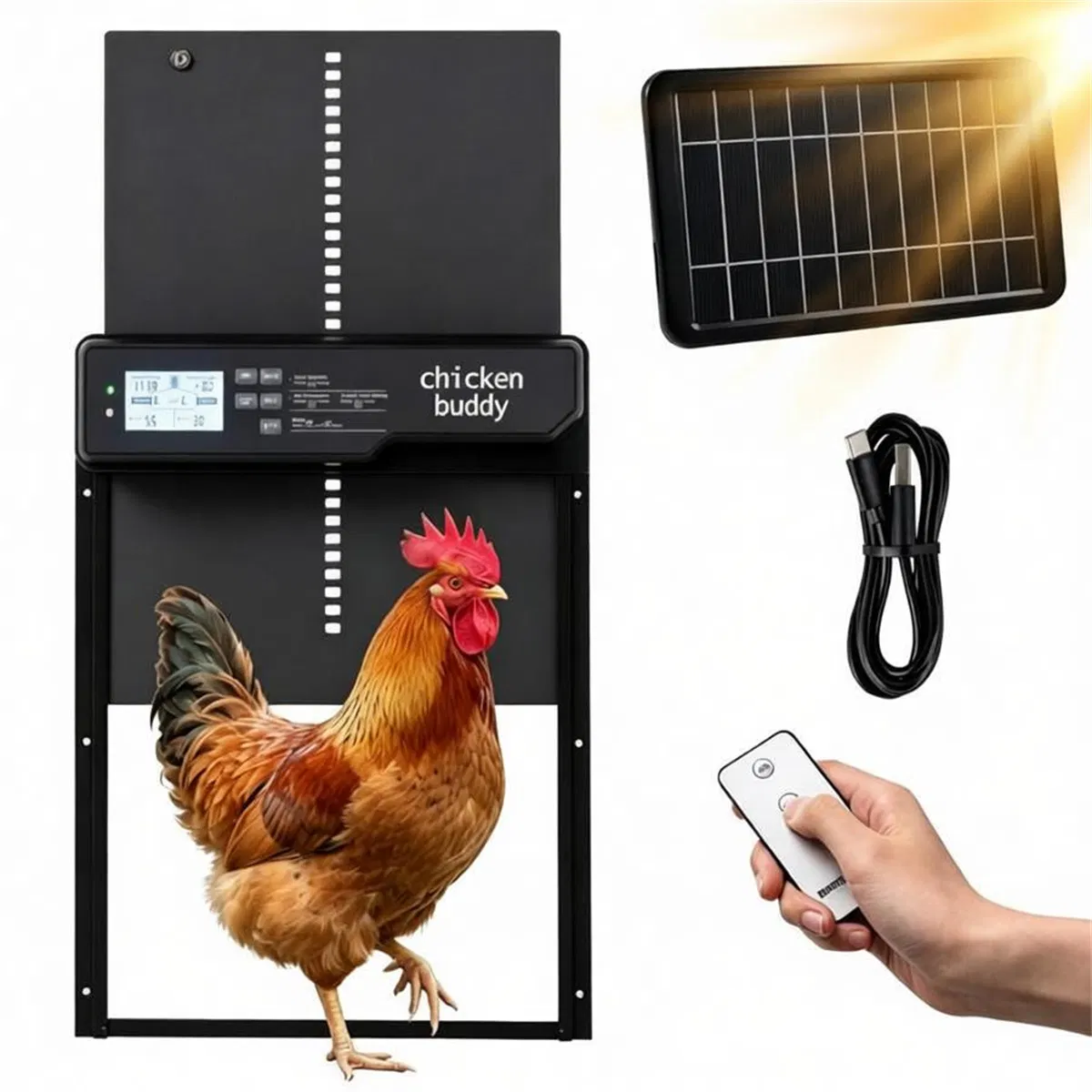 Solar Powered Automatic Chicken Coop Door with 4 Control Modes Light Sensor Timer Remote Manual, Anti-Pinch Weatherproof Aluminum Alloy Poultry Opener for Chickens Ducks Pigeons$141.99View on Mallflare
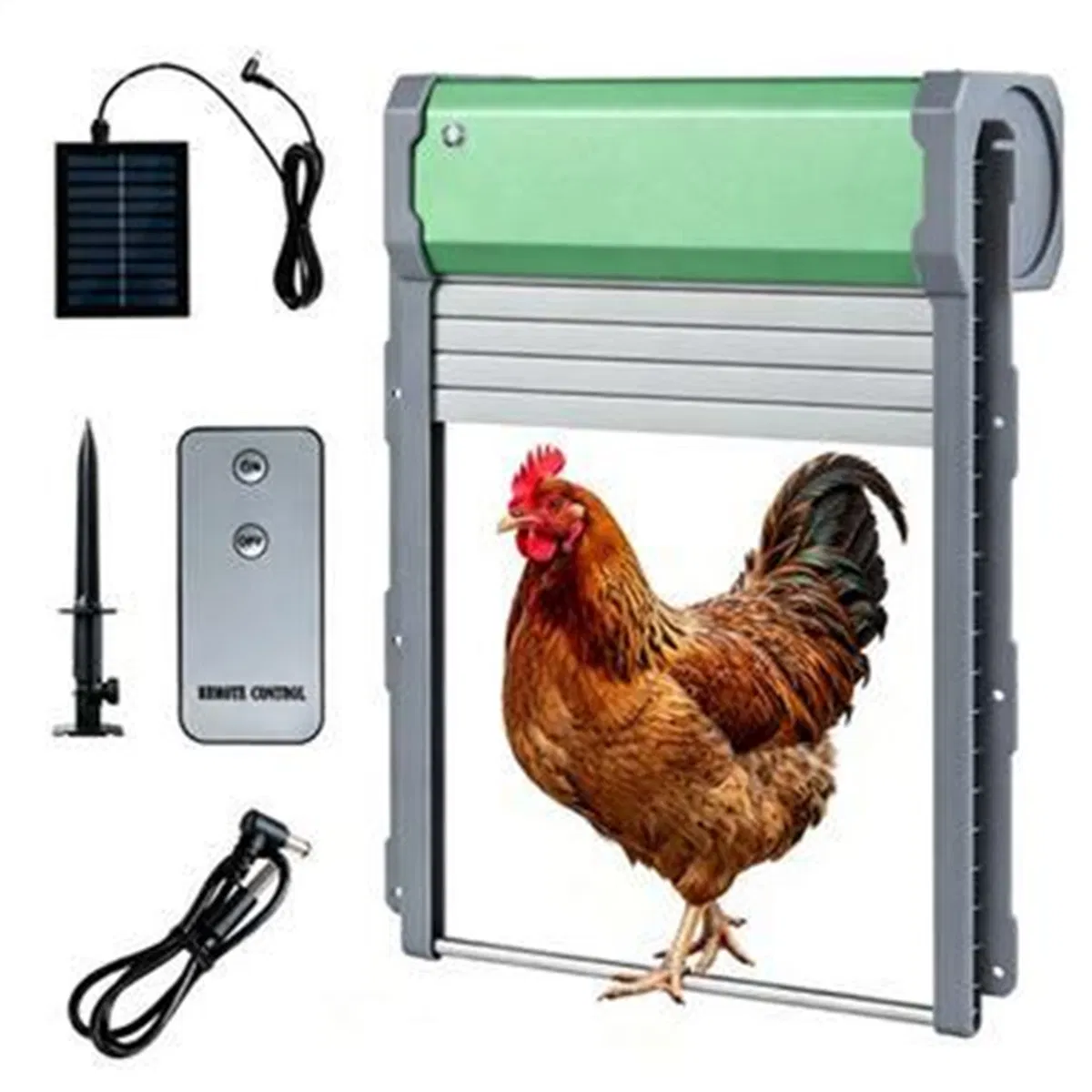 Solar Powered Automatic Chicken Coop Door with 4 Modes Light Sensor Timer Remote Control, Anti-Pinch Weatherproof Aluminum Opener for Chickens Ducks Rabbits Poultry$141.99View on Mallflare
Highlights
- Lifting doors use a motorized cord or rack to raise a panel vertically, while sliding doors run on side tracks — lifting types tolerate uneven frames better.
- Anti-pinch reversal uses current sensing or a limit switch to stop and reverse the door when obstruction is detected, preventing injury to birds and poultry.
- Light-sensor mode opens at dawn and closes at dusk; timer mode overrides seasonal daylight shifts, so dual-mode controllers suit year-round flocks.
- Aluminum alloy housings and IP-rated control boxes resist rain and UV, while ABS plastic units degrade faster in direct sun and freeze-thaw cycles.
Best use cases
- Best fit: a backyard flock with a standard 12x12 in pop hole and reliable morning daylight — choose a light-sensor aluminum lifting door for hands-off daily operation.
- Best fit: keepers who leave before sunrise or return after dark — pick a timer-plus-light-sensor model so opening and closing match your schedule, not just the sun.
- Wrong fit: coops with warped or oversized openings where a fixed-track sliding door cannot seal — measure the frame and choose a lifting door with adjustable cord travel instead.
- Skip the camera/WiFi tier unless you need remote monitoring; basic solar doors without app control are simpler, cheaper, and less prone to firmware or signal issues.
Buying tips
- Measure the pop-hole width and height before ordering; most doors cover a 10–12 in opening, and oversized doors need a frame reducer or a larger model.
- Prioritize anti-pinch reversal and a manual release cord — these let you free a trapped bird or open the door during a battery or motor failure.
- Choose a solar panel rated for daily recharge in your latitude; a 5–10 W panel with a 2000–5200 mAh battery covers most coops, but shaded coops need a larger panel.
- Inspect the door panel material: powder-coated aluminum resists rust and gnawing, while thin ABS or PVC panels warp and crack within a few seasons.
Specs
| Door Mechanism | Lifting cord vs sliding track |
|---|---|
| Control Modes | Light sensor / timer / remote / manual |
| Battery + Panel | 2000–5200 mAh; 5–10 W solar |
| Housing Material | Powder-coated aluminum vs ABS |
Related searches
What to check before buying
- Measure the coop wall thickness and pop-hole dimensions — the door frame must mount flush and the panel must clear the opening without rubbing.
- Confirm the solar panel cable reaches a spot with 4–6 hours of direct sun; shaded mounts need a longer cable or a larger panel to keep the battery charged.
- Check the controller's IP rating and mounting location — it must sit above splash height and away from direct rain, even if the housing is weatherproof.
- Verify the door includes a manual override or release cord and that the battery is user-replaceable, since sealed batteries shorten the product's usable life.
FAQ
Data sources: eBay / Amazon listings and product attribute feeds. Updated Nov 28, 2026.
Some links on this page are affiliate links. If you buy after clicking one, we may earn a commission at no extra cost to you. This does not change which products appear here or their order. Affiliate disclosure.