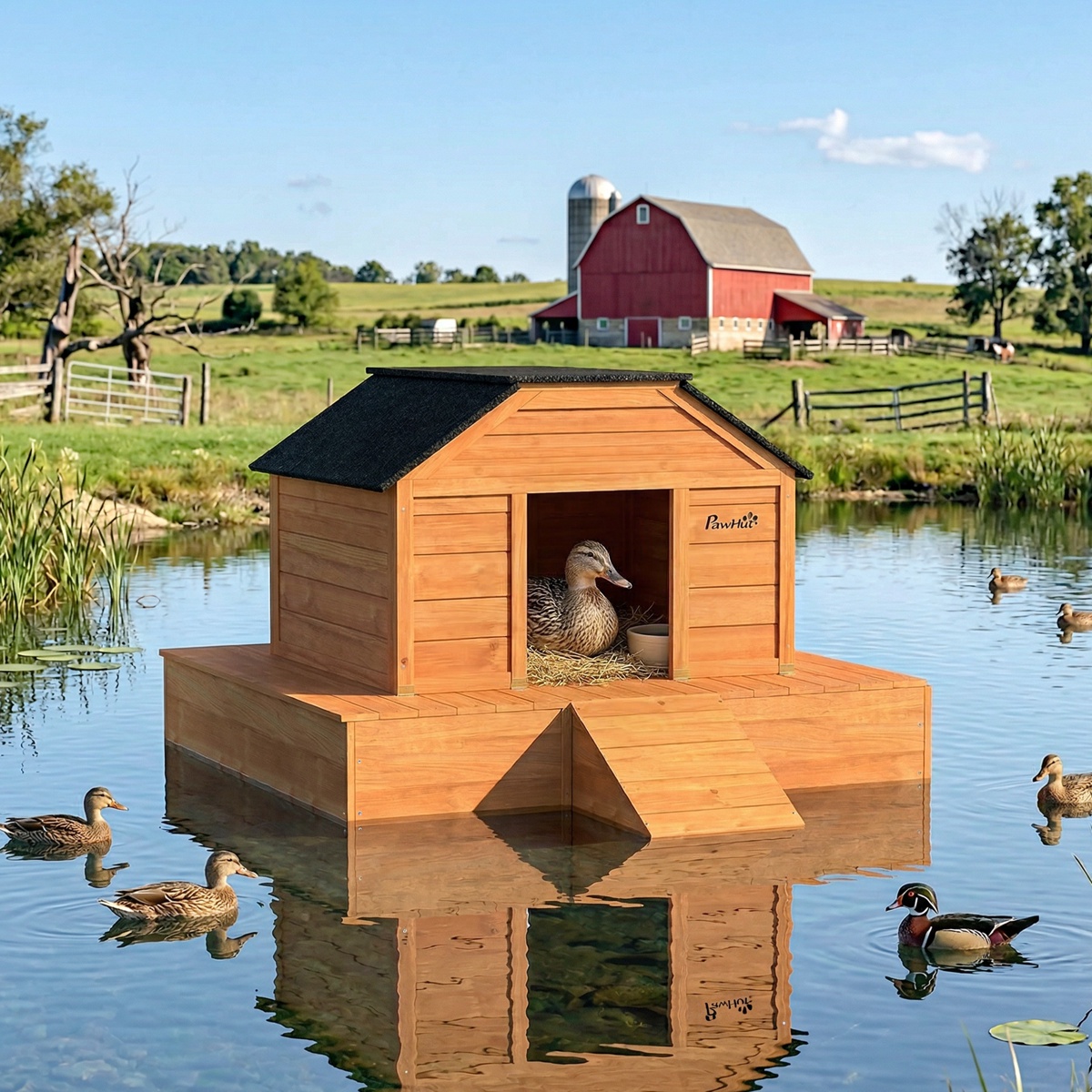

Photos from current listings. Actual item, color, and included accessories may vary.
Small Duck Coop Buying Guide
A small duck coop is a dedicated night shelter and nesting structure sized for 2–6 ducks, distinguished from chicken coops by wider floor area, ground-level nesting, and ventilation placed above head height to manage high moisture. The core trade-off is predator-grade construction and real ventilation versus thin, prefab 'duck-ready' boxes that rust or suffocate birds. Buy any coop whose footprint meets 4 sq ft per duck of interior floor, uses 14-gauge or thicker welded wire, and has a full roof plus high-and-low vents—skip anything with chicken-style elevated nest boxes or 1-inch mesh.
Key takeaways
- Ducks need 4–6 sq ft of interior floor per bird versus 2–3 sq ft for chickens; a 'small' duck coop should target at least 20–24 sq ft of covered floor for 4–6 ducks.
- Duck droppings are ~75–80% water, so coop flooring must be sealed plywood, concrete, or hard plastic—not bare OSB or particleboard, which swells and delaminates within a season.
- Ground-level nesting is mandatory: ducks cannot grip ramps or fly to elevated nest boxes, so any coop with chicken-style raised nest banks is a wrong fit.
At a glance
- Category
- Chicken Coops & Runs
- Last updated
- Nov 28, 2026
Current offers
Highlights
- Ducks need 4–6 sq ft of interior floor per bird versus 2–3 sq ft for chickens; a 'small' duck coop should target at least 20–24 sq ft of covered floor for 4–6 ducks.
- Duck droppings are ~75–80% water, so coop flooring must be sealed plywood, concrete, or hard plastic—not bare OSB or particleboard, which swells and delaminates within a season.
- Ground-level nesting is mandatory: ducks cannot grip ramps or fly to elevated nest boxes, so any coop with chicken-style raised nest banks is a wrong fit.
- Welded galvanized wire of 14-gauge or heavier with 1/2-inch mesh is the predator baseline; 1-inch chicken wire stops nothing larger than a raccoon's paw and fails against mink, fox, and hawks.
Best use cases
- Best fit: a stationary 4x6 ft walk-in coop with sealed plywood floor, high gable vents, and 1/2-inch welded wire for 4–6 ducks in a permanent backyard setup.
- Best fit: a raised hutch-style coop with a fully enclosed, lockable ground-level run for 2–4 call or runner ducks where the owner wants a movable or compact footprint.
- Wrong fit: any coop marketed for chickens with elevated nest boxes, ramps, or 2–3 sq ft per bird density—ducks will injure legs on ramps and foul elevated nests.
- Wrong fit: thin prefab 'duck houses' under 1-inch mesh with no floor and only a single high vent—these are summer shade shelters, not predator-safe year-round housing.
Buying tips
- Size by floor area, not bird count claims: multiply your duck count by 4 sq ft minimum (6 sq ft if confined 24/7) and require that much interior, not run, floor.
- Spec 1/2-inch welded galvanized wire at 14-gauge or thicker on every opening, and add a 12–18 inch buried apron or hardware-cloth skirt against digging predators.
- Require cross-ventilation with vents both above head height and at floor level; ducks exhale heavy moisture, and a single vent guarantees condensation, frostbite in winter, and respiratory disease.
- Choose a coop with a solid roof and sealed floor; open-bottom coops on soil become mud pits, and flat roofs without overhang let rain into vents.
Specs
| Floor Area | 4-6 sq ft per duck |
|---|---|
| Mesh Grade | 1/2 in welded, 14-ga+ |
| Nest Placement | Ground level only |
| Ventilation | High + low cross-vents |
Related searches
What to check before buying
- Measure your footprint: for 4 ducks you need a coop at least 4x5 ft (20 sq ft) interior plus an attached run of 10 sq ft per duck; confirm gate width clears a wheelbarrow for bedding changes.
- Check floor and bedding: sealed plywood, concrete, or hard plastic only—plan for 4–6 inches of straw or pine shavings that must stay dry, so the coop needs a raised sill or curb.
- Confirm climate fit: in freezing zones, choose insulation or double-wall construction and place vents above bird height to avoid drafts; in hot climates, prioritize shaded roof area and maximum high venting.
- Verify hardware and lock standard: two-step locks or carabiners on every door and a raccoon-proof latch; raccoons open simple hooks, and mink pass through 1-inch gaps.
FAQ
Data sources: eBay / Amazon listings and product attribute feeds. Updated Nov 28, 2026.
Some links on this page are affiliate links. If you buy after clicking one, we may earn a commission at no extra cost to you. This does not change which products appear here or their order. Affiliate disclosure.