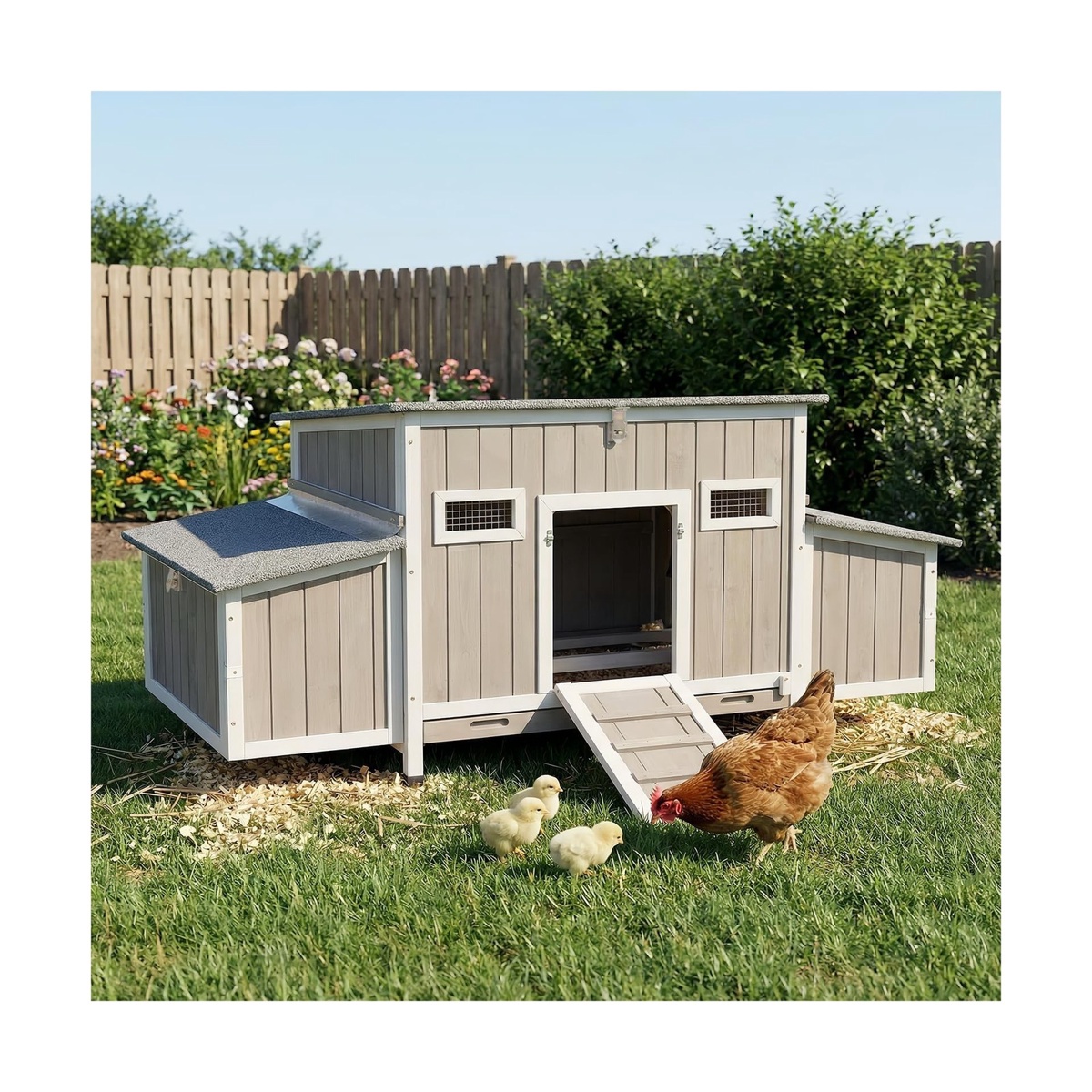

Photos from current listings. Actual item, color, and included accessories may vary.
Predator Proof Chicken Coop Buying Guide
A predator-proof chicken coop is defined by hardware cloth and locking latches, not by wire gauge alone. The core trade-off is welded ½-inch mesh with a secure roof versus flimsy hexagonal netting that raccoons and diggers defeat. Buy the welded-mesh, dig-skirted, lock-latched tier; skip anything relying on chicken wire or friction-fit panels.
Mesh Type:½-inch welded hardware cloth vs hex nettingMesh Gauge:19-gauge or thicker (predator grade)Perimeter Defense:12-18 in buried apron or mesh floorLatch Type:Spring-loaded / carabiner vs hook-and-eye
Typical price range$205.19
Key takeaways
- Hardware cloth (welded ½-inch or 1-inch mesh) stops raccoons and weasels; standard chicken wire (hexagonal 1-2 inch) fails against both.
- Dig-proof perimeter requires a 12-18 inch buried apron or floor mesh; surface-set coops remain vulnerable to fox and dog excavation.
- Predator-proof latches are spring-loaded or two-action carabiners; simple hook-and-eye or slide bolts are opened by raccoons.
At a glance
- Category
- Chicken Coops & Runs
- Last updated
- Nov 28, 2026
Current offers
Highlights
- Hardware cloth (welded ½-inch or 1-inch mesh) stops raccoons and weasels; standard chicken wire (hexagonal 1-2 inch) fails against both.
- Dig-proof perimeter requires a 12-18 inch buried apron or floor mesh; surface-set coops remain vulnerable to fox and dog excavation.
- Predator-proof latches are spring-loaded or two-action carabiners; simple hook-and-eye or slide bolts are opened by raccoons.
- Ventilation openings must be covered with ½-inch hardware cloth, not louvered wood gaps that admit snakes and rats.
Best use cases
- Best fit: keep 2-6 hens in a backyard with confirmed raccoon, fox, or hawk pressure — choose a raised wooden coop with ½-inch hardware cloth, dig apron, and locking latches.
- Best fit: free-range daytime flock needing a secure night roost — pair a predator-proof coop with a fully enclosed 118-inch metal run tunnel using welded mesh and a lockable door.
- Wrong fit: open-bottom or surface-mounted coops in rural predator zones — skip them; a buried apron or mesh floor is mandatory, not optional.
- Best fit: mild climates with rain — asphalt-roof wooden coops with raised floors keep bedding dry and deny damp-loving predators a foothold.
Buying tips
- Specify ½-inch welded hardware cloth (19-gauge or thicker) for all walls, vents, and floor; refuse 1-inch hex netting for predator zones.
- Size the coop at 4 sq ft per hen indoor plus 10 sq ft per hen run; a 2-hen coop that lists 4 sq ft total is a confinement box, not a coop.
- Require a dig apron of at least 12 inches outward or a fully meshed floor; surface-mounted coops without either are not predator-proof.
- Match latch type: spring-loaded or carabiner locks on every human door and nest box; raccoons routinely open simple hooks and slides.
Specs
| Mesh Type | ½-inch welded hardware cloth vs hex netting |
|---|---|
| Mesh Gauge | 19-gauge or thicker (predator grade) |
| Perimeter Defense | 12-18 in buried apron or mesh floor |
| Latch Type | Spring-loaded / carabiner vs hook-and-eye |
Related searches
What to check before buying
- Measure your footprint for coop plus run: a 118-inch run tunnel needs 10 ft of straight clearance and a level base.
- Confirm ground type: buried apron works in soil; on concrete or patio, require a mesh floor pan instead.
- Check roof and floor: asphalt shingle roof for rain, raised floor with mesh underside to block digging rats.
- Verify latch and mesh on arrival: count ½-inch openings and test every lock for two-action release before housing birds.
FAQ
Data sources: eBay / Amazon listings and product attribute feeds. Updated Nov 28, 2026.
Some links on this page are affiliate links. If you buy after clicking one, we may earn a commission at no extra cost to you. This does not change which products appear here or their order. Affiliate disclosure.