
Photos from current listings. Actual item, color, and included accessories may vary.
Outdoor Rabbit Coop Buying Guide
Outdoor rabbit coops span three architectures: wooden hutches with enclosed sleeping quarters, walk-in metal runs with fabric covers, and modular tunnel playpens. The core trade-off is predator-proofing and weather protection versus ventilation and open run space; wooden hutches win for overnight security, while metal runs with covers suit daytime exercise. Choose based on whether the structure is the rabbit's permanent 24/7 home (enclosed hutch) or a supervised daytime enclosure (open run).
Median $159.99
Key takeaways
- Wooden hutches typically use fir or pine framing with 3/8- to 1/2-inch plywood panels and asphalt or felt roofs; metal runs use 1-inch or 1.5-inch galvanized wire mesh on tubular steel frames.
- Walk-in metal runs are sized in feet (e.g., 6.6 x 3.3 x 6.6 ft or 9.8 x 6.6 x 6.6 ft) and ship with PE or Oxford fabric covers; the cover is waterproof but breathable only if vented.
- Two-story wooden coops add a ramp and nesting box, giving roughly 8-12 sq ft of floor space plus a raised sleeping area; single-level hutches of 36 x 25 x 27 inches suit one small-to-medium rabbit.
At a glance
- Category
- Chicken Coops & Runs
- Last updated
- Nov 28, 2026
Current offers
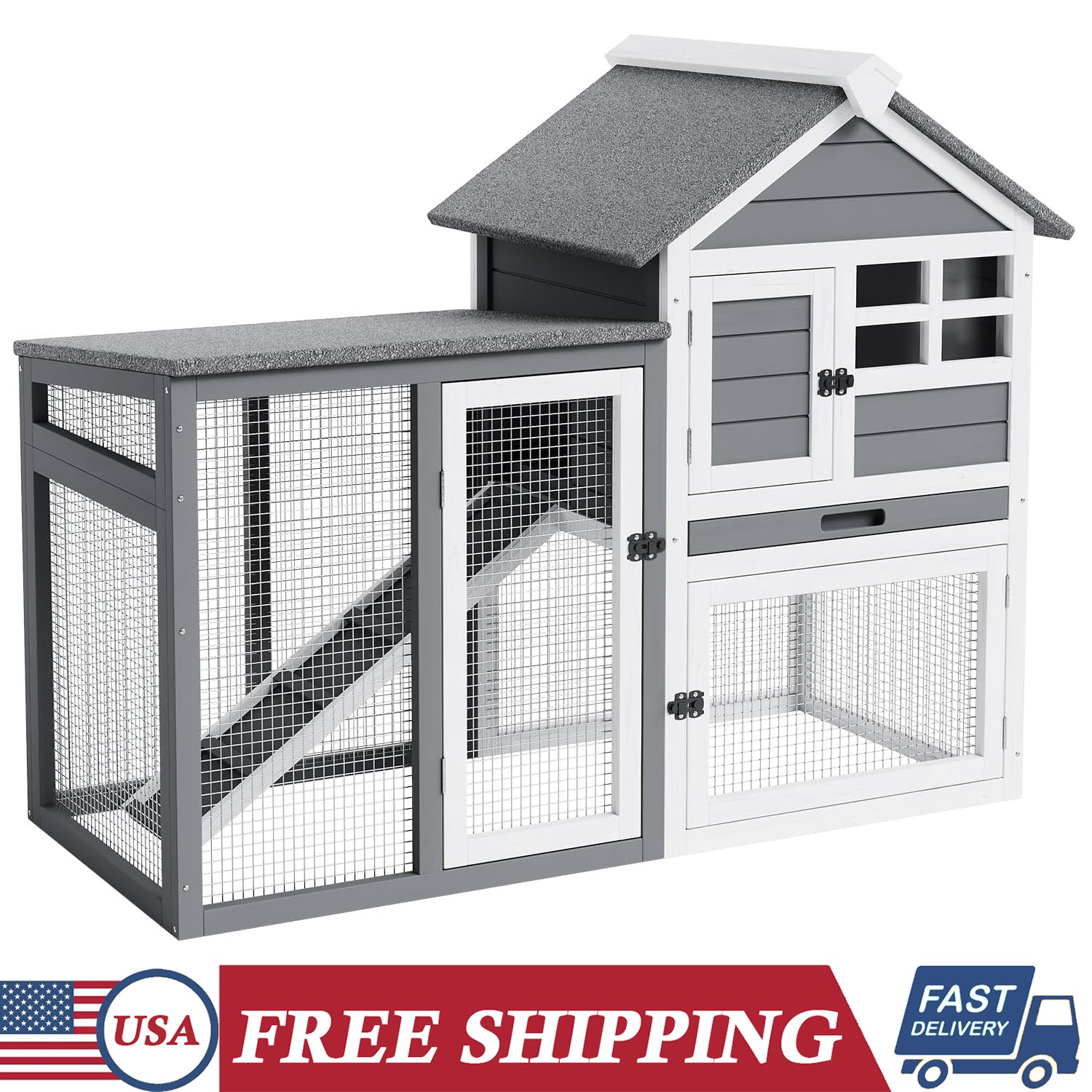 Large Chicken Coop Outdoor Wooden Backyard 2-Story Hen Rabbit House Chicken Run$109.98View on eBay
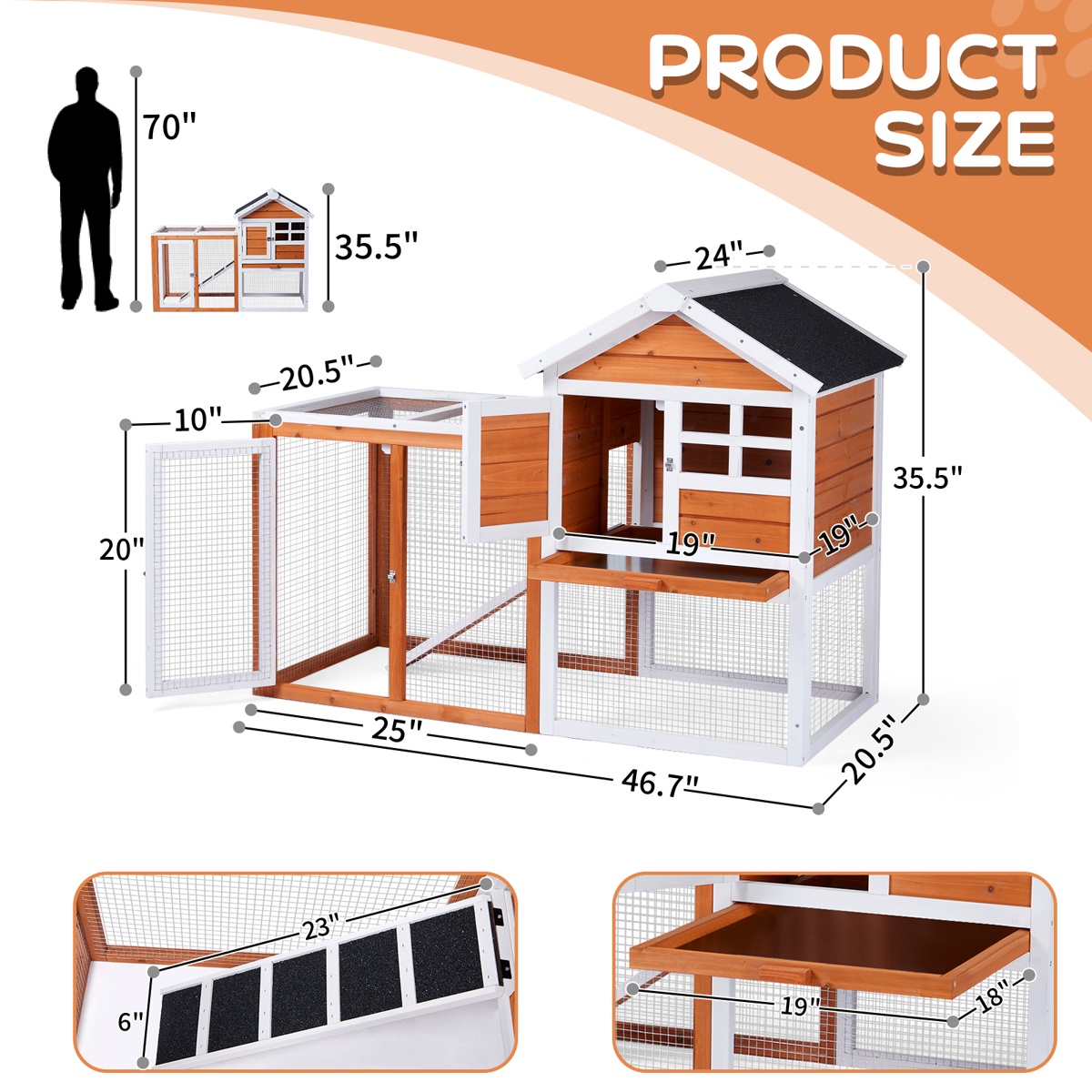 Wooden Rabbit Hutch Outdoor Chicken Coop Indoor Bunny Cage with Run, Guinea Pig House Pet Pull Out Upper Tray, Orange$172.99View on Mallflare
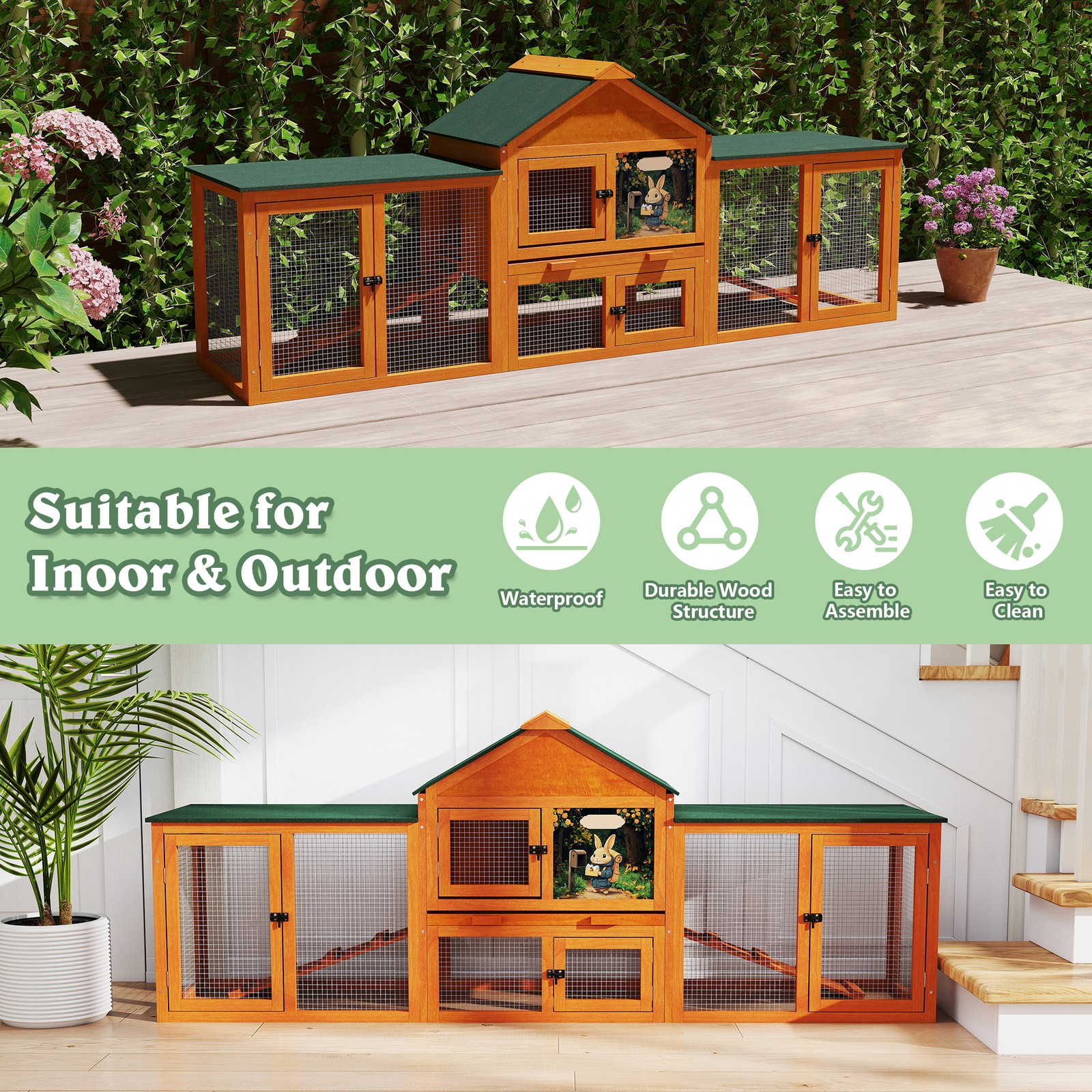 COZIWOW 84" Rabbit Hutch Chicken Coop Wooden Small Animal House Backyard Outdoor$149.99View on eBay
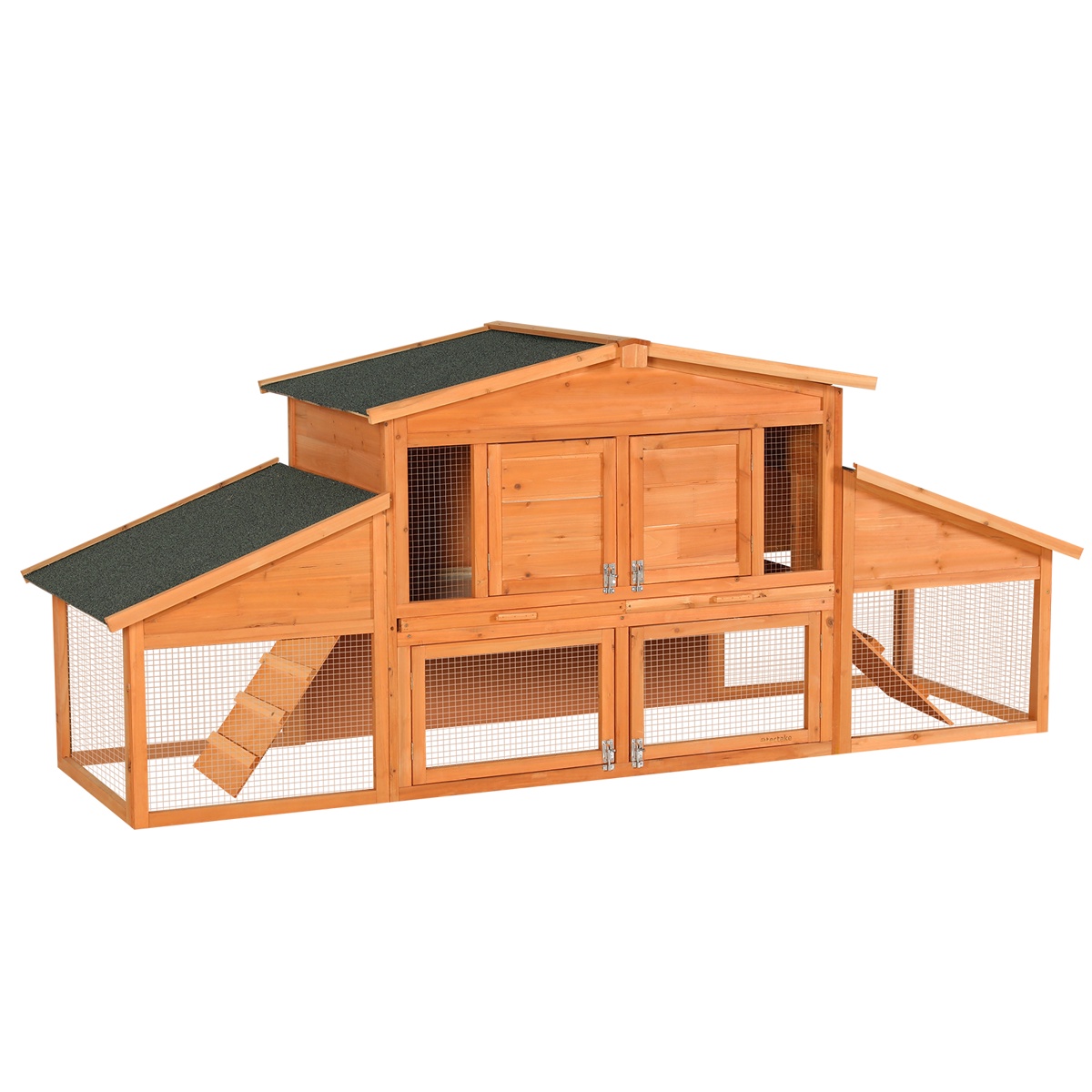 Extra-large Wooden Rabbit House, Chicken Coop, Outdoor Unit That Can Be Easily Assembled And Stable, Indoor With Cleaning Tray And Waterproof Roof, Suitable For Small And Medium-sized Rabbits And Chic$245.99View on Mallflare
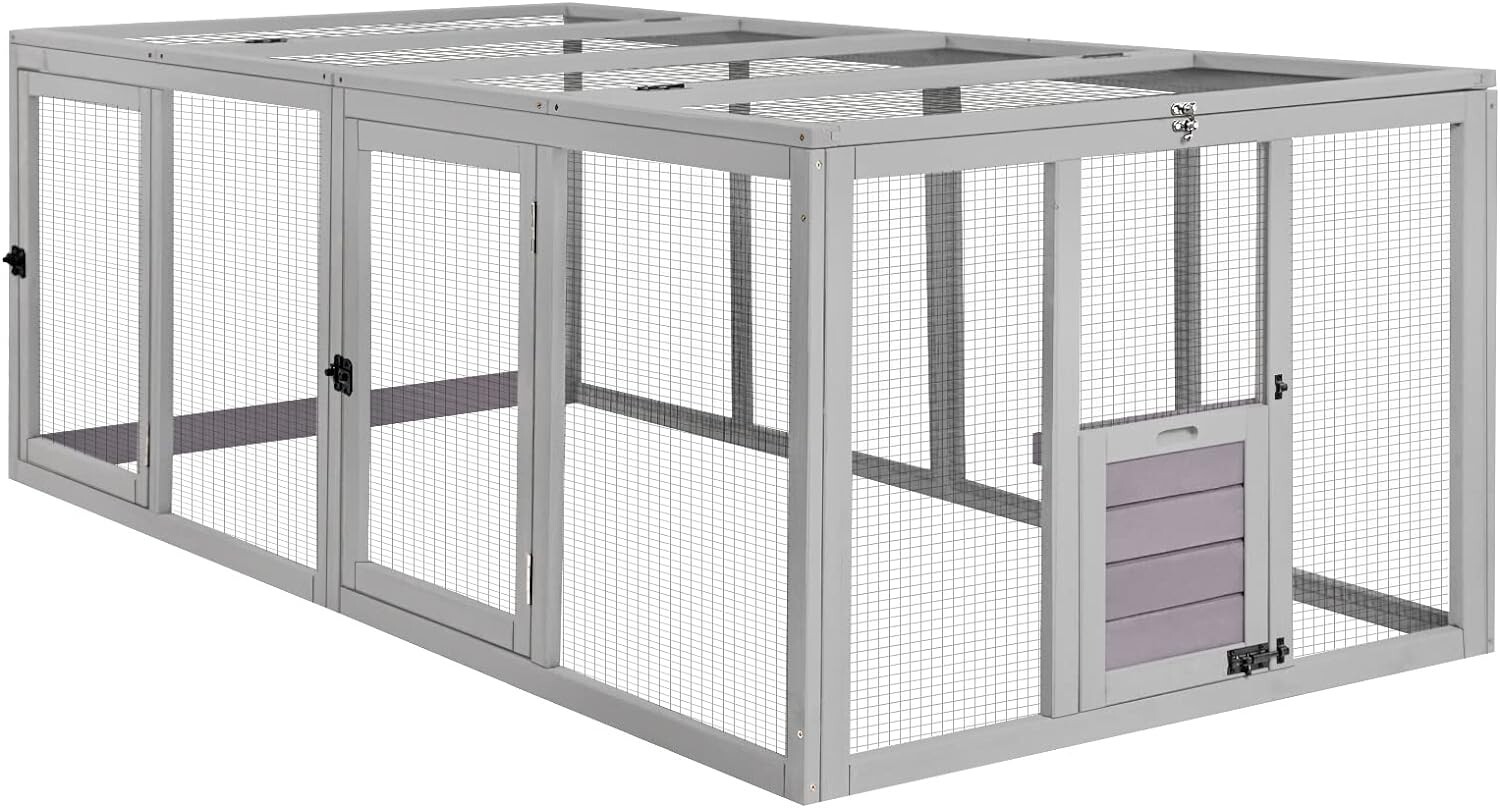 Aivituvin Chicken Coop Run Extension Rabbit Enclosure Outdoor Duck Playpen$159.99View on eBay
Highlights
- Wooden hutches typically use fir or pine framing with 3/8- to 1/2-inch plywood panels and asphalt or felt roofs; metal runs use 1-inch or 1.5-inch galvanized wire mesh on tubular steel frames.
- Walk-in metal runs are sized in feet (e.g., 6.6 x 3.3 x 6.6 ft or 9.8 x 6.6 x 6.6 ft) and ship with PE or Oxford fabric covers; the cover is waterproof but breathable only if vented.
- Two-story wooden coops add a ramp and nesting box, giving roughly 8-12 sq ft of floor space plus a raised sleeping area; single-level hutches of 36 x 25 x 27 inches suit one small-to-medium rabbit.
- Wire mesh floor spacing matters: openings larger than 1 x 1 inch let rabbits' feet slip through and admit small predators; 1/2 x 1 inch hardware cloth is the safe upgrade for permanent floors and lower walls.
Best use cases
- Permanent 24/7 outdoor home: pick a wooden hutch with an enclosed sleeping box, pull-out tray, and a roof overhang; skip open metal runs, which lack a draft-free den.
- Daytime exercise and grazing: choose a walk-in metal run with a waterproof cover and a lockable door; skip it as a night enclosure unless you add a solid hide box.
- Two rabbits or a medium breed: step up to a two-story wooden coop or a 6.6 x 6.6 ft run; skip 36-inch single-level hutches, which are too tight for bonded pairs.
- Temporary or rotating yard use: a portable tunnel run (e.g., 118 x 28 x 24 inches) works for supervised play; skip it for full-time housing because it lacks a raised, enclosed hutch.
Buying tips
- Size by floor area, not by listed animal count: allow at least 12 sq ft of run space per rabbit plus a 2 x 2 ft enclosed hide; a 6.6 x 3.3 ft run gives about 22 sq ft, enough for one or two.
- Check mesh gauge and spacing: 16- to 14-gauge welded wire at 1 x 1 inch or tighter resists predators; thinner 20-gauge decorative mesh deforms under a raccoon's weight.
- For wooden coops, confirm the roof material and raised floor: a sloped asphalt roof and legs that lift the floor 4-6 inches off the ground prevent rot and damp bedding.
- Match the cover to your climate: a waterproof PE cover blocks rain but traps heat, so choose a run with open gable vents or partial coverage in hot, humid summers.
Specs
| Structure Type | Wooden hutch / metal walk-in run |
|---|---|
| Floor Area | 8-22 sq ft (1-2 rabbits) |
| Mesh Spacing | 1x1 in or tighter; 14-16 gauge |
| Weather Cover | Waterproof PE/Oxford; vented |
Related searches
What to check before buying
- Measure your yard pad: walk-in runs need a level footprint matching the listed dimensions (e.g., 6.6 x 3.3 ft or 9.8 x 6.6 ft) plus clearance for the door swing.
- Verify the hutch floor height and ramp angle for your rabbit's size; a steep ramp over 30 degrees is unsafe for young or heavy rabbits.
- Confirm ground anchoring: metal runs ship with ground stakes or pegs; on soft soil or windy sites, plan to stake corners and add a skirt of hardware cloth.
- Check assembly and tool requirements: wooden coops typically need a screwdriver and two people for the roof panel; metal runs use slip-fit tubes and bungee cords for the cover.
FAQ
Data sources: eBay / Amazon listings and product attribute feeds. Updated Nov 28, 2026.
Some links on this page are affiliate links. If you buy after clicking one, we may earn a commission at no extra cost to you. This does not change which products appear here or their order. Affiliate disclosure.