
Photos from current listings. Actual item, color, and included accessories may vary.
Mobile Chicken Coop Buying Guide
A mobile chicken coop is a wheeled or skid-mounted poultry enclosure designed to be rotated across pasture so birds get fresh forage and fertilizer is distributed evenly. The core trade-off is between wheel/axle durability and predator-tight construction: flimsy plastic wheels and stapled mesh fail in months, while pneumatic tires, welded wire, and a raised floor last for years. Buy a coop with a metal axle, lockable wheel brakes, and 14-gauge or heavier galvanized mesh; skip any model relying on caster stems, zip ties, or untreated pine for the frame.
Median $249.99 · New listings
Key takeaways
- Wheel architecture determines mobility: solid rubber or pneumatic tires on a through-axle roll over turf, while small plastic casters sink and snap under a loaded coop.
- Predator resistance requires 14-gauge or heavier galvanized welded wire and a lockable door latch; 1-inch chicken wire alone stops chickens but not raccoons or foxes.
- Raised-floor coops with a removable dropping tray keep birds dry and make weekly movement practical; floorless bottomless runs suit day-range rotation on hard ground.
At a glance
- Category
- Chicken Coops & Runs
- Last updated
- Nov 28, 2026
Current offers
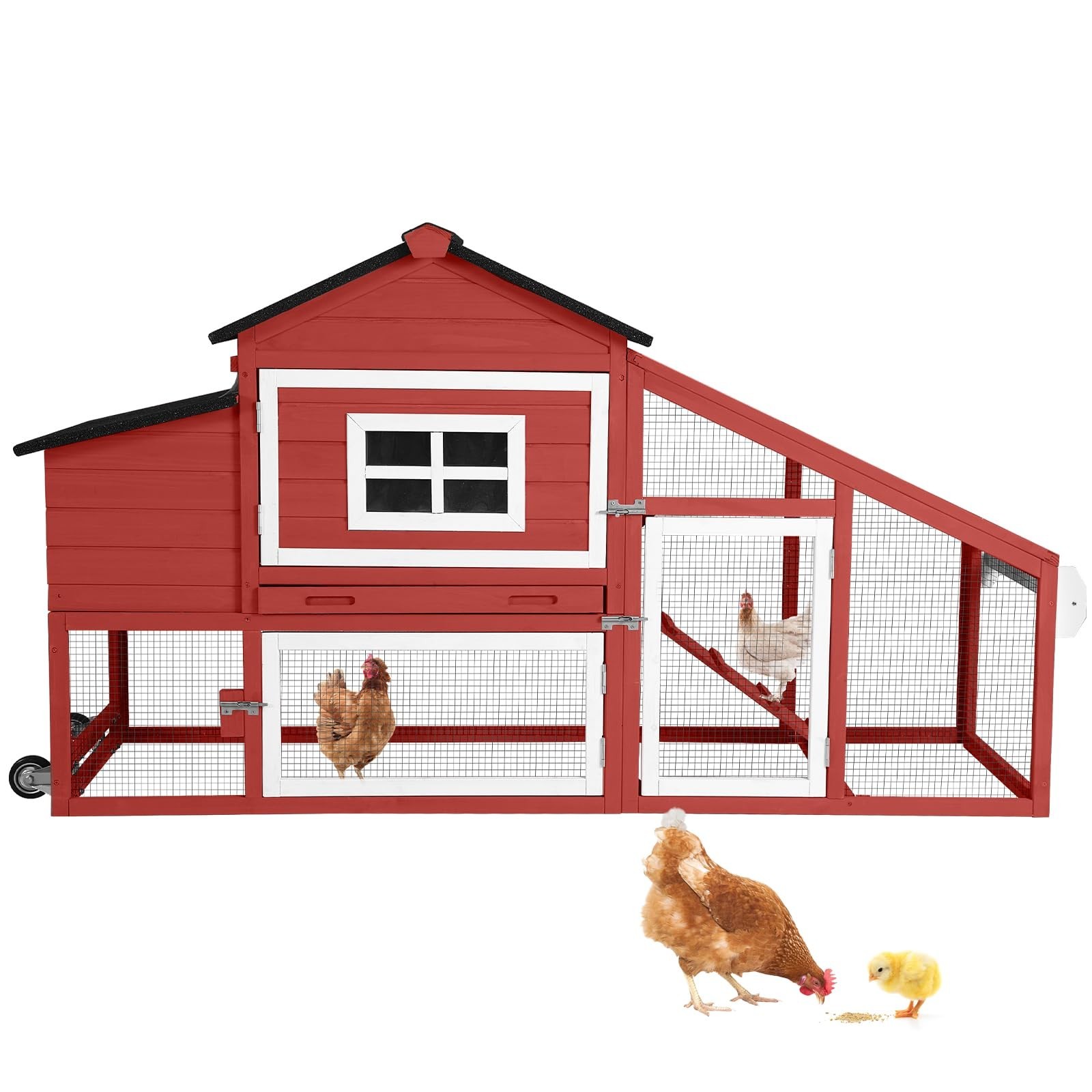 Aivituvin Mobile Chicken Coop, Large Poultry Cage with Wheels for Backyard$164.99View on eBay
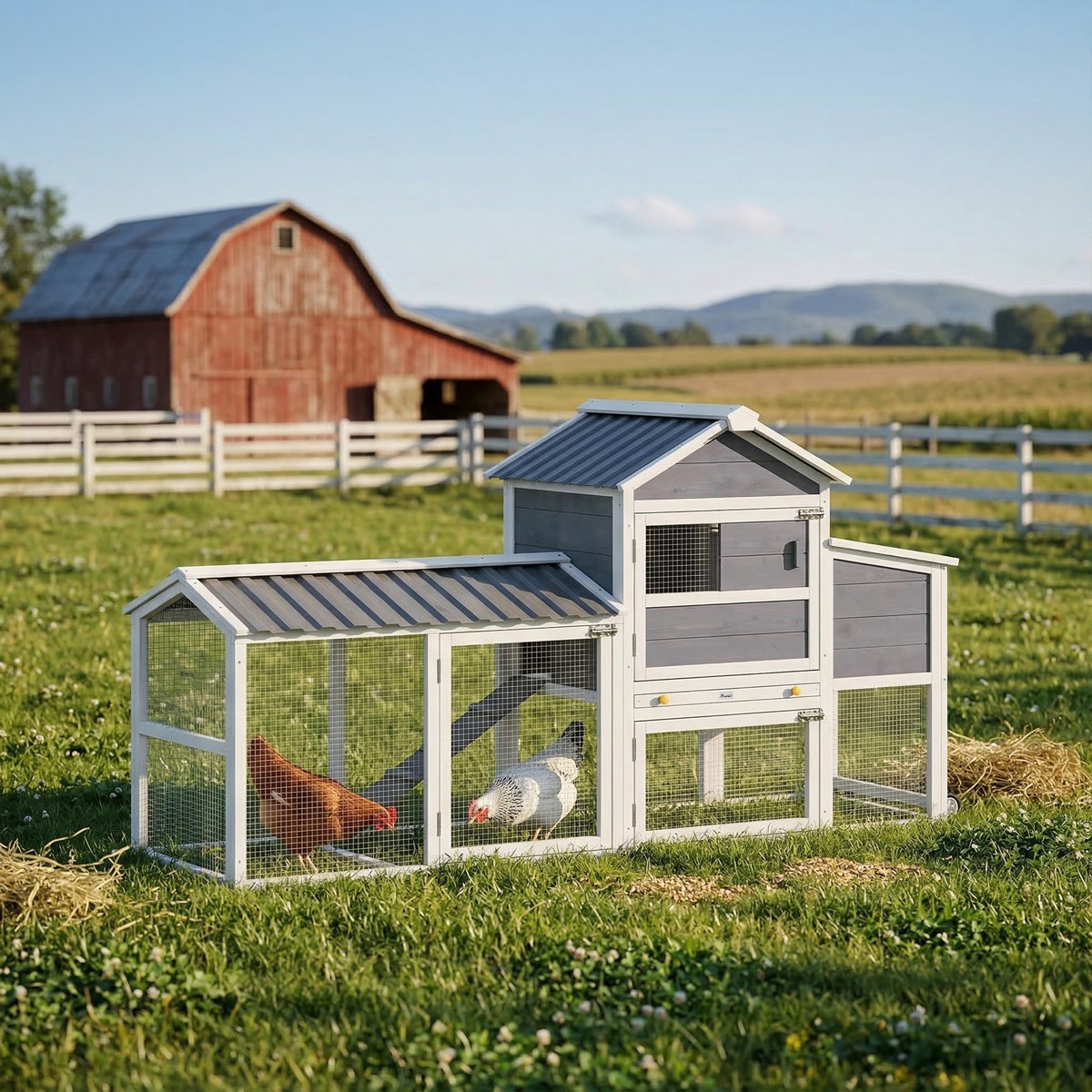 Chicken Coop with Wheels, 80" L Mobile Hen House Run, Outdoor Wooden Nesting Box, Tray, Ramp$189.99View on Mallflare
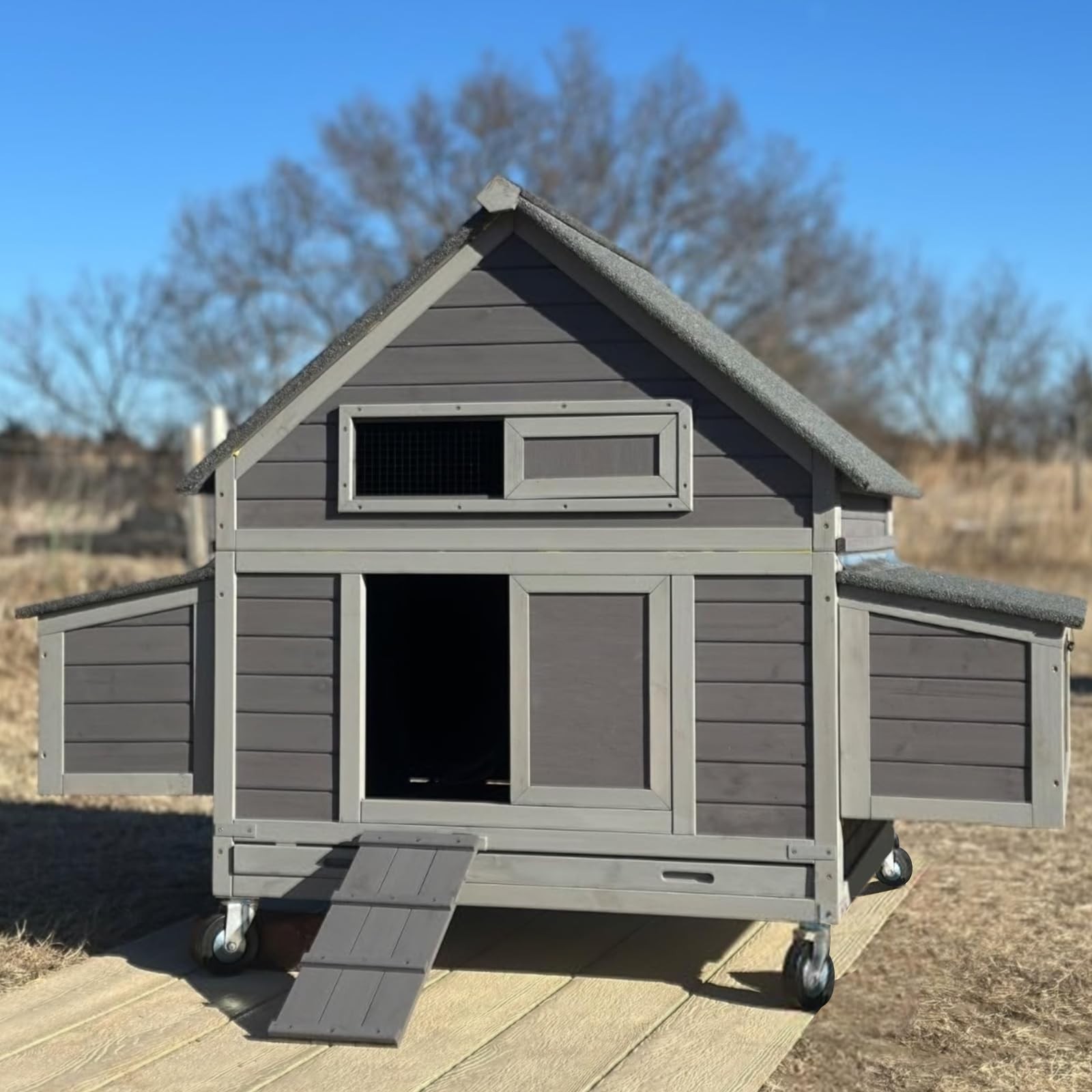 Large Chicken Coop on Wheels Mobile Wooden Weatherproof Hen House$329.99New · Last checked Nov 22, 2026View on eBay
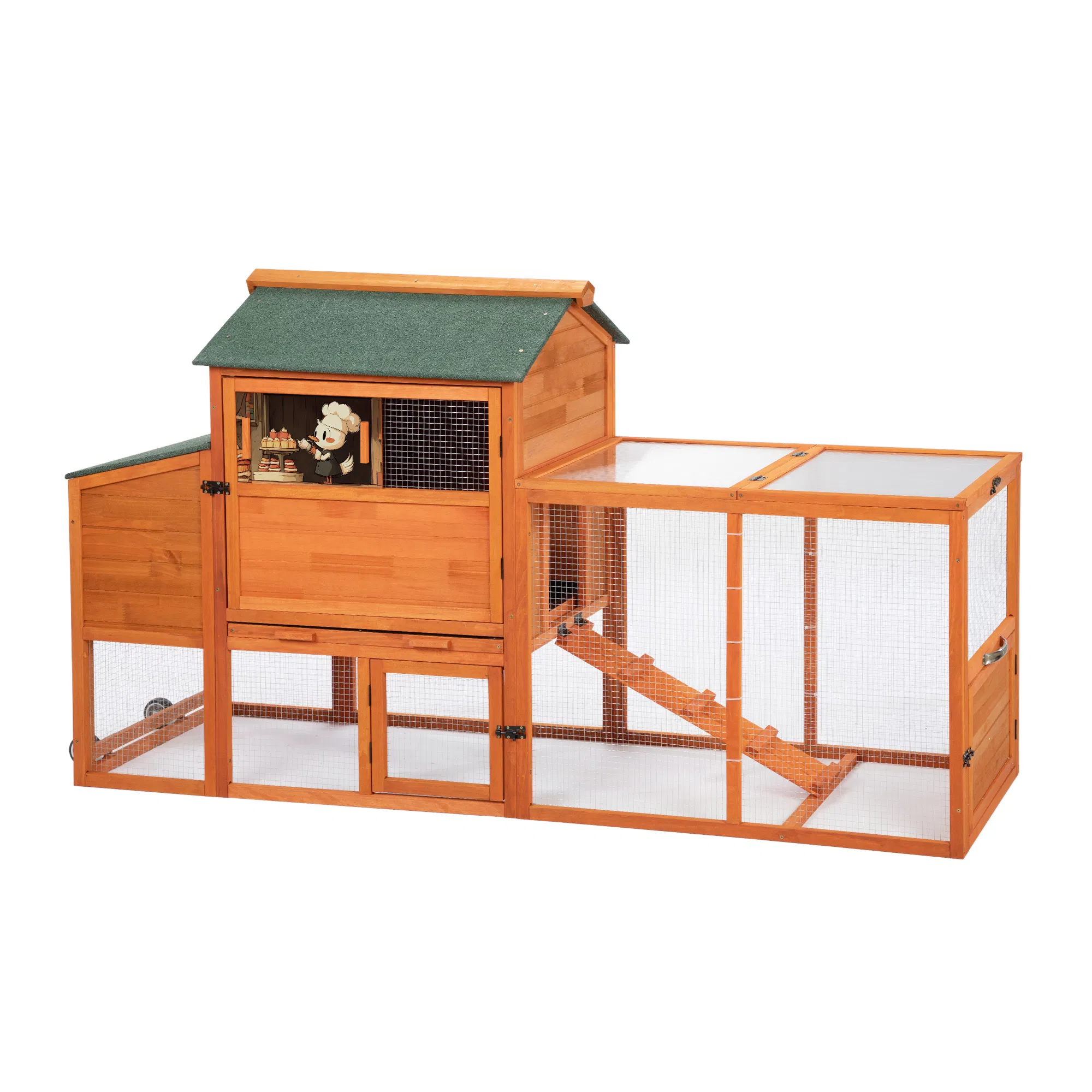 Portable Mobile Chicken Coop with Nesting Box, Sleeping Room, Run, Window, Sun Board, Doors, Pull-Out Tray, Wheels, Outdoor Backyard Pen for Small Animals, Orange Colorful Patterns$249.99View on Mallflare
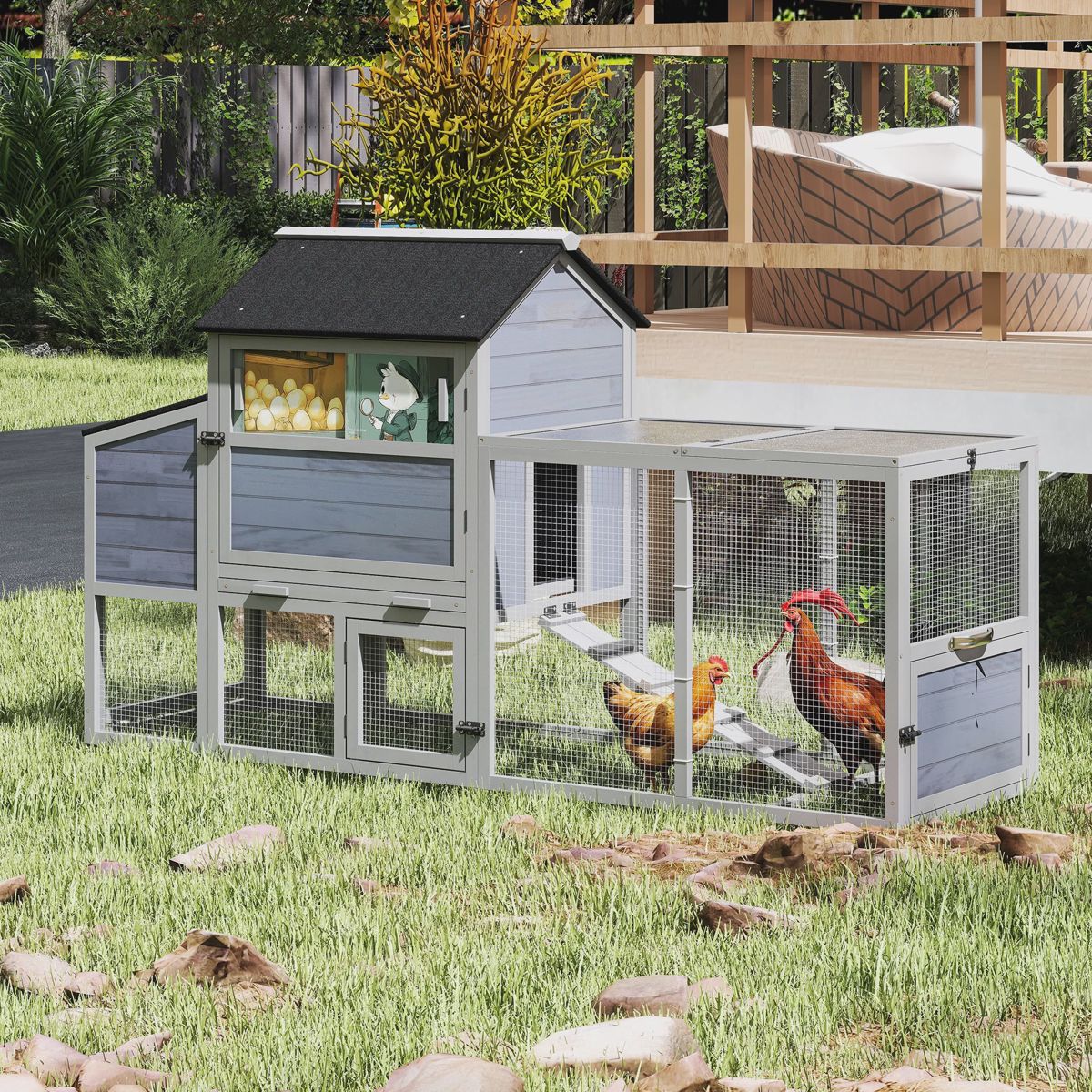 Portable Mobile Chicken Coop with Nesting Box, Sleeping Room, Run, Window, Sun Board, Doors, Pull-Out Tray, Wheels, Outdoor Backyard Pen for Small Animals, Gray Colorful Patterns$272.99View on Mallflare
Highlights
- Wheel architecture determines mobility: solid rubber or pneumatic tires on a through-axle roll over turf, while small plastic casters sink and snap under a loaded coop.
- Predator resistance requires 14-gauge or heavier galvanized welded wire and a lockable door latch; 1-inch chicken wire alone stops chickens but not raccoons or foxes.
- Raised-floor coops with a removable dropping tray keep birds dry and make weekly movement practical; floorless bottomless runs suit day-range rotation on hard ground.
- Nesting box access from outside the run is the key daily-use feature: an exterior hatch lets you collect eggs without entering or moving the coop.
Best use cases
- Best fit: 3-6 hens on lawn or pasture rotated every 1-3 days — pick a wheeled tractor with a raised floor, external nest hatch, and pneumatic tires. Skip fixed heavy coops that need two people to drag.
- Best fit: large fenced yard with uneven ground — choose a skid or dolly-handle design with a metal axle and wide tires. Skip small caster-wheel units, which bind on gravel and grass.
- Best fit: suburban backyard with HOA height limits and nighttime predator pressure — select a low-profile coop with a lockable pop door and hardware cloth skirt. Skip open-bottom runs for overnight use in raccoon or fox territory.
Buying tips
- Size on floor area, not bird count claims: allow 3-4 sq ft per hen inside the coop and 8-10 sq ft in the run; a 'large' label often means 4-6 birds maximum.
- Match wheel type to ground: pneumatic tires for lawn and pasture, solid rubber for gravel and concrete, and skip plastic casters entirely on any coop above light-duty size.
- Demand a metal through-axle and locking brakes; a single bent rod or bolt axle bends under load and makes the coop impossible to steer straight.
- Choose galvanized welded wire at 14-gauge or heavier with mesh openings of 1/2 inch or less against raccoons; 1-inch chicken wire is for containment only, not predator defense.
Specs
| Mobility Type | Wheeled tractor / skid / dolly-handle |
|---|---|
| Wheel & Axle | Pneumatic or solid rubber on metal axle |
| Predator Mesh | 14-gauge welded wire, 1/2-in openings |
| Capacity Rule | 3-4 sq ft coop / 8-10 sq ft run per hen |
Related searches
What to check before buying
- Measure gate widths and path turns on your rotation route; the coop's widest point plus wheel track must clear every gate by a comfortable margin.
- Confirm level ground or gentle slope along the rotation path — wheeled coops handle turf and gravel but not stairs, steep grades, or soft mud.
- Check local zoning for setback and structure rules; many suburbs cap coop height and require a minimum distance from property lines.
- Plan for a predator apron or skirt of hardware cloth at the base if the coop stays in one spot overnight, since wheeled coops sit close to the ground.
FAQ
Data sources: eBay / Amazon listings and product attribute feeds. Updated Nov 28, 2026.
Some links on this page are affiliate links. If you buy after clicking one, we may earn a commission at no extra cost to you. This does not change which products appear here or their order. Affiliate disclosure.