
Photos from current listings. Actual item, color, and included accessories may vary.
Metal Frame Chicken Coop Buying Guide
Walk-in metal frame coops solve the headroom and predator-resistance limits of wooden hutches, but tube gauge and mesh aperture decide whether they survive wind and digging predators. Sizing off the footprint alone leads to overcrowding—plan for covered roost space and a run that exceeds minimum floor area per bird. The frame is only as good as its anchoring and roof load path in open backyard exposure.
Median $223.99
Key takeaways
- Structural rigidity comes from tube wall thickness (typically 0.8–1.2 mm on consumer frames) and diagonal bracing; thicker walls resist wind racking and snow load far better than thin-wall poles.
- Mesh aperture is the predator gate: 1-inch hexagonal or 2x4-inch welded wire stops adult birds but lets raccoons reach through; 1/2-inch hardware cloth is required at the bottom 24 inches against digging and small predators.
- Roof geometry changes load and drainage: dome roofs shed water and snow without ponding, while spire roofs increase interior volume but need ridge tensioning to avoid cover sag and wind flap.
At a glance
- Category
- Chicken Coops & Runs
- Last updated
- Nov 28, 2026
Current offers
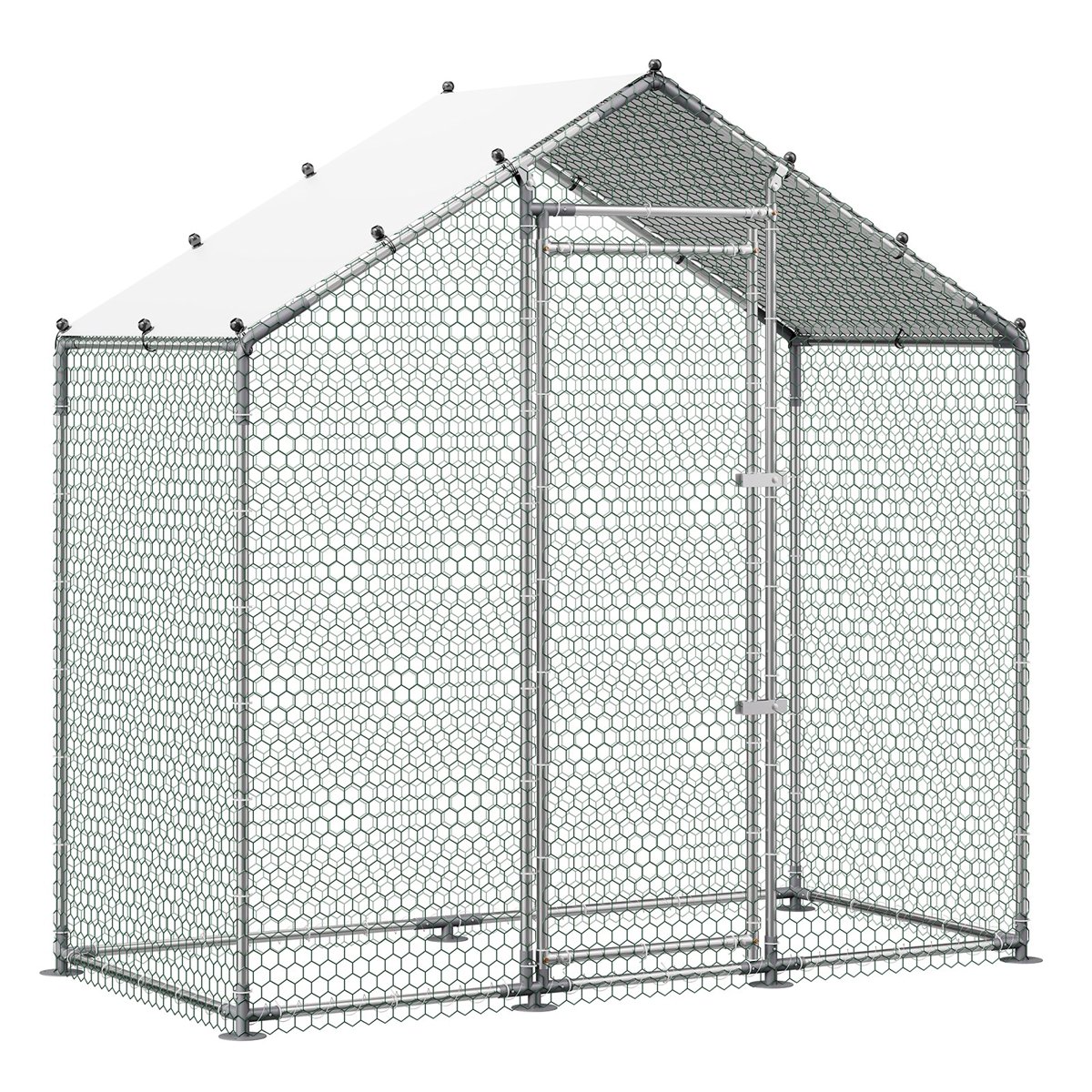 Large Metal Chicken Coop,6.6 X 3.3 X 6.6 Ft, Walk-in Run House With Waterproof Cover & Sturdy Frame, Spire Roof Poultry Cage Duck Pen For Rabbit Hen Goose Outdoor Backyard Farm Use$95.99View on Mallflare
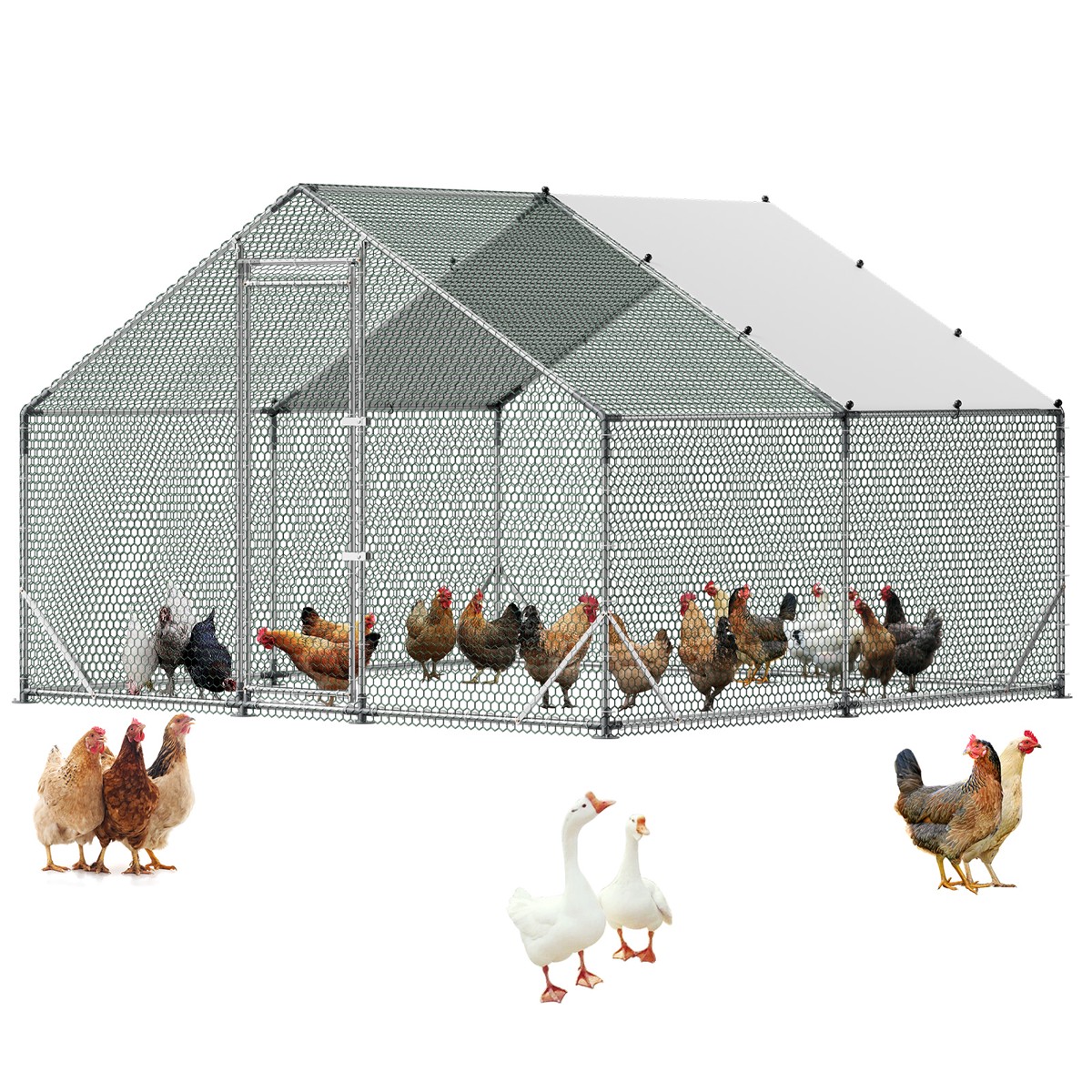 Large Metal Chicken Coop, 9.8 X 9.8 X 6.6 Ft, Walk-in Run House With Waterproof Cover & Sturdy Frame, Spire Roof Poultry Cage Duck Pen For Rabbit Hen Goose Outdoor Backyard Farm Use$161.99View on Mallflare
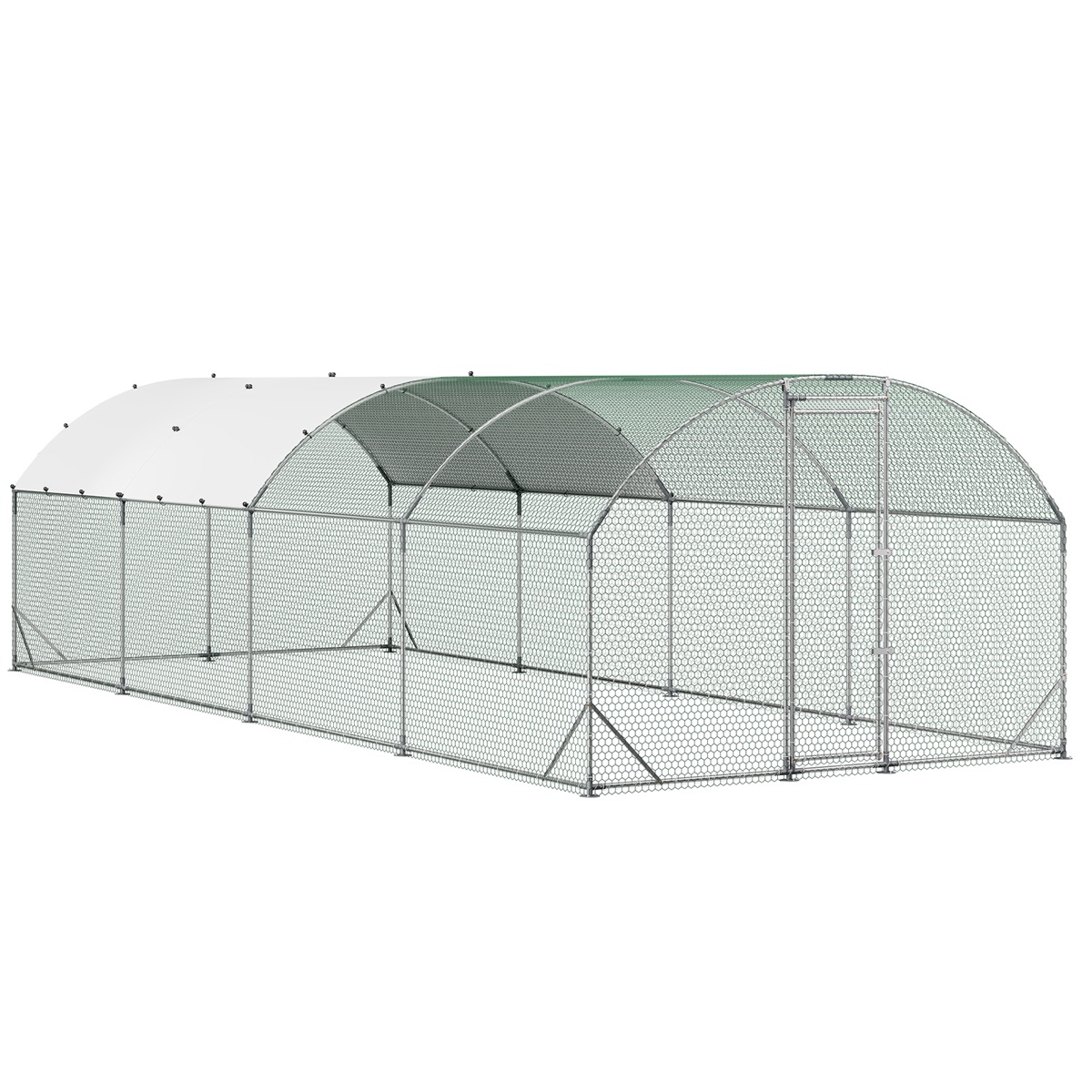 Large Metal Chicken Coop, 9 X 25 X 6.6 Ft, Walk-in Run House With Waterproof Cover & Sturdy Frame, Dome Roof Poultry Cage Duck Pen For Rabbit Hen Goose Outdoor Backyard Farm Use$285.99View on Mallflare
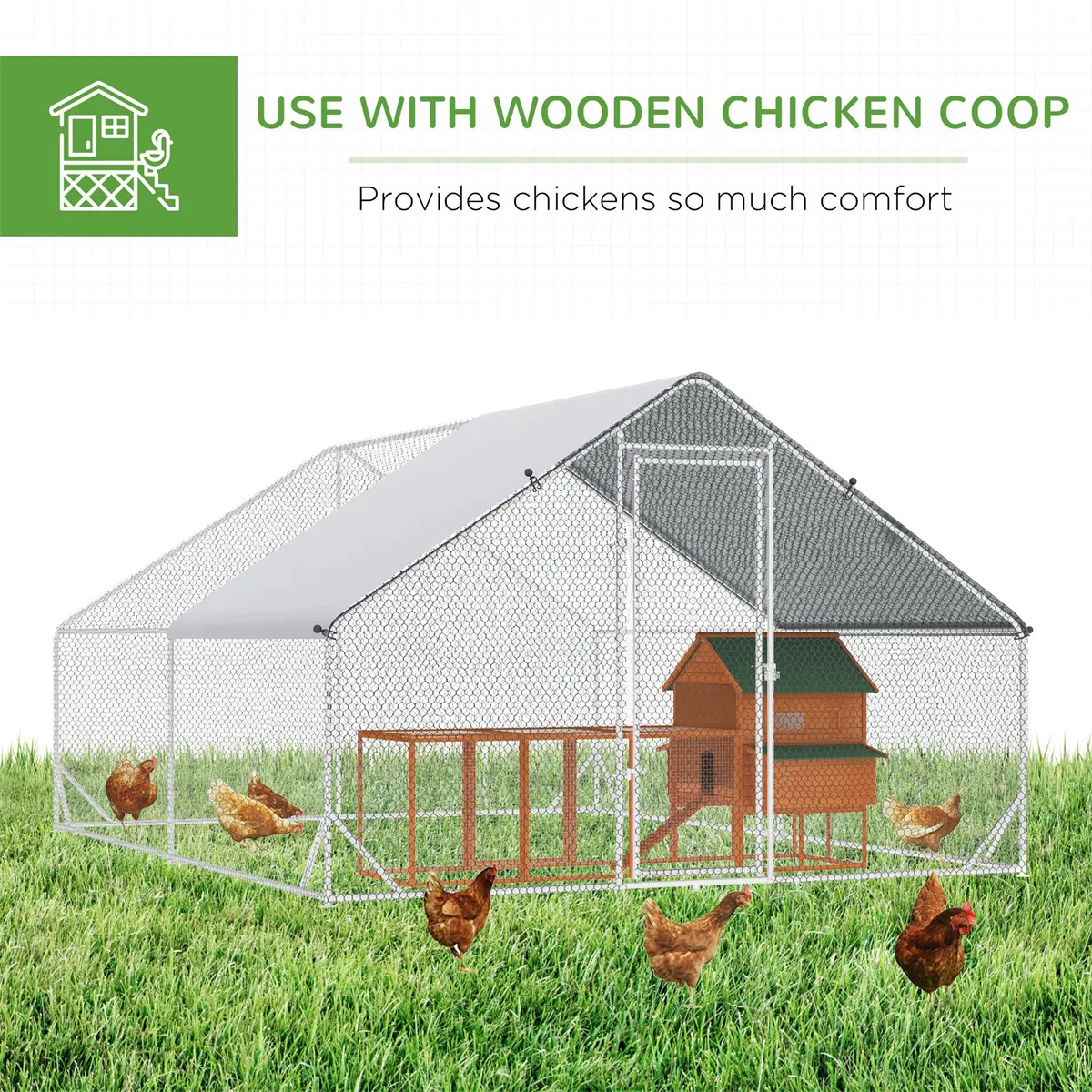 Metal Chicken Coop, Galvanized Steel Frame with Hexagonal Mesh, PE Cover and Lockable Door, 9.8 ft L x 13.1 ft W x 6.6 ft H, for 8-12 Chickens, Silver$332.99View on Mallflare
Highlights
- Structural rigidity comes from tube wall thickness (typically 0.8–1.2 mm on consumer frames) and diagonal bracing; thicker walls resist wind racking and snow load far better than thin-wall poles.
- Mesh aperture is the predator gate: 1-inch hexagonal or 2x4-inch welded wire stops adult birds but lets raccoons reach through; 1/2-inch hardware cloth is required at the bottom 24 inches against digging and small predators.
- Roof geometry changes load and drainage: dome roofs shed water and snow without ponding, while spire roofs increase interior volume but need ridge tensioning to avoid cover sag and wind flap.
- PE or PVC covers are UV-stabilized sacrificial layers that last roughly 1–3 seasons depending on sun exposure; galvanized frames outlast fabric, so plan cover replacement as a routine consumable.
Best use cases
- Best fit: 4–6 hens in a fixed suburban backyard—choose a 6.6 ft tall walk-in run with a waterproof cover and add 1/2-inch hardware cloth skirts; skip larger spans unless you will add ground anchors.
- Best fit: 8–12 birds on open ground—pick the 9.8 x 13.1 ft footprint with galvanized frame and lockable door, then reinforce the perimeter base with buried mesh; a bare frame without skirt invites digging predators.
- Wrong fit: exposed ridge-top or heavy-snow climates—thin-wall tube frames with fabric covers are not engineered for snow accumulation; pick a rigid-panel or timber-framed structure instead.
- Wrong fit: free-ranging flocks that need daily movement—fixed walk-in frames are not portable; choose a wheeled tractor or lightweight run if rotation is the plan.
Buying tips
- Check tube wall thickness and joint style first—bolted clamp joints with thicker galvanized walls hold tension better than push-fit or thin pop-riveted connections.
- Prioritize 1/2-inch hardware cloth at ground level; hexagonal poultry mesh above 24 inches is acceptable for containment but not predator exclusion.
- Size by usable floor area, not footprint: budget roughly 8–10 sq ft per bird in the run plus covered roost space, and remember roof slope eats headroom at the edges.
- Avoid fabric-only anchoring in wind corridors—add ground stakes or screw-in anchors at every corner and mid-span, and tension the cover so it cannot flap and fatigue the frame.
Specs
| Frame Material | Galvanized steel tube |
|---|---|
| Tube Wall | 0.8–1.2 mm typical |
| Mesh Type | Hexagonal poultry / welded wire |
| Cover | UV-stabilized PE / PVC |
Related searches
What to check before buying
- Measure the final footprint against your yard setbacks and gate width—a 9.8 x 13.1 ft frame needs a clear delivery path and level ground.
- Confirm ground conditions: soft soil needs screw-in anchors, while hardpan or gravel requires base plates or concrete footings for the legs.
- Check local wind and snow exposure—open sites demand diagonal bracing and a cover that can be removed before snow load builds.
- Plan companion parts: feeder, waterer, roost bars, nest boxes, and a predator skirt are not included with frame-and-cover kits.
FAQ
Data sources: eBay / Amazon listings and product attribute feeds. Updated Nov 28, 2026.
Some links on this page are affiliate links. If you buy after clicking one, we may earn a commission at no extra cost to you. This does not change which products appear here or their order. Affiliate disclosure.