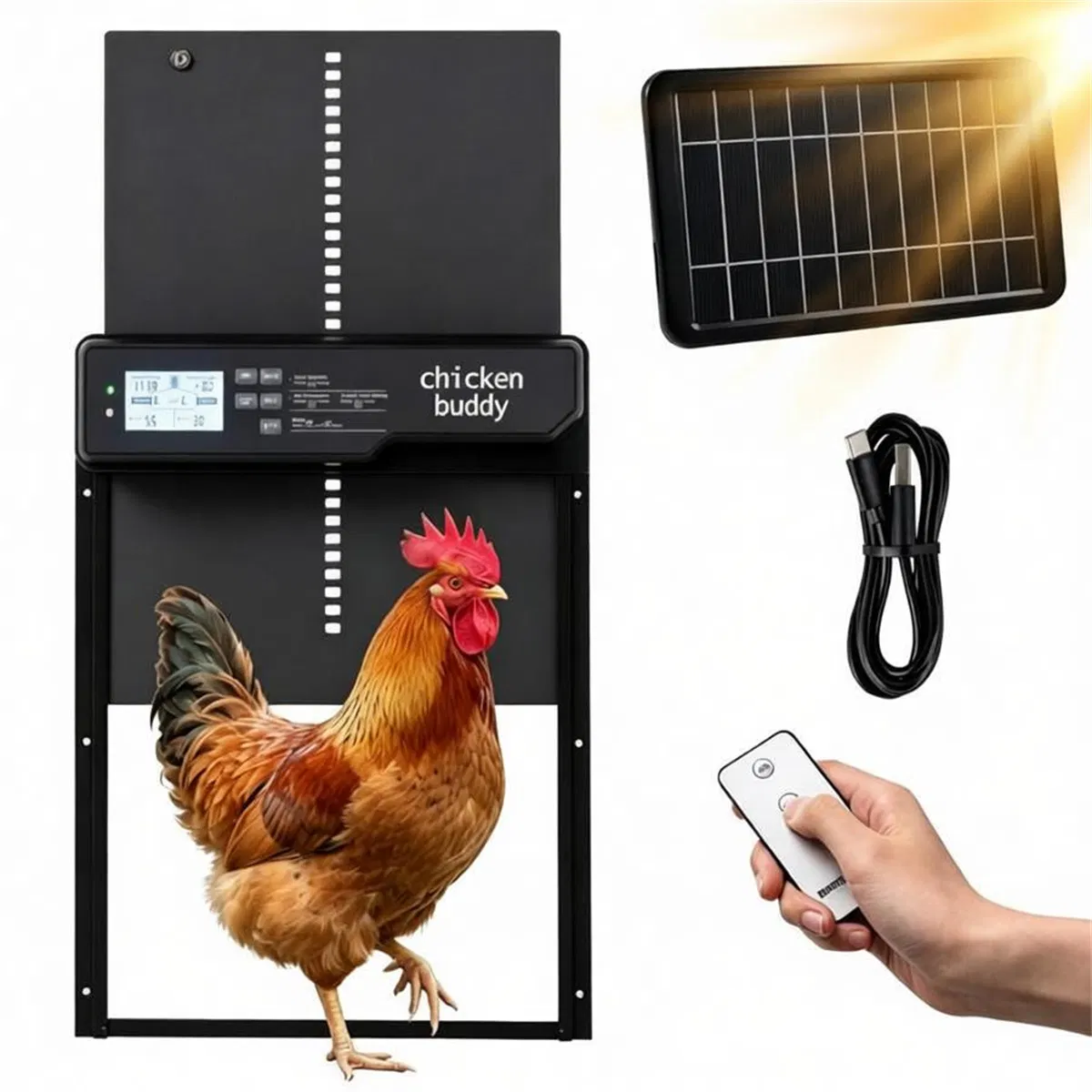

Photos from current listings. Actual item, color, and included accessories may vary.
Manual Chicken Coop Door Buying Guide
Manual chicken coop doors are the simplest, most reliable way to secure a flock—but the wrong slide track, latch, or material grade will jam, rust, or fail within a season. Buyers often overlook run clearance, door weight, and predator-rated fasteners until after installation. Focus on track geometry, aluminum or HDPE construction, and a latch that stays put in wind.
Key takeaways
- Aluminum alloy or UV-stabilized HDPE panels resist rust and warping better than thin galvanized steel or untreated wood in wet climates.
- Top-hung slide tracks with sealed rollers or UHMW guides prevent binding better than bottom-rail designs that clog with shavings and mud.
- Manual latches should be two-point or spring-loaded; a single gravity hook can be flipped by raccoons and wind.
At a glance
- Category
- Chicken Coops & Runs
- Last updated
- Nov 28, 2026
Current offers
Highlights
- Aluminum alloy or UV-stabilized HDPE panels resist rust and warping better than thin galvanized steel or untreated wood in wet climates.
- Top-hung slide tracks with sealed rollers or UHMW guides prevent binding better than bottom-rail designs that clog with shavings and mud.
- Manual latches should be two-point or spring-loaded; a single gravity hook can be flipped by raccoons and wind.
- Door weight plus frame depth determines whether a simple pull-handle or a counterweight pulley system is needed for smooth daily operation.
Best use cases
- Best fit: small backyard coops with 3–8 birds—choose a lightweight aluminum slide door with a top track and spring latch for one-hand morning release.
- Best fit: harsh winter or predator-heavy areas—pick a reinforced HDPE or double-wall aluminum door with a two-point latch and sealed track to stop frost and raccoon leverage.
- Wrong fit: large walk-in coops or heavy wooden doors—skip light manual slides and use a counterweighted pulley or guillotine-style track with a locking pin.
- Wrong fit: off-grid or remote setups expecting automation—manual doors require daily human operation; if you travel, choose a solar automatic opener with manual override instead.
Buying tips
- Measure the coop opening height and width plus track clearance before ordering; door panel should overlap the frame by at least 1 inch on each side.
- Prioritize 1.5–2 mm aluminum alloy or 5 mm UV-stabilized HDPE over thin sheet metal that dents and binds after one season.
- Inspect the latch mechanism: two-point spring latches or sliding barrel bolts outperform single gravity hooks against raccoons and wind.
- Check that the slide track uses sealed rollers or UHMW guides and mounts above the opening—bottom-rail slides clog with bedding and freeze.
Specs
| Door Type | Manual slide / hinged panel |
|---|---|
| Frame Material | Aluminum alloy / HDPE / galvanized steel |
| Latch Style | Spring two-point / barrel bolt / gravity hook |
| Track Mount | Top-hung slide / bottom rail / guillotine |
Related searches
What to check before buying
- Measure coop door opening width, height, and wall thickness; confirm the track and frame fit flush without protruding into the run.
- Verify your coop wall material (wood, metal, plastic) and screw length so the door frame anchors into structure, not just siding.
- Check run clearance: the door must slide fully open without hitting feeder, roost, or nest box walls.
- Confirm latch reach and handle height work with your daily reach and glove size in winter.
FAQ
Data sources: eBay / Amazon listings and product attribute feeds. Updated Nov 28, 2026.
Some links on this page are affiliate links. If you buy after clicking one, we may earn a commission at no extra cost to you. This does not change which products appear here or their order. Affiliate disclosure.