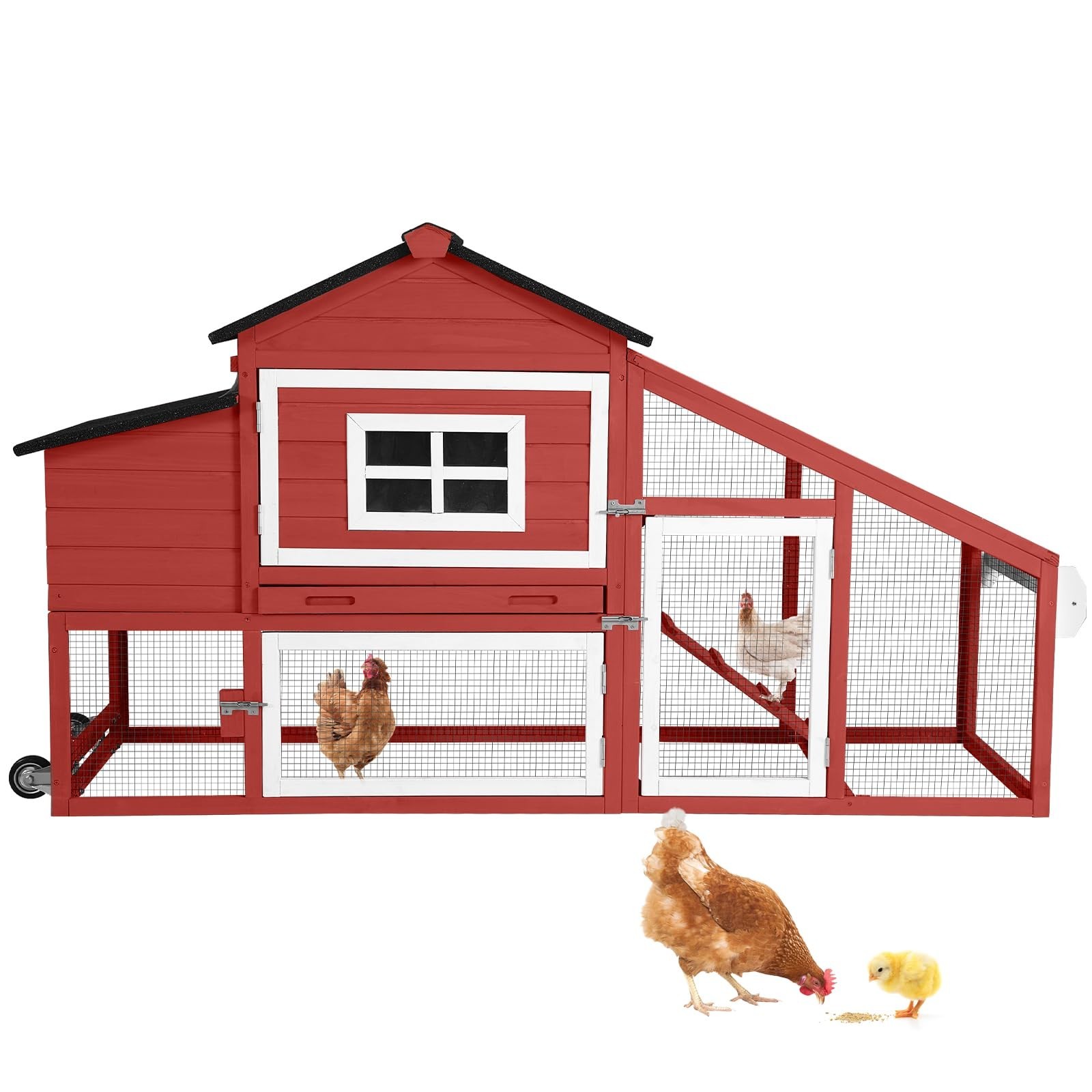

Photos from current listings. Actual item, color, and included accessories may vary.
Large Mobile Chicken Coop Buying Guide
A large mobile chicken coop only solves flock rotation if its wheel and axle system survives soft ground—most buyers overlook that wheels on a heavy wooden house sink into turf and defeat the purpose. Size the house to your flock's roost length (about 8–10 in per bird), then confirm the wheel diameter and tire type match your lawn or pasture conditions before choosing wood gauge or run length.
Median $247.49 · New listings
Key takeaways
- Wheeled coops typically use 6–10 in solid plastic or pneumatic tires; anything under 6 in stalls in damp grass and gravel.
- Wooden mobile houses use 3/4 in exterior plywood or 12–16 mm tongue-and-groove siding; thinner panels warp and lose weatherproofing within seasons.
- Predator security depends on 1/2 in hardware cloth, not chicken wire, plus barrel-bolt or padlockable latches on doors and nest-box panels.
At a glance
- Category
- Chicken Coops & Runs
- Last updated
- Nov 28, 2026
Current offers
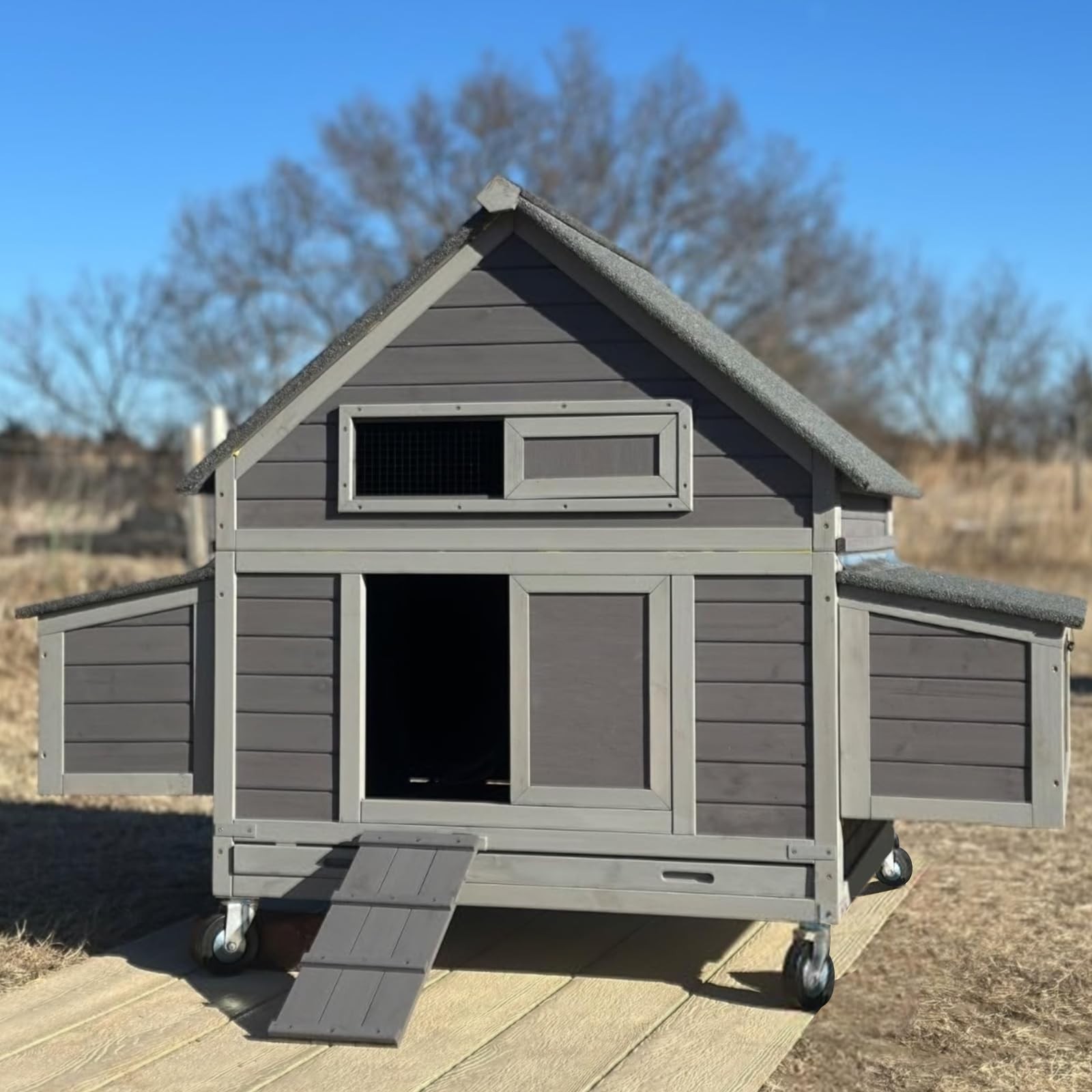
Highlights
- Wheeled coops typically use 6–10 in solid plastic or pneumatic tires; anything under 6 in stalls in damp grass and gravel.
- Wooden mobile houses use 3/4 in exterior plywood or 12–16 mm tongue-and-groove siding; thinner panels warp and lose weatherproofing within seasons.
- Predator security depends on 1/2 in hardware cloth, not chicken wire, plus barrel-bolt or padlockable latches on doors and nest-box panels.
- Roof overhang of 4–6 in and a raised floor 12–18 in off the ground keep bedding dry and reduce rot at the base.
Best use cases
- Best fit for 4–8 hens on lawn or orchard rows: pick a wheeled wooden coop with 8–10 in pneumatic tires and a pull handle at hip height.
- Wrong fit for uneven pasture or slopes: skip small plastic casters and choose a coop with large spoked wheels or a skid-and-tow design instead.
- Best fit for rotating across a garden: choose a lightweight house under 150 lb with a detachable run so one person can move it weekly.
- Wrong fit for permanent backyard placement: a fixed coop with a concrete or gravel base is cheaper and more durable than paying for mobility hardware you won't use.
Buying tips
- Check roost space first: allow 8–10 in of perch per bird and 3–4 sq ft of interior floor per hen for large-breed flocks.
- Prioritize 1/2 in hardware cloth over 1 in chicken wire on every vent and run panel; raccoons and weasels reach through standard poultry mesh.
- Avoid untreated pine and OSB in damp climates; choose cedar, heat-treated wood, or sealed exterior plywood rated for ground contact.
- Size the run so it detaches or folds; a fixed run longer than 4 ft makes the whole coop too heavy to pull by hand.
Specs
| Wheel Type | 8–10 in pneumatic or solid casters |
|---|---|
| Flock Capacity | 6–10 hens (3–4 sq ft/bird) |
| Frame Material | Cedar or sealed exterior plywood |
| Predator Mesh | 1/2 in galvanized hardware cloth |
Related searches
What to check before buying
- Measure your gate and path width—most large wheeled coops are 40–60 in wide and won't pass through a standard 36 in garden gate.
- Confirm your ground type: pneumatic tires roll on turf, but solid casters need a hard path or they sink.
- Check floor height and ramp angle; a raised floor above 18 in needs a ramp with cleats for heavier breeds.
- Verify the roof material and overhang: asphalt shingle or polycarbonate panels shed rain, while flat plywood lids pool water and rot.
FAQ
Data sources: eBay / Amazon listings and product attribute feeds. Updated Nov 28, 2026.
Some links on this page are affiliate links. If you buy after clicking one, we may earn a commission at no extra cost to you. This does not change which products appear here or their order. Affiliate disclosure.