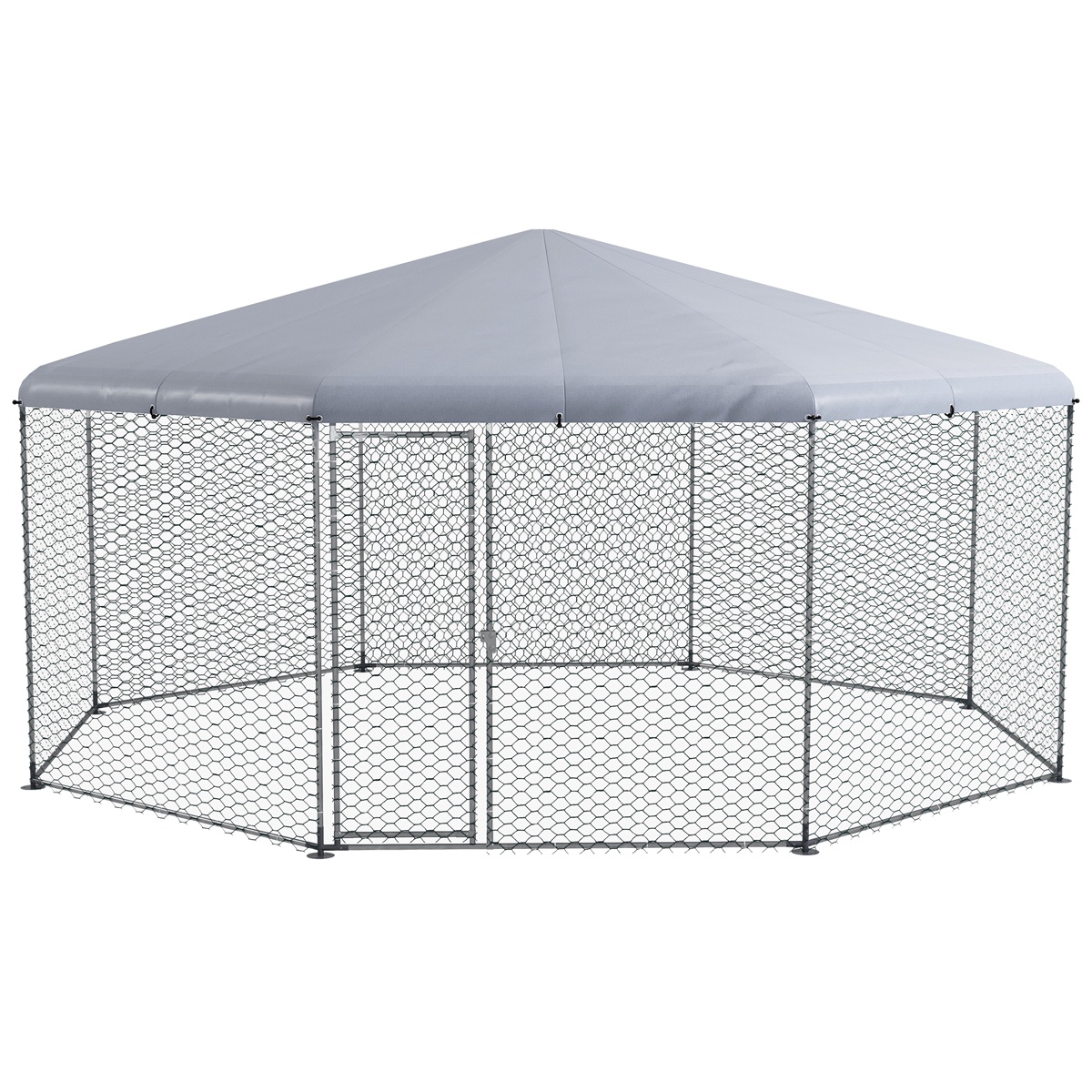

Photos from current listings. Actual item, color, and included accessories may vary.
Large Duck Coop Buying Guide
Large duck coops are walk-in metal run-and-house structures sized for 4-10 ducks, where the primary trade-off is thin-wall galvanized tube framing with a tarp cover versus heavier-gauge welded panels with a rigid roof. The decision rule: buy a walk-in height of 6.5 ft or more, a tube wall of 1.0 mm or thicker, and a footprint that gives each duck at least 10 sq ft of run, or the frame will rack and the birds will soil the enclosure faster than you can manage.
Key takeaways
- Walk-in duck coops use 25-32 mm round or square galvanized steel tube; 1.0-1.2 mm wall thickness resists racking, while 0.6-0.8 mm tube dents and bends at the panel joints.
- Footprint tiers step from roughly 6.6 x 3.3 ft to 9.8 x 19.7 ft, giving 22-193 sq ft of covered run; ducks need at least 10 sq ft of run plus 3-4 sq ft of shelter per bird.
- Spire and dome roofs shed rain and snow better than flat panels, but only when the waterproof PE or PVC cover is tensioned with bungees and the frame has cross-bracing at the gable ends.
At a glance
- Category
- Chicken Coops & Runs
- Last updated
- Nov 28, 2026
Current offers
Highlights
- Walk-in duck coops use 25-32 mm round or square galvanized steel tube; 1.0-1.2 mm wall thickness resists racking, while 0.6-0.8 mm tube dents and bends at the panel joints.
- Footprint tiers step from roughly 6.6 x 3.3 ft to 9.8 x 19.7 ft, giving 22-193 sq ft of covered run; ducks need at least 10 sq ft of run plus 3-4 sq ft of shelter per bird.
- Spire and dome roofs shed rain and snow better than flat panels, but only when the waterproof PE or PVC cover is tensioned with bungees and the frame has cross-bracing at the gable ends.
- Ducks need a solid, elevated nesting/shelter box inside the run, a door latch rated for raccoons, and hardware cloth with 1/2 in mesh over any open lower panel; the included tarp alone is not predator-proof.
Best use cases
- Best fit: 4-6 ducks in a backyard — pick the 6.6 x 6.6 x 6.6 ft walk-in model with a spire roof, which gives about 43 sq ft of run and stands tall enough to shovel and clean.
- Best fit: 8-12 ducks on a farm or large yard — choose the 9.8 x 13.1 x 6.6 ft footprint (about 128 sq ft) so the flock has room to move and a dry zone under the tarp during rain.
- Wrong fit: heavy snow or high-wind zones — a tarp-covered tube frame will collapse under wet snow load; instead choose a rigid-roof coop with a snow-rated panel roof and anchored posts.
- Wrong fit: night-time predator defense on its own — the open-bottom run with a tarp is a daytime enclosure; pair it with a lockable wooden or plastic duck house for overnight shelter.
Buying tips
- Size by math: multiply duck count by 10 sq ft for the run and add 3-4 sq ft per duck for the shelter; a 6.6 x 6.6 ft run suits about 4 ducks, a 9.8 x 6.6 ft run about 5-6, and a 9.8 x 13.1 ft run about 10-12.
- Check tube gauge and joint type: 1.0 mm or thicker galvanized tube with bolted or riveted panel connectors holds shape; slip-fit thin tube frames loosen and wobble within a season.
- Require a walk-in door height of at least 6 ft and a lockable latch; duck coops are entered daily for cleaning and egg/nest checks, so a low crawl door or friction latch is a deal-breaker.
- Buy the largest footprint your yard allows at the 6.6 ft height tier; expandable panels and modular 9.8 ft bays cost less per square foot than adding a second small coop later.
Specs
| Frame Material | Galvanized steel tube, 25-32 mm |
|---|---|
| Tube Wall Thickness | 1.0-1.2 mm durable; 0.6-0.8 mm light |
| Walk-In Height | 6.5-6.6 ft (standing clearance) |
| Roof & Cover Type | Spire/dome frame + PE/PVC tarp |
Related searches
What to check before buying
- Measure the footprint plus 2 ft of clearance on all sides for anchoring stakes and tarp overhang; the 9.8 x 19.7 ft model needs roughly 12 x 22 ft of level ground.
- Confirm ground is level and firm; tube coops sit on soil or gravel, so slope over 2 in across the footprint will twist the frame and misalign the door.
- Plan a 1/2 in hardware cloth skirt or buried apron around the base, because the open-bottom run relies on a perimeter barrier against digging predators.
- Verify you have a separate lockable duck house or shelter box inside the run for overnight use, plus a power source or extension for a heated water bowl in freezing climates.
FAQ
Data sources: eBay / Amazon listings and product attribute feeds. Updated Nov 28, 2026.
Some links on this page are affiliate links. If you buy after clicking one, we may earn a commission at no extra cost to you. This does not change which products appear here or their order. Affiliate disclosure.