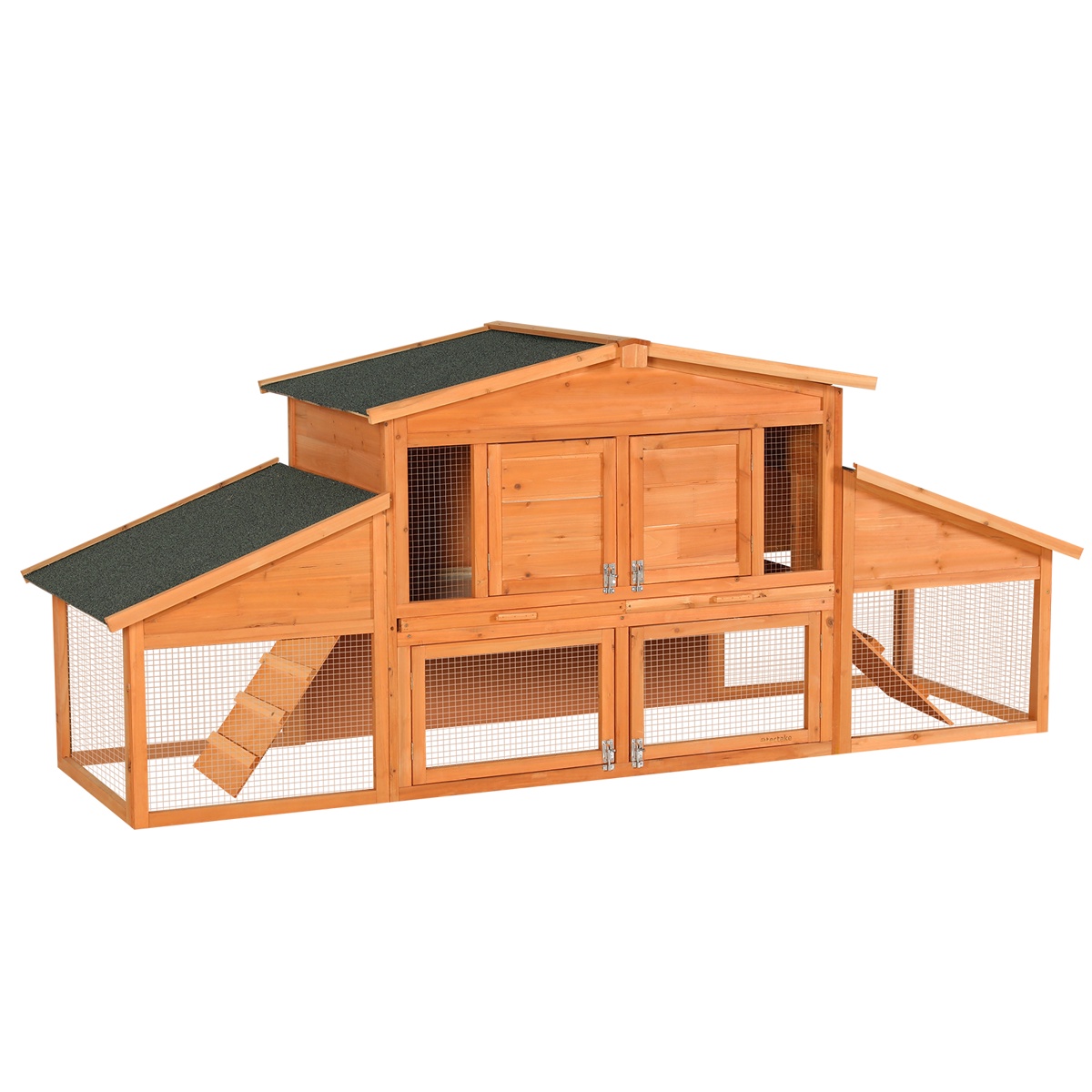

Photos from current listings. Actual item, color, and included accessories may vary.
Extra Large Chicken House Buying Guide
An extra-large chicken house is only worth its footprint if the dimensions, nest-box count, and run space match your flock size—most buyers underestimate how fast six hens outgrow a 'large' coop. Sizing by square footage per bird and climate exposure beats shopping by marketing labels, and wood grade plus roof overhang decide whether the unit survives its third winter.
Key takeaways
- Floor-area rule: allow 3–4 sq ft per bird inside the house and 8–10 sq ft in the attached run; a true extra-large house starts around 20–24 sq ft of interior floor.
- Solid pine or fir framing in 3/4-inch stock with galvanized wire mesh (not chicken wire) is the durability baseline—chicken wire keeps birds in but not predators out.
- Nest-box count scales at roughly one 12x12-inch box per 3–4 hens, so a six-hen house needs two boxes and a ten-hen house needs three.
At a glance
- Category
- Chicken Coops & Runs
- Last updated
- Nov 28, 2026
Current offers
Highlights
- Floor-area rule: allow 3–4 sq ft per bird inside the house and 8–10 sq ft in the attached run; a true extra-large house starts around 20–24 sq ft of interior floor.
- Solid pine or fir framing in 3/4-inch stock with galvanized wire mesh (not chicken wire) is the durability baseline—chicken wire keeps birds in but not predators out.
- Nest-box count scales at roughly one 12x12-inch box per 3–4 hens, so a six-hen house needs two boxes and a ten-hen house needs three.
- Roof overhang of 4–6 inches plus a raised floor (8–12 inches off grade) keeps bedding dry and blocks ground moisture and rodents.
Best use cases
- Best fit: a backyard flock of 6–10 standard hens in a temperate climate—pick a wooden house with two to three nest boxes, a raised floor, and an attached run.
- Wrong fit: keeping bantams or 2–3 pet hens in an extra-large model—the unused space costs more, is harder to heat, and complicates cleaning.
- Best fit: a covered, walk-in run configuration for keepers who want standing-height access and daily egg collection without crawling.
- Skip: open-bottom or tray-only coops in predator-heavy or wet regions unless you add a hardware-cloth skirt and elevate the unit on blocks.
Buying tips
- Measure the interior footprint, not the roofline—manufacturers quote overall dimensions that include eaves and nest-box overhangs.
- Prioritize 3/4-inch tongue-and-groove or plywood panels; 3/8-inch or thinner walls warp and leak within a couple of seasons.
- Inspect the wire gauge and mesh size: 1/2-inch hardware cloth at 19-gauge or heavier resists raccoons and weasels better than 1-inch poultry netting.
- Choose a sloped or gabled roof with a removable or hinged panel for cleaning, and confirm the tray slides out without disassembling the run.
Specs
| Interior Floor Area | 20–24+ sq ft for 6–8 hens |
|---|---|
| Nest Box Count | 2–3 boxes at 12x12 in |
| Wall Construction | 3/4 in pine or plywood |
| Predator Mesh | 1/2 in hardware cloth, 19 ga+ |
Related searches
What to check before buying
- Lawn or coop-pad footprint at least 2 feet larger than the house plus run on every side, with level ground for the base frame.
- Gate or door width of 24 inches or more if you plan to wheel a barrow or wheelbarrow inside for bedding changes.
- Roof snow-load and wind exposure checked against your region; add tie-downs or ground anchors on exposed sites.
- Predator perimeter: buried hardware-cloth apron 12 inches out and down, plus locks—not hooks—on all doors and nest-box lids.
FAQ
Data sources: eBay / Amazon listings and product attribute feeds. Updated Nov 28, 2026.
Some links on this page are affiliate links. If you buy after clicking one, we may earn a commission at no extra cost to you. This does not change which products appear here or their order. Affiliate disclosure.