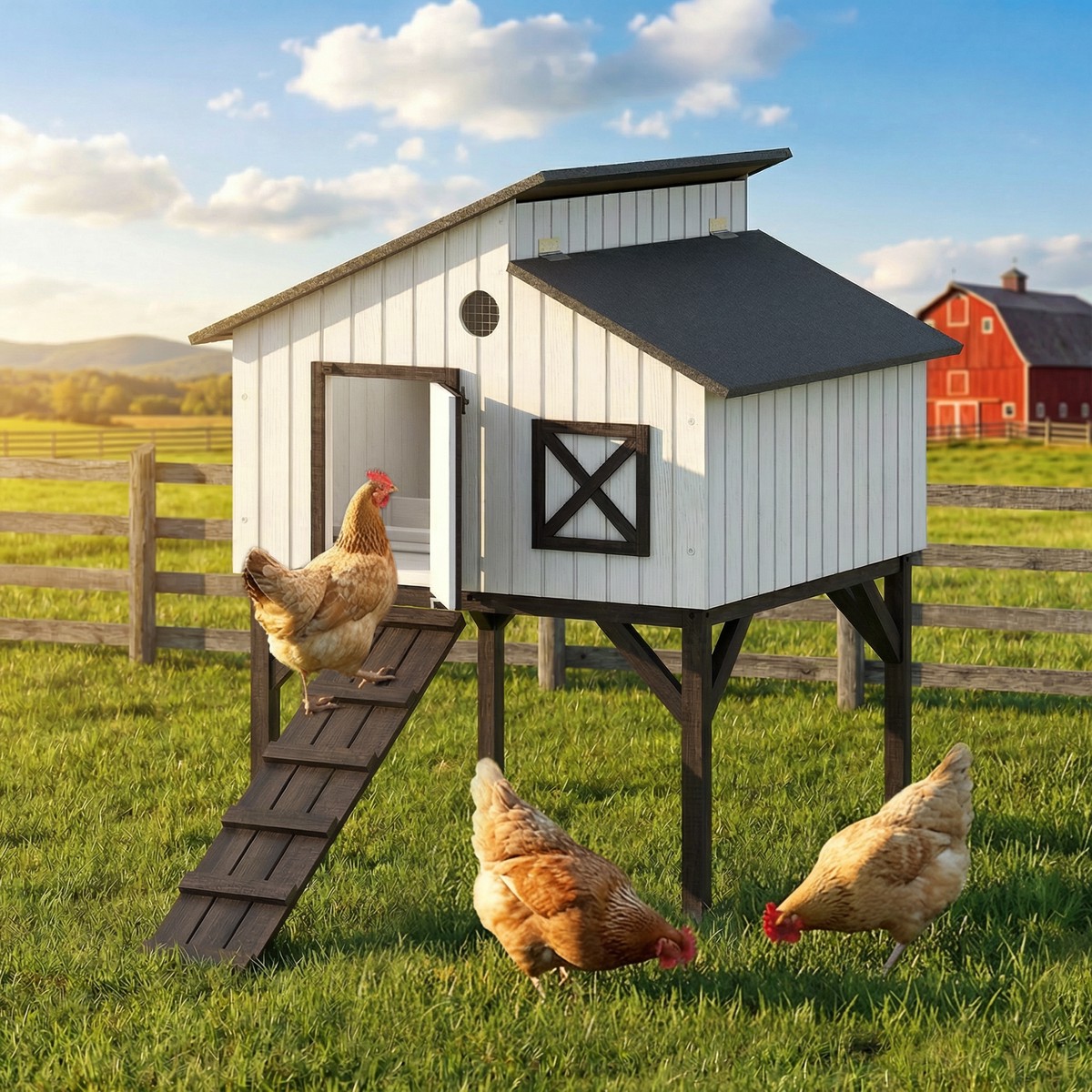

Photos from current listings. Actual item, color, and included accessories may vary.
Elevated Chicken Coop Buying Guide
An elevated chicken coop is a raised poultry enclosure with a built-in or attached run, keeping hens off the ground for predator protection, easier cleaning, and better ventilation. The key trade-off is frame and wire gauge versus lightweight fabric or thin mesh covers that fail under raccoon and hawk pressure. Choose a coop with a rigid wood or galvanized-steel frame, 14-gauge or thicker welded wire, and a roof rated for your snow load; skip fabric-draped or stapled-mesh units if predators are present.
Median $226.49
Key takeaways
- Raised floor height of 12–24 inches above grade prevents ground moisture and deters burrowing predators; higher platforms need ramp slope ≤30 degrees for heavy breeds.
- Welded wire mesh at 14-gauge or heavier with 1/2-inch openings stops raccoon paws and weasels; 1-inch hex mesh or chicken wire only deters hawks, not climbers.
- Asphalt or metal openable roof panels over nesting boxes allow egg collection without entering the run; hinges should be stainless or galvanized to avoid rust seizure.
At a glance
- Category
- Chicken Coops & Runs
- Last updated
- Nov 28, 2026
Current offers
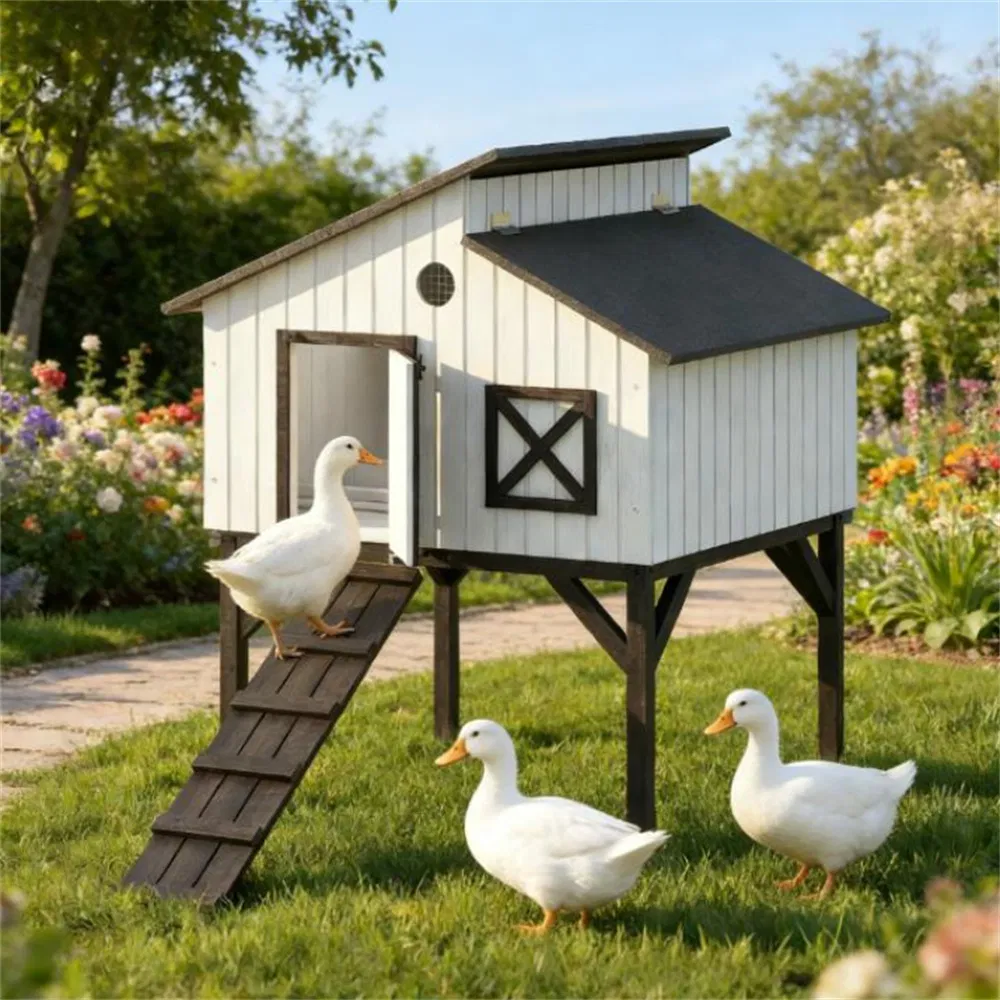
Highlights
- Raised floor height of 12–24 inches above grade prevents ground moisture and deters burrowing predators; higher platforms need ramp slope ≤30 degrees for heavy breeds.
- Welded wire mesh at 14-gauge or heavier with 1/2-inch openings stops raccoon paws and weasels; 1-inch hex mesh or chicken wire only deters hawks, not climbers.
- Asphalt or metal openable roof panels over nesting boxes allow egg collection without entering the run; hinges should be stainless or galvanized to avoid rust seizure.
- Solid wood frames (cedar or pressure-treated pine) outlast fir or bamboo by years in wet climates; fabric covers are seasonal shade/windbreaks, not structural predator barriers.
Best use cases
- Best fit: 2–4 hens in a backyard with raccoons or foxes — pick a raised wood coop with 14-gauge welded wire run and lockable nest-box door.
- Best fit: urban lot with limited ground space — choose a compact elevated coop with integrated run under the house to double footprint efficiency.
- Wrong fit: open pasture or heavy snow region — skip elevated coops with fabric roofs and light frames; use a grounded coop with snow-load-rated metal roof.
- Wrong fit: flock over 6 hens — small elevated coops crowd quickly; step up to a walk-in coop with attached run rather than stacking multiple hutches.
Buying tips
- Size by floor area: allow 3–4 sq ft per hen inside the raised house plus 8–10 sq ft per hen in the run; a 4-hen coop needs roughly 12–16 sq ft interior.
- Check wire gauge and fastening: 14-gauge welded wire stapled over a wood frame beats 19-gauge mesh or chicken wire clipped to thin posts for predator resistance.
- Match roof to climate: asphalt shingle panels handle rain and moderate snow; in heavy-snow zones require metal roof panels and a frame rated for the load.
- Confirm ramp and door clearance: heavy breeds need a ramp at ≤30 degrees and a pop door at least 10 inches wide by 12 inches tall.
Specs
| Frame Material | Cedar / pressure-treated pine vs fir |
|---|---|
| Run Wire Gauge | 14-ga welded vs 19-ga mesh / chicken wire |
| Floor Height | 12–24 in elevated vs ground-level |
| Roof Type | Asphalt panel / metal vs fabric cover |
Related searches
What to check before buying
- Measure your yard pad: elevated coops need a level footprint plus clearance for the ramp and open roof panel swing.
- Check predator pressure locally: raccoons and foxes require 14-gauge wire and locking latches; hawks only need a covered run top.
- Verify climate fit: snow load and wind exposure rule out fabric roofs and light frames; rainy climates favor cedar or pressure-treated wood.
- Plan companion parts: feeder, waterer, and pine shavings must fit inside the raised house without blocking the nest box.
FAQ
Data sources: eBay / Amazon listings and product attribute feeds. Updated Nov 28, 2026.
Some links on this page are affiliate links. If you buy after clicking one, we may earn a commission at no extra cost to you. This does not change which products appear here or their order. Affiliate disclosure.