
Photos from current listings. Actual item, color, and included accessories may vary.
Duck Cage Buying Guide
A duck cage is an outdoor enclosure built for waterfowl, so it must solve three problems that chicken coops often ignore: standing water and mud, low nocturnal perching, and stronger predation pressure near ponds. The core trade-off is mesh gauge and framing rigidity versus walk-in height and weatherproof covering — thin wire on light tube frames fails fast under ducks' repetitive ground-level pushing. Buy walk-in galvanized or hardware-cloth panel systems with a raised or drained floor for permanent flocks, and treat thin wooden 1–2 bird hutches as nursery or isolation units only.
Median $324.99
Key takeaways
- Welded galvanized wire over 1-inch or smaller mesh blocks raccoon reach and prevents ducks from forcing their heads through larger 2x4-inch poultry netting.
- Walk-in frames around 6.5 ft tall in 6.6x6.6 or 6.6x10 ft footprints are the standard tier for 4–8 ducks; low 36x25x27 in hutches are brooder or hospital cages.
- A waterproof, UV-stabilized tarp roof turns an open run into a dry loafing area; ducks need shade and dry bedding far more than chickens do.
At a glance
- Category
- Chicken Coops & Runs
- Last updated
- Nov 28, 2026
Current offers
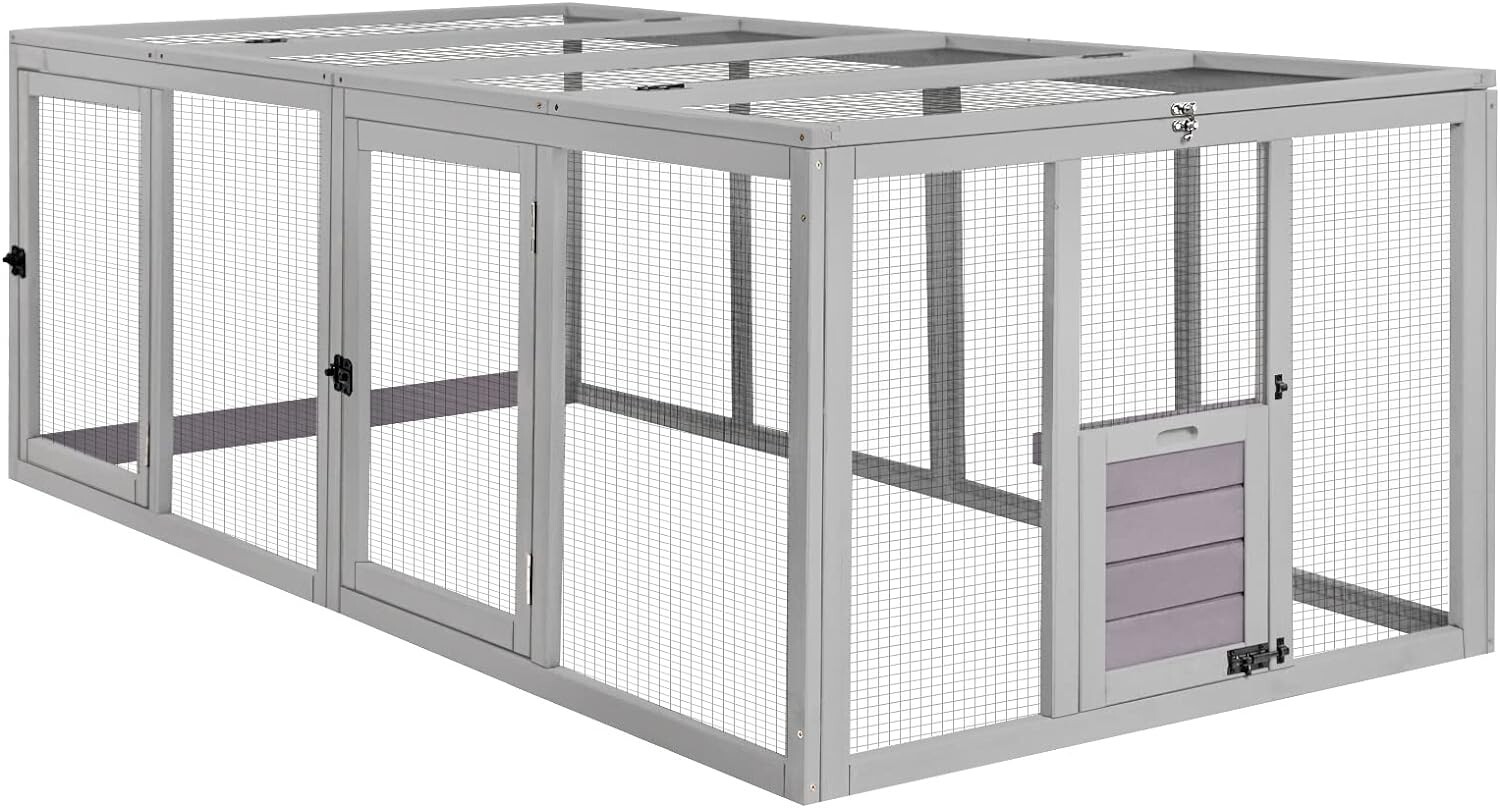 Aivituvin Chicken Coop Run Extension Rabbit Enclosure Outdoor Duck Playpen$159.99View on eBay
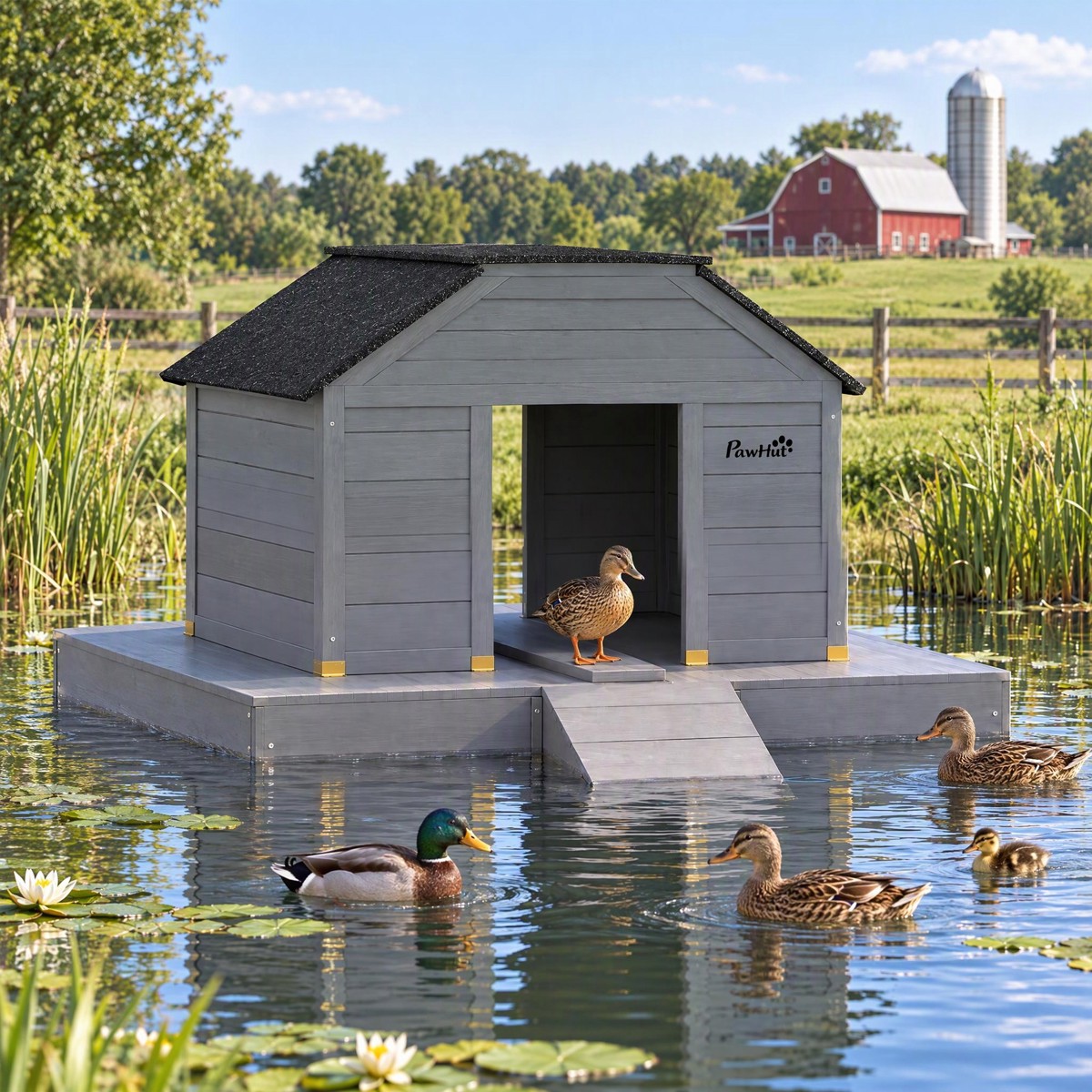 Floating Duck Coop, Wooden House with Ramp and Waterproof Asphalt Roof, Gray$243.99View on Mallflare
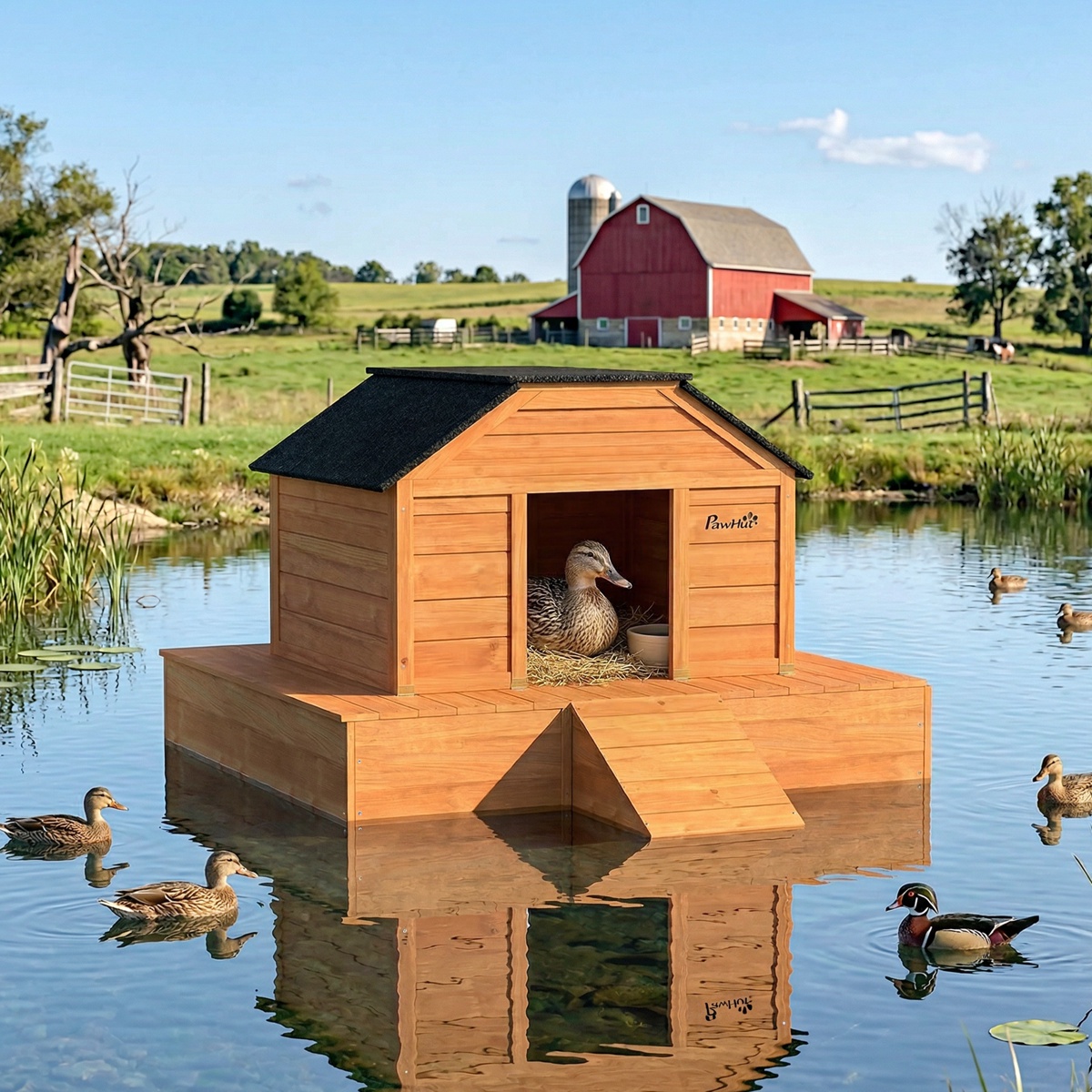 Floating Duck Coop, Wooden House with Ramp and Waterproof Asphalt Roof, Small Animal$249.99View on Mallflare
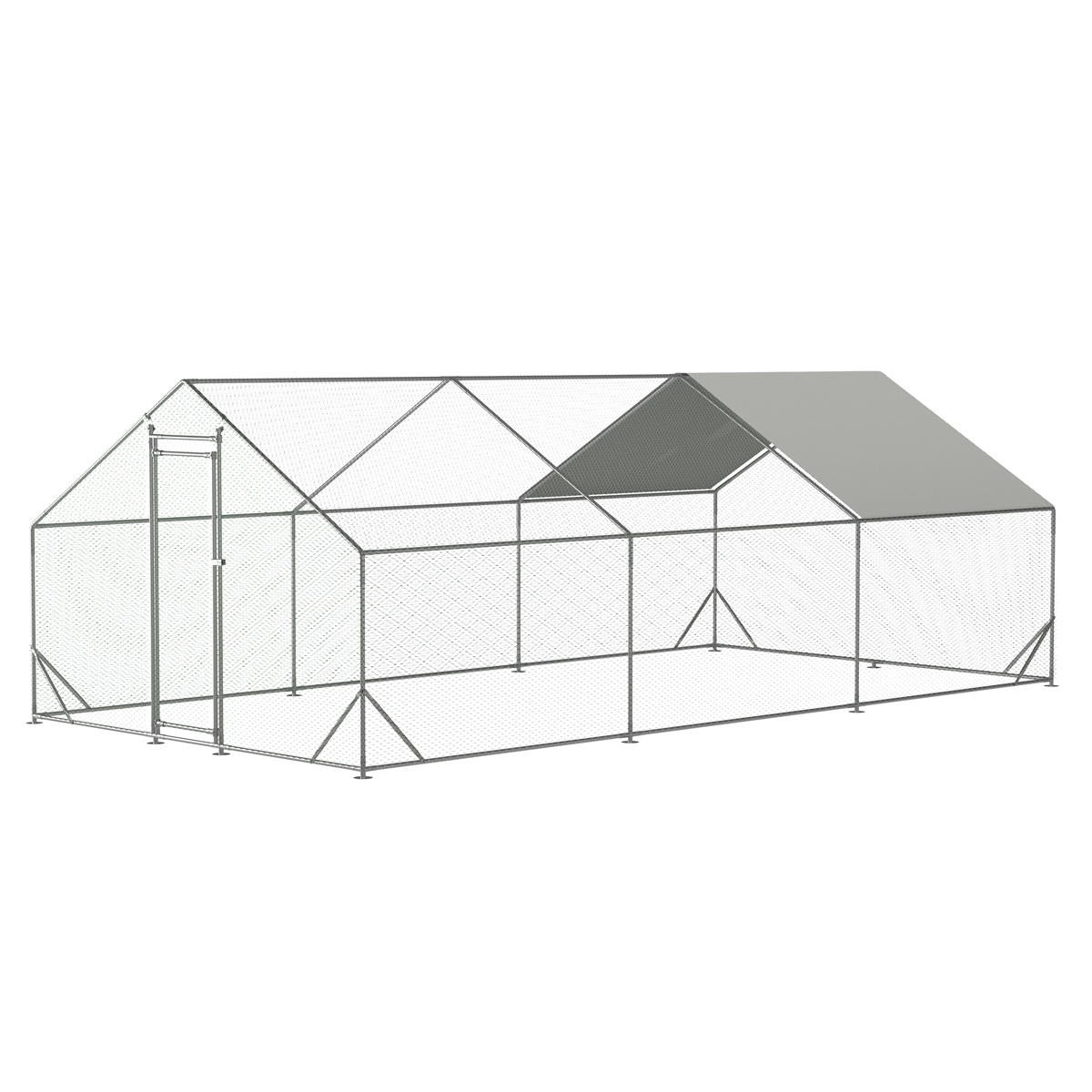 Large Metal Chicken Coop, Walk-in Run,Galvanized Wire Poultry Hen Pen Cage, Rabbits Duck Cages With Waterproof And Anti-Ultraviolet Cover For Outside 10L X 20W X 6.56'H$301.99View on Mallflare
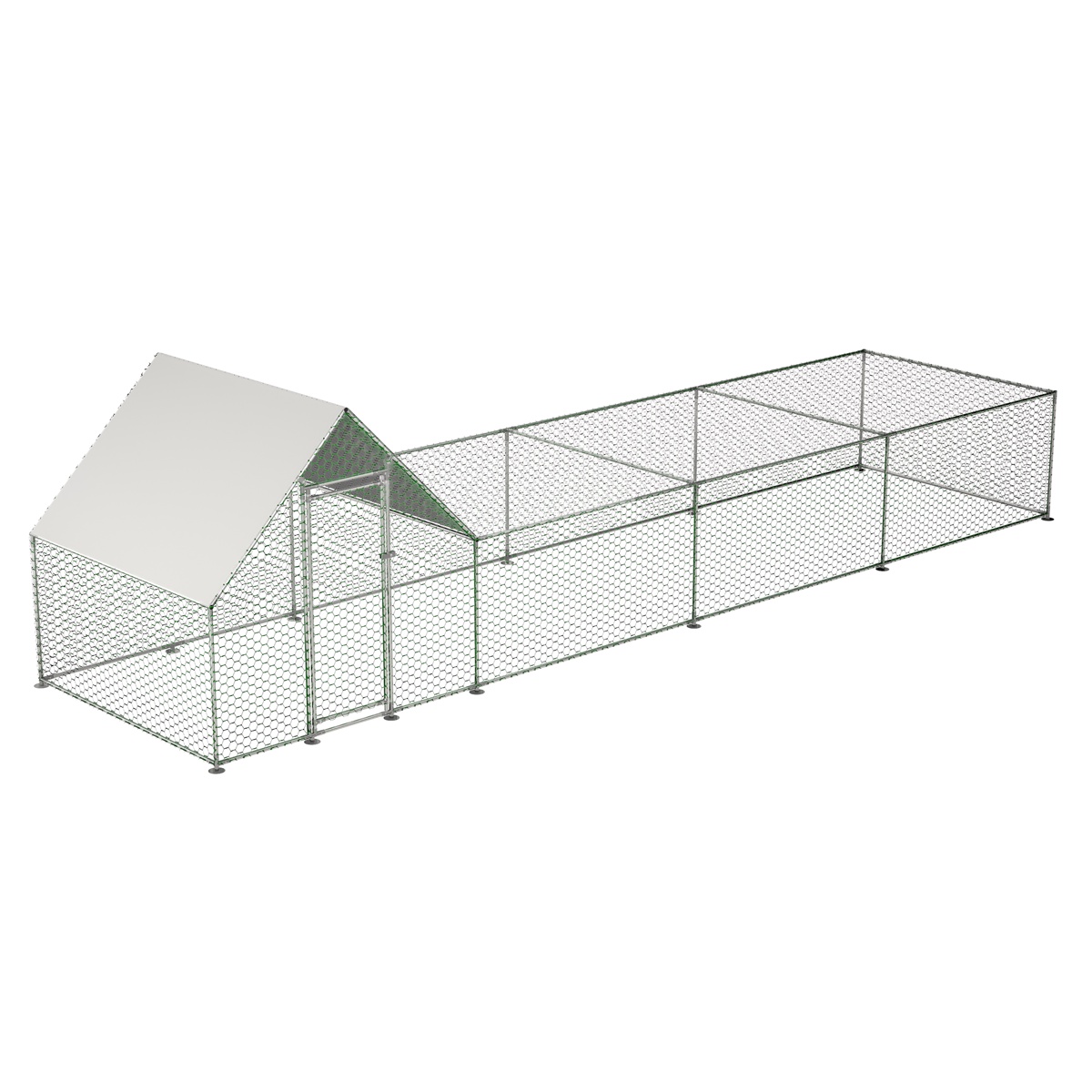 26'Lx6.7'Wx6.6' ft Large Metal Chicken Coop, Walk-in Run, Galvanized Wire Poultry Hen Pen Cage, Rabbits Duck Cages with Waterproof and Anti-Ultraviolet Cover for Outside$347.99View on Mallflare
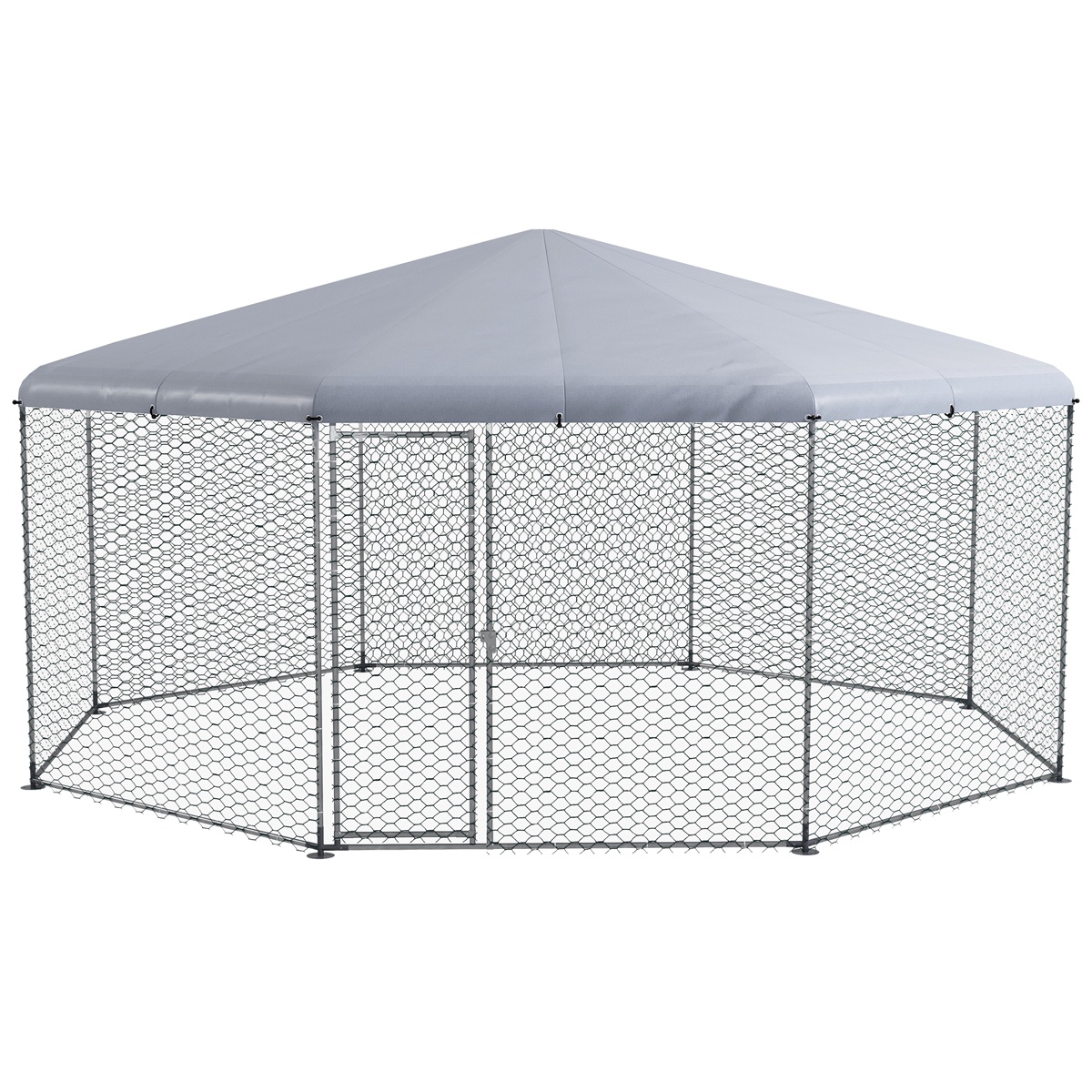 PawHut Large Metal Chicken Coop Run For Ducks And Rabbits With Waterproof And Anti-UV Cover, Walk-in Poultry Cage Hen House For Outdoor And Yard Farm Use, 17' X 15.7' X 9'$453.99View on Mallflare
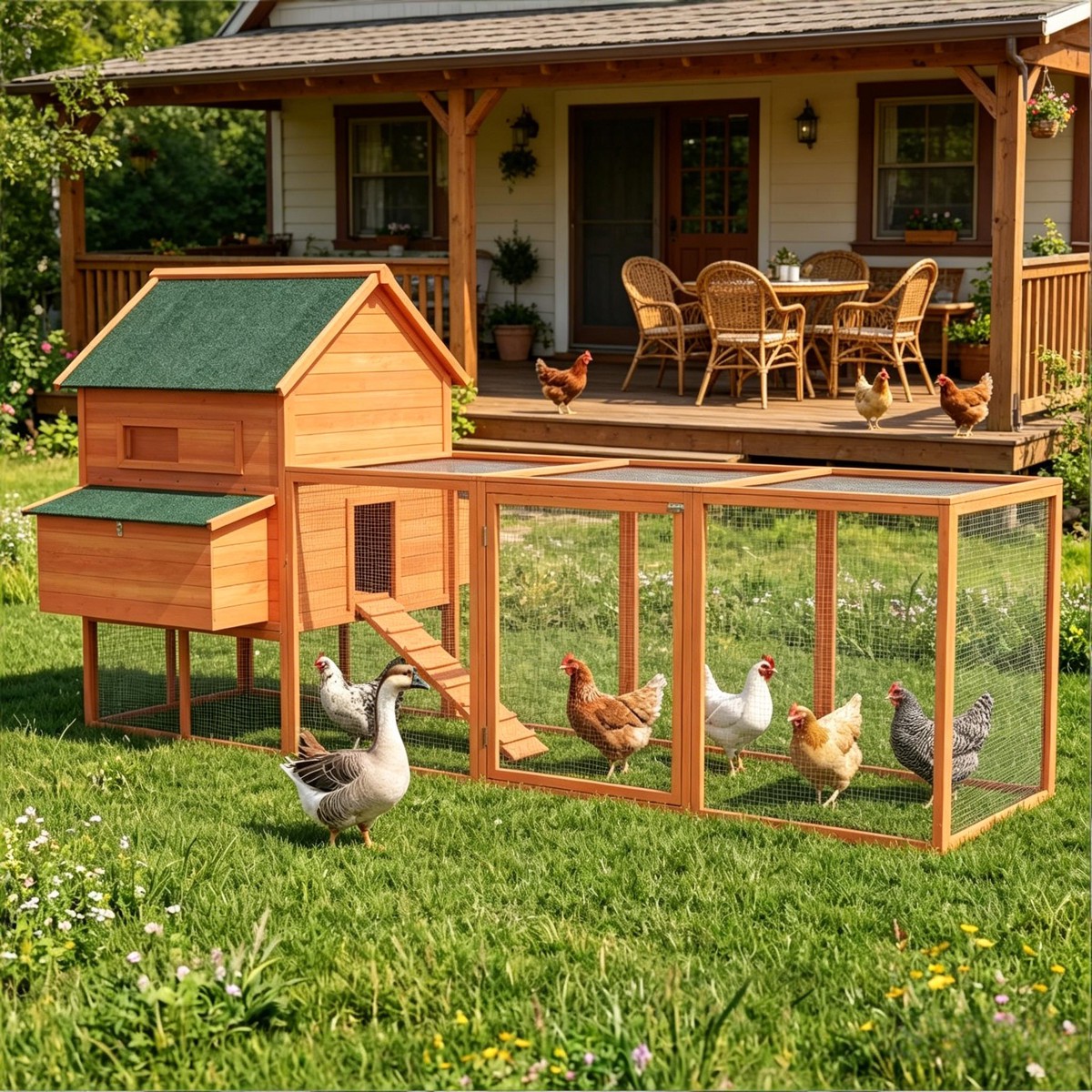 Spacious Goose House,Duck Coop,Wooden Chicken Coop,Pet House with Two Sliding Windows$557.99View on Mallflare
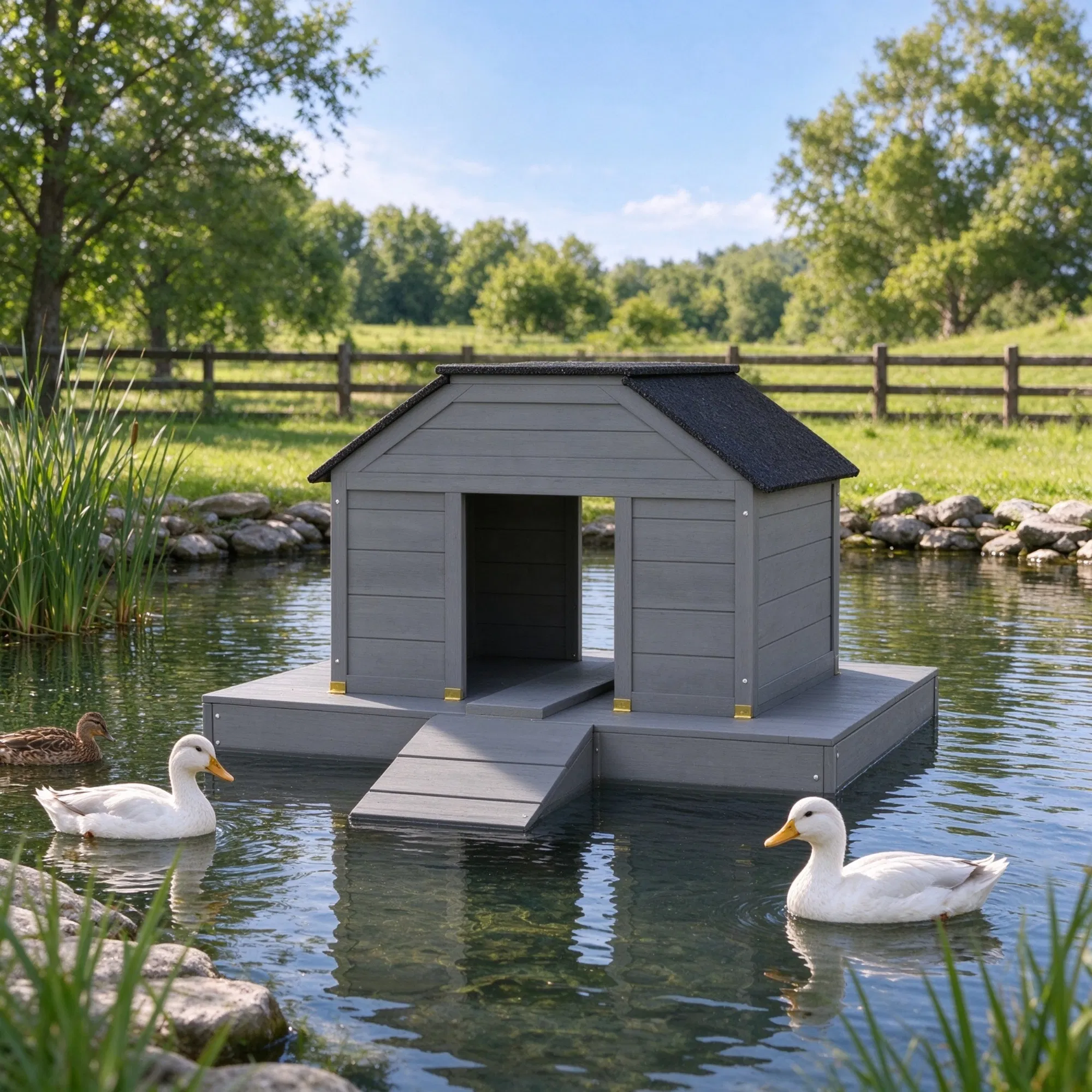 Floating Duck Coop, Wooden House with Ramp & Waterproof Asphalt Roof for Pond$577.99View on Mallflare
Highlights
- Welded galvanized wire over 1-inch or smaller mesh blocks raccoon reach and prevents ducks from forcing their heads through larger 2x4-inch poultry netting.
- Walk-in frames around 6.5 ft tall in 6.6x6.6 or 6.6x10 ft footprints are the standard tier for 4–8 ducks; low 36x25x27 in hutches are brooder or hospital cages.
- A waterproof, UV-stabilized tarp roof turns an open run into a dry loafing area; ducks need shade and dry bedding far more than chickens do.
- Hardware cloth (welded 1/2-inch mesh) at the lower 2–3 ft is the effective predator barrier; standard chicken wire alone stops chickens, not determined raccoons or foxes.
Best use cases
- Best fit: 4–8 ducks in a backyard — a 6.6x6.6x6.6 ft walk-in metal run with tarp cover and 1/2-inch hardware cloth skirt; skip open-top pens and chicken-wire-only builds.
- Best fit: 1–3 ducks or ducklings as a nursery/isolation unit — a 36x25x27 in wooden hutch with pull-out tray; skip it as a permanent home for adult ducks.
- Best fit: pond-side or rainy-climate flocks — a raised platform or gravel-drained floor plus full roof cover; skip flat dirt floors that turn to standing muck.
- Wrong fit: large-breed or multiple-drakes setups in any cage under 6 ft tall — ducks need ground-level turning room and vertical clearance for mating and wing-flapping.
Buying tips
- Size by floor area, not bird count labels: budget about 4–6 sq ft of run floor per duck, so a 6.6x6.6 ft run (≈43 sq ft) realistically holds 7–10 ducks with a separate shelter box.
- Specify 1/2-inch hardware cloth for the bottom 2–3 ft and roof edges; 1-inch welded wire is acceptable above that, but 2x4-inch poultry netting is a predator liability.
- Choose hot-dip galvanized or powder-coated steel frames over bare tube; galvanized wire plus UV-treated tarp cover is the durability baseline for year-round outdoor use.
- Add a solar automatic door with light sensor, timer, and anti-pinch on any walk-in run; ducks are vulnerable at dusk and a manual door is the most common flock-loss failure point.
Specs
| Enclosure Type | Walk-in run vs low hutch |
|---|---|
| Frame & Mesh | Galvanized steel / 1/2-in hardware cloth |
| Run Footprint | ≈43 sq ft (6.6x6.6 ft) and up |
| Weather Cover | UV tarp roof vs open top |
Related searches
What to check before buying
- Measure the footprint against your yard: a 6.6x6.6 ft run needs roughly a 7x7 ft clear pad plus clearance for door swing and tarp overhang.
- Confirm ground conditions — ducks create mud, so plan gravel, sand, or a raised platform and check that the run frame can be staked or anchored against wind.
- Check your climate: full tarp cover for heavy rain and snow load, partial cover for hot climates, and confirm the frame height clears your tallest gate or fence line.
- Verify companion parts before buying: solar door, feeder, waterer, and a nesting/shelter box are separate items, and the run must have a gable or flat panel the door can mount to.
FAQ
Data sources: eBay / Amazon listings and product attribute feeds. Updated Nov 28, 2026.
Some links on this page are affiliate links. If you buy after clicking one, we may earn a commission at no extra cost to you. This does not change which products appear here or their order. Affiliate disclosure.