
Photos from current listings. Actual item, color, and included accessories may vary.
Cute Chicken Coop Buying Guide
A cute chicken coop is a small-scale backyard henhouse whose design, color, and detailing are chosen for visual charm as much as function, and the primary trade-off is aesthetic appeal versus predator-proof construction and cleanability. The decision rule: buy a coop with a raised, vented living area, a lockable nest box, and a removable droppings tray; skip any cute coop whose access doors lack predator latches or whose run attaches with flimsy wire and staple-only joints.
Median $246.99
Key takeaways
- Wooden coops in the 77-inch class typically use fir or pine framing with 3-5 mm plywood panels; thicker 10-12 mm tongue-and-groove walls resist warping and hold warmth better in winter.
- Predator resistance hinges on hardware cloth (19-gauge welded wire, 1/2-inch mesh) rather than chicken wire, plus barrel bolts or hasp-and-padlock latches on every human-access door.
- A removable metal or plastic droppings tray and a hinged roof over the nest box cut weekly cleaning time from roughly an hour to 15 minutes on coops this size.
At a glance
- Category
- Chicken Coops & Runs
- Last updated
- Nov 28, 2026
Current offers
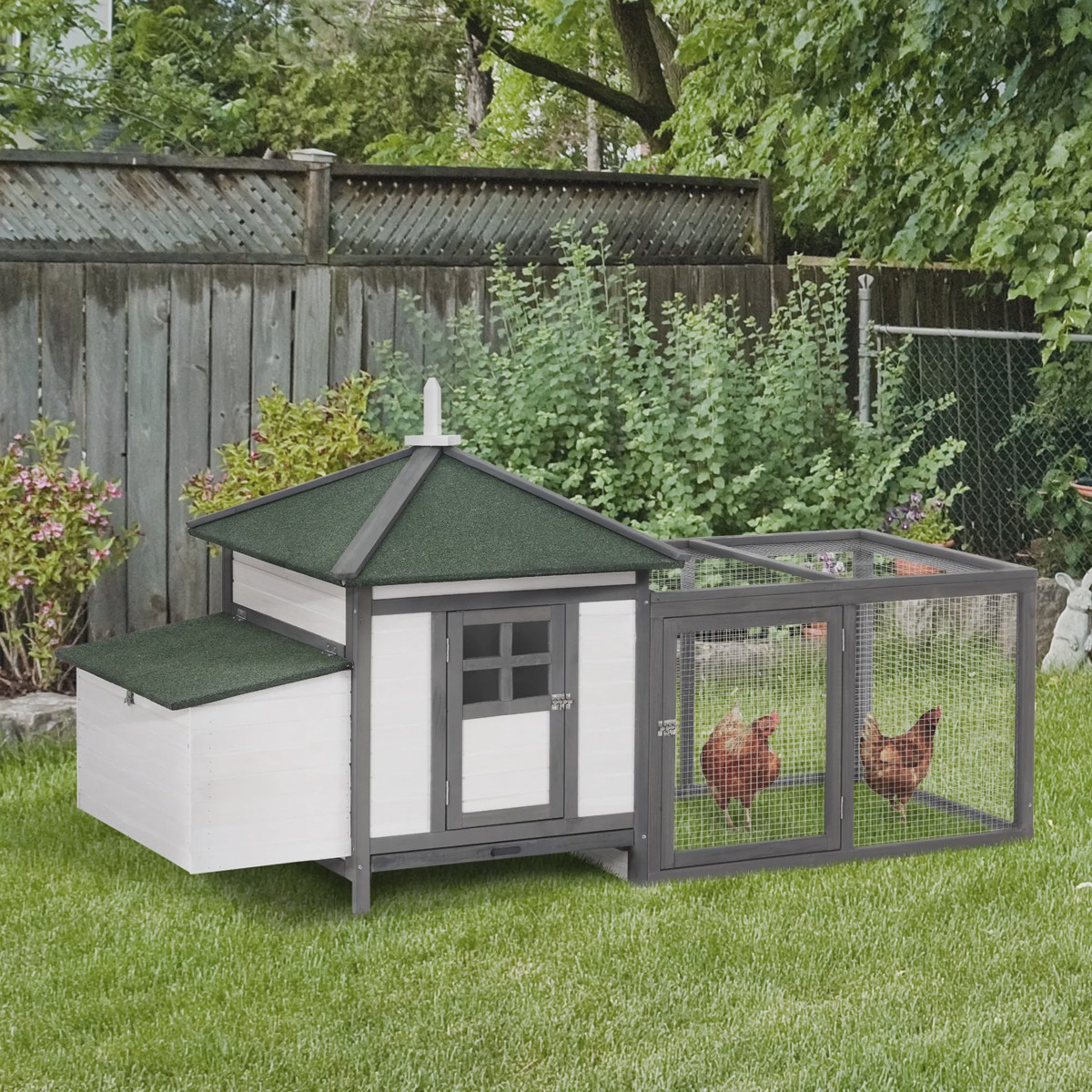 77" Wooden Chicken Coop with Nesting Box, Cute Outdoor Hen House Removable Tray, Ramp Run, for Garden Backyard, Gray$245.99View on Mallflare
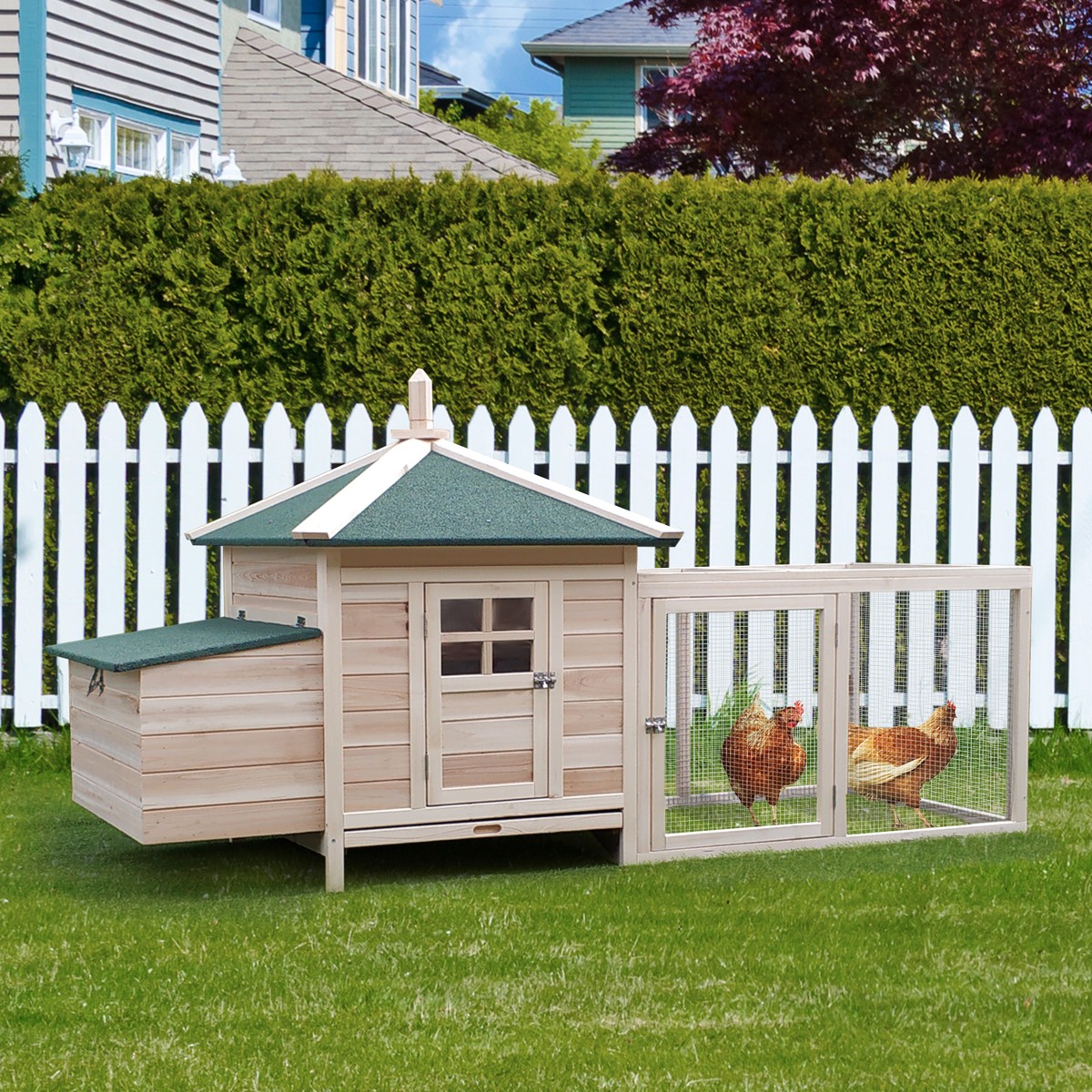 77" Wooden Chicken Coop With Nesting Box, Cute Outdoor Hen House Removable Tray, Ramp Run, For Garden Backyard, Natural$246.99View on Mallflare
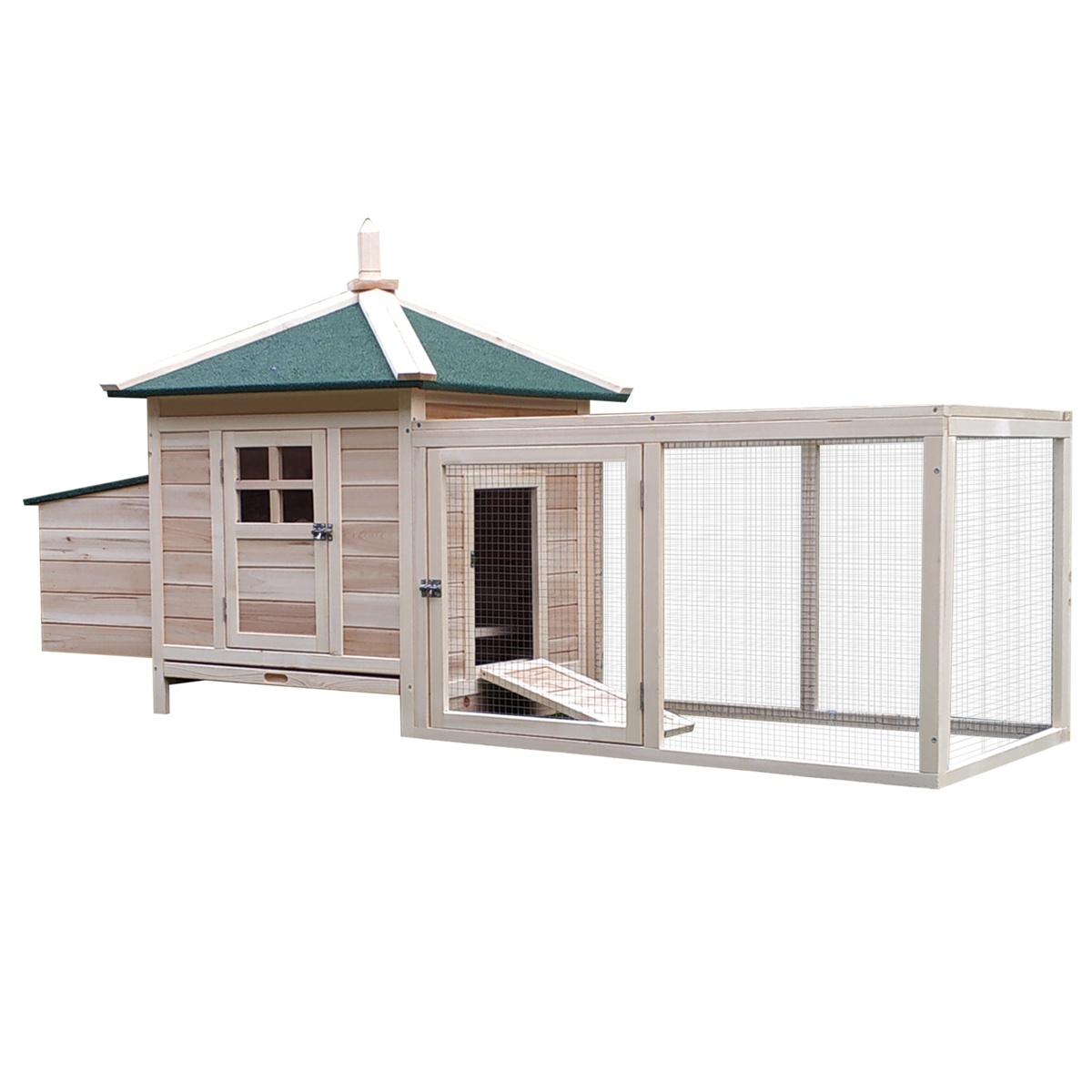 PawHut 77 Wooden Chicken Coop With Nesting Box, Cute Outdoor Hen House Removable Tray, Ramp Run, For Garden Backyard, Natural$264.99View on Mallflare
Highlights
- Wooden coops in the 77-inch class typically use fir or pine framing with 3-5 mm plywood panels; thicker 10-12 mm tongue-and-groove walls resist warping and hold warmth better in winter.
- Predator resistance hinges on hardware cloth (19-gauge welded wire, 1/2-inch mesh) rather than chicken wire, plus barrel bolts or hasp-and-padlock latches on every human-access door.
- A removable metal or plastic droppings tray and a hinged roof over the nest box cut weekly cleaning time from roughly an hour to 15 minutes on coops this size.
- Ventilation area should be at least 1 square foot per bird, placed high above roost height to exhaust ammonia and moisture without creating drafts on the hens.
Best use cases
- Best fit: 2-4 hens in a suburban backyard with a fenced garden — choose a raised wooden coop with an attached run and a removable tray, and place it on level ground or pavers.
- Best fit: a visible garden focal point where the coop sits near a patio — pick a painted or natural-wood coop with decorative trim and a shingled roof, and add a hardware-cloth skirt to stop digging predators.
- Wrong fit: open-range flocks or more than 6 birds — skip cute compact coops entirely; step up to a walk-in coop with full-height access and at least 4 square feet of floor space per bird.
- Wrong fit: coastal or high-rain climates — avoid untreated plywood cute coops; choose pressure-treated framing, a raised floor, and an oversized roof overhang, or a plastic coop instead.
Buying tips
- Size by floor area, not bird count claims: allow 3-4 square feet of interior floor per hen and 8-10 inches of roost bar per bird; a 77-inch coop with a 30-inch-deep body fits 3-4 standard hens comfortably.
- Check wall and floor thickness before buying: 10 mm or thicker tongue-and-groove panels outlast 3-5 mm plywood by years and resist moisture warping in humid gardens.
- Require 1/2-inch 19-gauge hardware cloth on all openings and a lockable nest-box lid; chicken wire (hex mesh) stops hens but not raccoons or foxes.
- Confirm the run attaches with bolts and brackets rather than staples, and that the coop sits at least 12-18 inches off the ground to deter rodents and keep the floor dry.
Specs
| Frame Material | Fir/pine wood vs molded plastic |
|---|---|
| Wall Thickness | 3-5 mm ply vs 10-12 mm tongue-and-groove |
| Mesh Grade | 1/2-in 19-ga hardware cloth vs chicken wire |
| Capacity | 3-4 hens (3-4 sq ft floor each) |
Related searches
What to check before buying
- Measure your intended footprint including the run: a 77-inch coop plus run typically needs roughly 8-10 feet of length and 3-4 feet of width of level ground.
- Confirm gate and door widths along your delivery path and garden access — assembled coops this size often will not fit through a standard 36-inch gate.
- Verify ground conditions: coops must sit on level soil, gravel, or pavers; sloped lawns require a leveled base or the frame will rack and doors will bind.
- Plan for power and water access nearby if you add heated waterers or coop lighting, and check local ordinances for setback distances and hen limits.
FAQ
Data sources: eBay / Amazon listings and product attribute feeds. Updated Nov 28, 2026.
Some links on this page are affiliate links. If you buy after clicking one, we may earn a commission at no extra cost to you. This does not change which products appear here or their order. Affiliate disclosure.