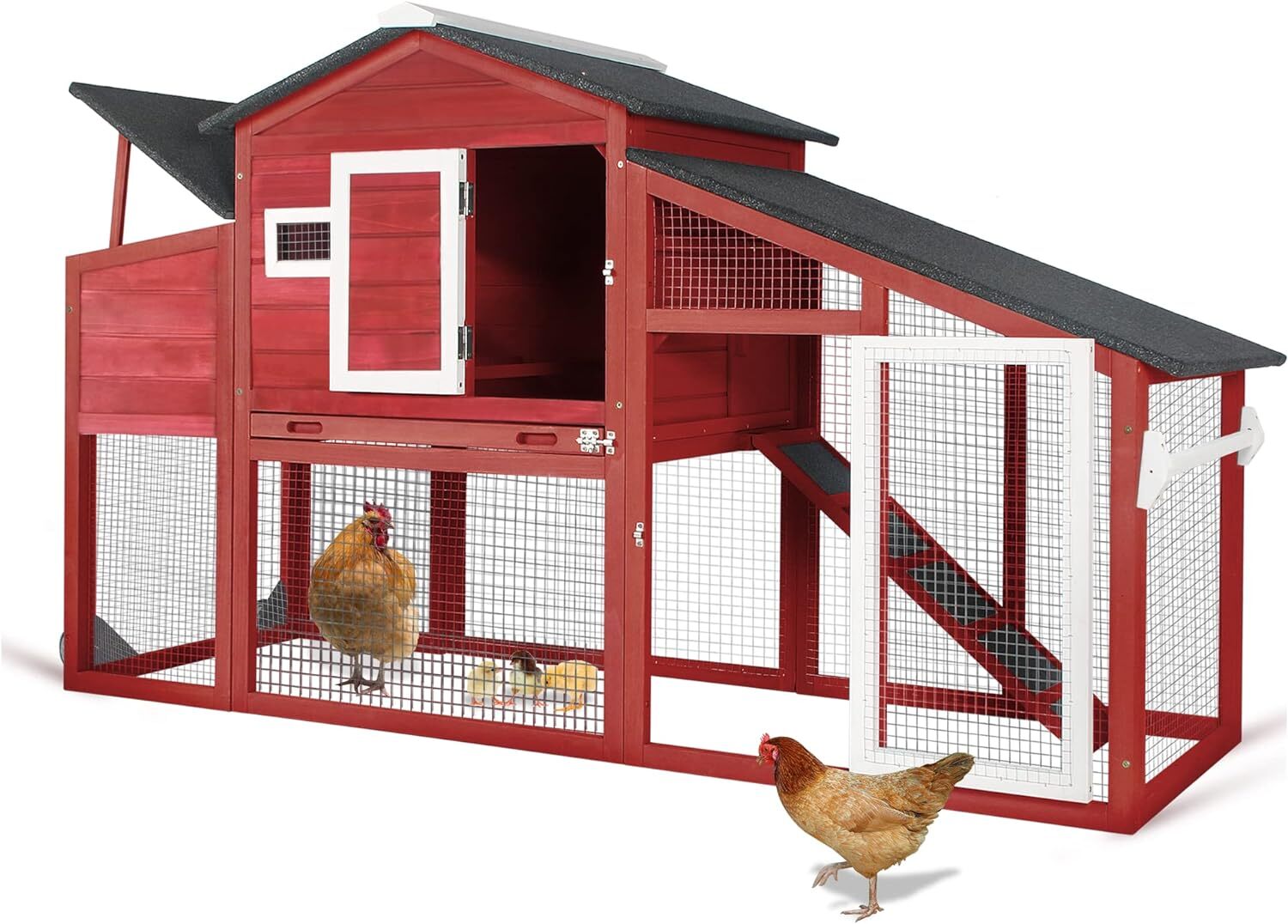

Photos from current listings. Actual item, color, and included accessories may vary.
Chicken Coop On Wheel Buying Guide
A chicken coop on wheels is a mobile housing unit that lets you rotate grazing areas while keeping hens protected. The key trade-off is mobility versus predator resistance: wheel hardware and lightweight frames ease moving but often sacrifice structural rigidity and secure flooring. Choose a wheeled coop only if you plan to move it at least weekly on level ground; otherwise, a fixed coop with a run provides better durability.
Key takeaways
- Wheel type determines mobility: solid rubber or PU wheels handle rough grass, while small plastic casters sink in soft soil.
- Wood coops typically use 12–18 mm fir or pine plywood; thinner panels under 10 mm flex and warp when moved frequently.
- Metal coops use 0.8–1.2 mm galvanized steel tubing; heavier gauge resists bending but adds weight that complicates rolling.
At a glance
- Category
- Chicken Coops & Runs
- Last updated
- Nov 28, 2026
Current offers
Highlights
- Wheel type determines mobility: solid rubber or PU wheels handle rough grass, while small plastic casters sink in soft soil.
- Wood coops typically use 12–18 mm fir or pine plywood; thinner panels under 10 mm flex and warp when moved frequently.
- Metal coops use 0.8–1.2 mm galvanized steel tubing; heavier gauge resists bending but adds weight that complicates rolling.
- Nesting box count and pull-out tray design directly affect daily maintenance: two boxes suit 4–6 hens, one box fits 2–3.
Best use cases
- Best fit: 2–4 hens in a backyard with flat lawn — pick a wooden tractor coop with 8–10 inch wheels and a pull-out tray for easy cleaning.
- Best fit: rotational grazing on pasture — choose a lightweight metal tunnel coop with a waterproof cover and large wheels to move daily.
- Wrong fit: uneven slopes or tight garden paths — skip small casters and buy a fixed coop with a run instead.
- Wrong fit: flocks over 6 hens — a single wheeled coop lacks space; use a wheeled coop only as a breeding or isolation pen.
Buying tips
- Match coop floor area to flock: allow 2–3 sq ft per hen inside; a 4-hen coop needs at least 8–12 sq ft of interior floor space.
- Check wheel diameter: 8 inches or larger rolls over grass and gravel; smaller wheels jam in soft ground and require lifting.
- Verify wood treatment: heat-treated or pressure-treated lumber resists rot; untreated pine lasts only 1–2 seasons outdoors.
- Confirm predator features: a wheeled coop must have a secure latching door and 1/2-inch hardware cloth, not chicken wire, over vents.
Specs
| Wheel Type | Solid rubber / plastic casters |
|---|---|
| Frame Material | Wood (fir/pine) vs galvanized steel |
| Capacity | 2–6 hens (2–3 sq ft per hen) |
| Mobility | Daily (light metal) vs weekly (wood) |
Related searches
What to check before buying
- Measure your garden gate and path width; wheeled coops range from 43 to 118 inches long and must fit through openings.
- Ensure the ground is level and firm — soft mud or steep slopes make rolling difficult and can tip the coop.
- Check that the coop includes a nesting box, roost, and pull-out tray; missing parts mean extra purchases.
- Verify the run attachment: some wheeled coops have a built-in run, others require a separate run to be connected.
FAQ
Data sources: eBay / Amazon listings and product attribute feeds. Updated Nov 28, 2026.
Some links on this page are affiliate links. If you buy after clicking one, we may earn a commission at no extra cost to you. This does not change which products appear here or their order. Affiliate disclosure.