
Photos from current listings. Actual item, color, and included accessories may vary.
Chicken Coop Laying Box Buying Guide
A chicken coop laying box is a dedicated, darkened nesting compartment that encourages hens to lay in a clean, accessible spot instead of on the floor or in hidden corners. The core trade-off is material and drainage architecture: molded plastic roll-out boxes resist moisture and mites and self-collect eggs, while wood multi-compartment units offer capacity and ventilation but demand sealing and bedding discipline. Buy plastic roll-out tiers for humid climates and easy egg collection; buy wood tiers only with sealed joints and a lift-off lid for inspection.
Median $73.99
Key takeaways
- Roll-out designs slope the floor 10–15 degrees so eggs roll into an external basket, eliminating broken eggs and dirty shells from foot traffic.
- Molded HDPE or PP plastic boxes resist moisture, mites, and ammonia; wood boxes need sealed joints and annual re-coating to prevent rot and mite harborage.
- Compartment count sets capacity: plan one 12x12-inch nest per 3–5 hens, so a 3-compartment box serves 9–15 hens and an 8-compartment unit serves 24–40 hens.
At a glance
- Category
- Chicken Coops & Runs
- Last updated
- Nov 28, 2026
Current offers
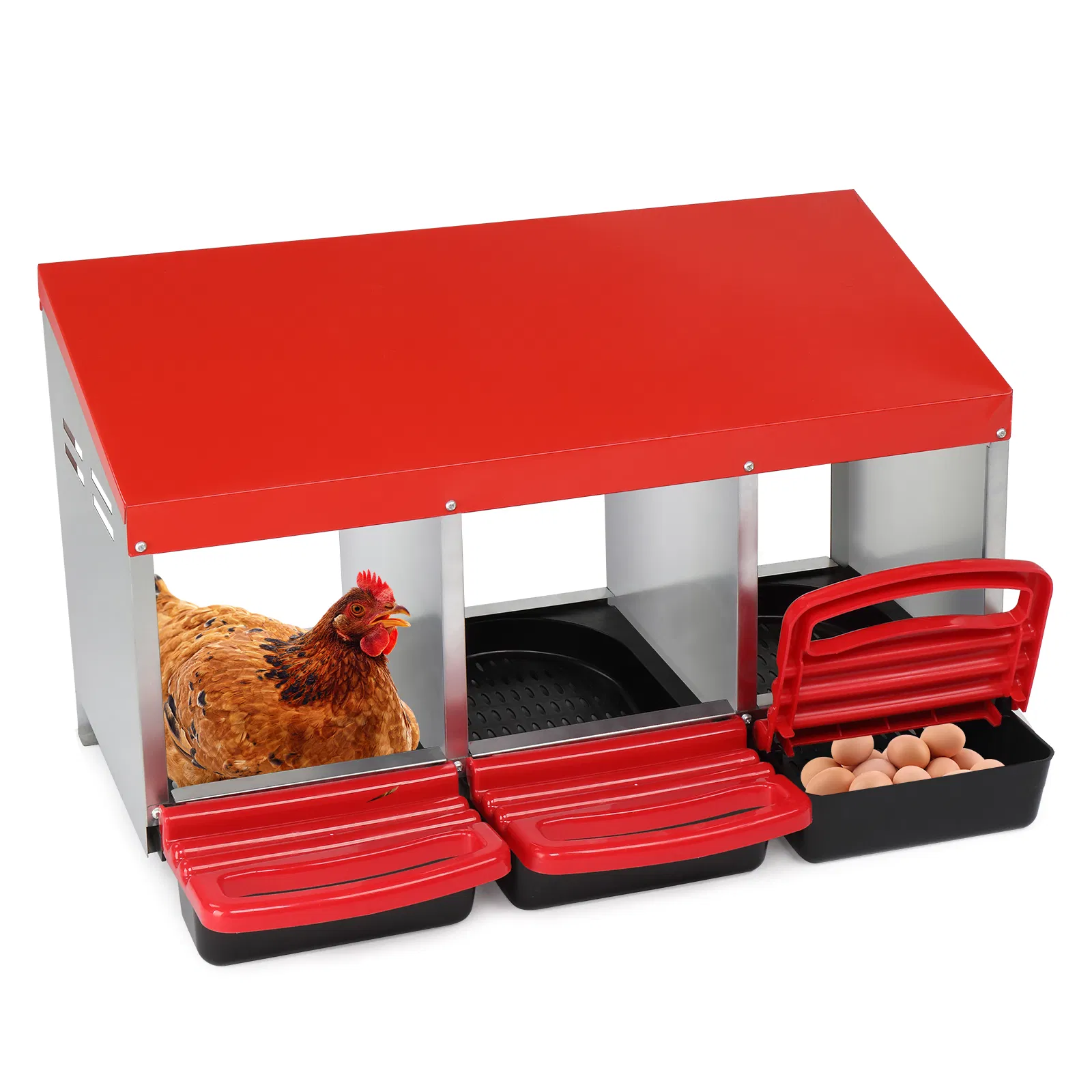 3 Compartment Roll Out Chicken Nesting Box with Plastic Basket, Egg Nest Box Laying Box Hens Coop Box, Red$73.99View on Mallflare
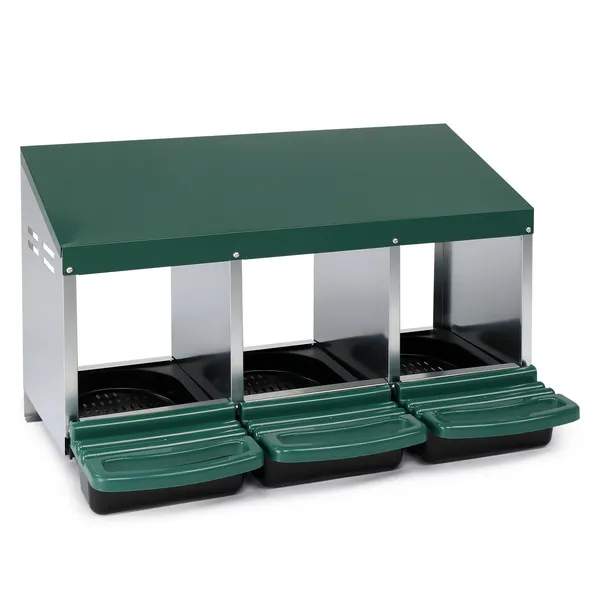 3 Compartment Roll Out Chicken Nesting Box With Plastic Basket, Egg Nest Box Laying Box Hens Coop Box, Green$73.99View on Mallflare
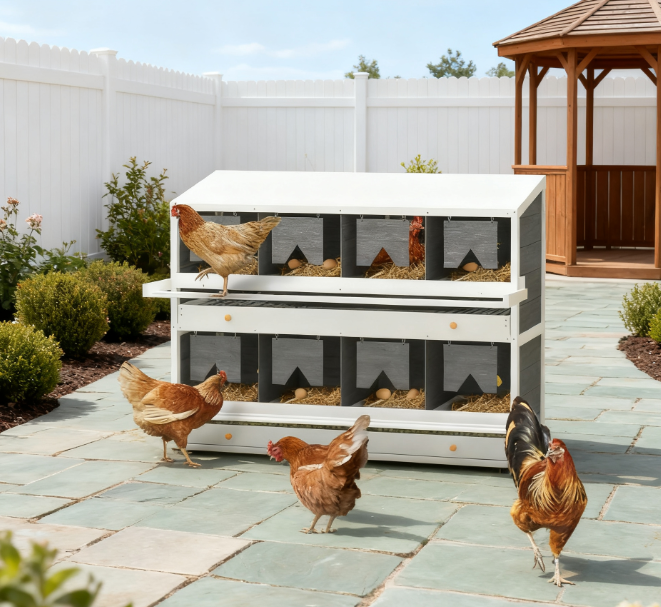 Chicken Nesting Box, 8 Compartment Wood Laying Boxes For Coop$348.99View on Mallflare
Highlights
- Roll-out designs slope the floor 10–15 degrees so eggs roll into an external basket, eliminating broken eggs and dirty shells from foot traffic.
- Molded HDPE or PP plastic boxes resist moisture, mites, and ammonia; wood boxes need sealed joints and annual re-coating to prevent rot and mite harborage.
- Compartment count sets capacity: plan one 12x12-inch nest per 3–5 hens, so a 3-compartment box serves 9–15 hens and an 8-compartment unit serves 24–40 hens.
- Leg-mounted boxes raise nests 18–24 inches off the ground, matching the natural elevated laying height hens prefer and easing cleaning underneath.
Best use cases
- Best fit: a backyard flock of 9–15 hens in a humid or coastal climate — pick a 3-compartment plastic roll-out box with a sloped floor and external egg basket to cut cleaning and breakage.
- Best fit: a larger flock of 24–40 hens or a coop wall with free space — pick an 8-compartment wood laying box only if you seal joints and add a removable lid for inspection.
- Wrong fit: a flock under 6 hens — a single 12x12-inch nest or a 2-compartment box is enough; skip 8-compartment units that waste coop footprint and bedding.
- Wrong fit: an open, unsheltered run — plastic or wood boxes placed in direct rain need a lid and a dry mounting wall; exposed boxes grow mold and deter laying.
Buying tips
- Size nests at 12x12 inches minimum per compartment; bantam breeds tolerate 10x10 inches, but standard hens need the full 12-inch depth to turn around.
- Choose roll-out plastic trays over flat wood floors in humid regions: the sloped tray drains moisture and moves eggs out of reach of droppings.
- Mount boxes 18–24 inches above the coop floor and add a 4-inch lip or perch bar so hens can enter without scratching bedding out.
- For wood 8-compartment units, confirm the lid is hinged or fully removable and that joints are glued and sealed — unsealed butt joints wick moisture and harbor mites.
Specs
| Material | HDPE/PP plastic vs sealed pine plywood |
|---|---|
| Compartment Count | 1–3 small flock / 8 large flock |
| Nest Opening Size | 12x12 in standard / 10x10 in bantam |
| Mounting Type | Wall-mount vs leg-stand 18–24 in high |
Related searches
What to check before buying
- Measure coop wall space: each compartment needs 12x12 inches plus 4 inches of clearance for the lid or roll-out basket to open.
- Confirm mounting height: boxes should sit 18–24 inches off the floor, with a perch or ramp within 8 inches of the entrance lip.
- Check climate exposure: plastic boxes suit humid or rainy runs; wood boxes need a roofed, dry wall and sealed exterior.
- Verify companion parts: roll-out trays require a level mounting surface, and leg-mounted units need firm, level ground or a coop floor that accepts lag bolts.
FAQ
Data sources: eBay / Amazon listings and product attribute feeds. Updated Nov 28, 2026.
Some links on this page are affiliate links. If you buy after clicking one, we may earn a commission at no extra cost to you. This does not change which products appear here or their order. Affiliate disclosure.