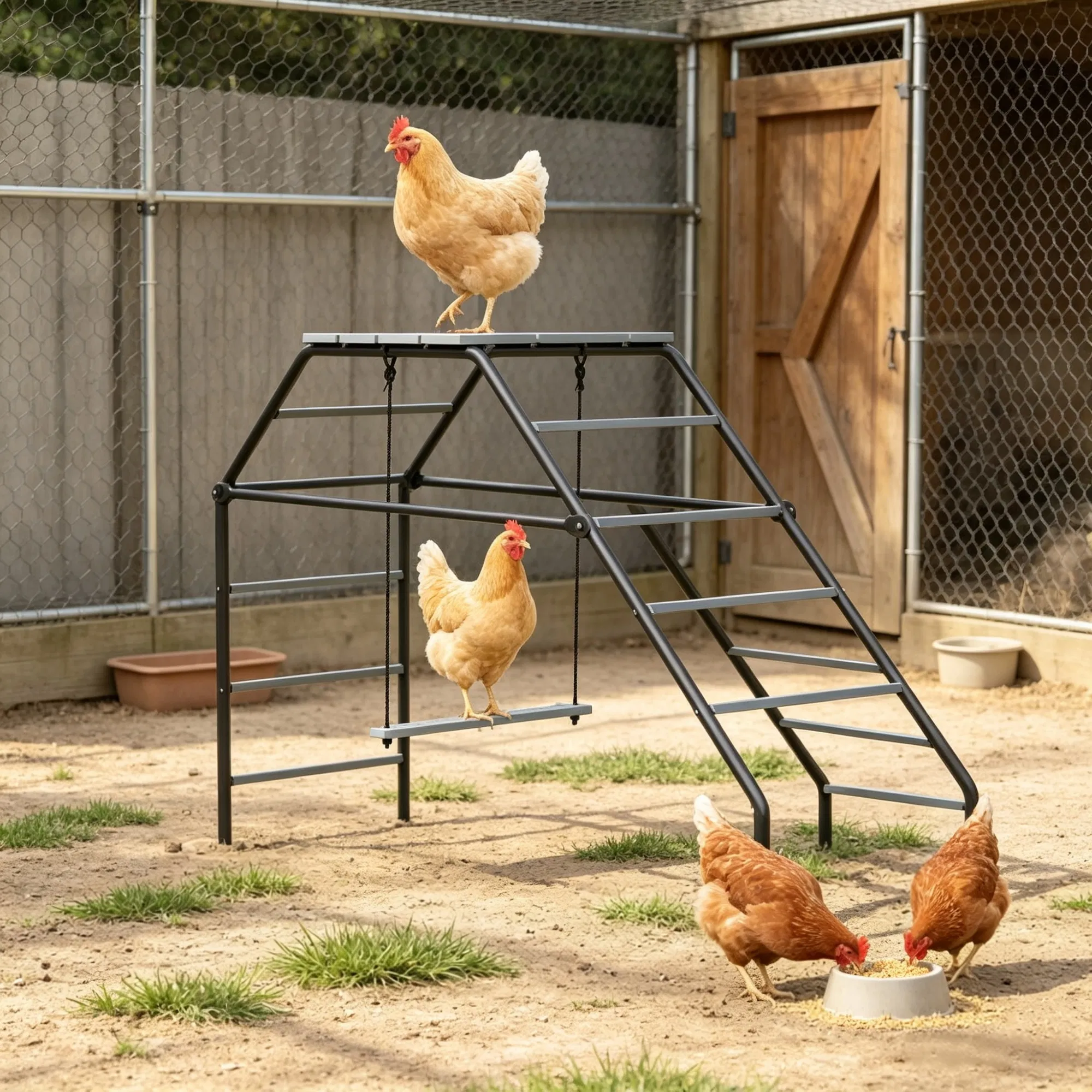

Photos from current listings. Actual item, color, and included accessories may vary.
Brooder Chicken Coop Buying Guide
A brooder chicken coop is a small, controlled-environment enclosure for chicks from hatch until they are fully feathered and ready for the main coop. The core trade-off is between precise heat and draft control for young birds versus durable, easy-clean construction that survives daily bedding changes. Choose a brooder with adjustable overhead heat, secure wire mesh, and a solid floor; skip any unit that relies on fixed heat or open-bottom designs.
Key takeaways
- Adjustable heat source is the defining feature: a brooder plate or dimmable lamp lets you lower temperature roughly 5°F per week from 95°F at hatch.
- Wire mesh gauge and spacing determine predator and escape security; 1/2-inch hardware cloth prevents chick escape and keeps out snakes and rodents.
- Solid, removable floor trays in plastic or galvanized steel beat open-bottom pens for sanitation and moisture control during brooding.
At a glance
- Category
- Chicken Coops & Runs
- Last updated
- Nov 28, 2026
Current offers
Highlights
- Adjustable heat source is the defining feature: a brooder plate or dimmable lamp lets you lower temperature roughly 5°F per week from 95°F at hatch.
- Wire mesh gauge and spacing determine predator and escape security; 1/2-inch hardware cloth prevents chick escape and keeps out snakes and rodents.
- Solid, removable floor trays in plastic or galvanized steel beat open-bottom pens for sanitation and moisture control during brooding.
- Roosting bars and perches should be removable and sized at 1-2 inches diameter; adjustable swing perches help transition chicks to off-floor resting.
Best use cases
- Best fit: a garage or utility room brooder with a dimmable heat lamp or plate, solid floor, and 1/2-inch mesh for 1-25 chicks through 6-8 weeks.
- Best fit: a backyard integration setup where the brooder sits inside the main run, using adjustable perches and a wire pen so chicks acclimate to the flock safely.
- Wrong fit: open-bottom or wire-floor brooders for young chicks in cool climates—these cause drafts and foot problems; choose a solid-floor, draft-shielded design instead.
- Wrong fit: a full-size coop used as a brooder—large air volume makes temperature control inefficient; pick a compact pen sized at 1-2 sq ft per chick.
Buying tips
- Size the brooder at 1 sq ft per chick for weeks 1-4 and 2 sq ft per chick by week 6; a 24x36-inch pen suits about 6-8 chicks to 6 weeks.
- Choose a heat source with a dimmer or adjustable height: start at 95°F and reduce 5°F weekly; a 250W lamp fits most small brooders, but a brooder plate is safer and cheaper to run.
- Specify 1/2-inch hardware cloth, not chicken wire; chicken wire's 1-inch hex lets chicks slip through and does not stop predators.
- Pick removable roosting bars and perches at 1-2 inches diameter with adjustable height so chicks can move off the floor as they feather out.
Specs
| Heat Source | Adjustable plate or dimmable lamp |
|---|---|
| Mesh Spacing | 1/2-inch hardware cloth |
| Floor Type | Solid removable tray |
| Capacity | 1-2 sq ft per chick by age |
Related searches
What to check before buying
- Measure your brooder footprint: allow 1-2 sq ft per chick and confirm the pen fits your garage, mudroom, or run with clearance for a heat source.
- Check floor and drainage: a solid, removable tray or sealed plywood base is required; bare concrete or soil floors stay wet and chill chicks.
- Confirm power and plug standard for your heat lamp or plate, and use a GFCI outlet; plan cord routing away from waterers and bedding.
- Verify companion parts: a chick waterer, feeder, thermometer, and bedding (pine shavings) are needed on day one; perches and roosting bars are added from week 3-4.
FAQ
Data sources: eBay / Amazon listings and product attribute feeds. Updated Nov 28, 2026.
Some links on this page are affiliate links. If you buy after clicking one, we may earn a commission at no extra cost to you. This does not change which products appear here or their order. Affiliate disclosure.