
Photos from current listings. Actual item, color, and included accessories may vary.
Automatic Chicken House Buying Guide
An automatic chicken house solves the daily open-close chore, but reliability hinges on the door mechanism, power source, and predator-proofing—not just the automation label. Buyers often overlook how the door interfaces with their specific coop framing and whether the opener senses resistance, which determines whether a bird gets trapped or a raccoon gets in.
Median $134.99
Key takeaways
- Light-sensor and timer-driven doors are the two main control architectures; light-sensor models open at dawn and close at dusk but can be fooled by artificial light or heavy overcast.
- Door drive types split into motorized linear actuators (sliding or swinging) and spring-loaded pull cords; linear actuators offer stronger resistance detection and are less prone to jamming from debris.
- Power options are 4×AA battery (most common, 6–12 month life), 6V/12V DC adapter, or small solar panel; battery-only units avoid trenching but need lithium or alkaline cells rated for outdoor temperature swings.
At a glance
- Category
- Chicken Coops & Runs
- Last updated
- Nov 28, 2026
Current offers
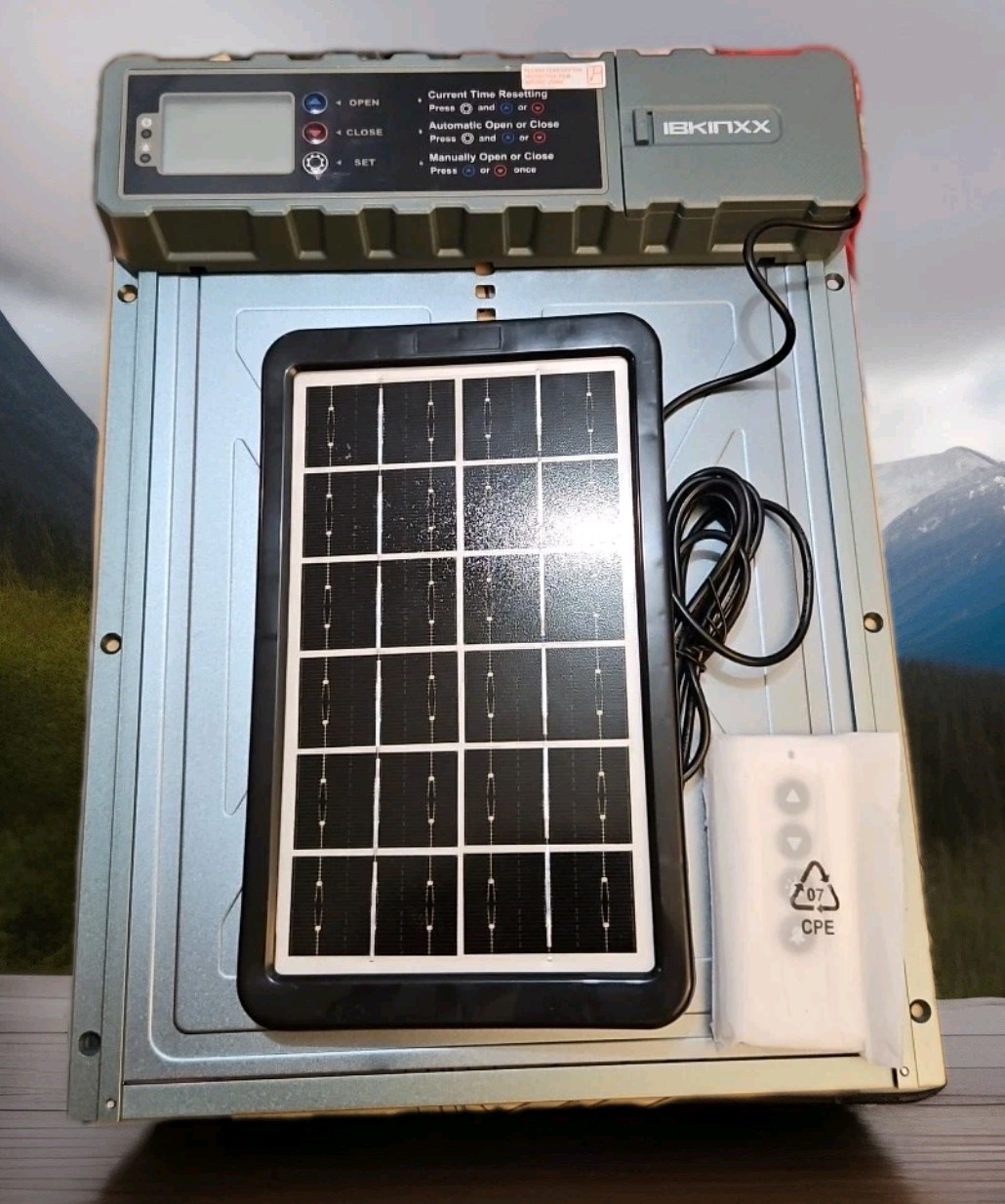 Solar Automatic Chicken Coop Door with Light Sensor Timer LCD Display$29.99View on eBay
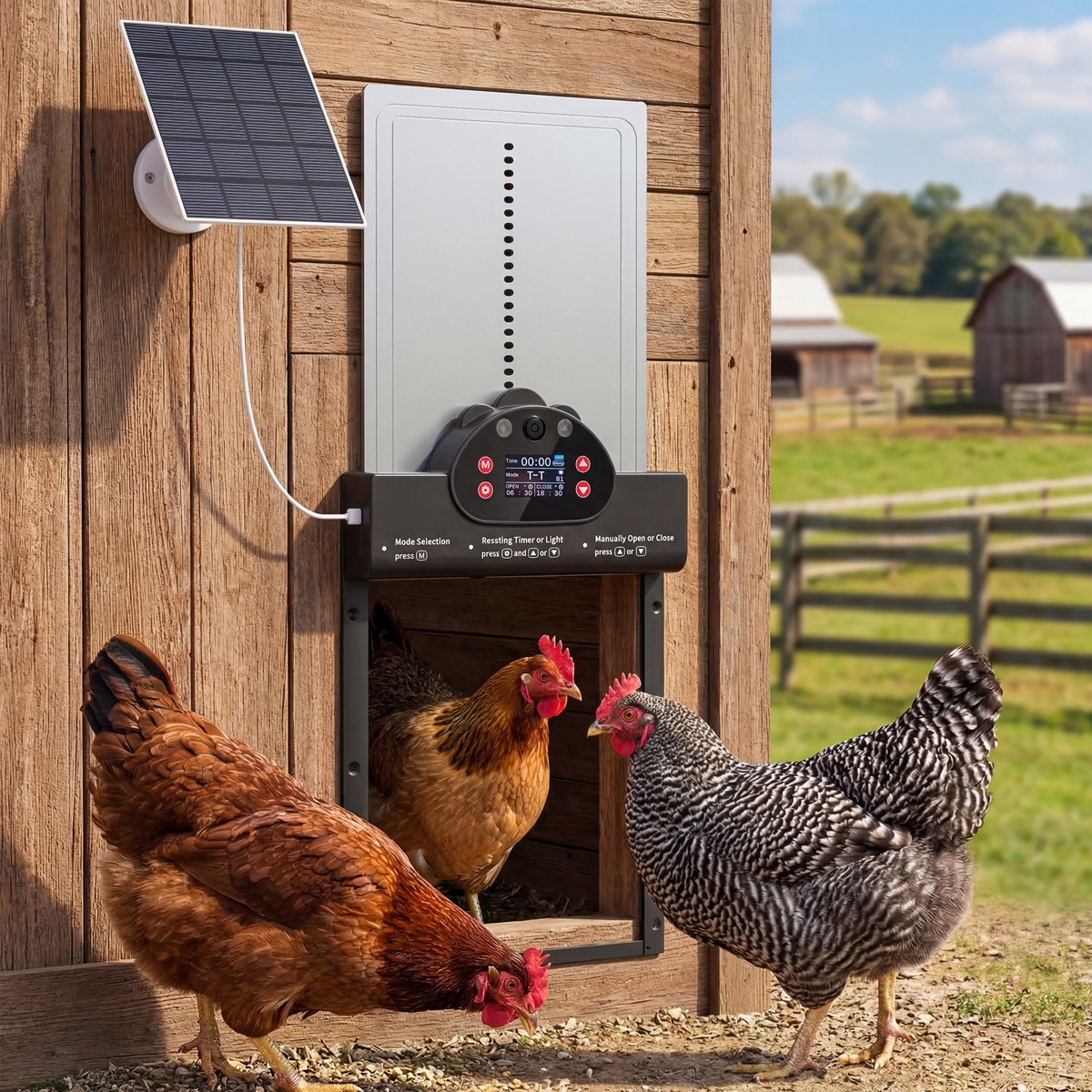 2K HD AI Camera Automatic Chicken Coop Door with APP Remote Control, WiFi Solar Powered 5200 mAh Large Battery$111.99View on Mallflare
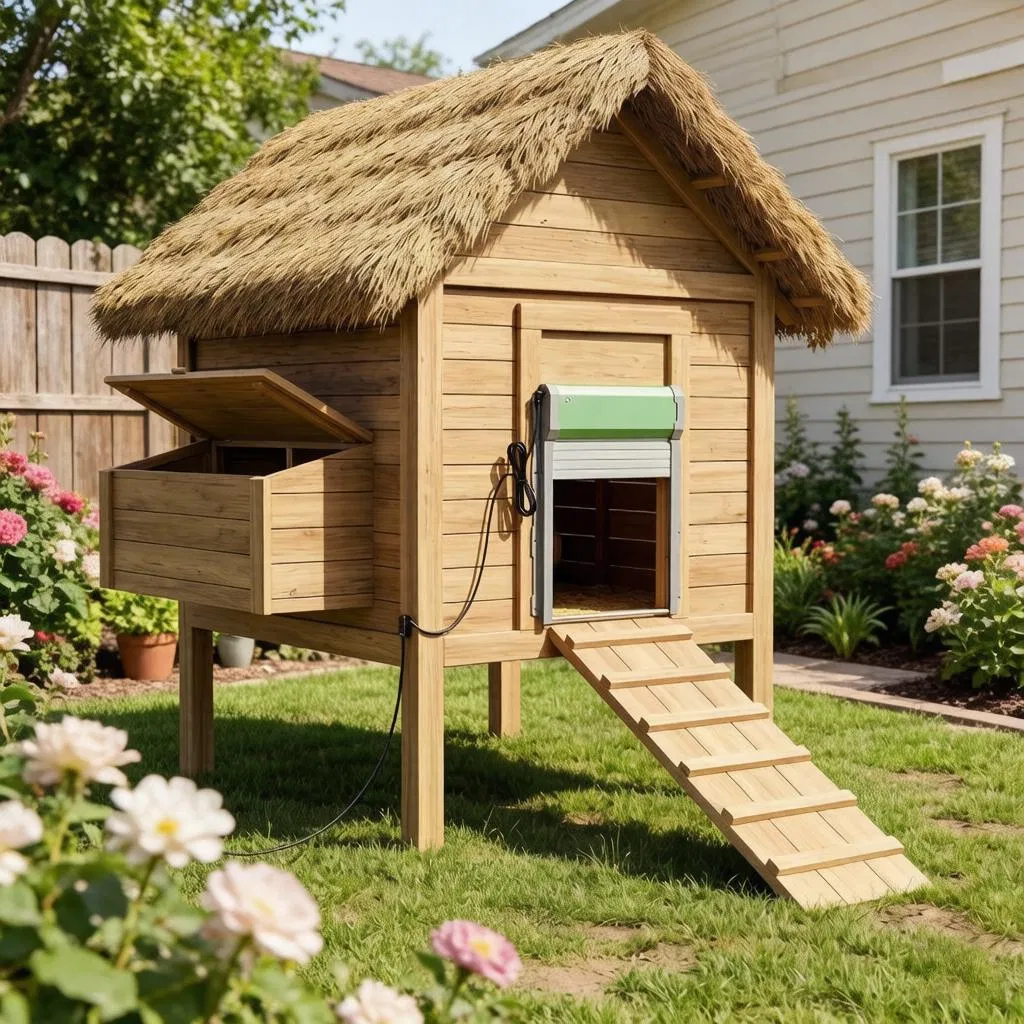 Automatic chicken coop door , equipped with remote control light sensor and outdoor timer$134.99View on Mallflare
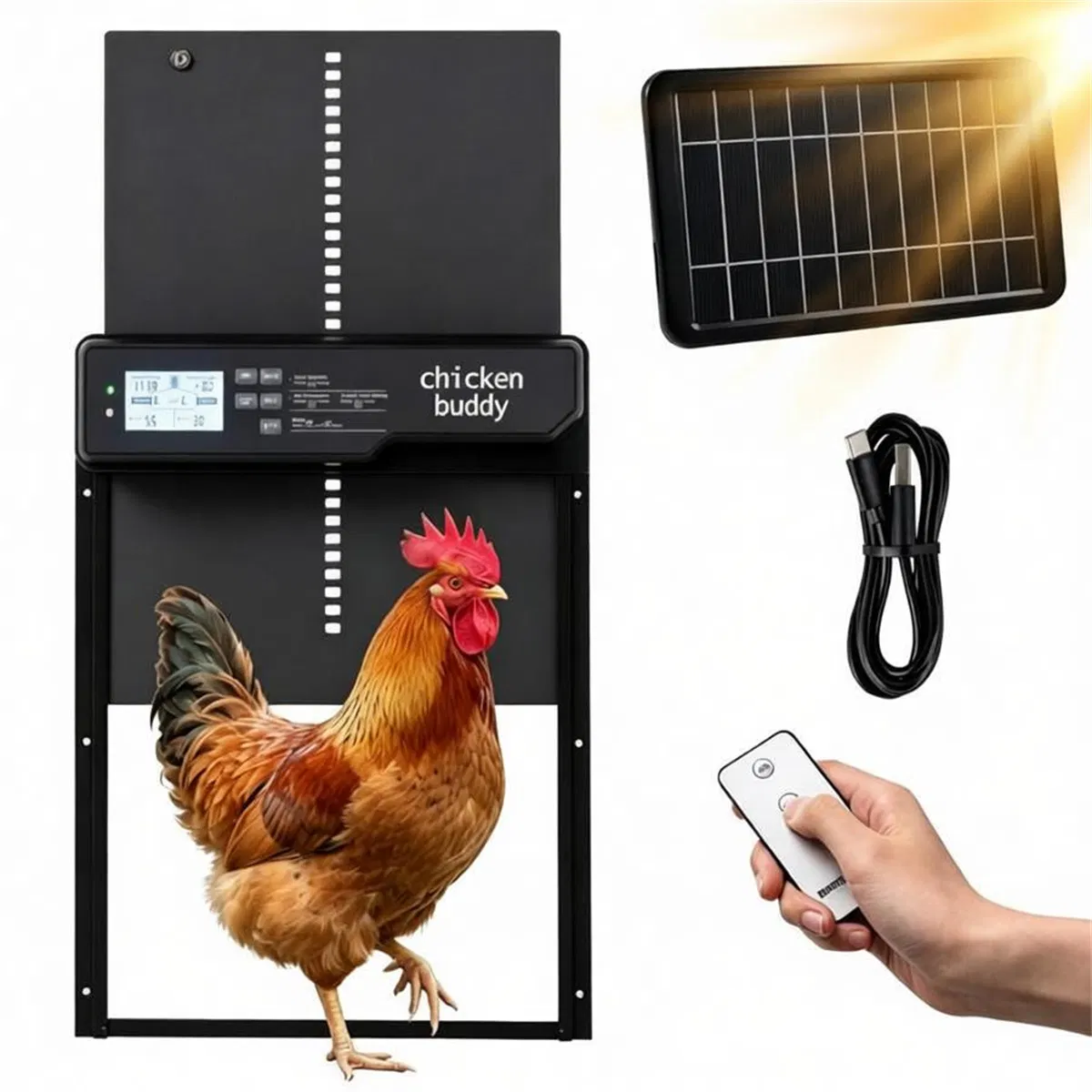 Solar Powered Automatic Chicken Coop Door with 4 Control Modes Light Sensor Timer Remote Manual, Anti-Pinch Weatherproof Aluminum Alloy Poultry Opener for Chickens Ducks Pigeons$141.99View on Mallflare
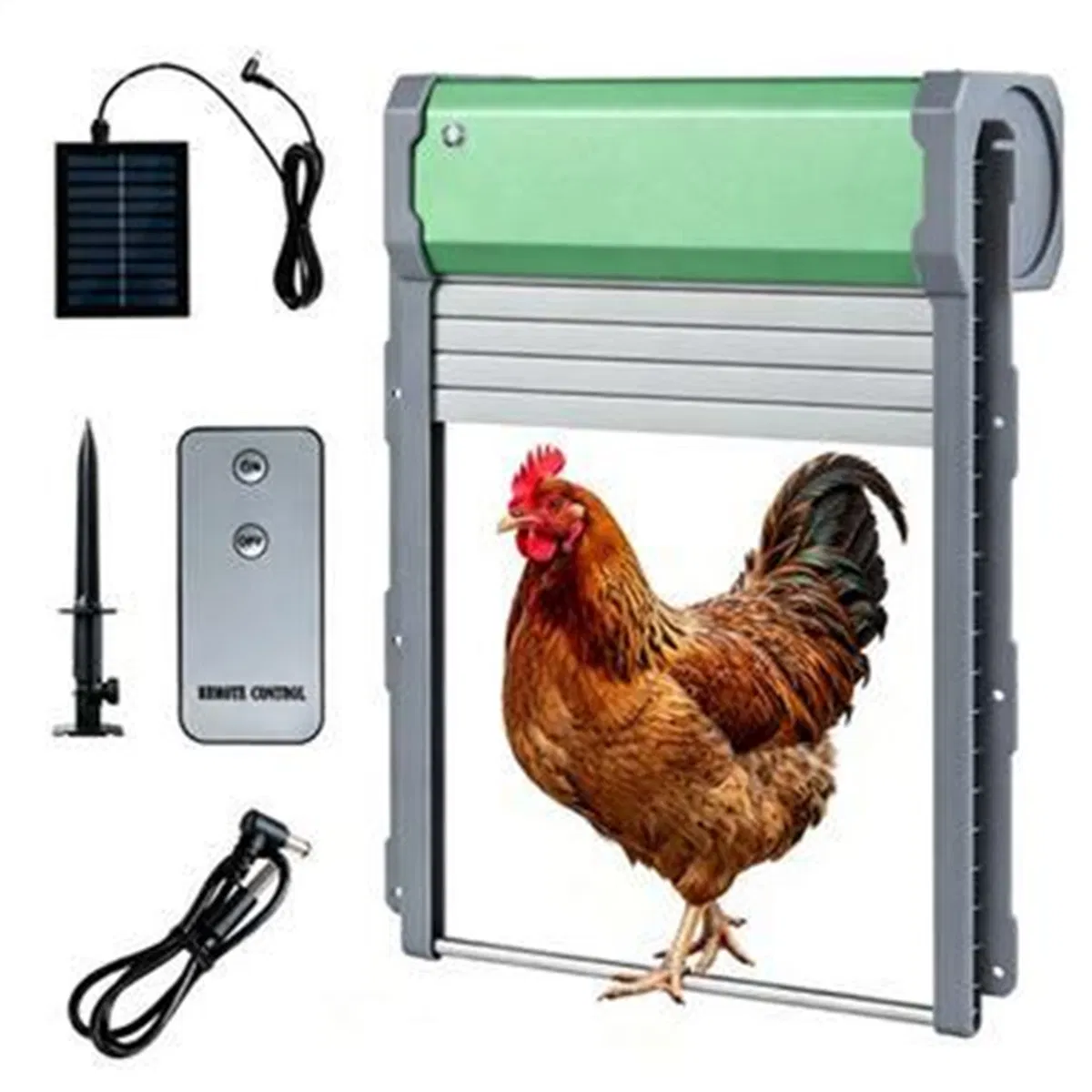 Solar Powered Automatic Chicken Coop Door with 4 Modes Light Sensor Timer Remote Control, Anti-Pinch Weatherproof Aluminum Opener for Chickens Ducks Rabbits Poultry$141.99View on Mallflare
Highlights
- Light-sensor and timer-driven doors are the two main control architectures; light-sensor models open at dawn and close at dusk but can be fooled by artificial light or heavy overcast.
- Door drive types split into motorized linear actuators (sliding or swinging) and spring-loaded pull cords; linear actuators offer stronger resistance detection and are less prone to jamming from debris.
- Power options are 4×AA battery (most common, 6–12 month life), 6V/12V DC adapter, or small solar panel; battery-only units avoid trenching but need lithium or alkaline cells rated for outdoor temperature swings.
- Predator resistance depends on door overlap and latch design: a door that slides in a track with a 1-inch overlap and a gravity or magnetic latch resists raccoon dexterity better than a simple hinged flap.
Best use cases
- Best fit: a backyard flock of 4–12 hens in a fixed coop with a standard 10×12-inch door opening—choose a light-sensor linear-actuator kit with battery backup and adjustable open/close delay for dusk stragglers.
- Wrong fit: a mobile tractor or hoop coop with a non-rectangular or oversized door—skip automatic houses and use a manual latch until you can retrofit a framed rectangular opening; most openers require a rigid, plumb frame.
- Best fit: remote or off-grid coops where running AC power is impractical—pick a solar-assisted unit with a 6V panel and rechargeable AA pack, and mount the panel south-facing with no shade.
- Wrong fit: coops with heavy snow load or freezing rain—avoid pull-cord and spring mechanisms that ice up; choose a sealed linear actuator rated for sub-zero operation or keep the door manual in winter.
Buying tips
- Check the door opening dimensions against the opener’s rated frame size—most kits require a 10–12 inch wide by 12–14 inch tall rectangular opening with at least 1 inch of clearance on each side for the track.
- Prioritize resistance-sensing or clutch mechanisms that stop and reverse on obstruction; this is the single most important safety feature for preventing injury to birds or damage to the motor.
- Avoid light-sensor-only models if your coop sits near a porch light or streetlamp—choose a timer or adjustable sensitivity model, or mount the sensor facing away from artificial light sources.
- Compare battery life and cell type: units rated for 6–12 months on 4×AA alkaline are the baseline; lithium AA cells cost more but hold voltage better below freezing.
Specs
| Control Type | Light sensor / Timer / Programmable |
|---|---|
| Door Drive | Linear actuator vs pull-cord spring |
| Power Source | 4×AA battery / 6V DC / Solar |
| Door Opening | 10–12 in W × 12–14 in H (typical) |
Related searches
What to check before buying
- Measure your coop door opening width and height, plus the flat mounting space above and beside it—most automatic openers need a solid, plumb surface at least 14×16 inches.
- Confirm your coop framing is rigid wood or metal; flimsy plastic or wire-only walls will flex and misalign the door track, causing jams.
- Check the power path: battery-only units need easy access for cell changes without entering the run; solar units need an unshaded south-facing mount.
- Verify the door swing or slide path is clear of bedding, feeders, and roost bars—automated doors need a full, unobstructed sweep to close completely.
FAQ
Data sources: eBay / Amazon listings and product attribute feeds. Updated Nov 28, 2026.
Some links on this page are affiliate links. If you buy after clicking one, we may earn a commission at no extra cost to you. This does not change which products appear here or their order. Affiliate disclosure.