
Photos from current listings. Actual item, color, and included accessories may vary.
Automatic Chicken Coop Buying Guide
An automatic chicken coop door is a motorized opener that replaces manual latch duty, using light sensors, timers, or remotes to secure the flock at dusk and release them at dawn. The decisive trade-off is actuator and sealing quality: cheap plastic gears and loose weather seals fail within a season, while aluminum-bodied units with anti-pinch sensing and metal gearing last for years. Buy a door rated for your opening size with a hardwired or solar-charged power path and mechanical anti-pinch; skip any unit with nylon gears or a sensor-only trigger and no manual override.
Median $134.99
Key takeaways
- Door drive types split into geared DC motors with plastic/nylon internals (short service life) and metal-gear or lead-screw actuators rated for thousands of daily cycles.
- Anti-pinch safety uses current-sensing or a pressure bar to reverse on obstruction; sensor-only doors without this can crush or trap birds and are a disqualifier for flocks with young chicks.
- Power architecture is either 4xAA battery with solar trickle, or a low-voltage DC adapter; solar panels must be sized to the actuator stall current or the door stalls in overcast weeks.
At a glance
- Category
- Chicken Coops & Runs
- Last updated
- Nov 28, 2026
Current offers
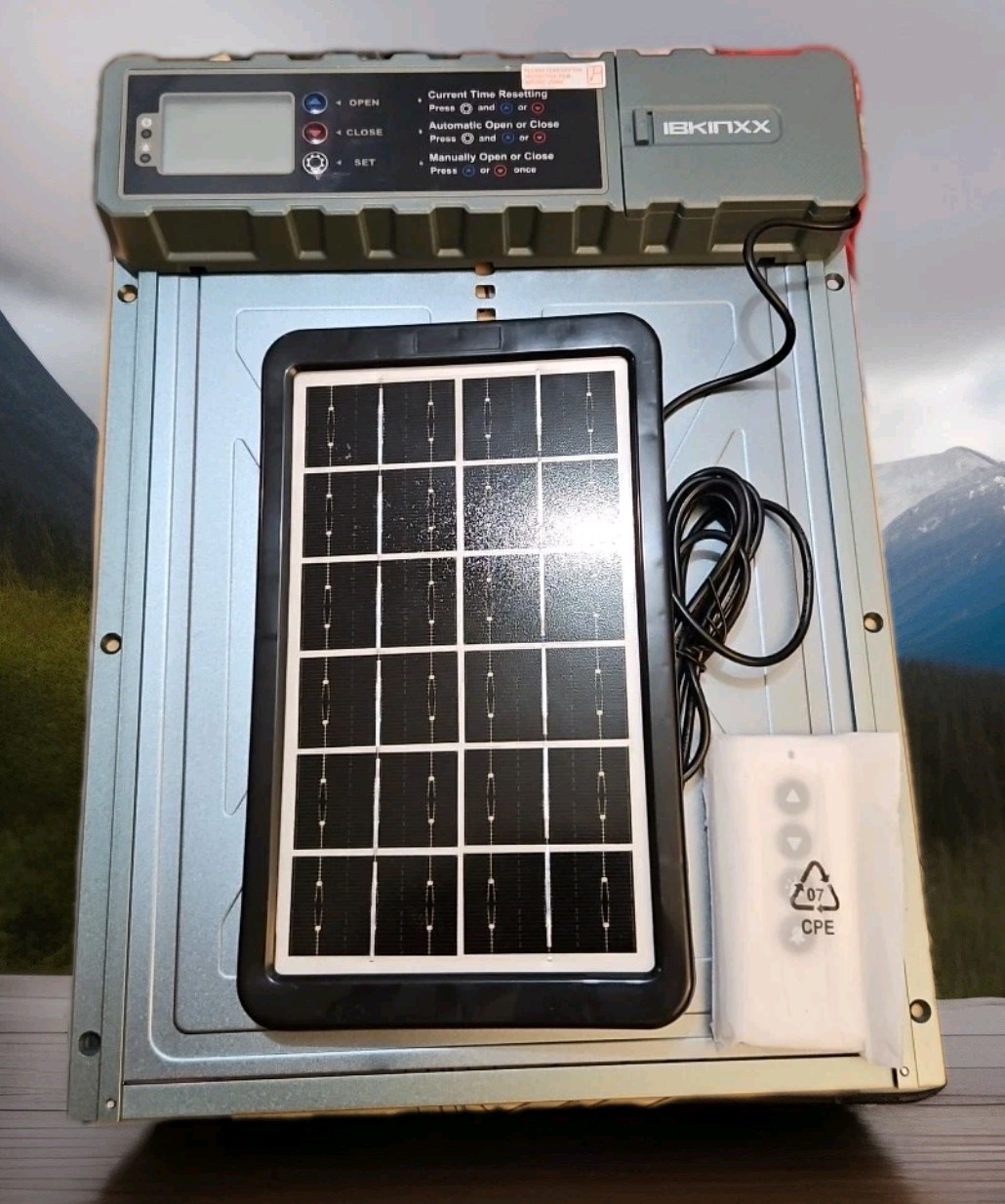 Solar Automatic Chicken Coop Door with Light Sensor Timer LCD Display$29.99View on eBay
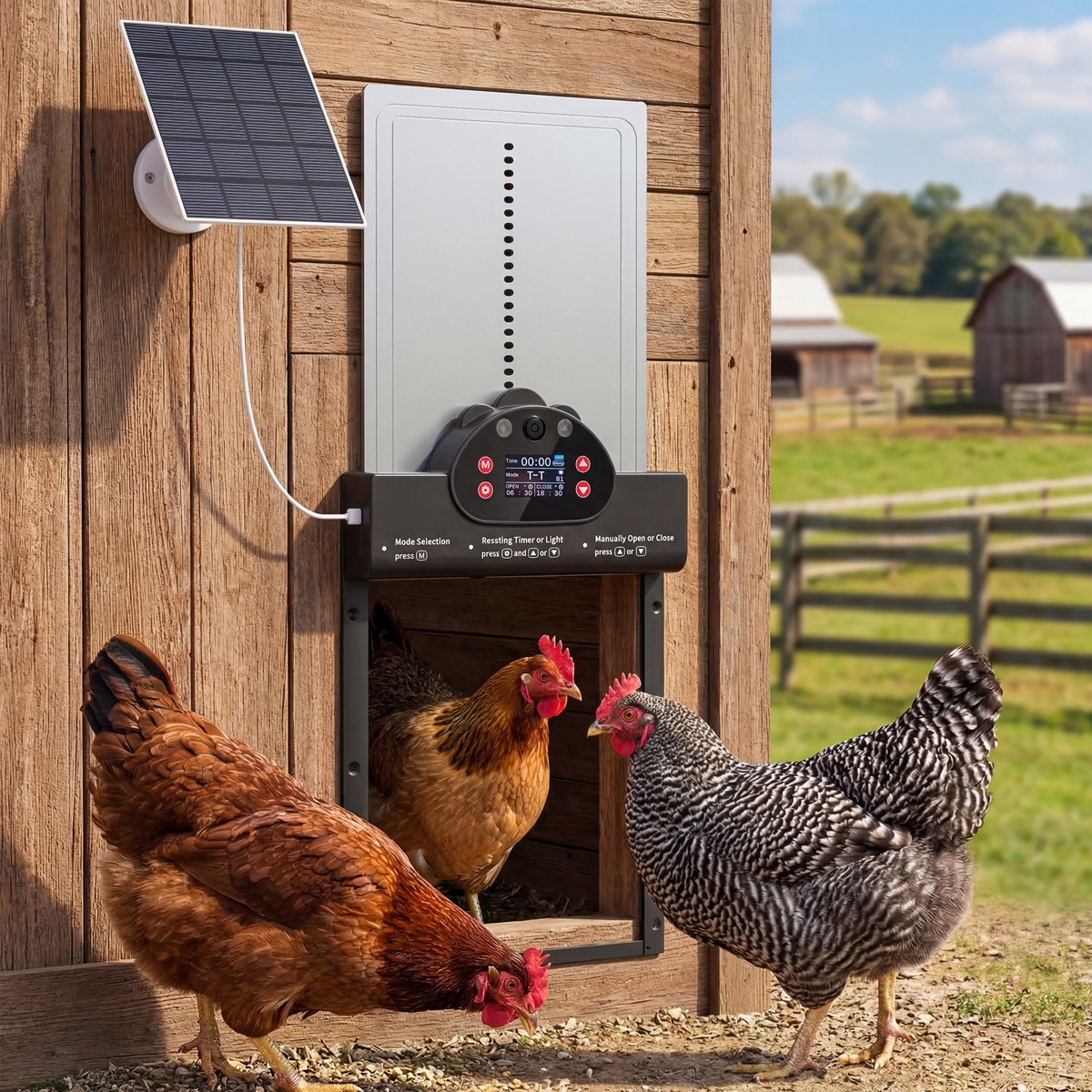 2K HD AI Camera Automatic Chicken Coop Door with APP Remote Control, WiFi Solar Powered 5200 mAh Large Battery$111.99View on Mallflare
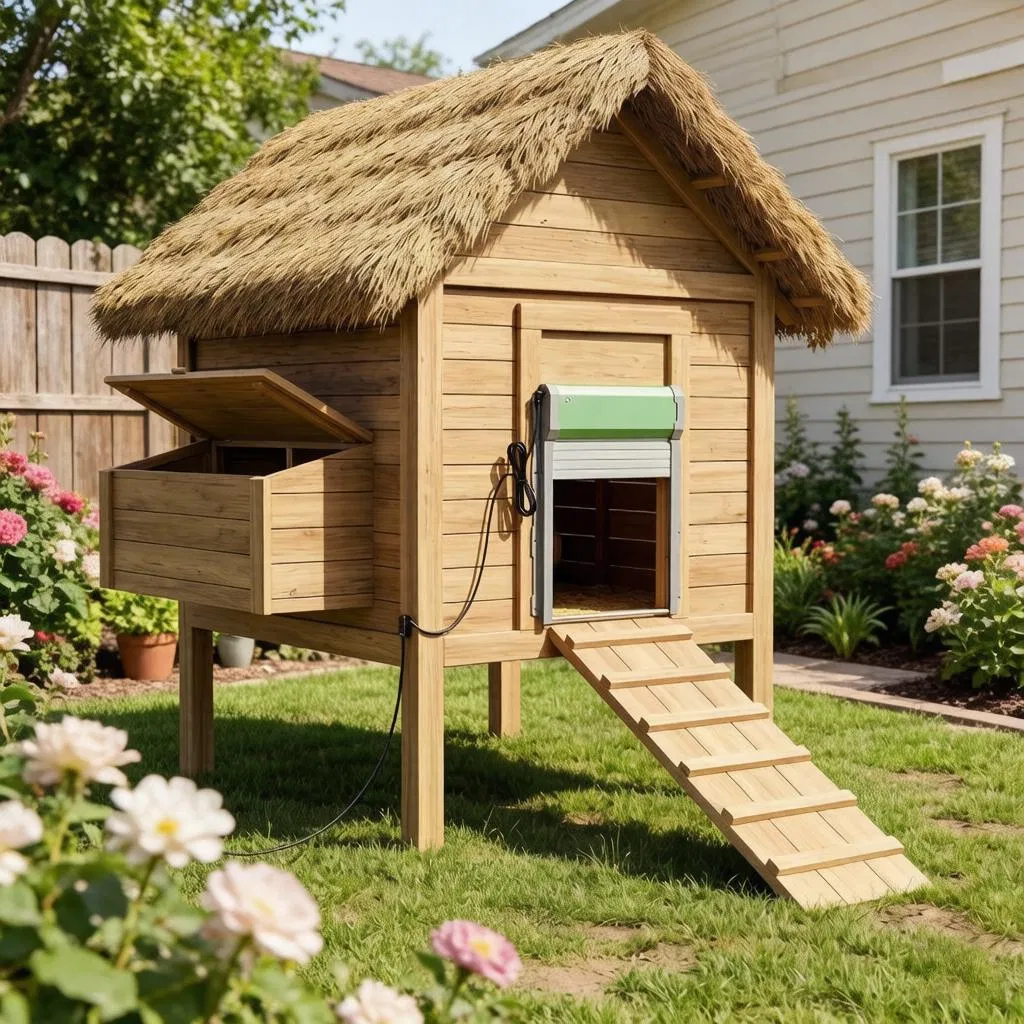 Automatic chicken coop door , equipped with remote control light sensor and outdoor timer$134.99View on Mallflare
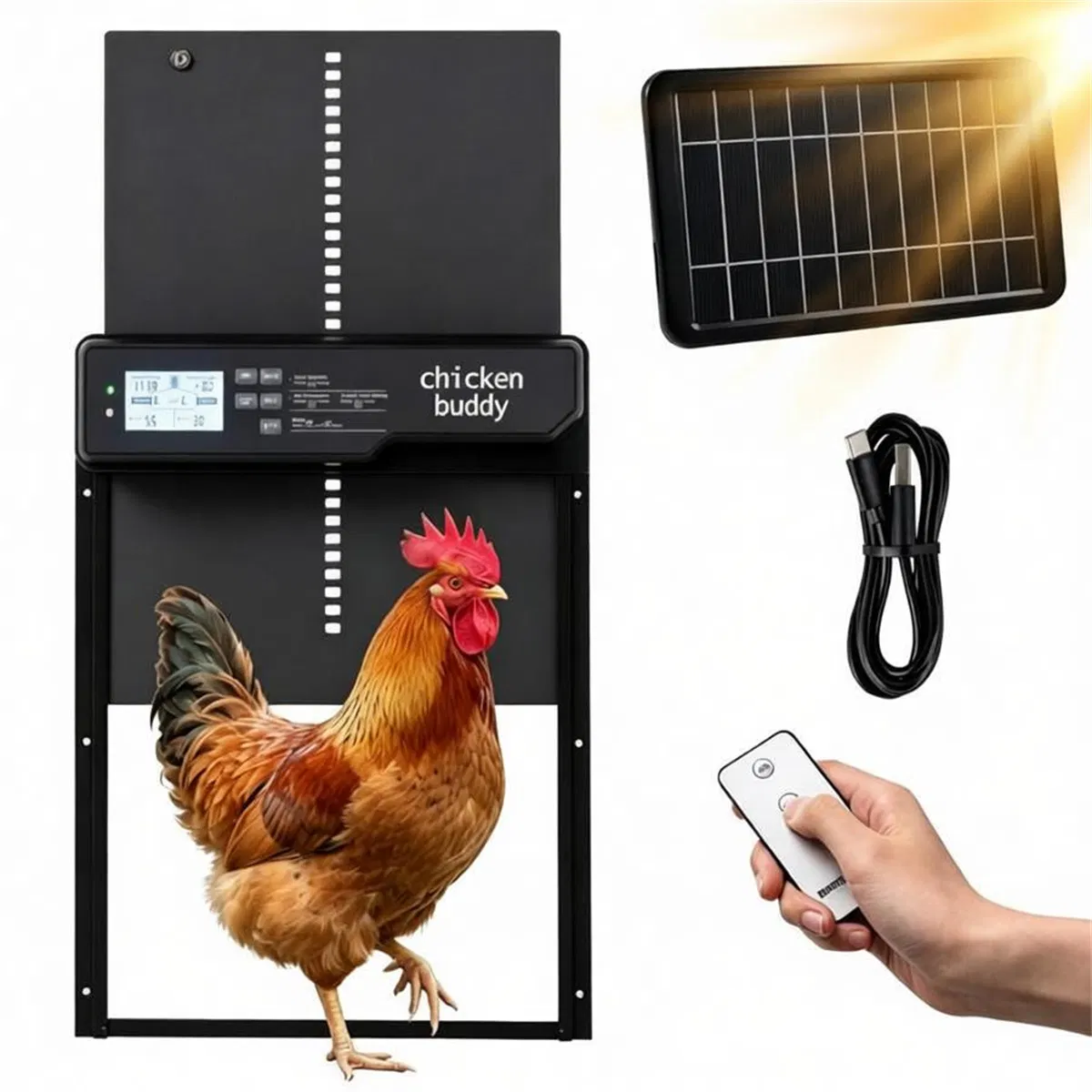 Solar Powered Automatic Chicken Coop Door with 4 Control Modes Light Sensor Timer Remote Manual, Anti-Pinch Weatherproof Aluminum Alloy Poultry Opener for Chickens Ducks Pigeons$141.99View on Mallflare
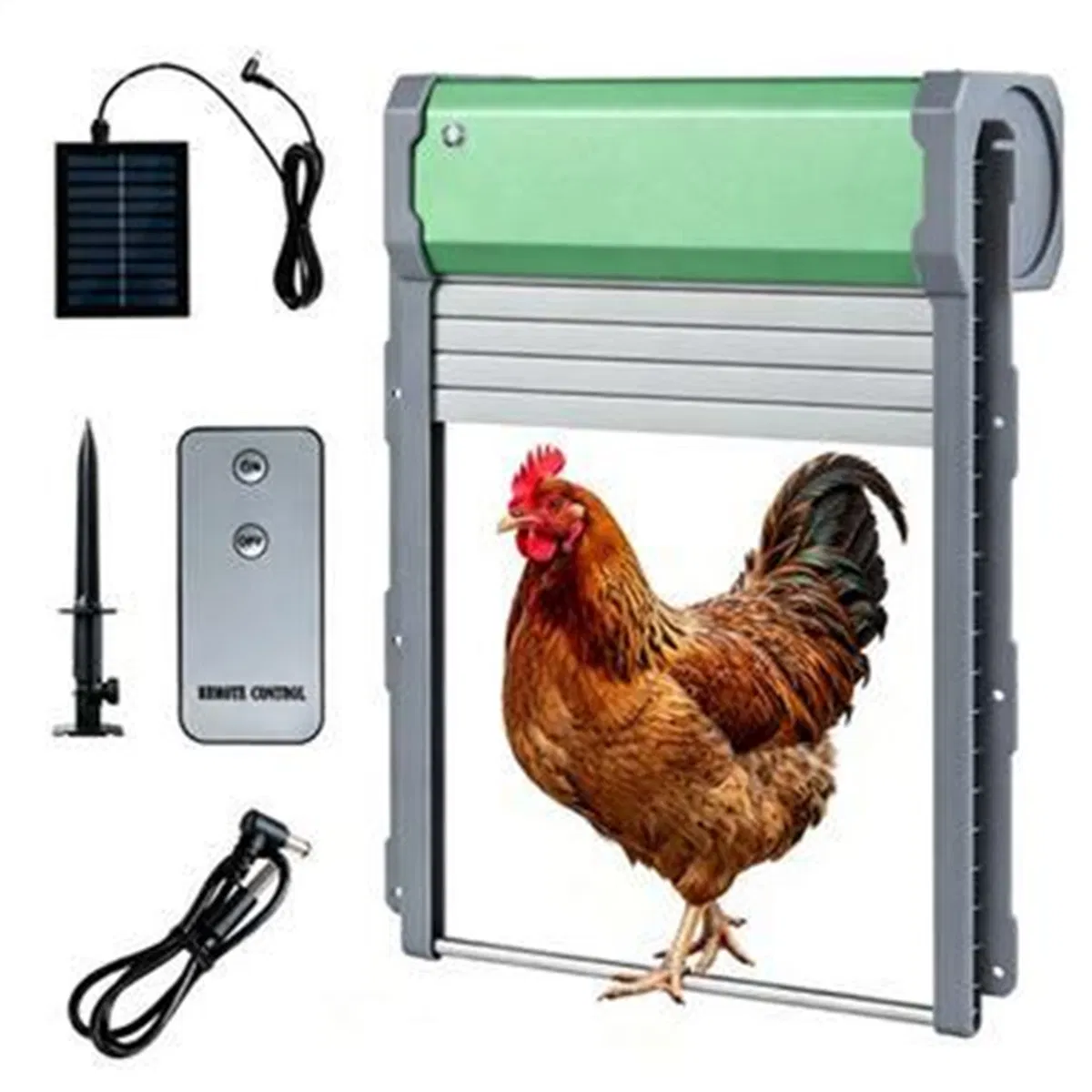 Solar Powered Automatic Chicken Coop Door with 4 Modes Light Sensor Timer Remote Control, Anti-Pinch Weatherproof Aluminum Opener for Chickens Ducks Rabbits Poultry$141.99View on Mallflare
Highlights
- Door drive types split into geared DC motors with plastic/nylon internals (short service life) and metal-gear or lead-screw actuators rated for thousands of daily cycles.
- Anti-pinch safety uses current-sensing or a pressure bar to reverse on obstruction; sensor-only doors without this can crush or trap birds and are a disqualifier for flocks with young chicks.
- Power architecture is either 4xAA battery with solar trickle, or a low-voltage DC adapter; solar panels must be sized to the actuator stall current or the door stalls in overcast weeks.
- Weather sealing is defined by the frame gasket and guide-rail clearance: aluminum alloy frames with overlapping lips shed rain, while thin ABS shells warp and jam in freeze-thaw cycles.
Best use cases
- Best fit: a remote or off-grid coop — pick a solar-charged unit with light sensor plus timer and a manual override so you can close the door without sun or batteries.
- Best fit: a predator-heavy area — choose an aluminum-frame door with anti-pinch current sensing and a tight guide rail; skip thin plastic doors that raccoons can pry or chew.
- Wrong fit: a coop opening wider than the door's listed frame — buy a door sized to the actual opening or a dual-panel kit; a single narrow door leaves gaps predators exploit.
- Wrong fit: extreme cold without a heated or low-draw actuator — skip standard nylon-gear units that stiffen below freezing; select metal-gear or lead-screw models rated for sub-zero operation.
Buying tips
- Measure the coop opening first: door frame must cover the cutout plus 1–2 inches of overlap on each side for the mounting flange and weather seal.
- Match actuator gearing to climate: nylon gears are fine in mild climates, but metal gears or lead-screw drives resist cold-stiffening and last through daily cycles.
- Choose power by site: direct-sun coops suit 5–10W solar panels with AA backup; shaded coops need a low-voltage adapter run or a larger panel and battery bank.
- Confirm trigger redundancy: a light sensor plus programmable timer beats sensor-only because seasonal daylight shifts and coop shadows can trigger false openings.
Specs
| Drive Type | Metal-gear DC vs nylon-gear |
|---|---|
| Safety | Anti-pinch current sense / pressure bar |
| Power | Solar + AA vs low-voltage adapter |
| Frame Build | Aluminum alloy vs ABS plastic |
Related searches
What to check before buying
- Measure the coop door cutout height and width, and confirm the frame flange overlap clears the coop wall thickness and trim.
- Check the power path: panel placement for solar units needs 4–6 hours of direct sun, or verify a low-voltage adapter run reaches the coop.
- Confirm the door's low-temperature rating and gasket material match your winter climate and freeze-thaw exposure.
- Verify the unit includes a manual override or clutch so the door can be opened during power loss or motor failure.
FAQ
Data sources: eBay / Amazon listings and product attribute feeds. Updated Nov 28, 2026.
Some links on this page are affiliate links. If you buy after clicking one, we may earn a commission at no extra cost to you. This does not change which products appear here or their order. Affiliate disclosure.