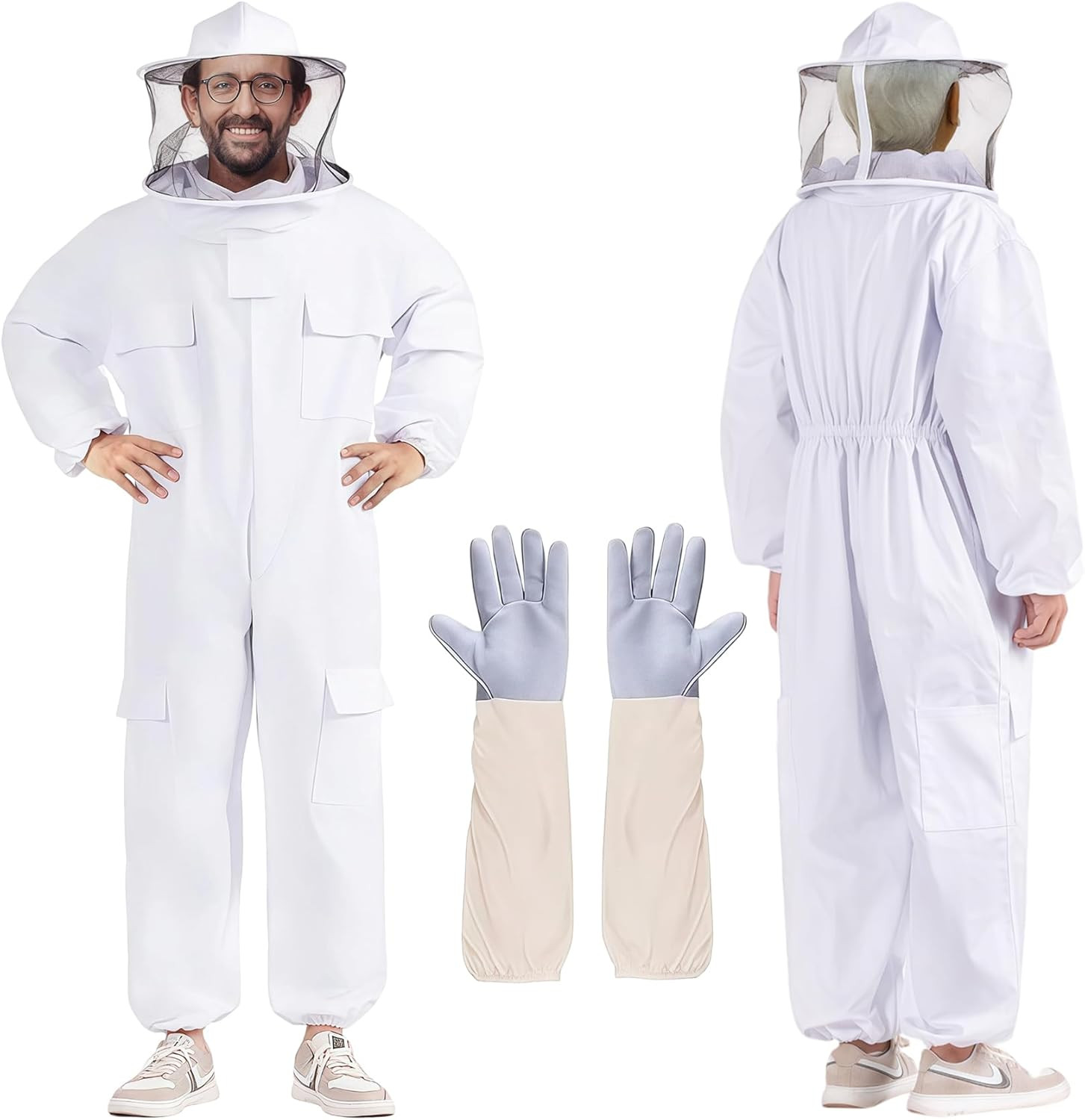

Photos from current listings. Actual item, color, and included accessories may vary.
Sting Proof Bee Suit Buying Guide
A sting-proof bee suit is a full-body barrier garment engineered to prevent worker bee stingers from reaching skin, with protection level determined by fabric weave density, seam construction, and veil-to-body sealing. The core trade-off is breathability versus impenetrability: triple-layer ventilated mesh blocks stingers while moving air, whereas single-layer cotton or polyester offers airflow but fails against determined stingers at pressure points. The decision rule is simple: buy only suits with explicitly sealed or double-stitched seams, a veil that attaches via zipper or overlapping fabric, and fabric rated at 3-layer or 280+ GSM equivalent—anything less is a hobbyist compromise, not sting-proof protection.
Median $146.92 · New listings
Key takeaways
- Triple-layer ventilated mesh (3-layer) blocks stingers by separating outer and inner mesh with a spacer yarn, delivering sting-proof performance with superior airflow versus single-layer suits.
- Round veil (fencing-style) offers 360-degree visibility and keeps mesh off the face, but must attach via zipper or overlapping collar to prevent bees entering at the neck seal.
- Sting-proof suits require sealed seams—double-stitched or taped—because standard seams create gaps wider than a bee stinger (approx. 0.3mm diameter) at stress points.
At a glance
- Category
- Beekeeping Suits & Protection
- Last updated
- Nov 25, 2026
Current offers
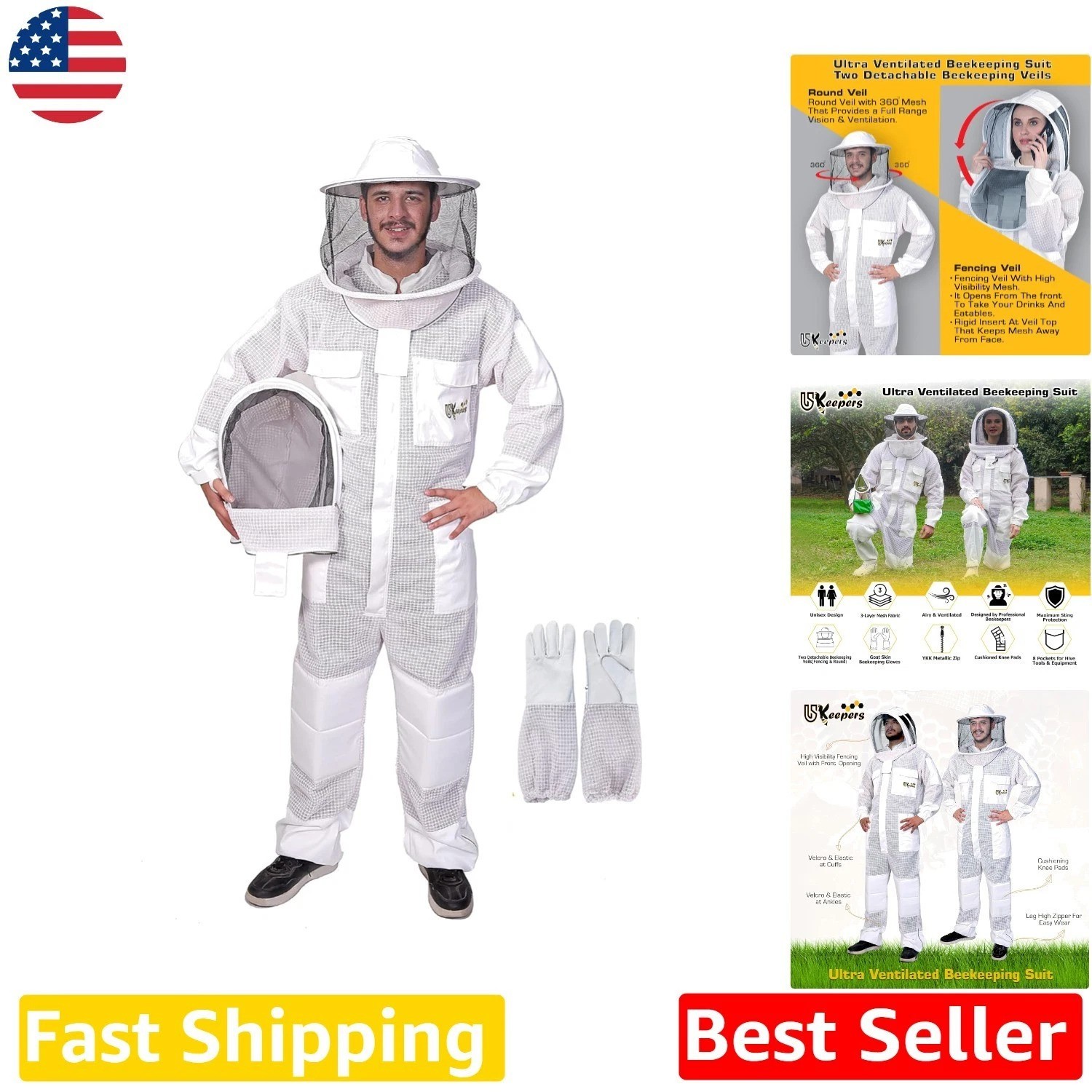
Highlights
- Triple-layer ventilated mesh (3-layer) blocks stingers by separating outer and inner mesh with a spacer yarn, delivering sting-proof performance with superior airflow versus single-layer suits.
- Round veil (fencing-style) offers 360-degree visibility and keeps mesh off the face, but must attach via zipper or overlapping collar to prevent bees entering at the neck seal.
- Sting-proof suits require sealed seams—double-stitched or taped—because standard seams create gaps wider than a bee stinger (approx. 0.3mm diameter) at stress points.
- Fabric weight matters: 280 GSM or higher cotton/poly blends resist stingers at pressure points, while lightweight single-layer suits under 200 GSM allow penetration when bees press against fabric.
Best use cases
- Best fit: Buy a triple-layer ventilated suit with round veil and zippered neck seal for hot-climate apiaries and long inspections—ventilation prevents heat stress without sacrificing sting protection.
- Best fit: Choose a 280+ GSM cotton or poly-cotton suit with fencing veil and sealed seams for defensive colonies and heavy-duty inspections where durability outranks breathability.
- Wrong fit: Skip single-layer economy suits with elastic-only veil attachment for any hive with known defensive behavior—these are fair-weather hobbyist garments, not sting-proof protection.
- Wrong fit: Avoid full ventilated suits in cool climates (below 15°C/60°F) without layering—mesh suits lack insulation and become cold during early-spring or late-autumn inspections.
Buying tips
- Measure chest and height, then size up one tier from street clothes: suits must fit loosely over base layers without pulling at shoulders or crotch when bending—tight fabric transmits stings.
- Demand a zippered or overlapping veil attachment: elastic-band veils leave a neck gap that bees exploit; zipper or double-fabric collar is the minimum sting-proof standard.
- Check seam construction: sealed, double-stitched, or taped seams at armpits, crotch, and ankles are mandatory—standard single-stitch seams create stinger-width gaps under pressure.
- For ventilated suits, confirm 3-layer construction (not 2-layer): three layers with spacer mesh block stingers; two-layer ventilated suits are breathable but not reliably sting-proof at pressure points.
Specs
| Fabric Construction | 3-layer ventilated mesh / 280+ GSM woven |
|---|---|
| Veil Type | Round/fencing, zipper or overlap seal |
| Seam Construction | Double-stitched / taped / sealed |
| Closure System | Zippered neck, elastic/zipper cuffs |
Related searches
What to check before buying
- Measure chest circumference and height, then compare against suit size chart with 4–6 inches of looseness allowance—suits that fit snugly fail at joints when bending.
- Confirm veil type and attachment: round/fencing veil for visibility and face clearance; zippered or overlapping collar required for sting-proof neck seal.
- Verify climate compatibility: triple-layer ventilated mesh for temperatures above 25°C/77°F; 280+ GSM cotton for cooler conditions or defensive colonies needing durability.
- Check ankle and wrist closures: elastic or zippered cuffs must seal over boots and gloves—loose cuffs are the most common sting entry point during inspections.
FAQ
Data sources: eBay / Amazon listings and product attribute feeds. Updated Nov 25, 2026.
Some links on this page are affiliate links. If you buy after clicking one, we may earn a commission at no extra cost to you. This does not change which products appear here or their order. Affiliate disclosure.