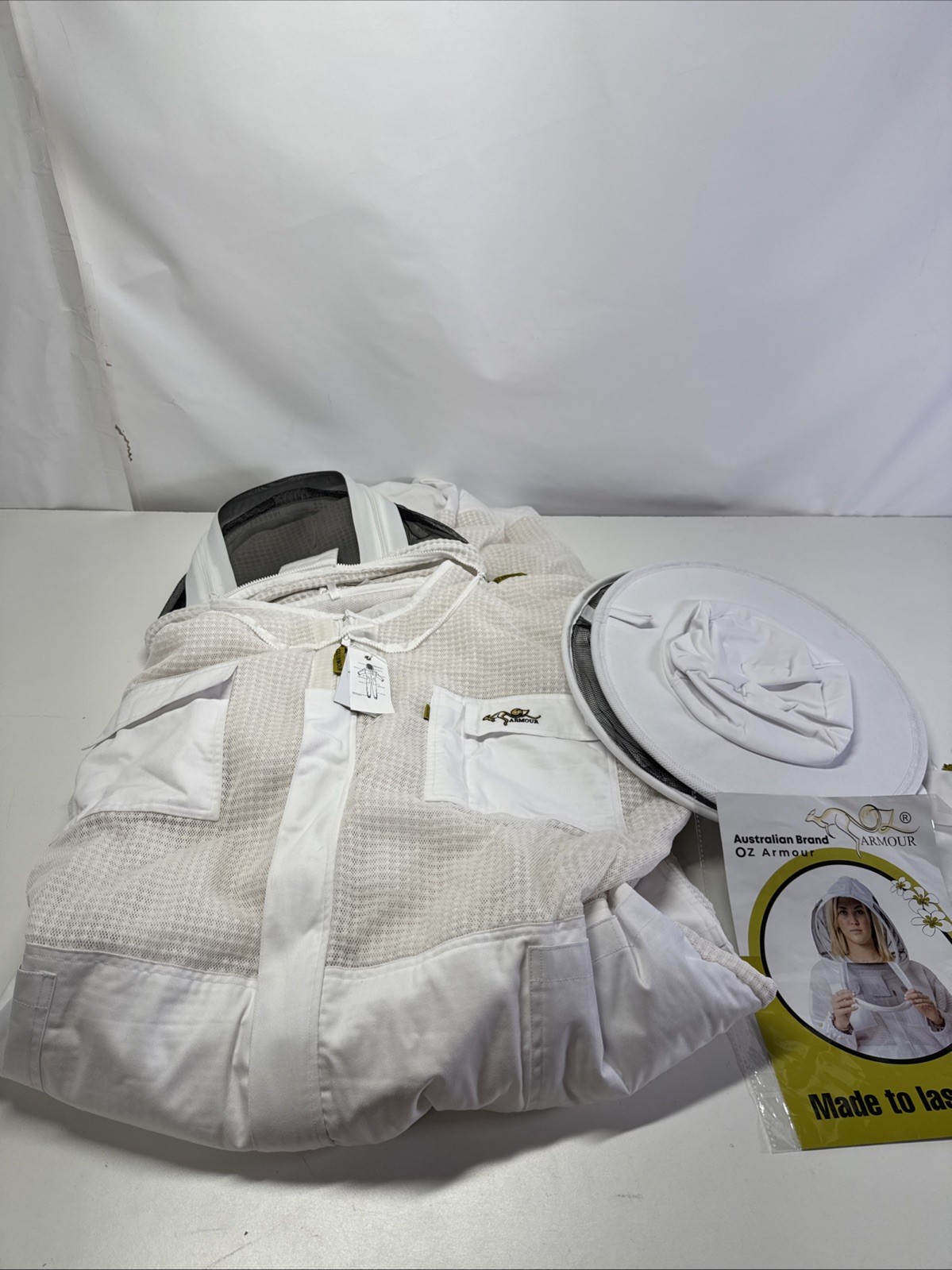

Photos from current listings. Actual item, color, and included accessories may vary.
Oz Armour Ventilated Bee Suit Buying Guide
A ventilated bee suit is only as good as its mesh-to-fabric ratio and sting-blocking layering, and the Oz Armour 3-layer design targets hot-weather apiary work where breathability and full-body coverage must coexist. Buyers often misjudge layer count versus actual airflow, or pick a size that binds at the shoulders and knees when kneeling at the hive. Focus on layer construction, vent placement, and true-to-fit sizing rather than marketing labels.
Key takeaways
- Three-layer ventilated construction uses an outer mesh, a sting-blocking mid-layer, and an inner liner to balance airflow with protection.
- Ventilated suits exchange some abrasion resistance for breathability, so inspect mesh density and seam reinforcement at high-flex zones.
- Full-suit coverage includes attached veil, thumb loops, and ankle closures; separate veil or glove gaps are common failure points.
At a glance
- Category
- Beekeeping Suits & Protection
- Last updated
- Nov 25, 2026
Current offers
Highlights
- Three-layer ventilated construction uses an outer mesh, a sting-blocking mid-layer, and an inner liner to balance airflow with protection.
- Ventilated suits exchange some abrasion resistance for breathability, so inspect mesh density and seam reinforcement at high-flex zones.
- Full-suit coverage includes attached veil, thumb loops, and ankle closures; separate veil or glove gaps are common failure points.
- Layer count alone does not guarantee sting-proofing—stitch density, zipper flaps, and mesh aperture size determine actual barrier performance.
Best use cases
- Best fit: a beekeeper working multiple hives in summer heat who needs full-body ventilation and will pair the suit with vented gloves and boots.
- Wrong fit: a buyer expecting a ventilated suit to replace a heavy-duty suit for aggressive Africanized colonies or cold-weather inspections.
- Choose the 3-layer ventilated configuration for long, hot-yard sessions; skip it for brief inspections where a jacket-and-veil combo is lighter.
- Pick a full suit over a jacket only if you routinely kneel or work low frames where leg stings are likely; otherwise a ventilated jacket saves cost and heat.
Buying tips
- Check mesh aperture and layer bonding: tighter, bonded layers block stings better but reduce airflow, so compare vent panels against solid fabric zones.
- Size up if you wear heavy clothing underneath; ventilated suits fit closer to the body and restrict movement when layered over hoodies.
- Prioritize reinforced knee and elbow panels plus double-slider zippers, since these are the first wear points on ventilated suits.
- Avoid suits with unsealed veil-to-shoulder seams; a sting at the neck gap defeats the purpose of a full-body ventilated design.
Specs
| Layer Construction | 3-layer ventilated mesh |
|---|---|
| Protection Type | Full-body suit vs jacket |
| Veil Style | Attached fencing or round veil |
| Closure System | Full-length zipper + cuff seals |
Related searches
What to check before buying
- Measure chest, waist, and inseam against the suit size chart, adding 2–4 inches for underlayers and kneeling movement.
- Confirm the veil type (fencing vs. round) matches your preferred visibility and whether it is detachable for washing.
- Check ankle and wrist closures—elastic cuffs versus hook-and-loop straps—for compatibility with your gloves and boots.
- Verify the suit’s zipper configuration (full-length front vs. rear) suits solo dressing without a helper.
FAQ
Data sources: eBay / Amazon listings and product attribute feeds. Updated Nov 25, 2026.
Some links on this page are affiliate links. If you buy after clicking one, we may earn a commission at no extra cost to you. This does not change which products appear here or their order. Affiliate disclosure.