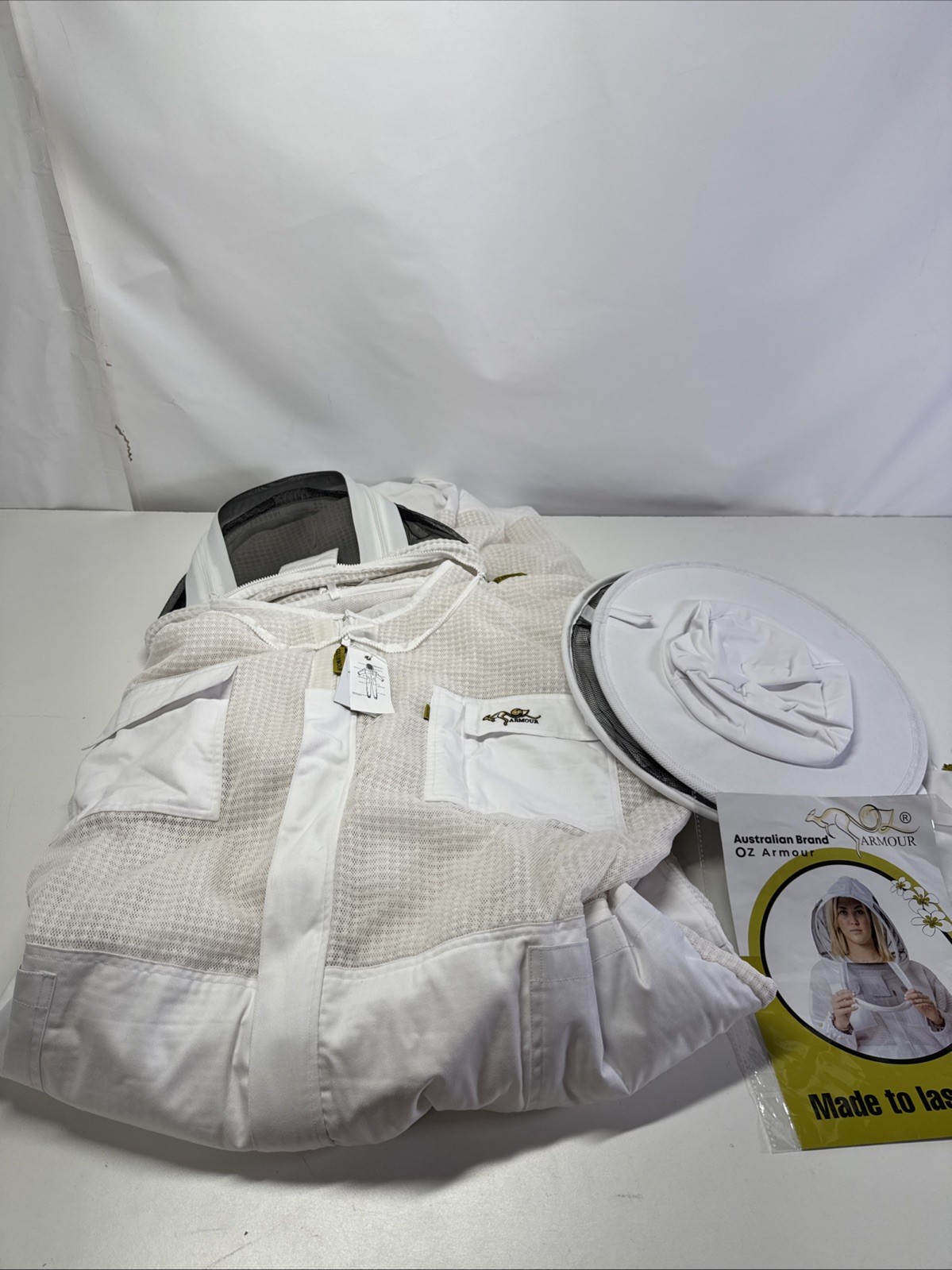

Photos from current listings. Actual item, color, and included accessories may vary.
Oz Armour Beekeeping Suit Buying Guide
An Oz Armour beekeeping suit is a ventilated three-layer mesh full-body suit built for hot-climate inspections where sting protection and airflow must coexist. The decisive trade-off is mesh aperture versus fabric durability: true ventilated suits use a fine 1.5–2 mm sting-resistant weave that blocks bee abdomens but snags on thorns, while solid cotton or polyester suits trade breathability for abrasion resistance. Buy a ventilated Oz Armour-tier suit only if you inspect in heat and accept gentler handling; otherwise choose a heavier solid suit.
Key takeaways
- Ventilated suits use a three-layer sandwich mesh with roughly 1.5–2 mm apertures; bees cannot sting through the layers, but the mesh tears on wire and blackberry thorns.
- Oz Armour-style suits typically pair a mesh body with reinforced solid fabric at the knees, elbows, and seat, plus a fencing-veil hood with rigid crown and mesh face panel.
- Sting protection depends on closure engineering: double-slider leg zips, elastic thumb loops, and a zip-over veil flap outperform loose cuffs more than fabric thickness does.
At a glance
- Category
- Beekeeping Suits & Protection
- Last updated
- Nov 25, 2026
Current offers
Highlights
- Ventilated suits use a three-layer sandwich mesh with roughly 1.5–2 mm apertures; bees cannot sting through the layers, but the mesh tears on wire and blackberry thorns.
- Oz Armour-style suits typically pair a mesh body with reinforced solid fabric at the knees, elbows, and seat, plus a fencing-veil hood with rigid crown and mesh face panel.
- Sting protection depends on closure engineering: double-slider leg zips, elastic thumb loops, and a zip-over veil flap outperform loose cuffs more than fabric thickness does.
- Fabric weight separates tiers: lightweight ventilated suits run about 180–220 GSM effective, while solid cotton suits run 280–320 GSM with materially better abrasion life.
Best use cases
- Best fit: buy a ventilated Oz Armour-style suit for summer apiary work above 25 °C (77 °F) with gentle colonies; skip it for heavy brush clearing or defensive Africanized stock.
- Wrong fit: choose a solid cotton or polycotton suit if you work feral cut-outs, move hives at night, or handle aggressive colonies where thorn snags and sting pressure are constant.
- Best fit: pair the suit with separate sting-resistant goatskin gloves and steel-toe boots; the suit alone does not protect wrists, hands, or feet during heavy propolis work.
- Wrong fit: skip full ventilated suits for quick lawn inspections under 10 minutes—a fencing veil and jacket is lighter, cooler to store, and faster to don.
Buying tips
- Size for layering: order a suit with at least 10 cm (4 in) of chest slack over your largest work clothes; ventilated mesh does not stretch, and a tight suit pulls at seams under a bee load.
- Confirm the veil standard: choose a fencing-style veil with a rigid crown and black or stainless mesh; round hat veils collapse against the face and allow stings through contact.
- Check zip hardware: metal double-sliders on legs and a full-length torso zip are the durability floor; plastic coil zips fail within a season under propolis and washing.
- Match the suit to your climate: ventilated mesh for sustained heat above 25 °C; solid cotton for cool mornings, heavy brush, or defensive colonies where abrasion resistance wins.
Specs
| Suit Architecture | Ventilated 3-layer mesh vs solid cotton |
|---|---|
| Mesh Aperture | 1.5–2 mm sting-resistant weave |
| Fabric Weight | 180–220 GSM mesh / 280–320 GSM solid |
| Veil Type | Fencing veil, rigid crown, mesh panel |
Related searches
What to check before buying
- Measure chest, waist, and inseam over work clothing, then add 10 cm (4 in) to chest and 5 cm (2 in) to inseam; ventilated suits do not stretch.
- Confirm boot compatibility: leg cuffs must close over boot tops with elastic or zip, and thumb loops must reach past the wrist when arms are raised.
- Check your apiary terrain for thorns, wire, and rough timber; ventilated mesh snags, so solid fabric is the safer tier on brushy sites.
- Verify the veil style and replacement parts: fencing veils need a rigid crown and replaceable mesh panel; confirm the suit ships with a matching veil, not a separate purchase.
FAQ
Data sources: eBay / Amazon listings and product attribute feeds. Updated Nov 25, 2026.
Some links on this page are affiliate links. If you buy after clicking one, we may earn a commission at no extra cost to you. This does not change which products appear here or their order. Affiliate disclosure.