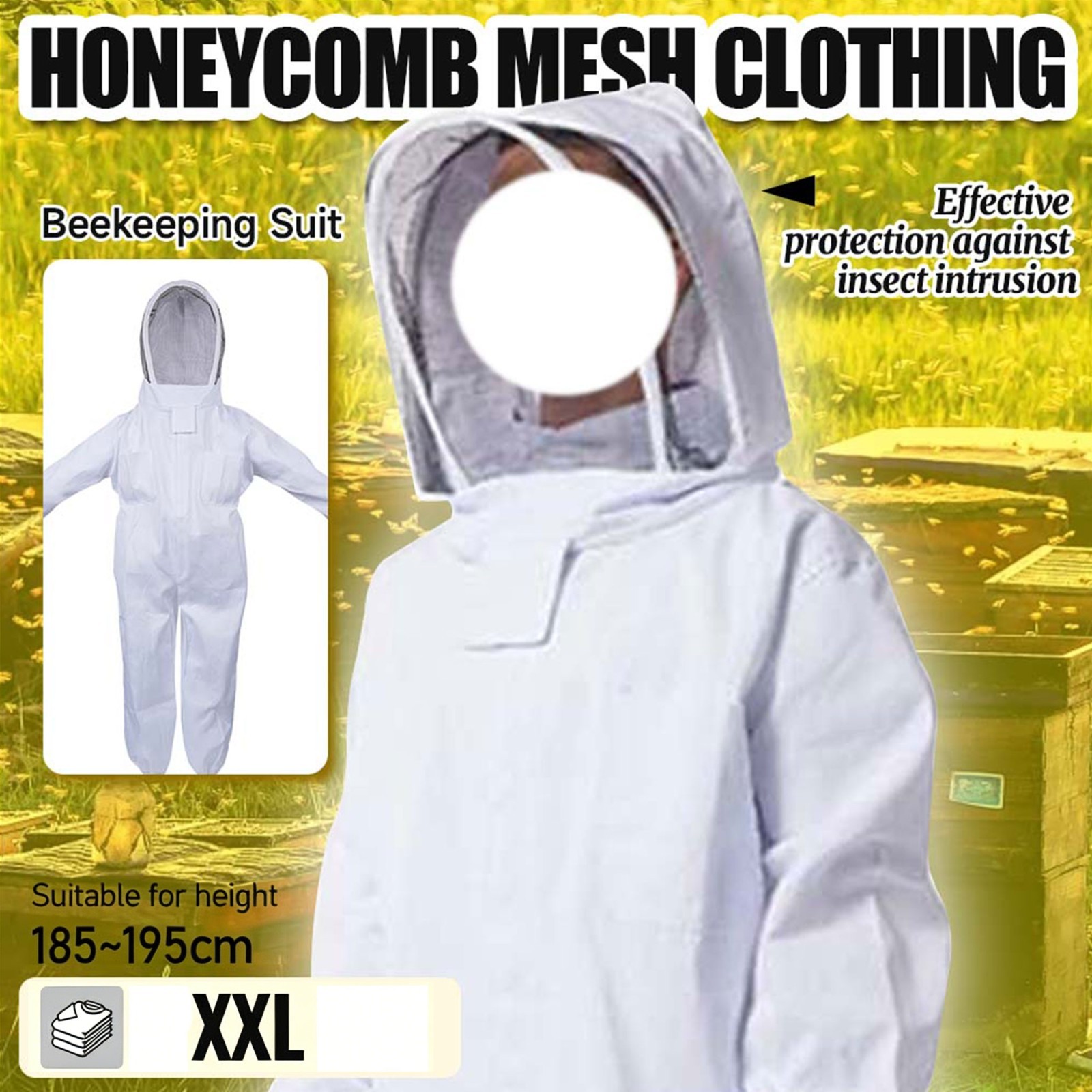

Photos from current listings. Actual item, color, and included accessories may vary.
Beekeeping Veil Buying Guide
A beekeeping veil is the primary barrier between your face and the hive, and the decisive trade-off is visibility versus sting-proofing: mesh aperture, fabric weight, and hat structure determine whether bees can reach skin or sting through the fabric. Durable veils use rigid, wide-brim structures with fine mesh and reinforced seams; compromises use floppy netting, coarse mesh, or thin fabric that presses against the face.
Key takeaways
- Mesh aperture determines sting risk: veils using mesh finer than roughly 2 mm keep bees from probing through, while coarse netting and wide-gauge screens let stingers reach skin.
- Fabric weight of 220-280 GSM cotton or polycotton blocks stings through the veil skirt; sub-180 GSM fabric stretches and allows sting penetration at contact points.
- Veil formats differ by use: fencing-style veils (hat + veil only) suit quick inspections, while suit-attached hoods and jacket-attached veils seal the neckline and are required for full-body protection.
At a glance
- Category
- Beekeeping Suits & Protection
- Last updated
- Nov 25, 2026
Current offers
Highlights
- Mesh aperture determines sting risk: veils using mesh finer than roughly 2 mm keep bees from probing through, while coarse netting and wide-gauge screens let stingers reach skin.
- Fabric weight of 220-280 GSM cotton or polycotton blocks stings through the veil skirt; sub-180 GSM fabric stretches and allows sting penetration at contact points.
- Veil formats differ by use: fencing-style veils (hat + veil only) suit quick inspections, while suit-attached hoods and jacket-attached veils seal the neckline and are required for full-body protection.
Best use cases
- Best for quick inspections: a fencing-style veil with a rigid wide-brim hat and fine mesh — light, ventilated, and adequate when wearing a thick long-sleeve shirt; skip full suits for this.
- Best for full hive work and aggressive colonies: a suit-attached or jacket-attached veil with sealed neckline and 220+ GSM fabric; skip standalone fencing veils that leave the neck and torso exposed.
- Best for hot climates: ventilated three-layer mesh suits with attached veils; skip heavy cotton suits that overheat, but never trade mesh fineness for airflow.
- Wrong fit: soft bucket veils and drawstring-only hoods for anyone working defensive colonies — the mesh contacts the face and stings occur through the fabric.
Buying tips
- Match veil to body coverage: standalone veils assume a thick long-sleeve shirt and jeans; attached veils on jackets or full suits are the only sealed option for defensive hives.
- Check hat circumference and brim width: a rigid brim of at least 30 cm diameter keeps mesh off the face; confirm the hat fits your head size, since XXL suits often ship standard hats.
- Verify mesh spec: choose veils specifying fine mesh (around 1.5-2 mm aperture) rather than generic 'netting'; coarse screens are for transport, not inspections.
- Suit sizing follows height: XXL typically fits 6'0"-6'2", L fits 5'8"-5'10"; an oversized suit with cinched ankles and wrists beats a tight suit that pulls mesh against skin.
Specs
| Veil Type | Fencing / suit-attached / jacket-attached |
|---|---|
| Mesh Aperture | Fine 1.5-2 mm vs coarse netting |
| Hat Structure | Rigid wide-brim vs soft bucket |
| Fabric Weight | 220-280 GSM vs sub-180 GSM |
Related searches
What to check before buying
- Measure head circumference and confirm the veil hat is adjustable or sized to fit, since suit size and hat size are independent.
- Check neckline closure: suit-attached veils must have a sealed zipper or overlapping fabric at the collar; standalone veils need a tight drawstring.
- Confirm mesh visibility in low light — fine mesh darkens vision, so choose lighter-colored mesh for better contrast against bees.
- Verify ankle and wrist closures on full suits (elastic or zippered) and that gloves overlap cuffs, since bees crawl upward into gaps.
FAQ
Data sources: eBay / Amazon listings and product attribute feeds. Updated Nov 25, 2026.
Some links on this page are affiliate links. If you buy after clicking one, we may earn a commission at no extra cost to you. This does not change which products appear here or their order. Affiliate disclosure.