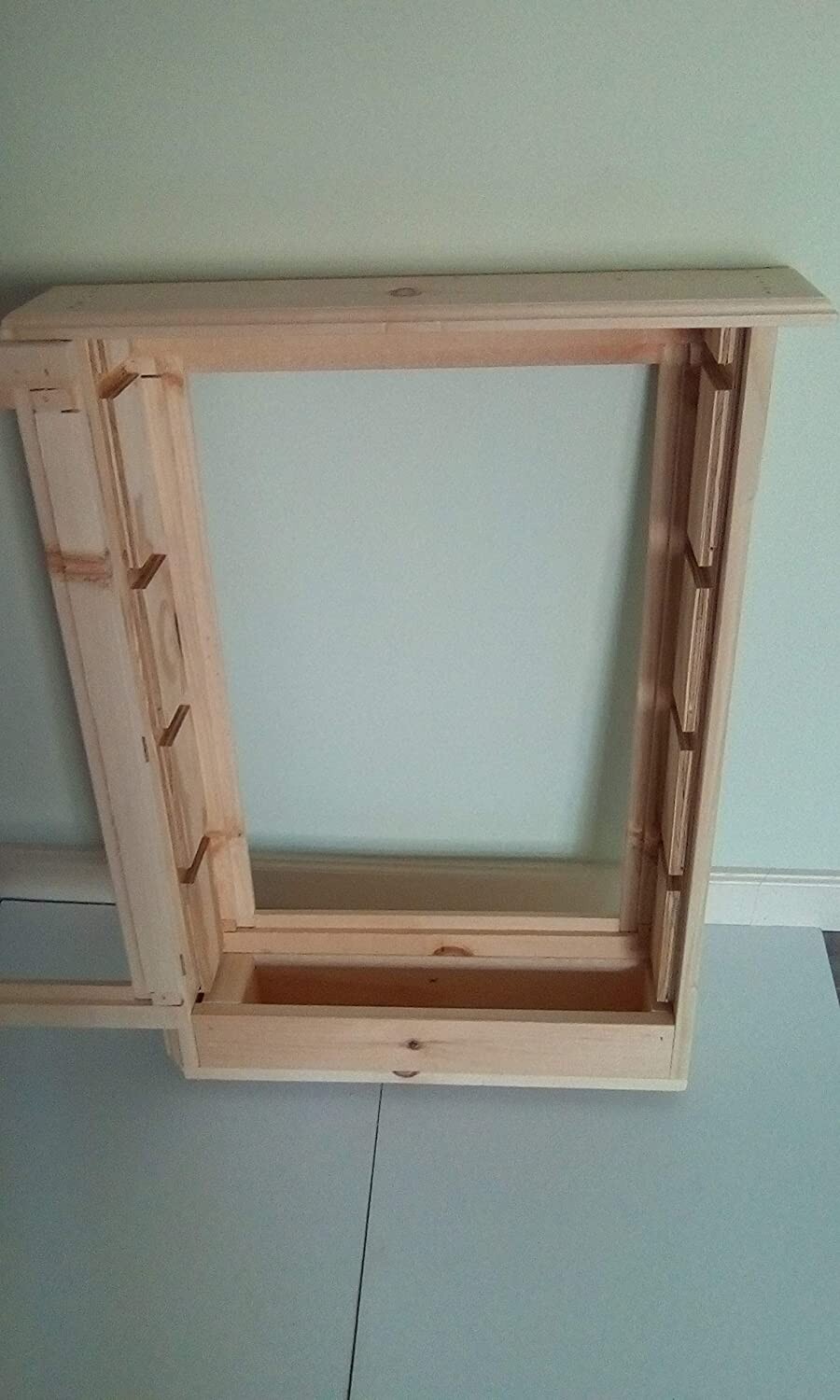

Photos from current listings. Actual item, color, and included accessories may vary.
Observation Bee Hive Buying Guide
An observation beehive is a single-frame or two-frame glass-walled hive designed for safe indoor or classroom viewing of live bee behavior. The core trade-off is optical clarity and bee visibility versus thermal insulation and escape-proofing: thin acrylic or glass panels give the best view but overheat faster and warp, while insulated frames and tighter joinery protect the colony but reduce visibility. Choose a hive with at least 3/16-inch tempered glass or UV-stabilized acrylic, a sealed venting system, and a dedicated entrance tube that exits through a window—skip any unit with unsealed seams or non-tempered panels.
Key takeaways
- Viewing panel material: 3/16-inch tempered glass resists scratching and holds clarity; 1/8-inch acrylic is lighter but warps and hazes under summer heat.
- Frame capacity: single-frame observation hives show one comb at a time; dual-frame or two-story units allow side-by-side comparison of brood vs. honey stores.
- Ventilation architecture: passive top vents with fine mesh (>=200 micron) prevent condensation and bee escape; sealed bottom trays allow mite-drop inspection without opening the hive.
At a glance
- Category
- Beehives & Frames
- Last updated
- Nov 28, 2026
Current offers
Highlights
- Viewing panel material: 3/16-inch tempered glass resists scratching and holds clarity; 1/8-inch acrylic is lighter but warps and hazes under summer heat.
- Frame capacity: single-frame observation hives show one comb at a time; dual-frame or two-story units allow side-by-side comparison of brood vs. honey stores.
- Ventilation architecture: passive top vents with fine mesh (>=200 micron) prevent condensation and bee escape; sealed bottom trays allow mite-drop inspection without opening the hive.
- Entrance design: a 3/4-inch inner-diameter tube or wooden tunnel with an exterior window plate keeps bees from entering the room and allows foraging access from outdoors.
Best use cases
- Best fit: Classroom or nature center needing year-round indoor viewing—pick a dual-frame tempered-glass model with a through-window entrance tube and lockable lid.
- Best fit: Hobbyist wanting seasonal outdoor observation—choose a single-frame cedar or pine hive with removable insulated cover and 3/16-inch glass panel; place under a roof overhang facing morning sun.
- Wrong fit: Permanent outdoor wintering in freezing climates—skip glass-only hives without insulated covers; condensation and thermal shock crack panels and chill the cluster.
- Wrong fit: High-traffic public exhibit with unsupervised children—avoid hives with exposed exterior seams or thumb-screw panels; specify a lockable, tamper-resistant frame and recessed glass.
Buying tips
- Match panel thickness to climate: use 3/16-inch tempered glass in full-sun rooms above 85°F; 1/8-inch acrylic only in shaded or climate-controlled spaces.
- Size the entrance tube to the wall: measure wall thickness plus 2 inches—order a tube long enough to pass through the window frame without kinks or gaps.
- Choose rot-resistant wood: cedar or cypress frames outlast pine by 5–10 years outdoors; painted pine is acceptable for indoor-only use.
- Confirm frame compatibility: standard Langstroth deep frames (9-1/8 inch) fit most observation hives; proprietary mini-frames lock you into one supplier for replacements.
Specs
| Panel Material | Tempered glass vs. acrylic |
|---|---|
| Frame Capacity | 1–4 standard deep frames |
| Entrance Tube | 3/4–1 in ID, through-wall |
| Ventilation | Mesh >=200 micron, top vents |
Related searches
What to check before buying
- Measure the window or wall opening where the entrance tube will pass—tube diameter must be 3/4 inch to 1 inch and length must exceed wall thickness by 2 inches.
- Verify room temperature stays between 60°F and 85°F; sustained heat above 90°F requires shade, ventilation, or a climate-controlled room to prevent comb melt.
- Check floor level and load: a full frame of honey plus bees weighs 6–10 pounds; mount on a sturdy table or wall bracket rated for at least 25 pounds.
- Confirm replacement parts availability for glass panels, entrance tubes, and frame rests before purchase—standard sizes are 3/16-inch glass and 9-1/8-inch deep frames.
FAQ
Data sources: eBay / Amazon listings and product attribute feeds. Updated Nov 28, 2026.
Some links on this page are affiliate links. If you buy after clicking one, we may earn a commission at no extra cost to you. This does not change which products appear here or their order. Affiliate disclosure.