
Photos from current listings. Actual item, color, and included accessories may vary.
Natural Bee Hive Buying Guide
A natural bee hive is a Langstroth-style wooden hive finished with beeswax or food-safe oil instead of paint or chemical sealants, so the wood stays breathable and the colony lives in a near-natural cavity. The core trade-off is wood species and coating versus frame count and box depth: cedar or cypress with pure beeswax resists rot for years, while pine with thin wax or stain needs re-coating and can warp. Choose a wax-coated cedar or cypress Langstroth with 10-frame boxes and standard 9-5/8-inch depth if you want a durable, expandable hive; skip painted pine starter kits and non-standard frame counts.
Median $56.99 · New listings
Key takeaways
- Langstroth standard: 10-frame boxes at 19-7/8 in length, 9-5/8 in depth, with 3/8 in bee space between frames — non-standard counts break frame interchangeability.
- Cedar and cypress are naturally rot- and moisture-resistant; pine needs paint or heavy wax and warps faster in humid climates.
- Pure beeswax coating is breathable and bee-safe; polyurethane, stain, or pressure-treated lumber can off-gas and is not food-safe for wax or honey.
At a glance
- Category
- Beehives & Frames
- Last updated
- Nov 27, 2026
Current offers
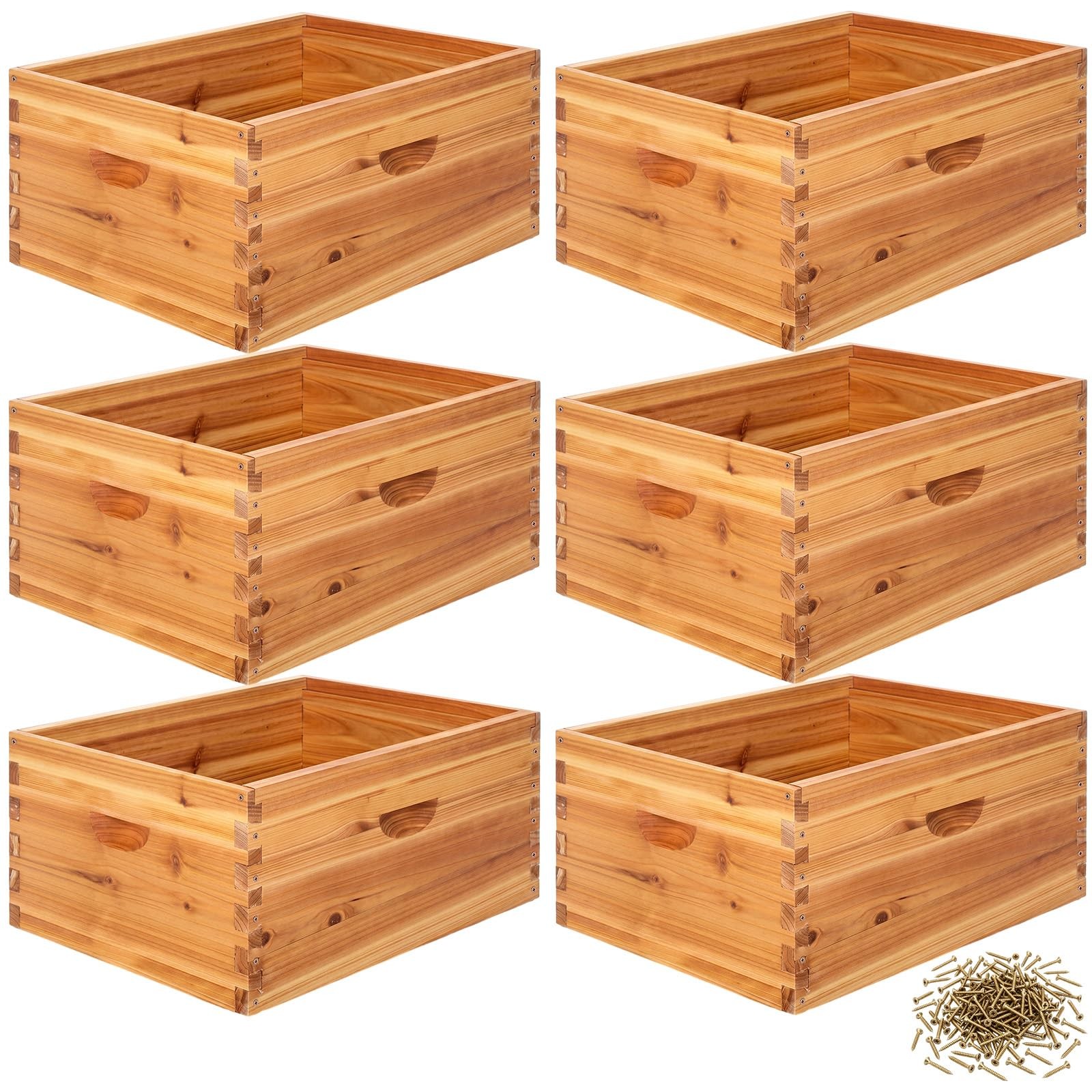 Marsui 6 Pcs Bee 10 Frame Deep Bee Hive Box, Langstroth Beehive Boxes Natural...$307.11New · Last checked Nov 23, 2026View on eBay
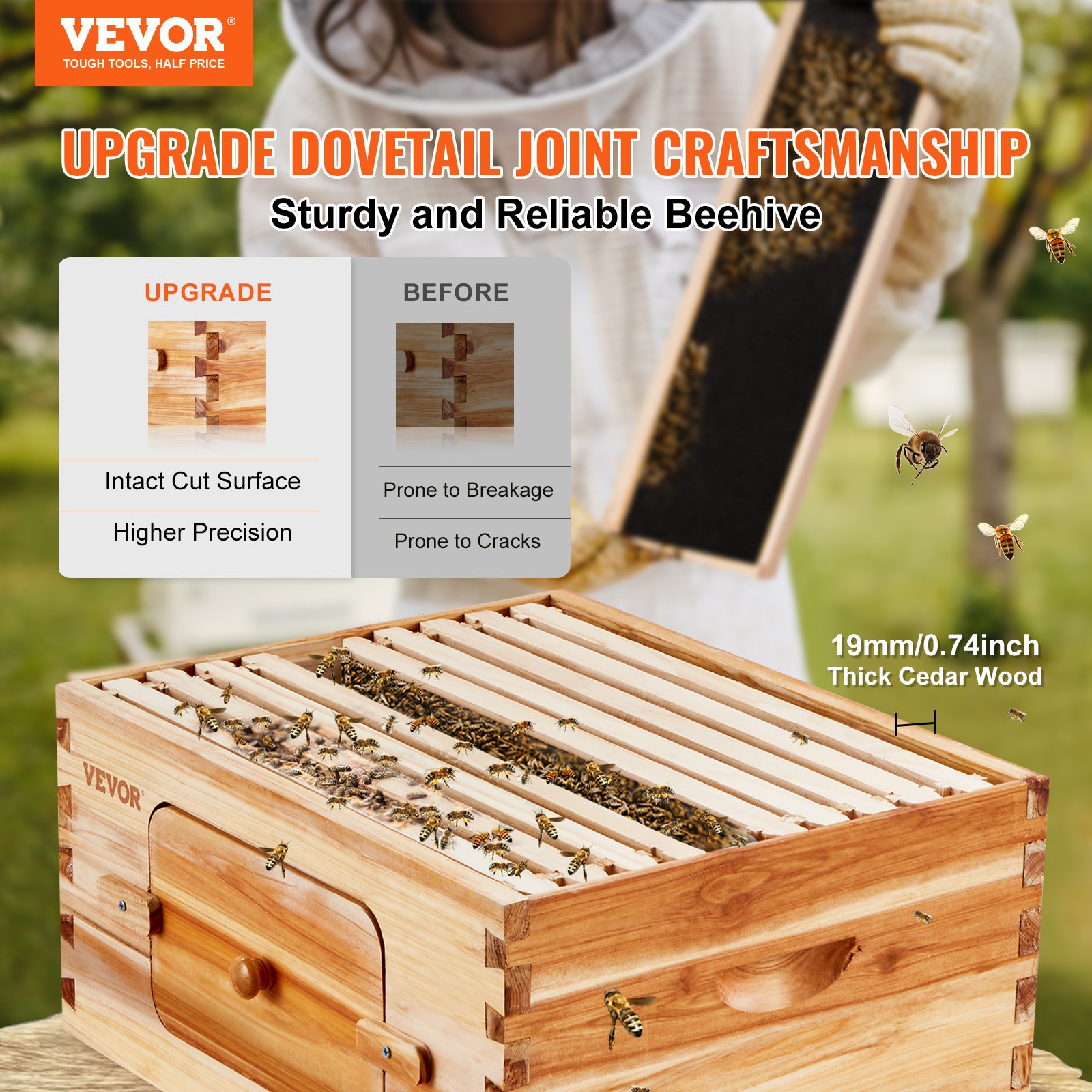 Bee Hive Deep Box Starter Kit, Beeswax Coated Natural Cedar Wood, Langstroth Beehive Kit With 10 Frames And Foundations, Transparent Acrylic Bee Windows For Beginners And Pro Beekeepers$49.99View on Mallflare
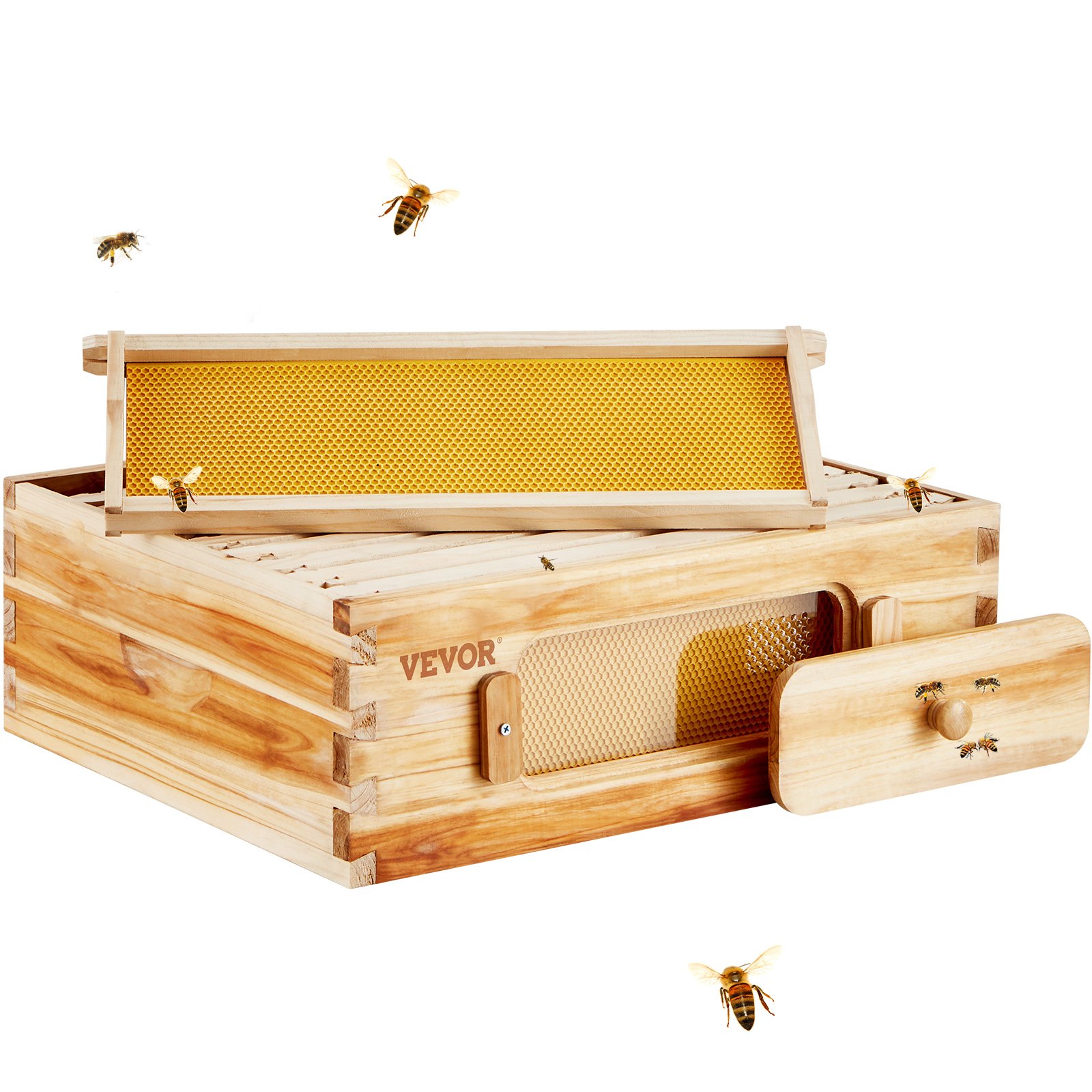 Bee Hive Medium Box Starter Kit, 100% Beeswax Coated Natural Cedar Wood, Langstroth Beehive Kit With 10 Frames And Foundations, Transparent Acrylic Bee Windows For Beginners And Pro Beekeepers$56.99View on Mallflare
Highlights
- Langstroth standard: 10-frame boxes at 19-7/8 in length, 9-5/8 in depth, with 3/8 in bee space between frames — non-standard counts break frame interchangeability.
- Cedar and cypress are naturally rot- and moisture-resistant; pine needs paint or heavy wax and warps faster in humid climates.
- Pure beeswax coating is breathable and bee-safe; polyurethane, stain, or pressure-treated lumber can off-gas and is not food-safe for wax or honey.
- Box depth tiers (deep 9-5/8 in, medium 6-5/8 in, shallow 5-11/16 in) set colony space and lift weight — mediums keep full supers manageable.
Best use cases
- Best fit: backyard beekeeper in a humid or wet climate — pick beeswax-coated cedar or cypress Langstroth with 10 frames and screened bottom board for moisture control.
- Best fit: beginner buying a starter kit — choose a complete kit with 10 frames and foundations per box, an entrance reducer, and a transparent acrylic window for inspection without opening the hive.
- Wrong fit: buying a painted pine decorative hive or a non-Langstroth novelty box for a working colony — frames won't interchange and coatings may not be bee-safe.
- Wrong fit: stacking only deep boxes for honey supers — full deeps are heavy; use medium 6-5/8 in supers for honey to keep lift weight reasonable.
Buying tips
- Match the hive to standard Langstroth 10-frame dimensions (19-7/8 × 16-1/4 in footprint) so frames, excluders, and feeders from other brands fit.
- Choose cedar or cypress over pine for longevity; confirm the coating is pure beeswax or food-safe oil, not paint, stain, or pressure-treated wood.
- Pick box depth by weight: deep 9-5/8 in for brood, medium 6-5/8 in for honey supers — a full medium super weighs roughly 40-50 lb versus 70-90 lb for a deep.
- For a starter kit, count 10 frames and foundations per box, plus a bottom board, inner cover, outer cover, and entrance reducer — missing parts mean immediate add-on purchases.
Specs
| Hive Standard | Langstroth 10-frame (19-7/8 × 16-1/4 in) |
|---|---|
| Wood & Coating | Cedar/cypress + pure beeswax |
| Box Depth Tiers | Deep 9-5/8 / Medium 6-5/8 in |
| Frame Count | 10 frames + foundations per box |
Related searches
What to check before buying
- Measure your apiary footprint: a standard 10-frame Langstroth needs about 22 × 18 in per box plus clearance for the beekeeper behind the hive.
- Check climate and ground: place on a level stand 12-18 in off the ground with morning sun and afternoon shade; humid sites need screened bottom boards and ventilation.
- Confirm you have a smoker, hive tool, and bee suit before the bees arrive — a hive kit alone does not include protective or inspection gear.
- Verify local regulations and hive density: many municipalities cap colonies per lot and require setback distances from property lines.
FAQ
Data sources: eBay / Amazon listings and product attribute feeds. Updated Nov 27, 2026.
Some links on this page are affiliate links. If you buy after clicking one, we may earn a commission at no extra cost to you. This does not change which products appear here or their order. Affiliate disclosure.