
Photos from current listings. Actual item, color, and included accessories may vary.
Bee Box Starter Kit Buying Guide
A bee box starter kit bundles the Langstroth hive bodies, frames, and foundations a new colony needs to move in, with the main trade-off being frame count and box depth versus wood species and coating durability. Durable kits use kiln-dried cedar or pine with full-frame counts (8 or 10 per box) and wax-coated foundations, while compromises skimp on frame counts, use thin softwood, or ship plastic-only foundations. The decision rule: match box depth and frame count to your climate and colony growth plan, and only accept kits with species-stated wood and beeswax-coated foundations.
Median $169.99 · New listings
Key takeaways
- Langstroth box depths: deep (9 5/8 in) for brood chambers, medium (6 5/8 in) for honey supers, shallow (5 11/16 in) for comb honey — kits mixing 2 deep + 2 medium cover brood plus two supers.
- Frame count per box: 10-frame boxes are standard for most climates; 8-frame boxes are lighter when full but yield less honey per box and need different extractor sizing.
- Wood durability: cedar and cypress resist rot naturally; pine needs exterior-grade paint or wax coating — raw unfinished pine degrades within a few seasons in wet climates.
At a glance
- Category
- Beehives & Frames
- Last updated
- Nov 27, 2026
Current offers
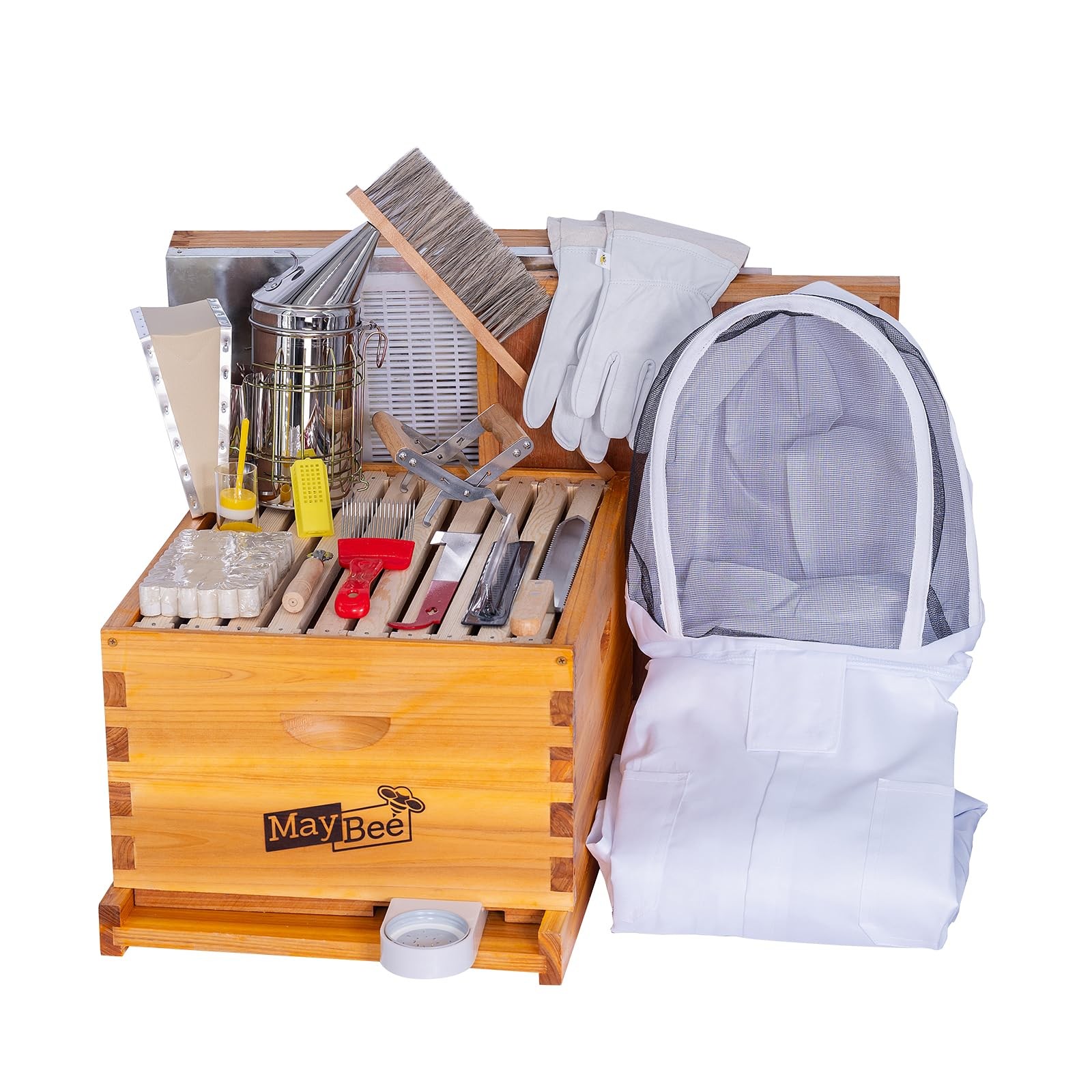 10-Frame Beehive Starter Kit, Bee Hive Kit Dipped in Beeswax, Bee Hives Boxes...$219.86New · Last checked Nov 18, 2026View on eBay
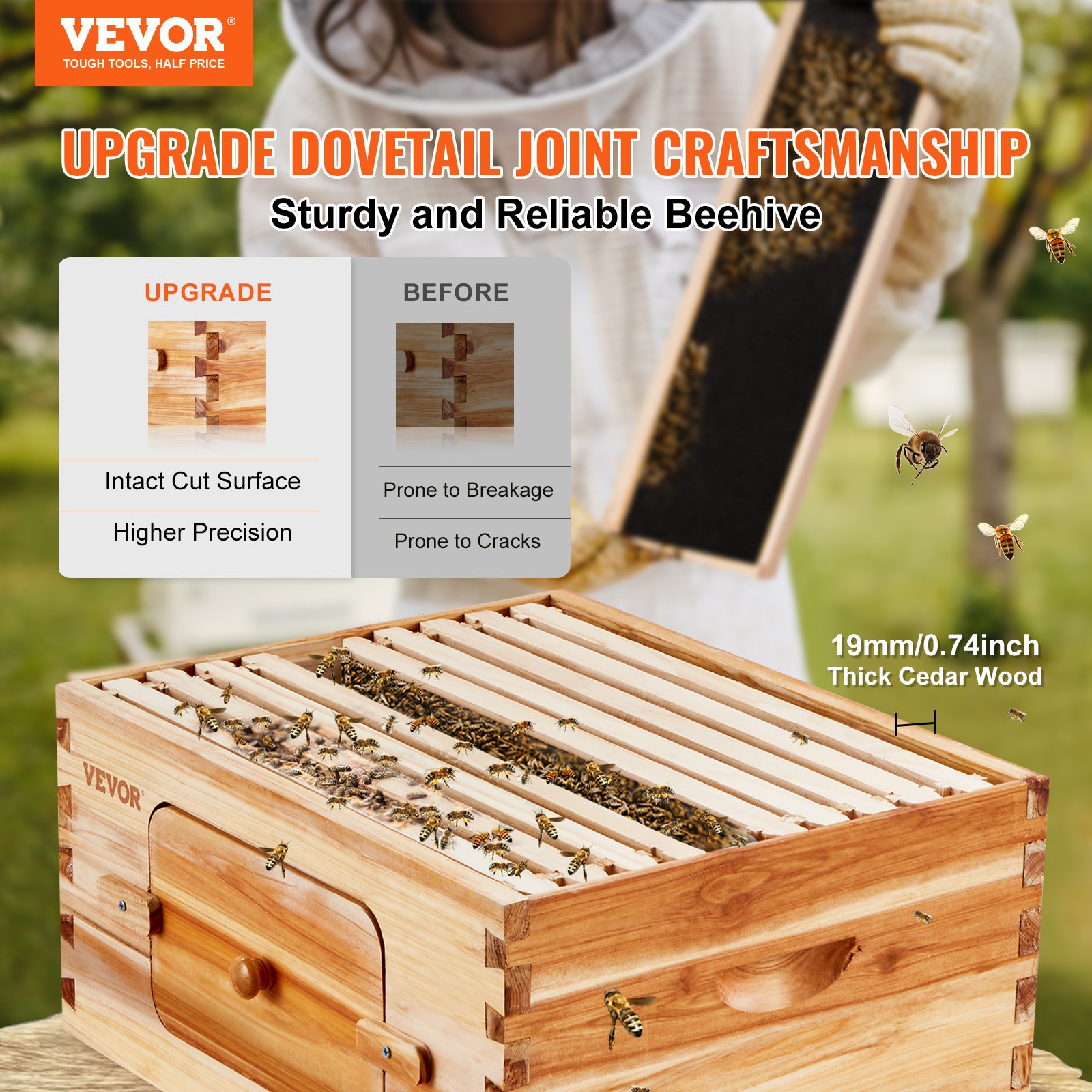 Bee Hive Deep Box Starter Kit, Beeswax Coated Natural Cedar Wood, Langstroth Beehive Kit With 10 Frames And Foundations, Transparent Acrylic Bee Windows For Beginners And Pro Beekeepers$49.99View on Mallflare
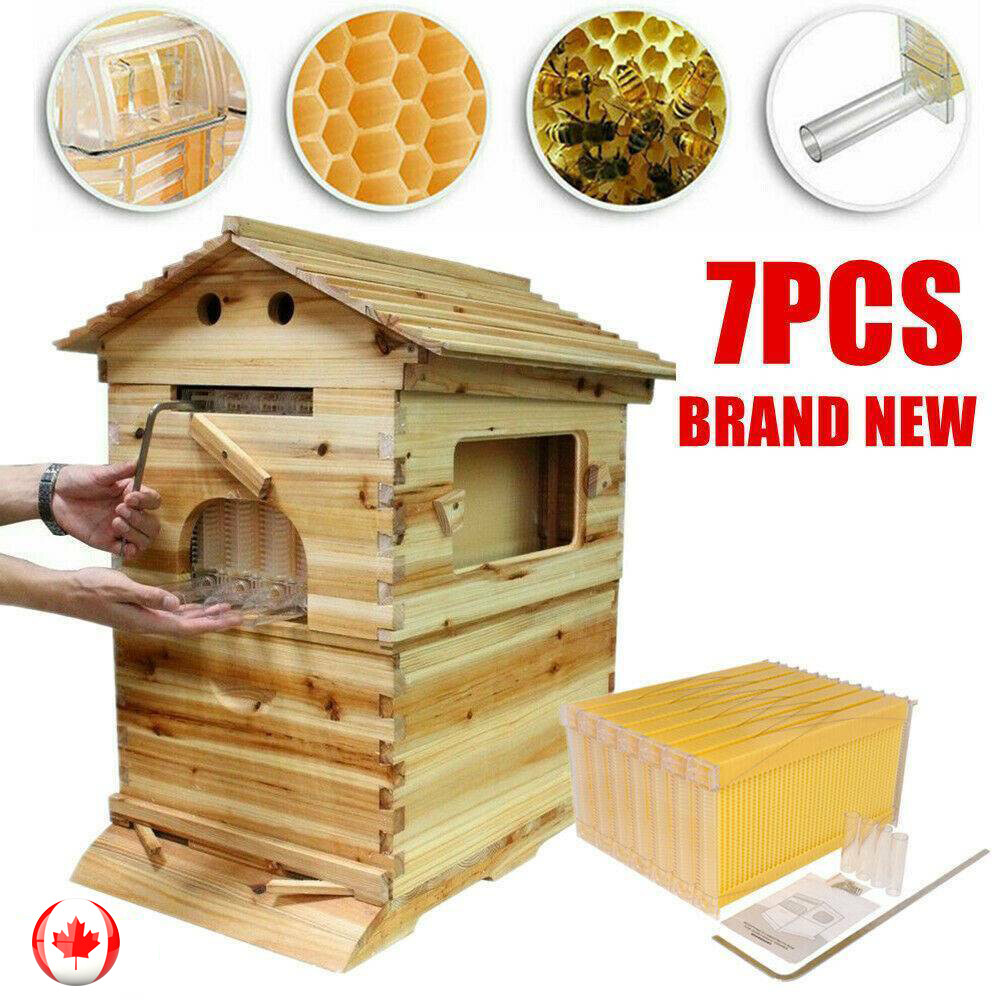 7 Auto Reap Bee Hive Beehive Starter Kit Beekeeping Frames Wooden Bee Boxes$239.99Last checked Nov 18, 2026View on eBay
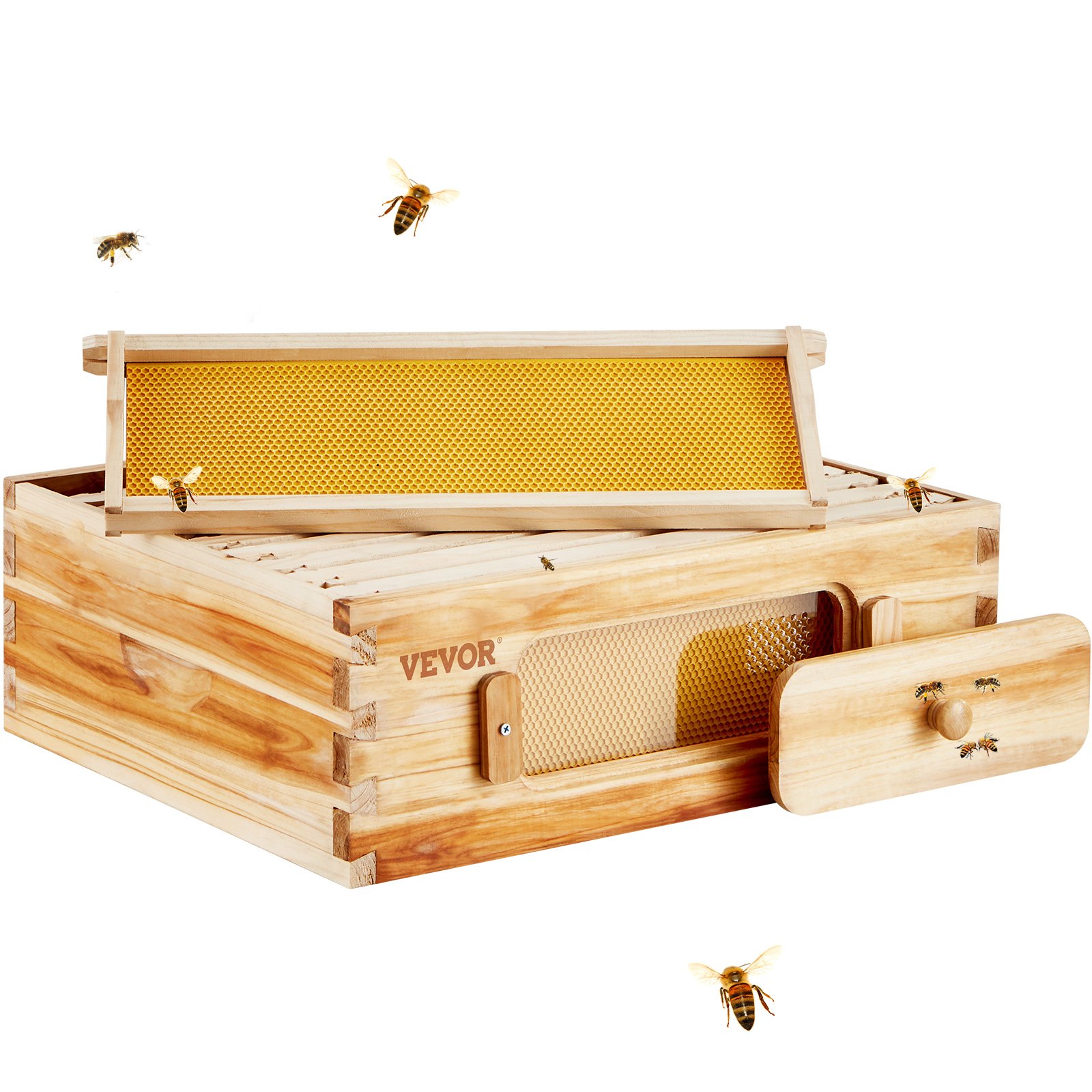 Bee Hive Medium Box Starter Kit, 100% Beeswax Coated Natural Cedar Wood, Langstroth Beehive Kit With 10 Frames And Foundations, Transparent Acrylic Bee Windows For Beginners And Pro Beekeepers$56.99View on Mallflare
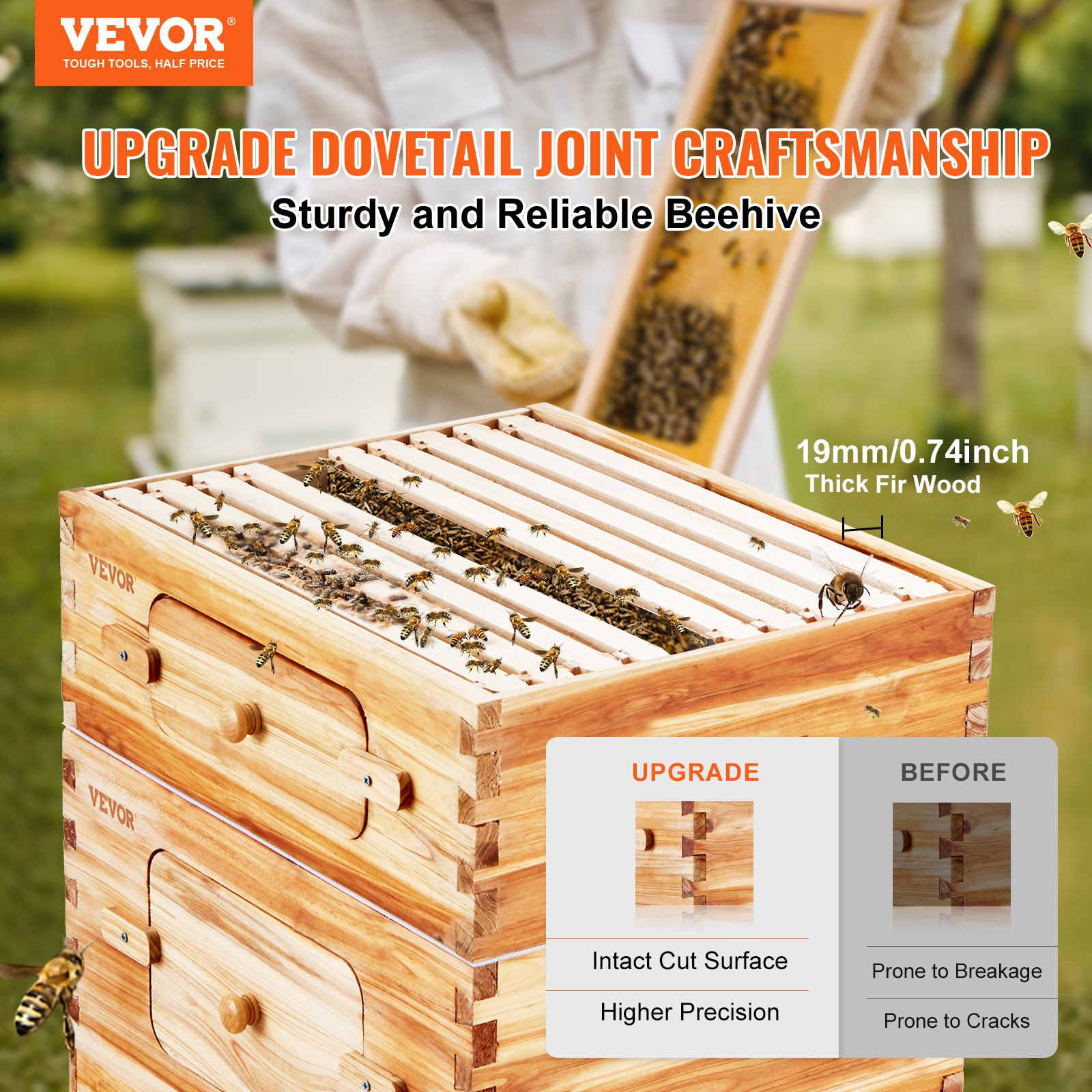 Bee Hive 20 Frame Bee Hives Starter Kit, Beeswax Coated Cedar Wood, Bee Boxes Langstroth Beehive Kit, Transparent Acrylic Windows With Foundations For Beginners Pro Beekeepers$144.99View on Mallflare
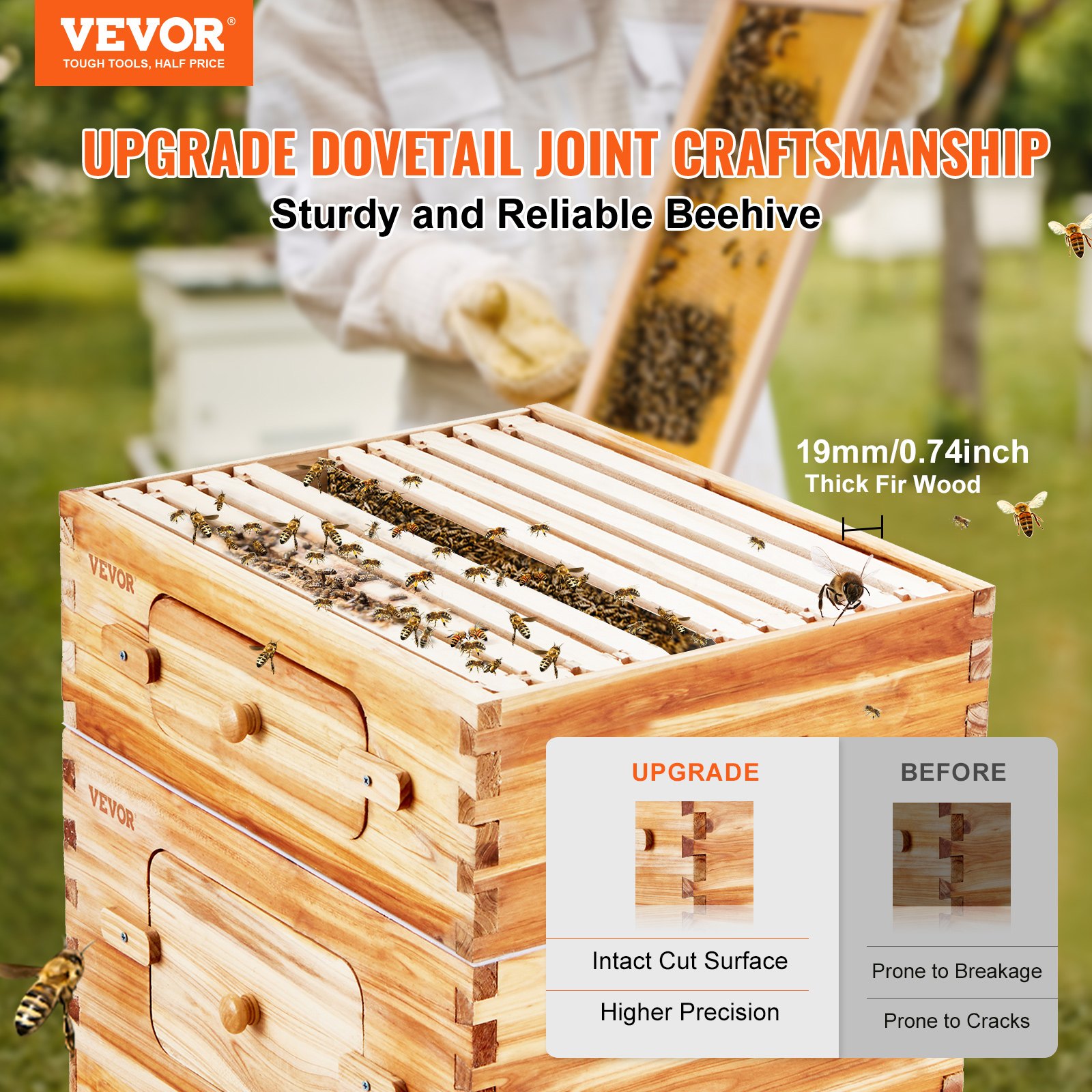 Bee Hive 30 Frame Bee Hives Starter Kit, Beeswax Coated Fir Wood, 2 Deep 1 Medium Bee Boxes Langstroth Beehive Kit, Transparent Acrylic Windows With Foundations For Beginners Pro Beekeepers$169.99View on Mallflare
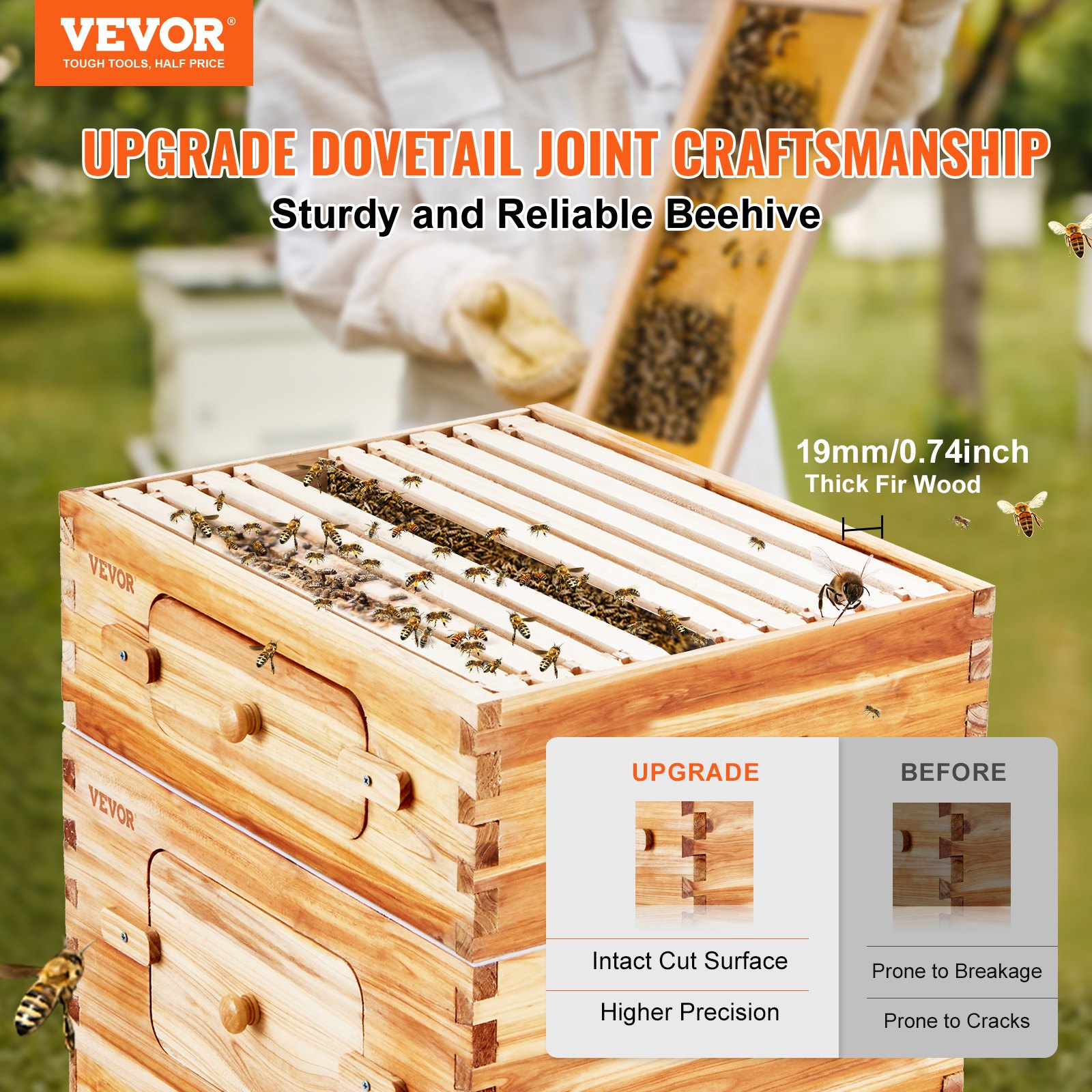 Bee Hive 40 Frame Bee Hives Starter Kit, Beeswax Coated Cedar Wood, 2 Deep 2 Medium Bee Boxes Langstroth Beehive Kit, Transparent Acrylic Windows With Foundations For Beginners Pro Beekeepers$207.99View on Mallflare
Highlights
- Langstroth box depths: deep (9 5/8 in) for brood chambers, medium (6 5/8 in) for honey supers, shallow (5 11/16 in) for comb honey — kits mixing 2 deep + 2 medium cover brood plus two supers.
- Frame count per box: 10-frame boxes are standard for most climates; 8-frame boxes are lighter when full but yield less honey per box and need different extractor sizing.
- Wood durability: cedar and cypress resist rot naturally; pine needs exterior-grade paint or wax coating — raw unfinished pine degrades within a few seasons in wet climates.
- Foundation type: beeswax-coated foundation speeds comb drawing and acceptance; uncoated plastic foundation is slower for new packages and can be rejected in cool spring weather.
Best use cases
- Best fit for a first-year beekeeper in a temperate climate: a 2-deep + 2-medium, 10-frame kit in cedar — gives brood chambers plus honey supers and room to split.
- Wrong fit: buying a single medium box kit for a new package — one medium lacks brood space and forces an immediate second purchase; skip it unless you are adding a super to an existing hive.
- Best fit for hot, humid southern climates: 8-frame cedar boxes with screened bottom boards improve ventilation and keep full-box weight manageable.
- Wrong fit: auto-flow or specialty frame kits as a first hive — they replace standard Langstroth frames, complicate inspection, and limit compatibility with extractors and nucs.
Buying tips
- Match box count to colony plan: 2 deep + 2 medium (40 frames) covers brood plus two honey supers; a single medium 10-frame kit is only a super addition, not a full hive.
- Choose cedar or cypress over pine if the hive sits in rain or snow; cedar needs no paint, while pine requires exterior paint or wax recoating every 1-2 seasons.
- Confirm frame count and foundation type: 10 frames per box with beeswax-coated foundation draws comb faster; 8-frame kits need 8-frame extractor baskets and nuc boxes.
- Check box joinery: dovetailed or finger-jointed corners hold up better than stapled butt joints, which loosen as wood swells and shrinks with moisture.
Specs
| Box Depths | Deep 9 5/8 in / Medium 6 5/8 in |
|---|---|
| Frames Per Box | 8-frame vs 10-frame standard |
| Wood Species | Cedar / cypress / pine |
| Foundation Type | Beeswax-coated vs plastic |
Related searches
What to check before buying
- Measure your stand or hive site: a 10-frame Langstroth box is about 19 7/8 in long and 16 1/4 in wide, so allow clearance for the roof overhang and hive tool access.
- Check your climate zone: humid or rainy areas favor cedar with screened bottom boards; cold climates favor 10-frame deeps for winter cluster space.
- Confirm local hive regulations: some municipalities require removable frames and inspectable Langstroth dimensions, which rules out fixed-comb or nonstandard boxes.
- Verify companion parts: you still need a bottom board, inner cover, outer cover, entrance reducer, and feeder — many starter kits omit these, so buy them with the kit.
FAQ
Data sources: eBay / Amazon listings and product attribute feeds. Updated Nov 27, 2026.
Some links on this page are affiliate links. If you buy after clicking one, we may earn a commission at no extra cost to you. This does not change which products appear here or their order. Affiliate disclosure.