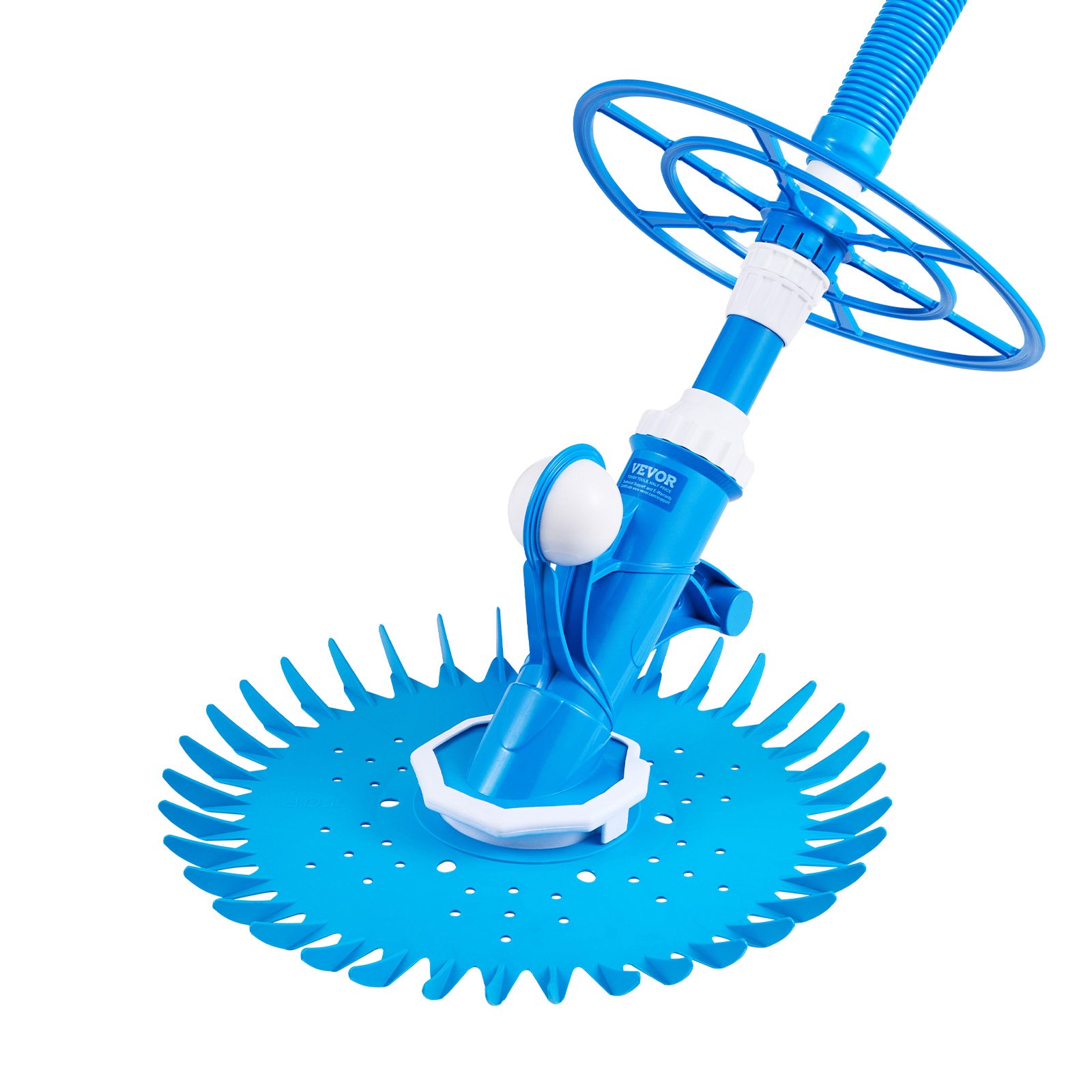

Photos from current listings. Actual item, color, and included accessories may vary.
Suction Pool Cleaner Buying Guide
Suction pool cleaners are non-powered vacuums that connect to your skimmer or dedicated suction line and use the pool's existing pump flow to lift debris into the filter. The core trade-off is diaphragm simplicity versus turbine/gearbox steering durability, and the decisive rule is matching cleaner architecture and hose count to your pool's flow rate and footprint, not chasing the cheapest head.
Key takeaways
- Diaphragm cleaners rely on a flexible rubber membrane driven by suction pulses and have no gears, making them the most clog-tolerant choice for leafy pools with mixed debris.
- Turbine/gear-driven steering heads use water-flow turbines and reduction gearboxes to execute programmed turn patterns, covering larger footprints per pass than random-path diaphragm units.
- Hose count and length dictate real coverage: each 40-inch hose section adds roughly 3 ft of reach, so a 12-hose kit suits pools up to about 20 x 35 ft while 10-hose kits suit compact above-ground pools.
At a glance
- Category
- Pools & Spas
- Last updated
- Nov 28, 2026
Current offers
Highlights
- Diaphragm cleaners rely on a flexible rubber membrane driven by suction pulses and have no gears, making them the most clog-tolerant choice for leafy pools with mixed debris.
- Turbine/gear-driven steering heads use water-flow turbines and reduction gearboxes to execute programmed turn patterns, covering larger footprints per pass than random-path diaphragm units.
- Hose count and length dictate real coverage: each 40-inch hose section adds roughly 3 ft of reach, so a 12-hose kit suits pools up to about 20 x 35 ft while 10-hose kits suit compact above-ground pools.
- Skimmer-driven cleaners require 1.5-inch or 2-inch suction lines and adequate pump flow; below roughly 30 GPM the head stalls, while excessive flow can cause diaphragm flutter and hose whip.
Best use cases
- Best fit: in-ground pools up to 20 x 35 ft with a dedicated suction port or skimmer and steady pump flow — choose a 12-hose turbine-steered head for full-floor coverage.
- Best fit: above-ground pools with fine sand and silt — choose a diaphragm cleaner, which tolerates grit without gear wear and works at lower flow rates.
- Wrong fit: large L-shaped or 40-ft pools — a 12-hose kit cannot reach the far wall; step up to a 14-plus hose kit or a robotic cleaner with programmed navigation.
- Wrong fit: pools with heavy large-leaf loads and no in-line leaf canister — the skimmer basket and pump strainer clog fast; add a leaf canister or choose a pressure-side/robotic unit.
Buying tips
- Measure your pool's longest run and add 2-3 ft of slack; divide by 3 ft per hose section (40-inch sections) to get the minimum hose count you need.
- Match the cleaner to pump flow: diaphragm heads work from about 30 GPM, while turbine-steered heads need roughly 40-50 GPM for reliable pattern execution.
- Confirm suction connection size — skimmer plate, 1.5-inch threaded port, or 2-inch port — and buy the matching adapter, since a loose fit leaks air and stalls the head.
- For above-ground pools, choose a unit rated for vinyl liners with soft bumper rings; aggressive brushes and high-flow turbine heads can abrade seams and print.
Specs
| Drive Type | Diaphragm vs Turbine/Geared |
|---|---|
| Hose Reach | 10-12 sections (30-36 ft) |
| Min Flow Rate | 30-50 GPM by head type |
| Suction Connection | Skimmer plate / 1.5-in / 2-in |
Related searches
What to check before buying
- Measure pool length, width, and depth, and note the distance from skimmer to the farthest wall to size hose count correctly.
- Identify your suction source — skimmer, dedicated suction line, or vacuum port — and its thread/connection standard before ordering adapters.
- Check pump flow and filter pressure; a dirty filter drops flow enough to stall diaphragm and turbine cleaners alike.
- Confirm pool surface type (plaster, vinyl, fiberglass) and choose brush stiffness and bumper design accordingly.
FAQ
Data sources: eBay / Amazon listings and product attribute feeds. Updated Nov 28, 2026.
Some links on this page are affiliate links. If you buy after clicking one, we may earn a commission at no extra cost to you. This does not change which products appear here or their order. Affiliate disclosure.