
Photos from current listings. Actual item, color, and included accessories may vary.
Portable Spa Buying Guide
Portable spas split into two genuinely different architectures: inflatable vinyl tubs that run on standard 120V household current and plug-and-play, and hard-shell roto-molded or acrylic units that need a dedicated 240V circuit and real site prep. Most buyer regret comes from buying an inflatable without checking the actual inflated footprint against their patio or deck, or expecting 240V-class heat-up speed and jet pressure from a 120V air-blower system. Match the tub type to your power source first, then size the seat count to the people who will actually use it, not the maximum quoted.
Median $664.99 · New listings
Key takeaways
- Inflatable spas use a blower that mixes air into the water through hundreds of perforated jet holes; hard-shell spas use a separate water pump with dedicated directional jets, so jet feel and heat retention differ fundamentally.
- Vinyl inflatable tubs run on standard 120V GFCI household outlets and typically heat at roughly 1-2°F per hour, while 240V hard-shell units heat far faster but require an electrician and a dedicated circuit.
- Wall construction determines durability: PVC laminate with internal polyester mesh and vertical I-beam stiffening holds shape better than single-layer PVC, and drop-stitch floors resist punctures from decking and pavers.
At a glance
- Category
- Pools & Spas
- Last updated
- Nov 27, 2026
Current offers
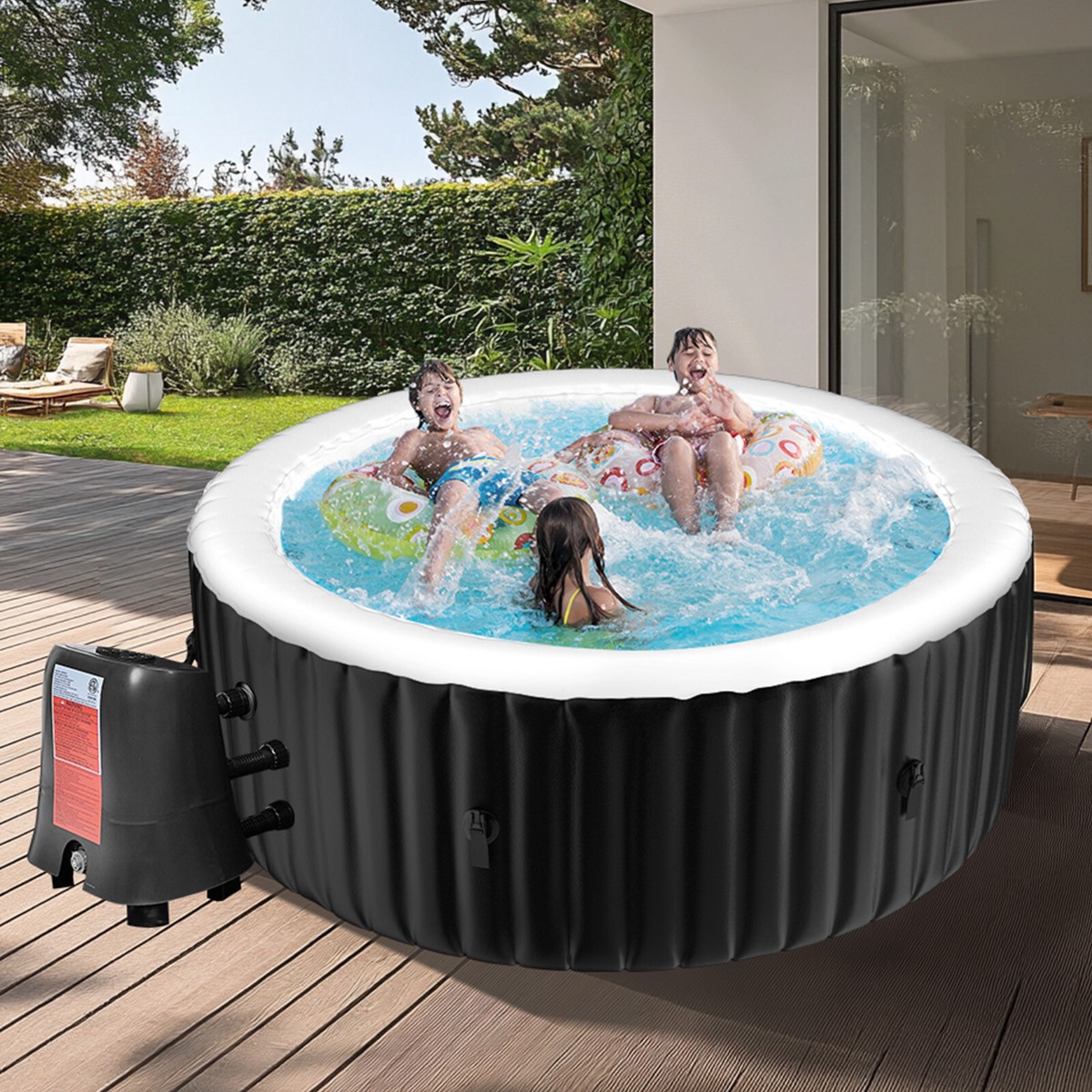 NAIZEA Hot Tub 4 Person Portable Blow Up Hot Tub Portable Spa 120 Bubble Jet$429.99New · Last checked Nov 22, 2026View on eBay
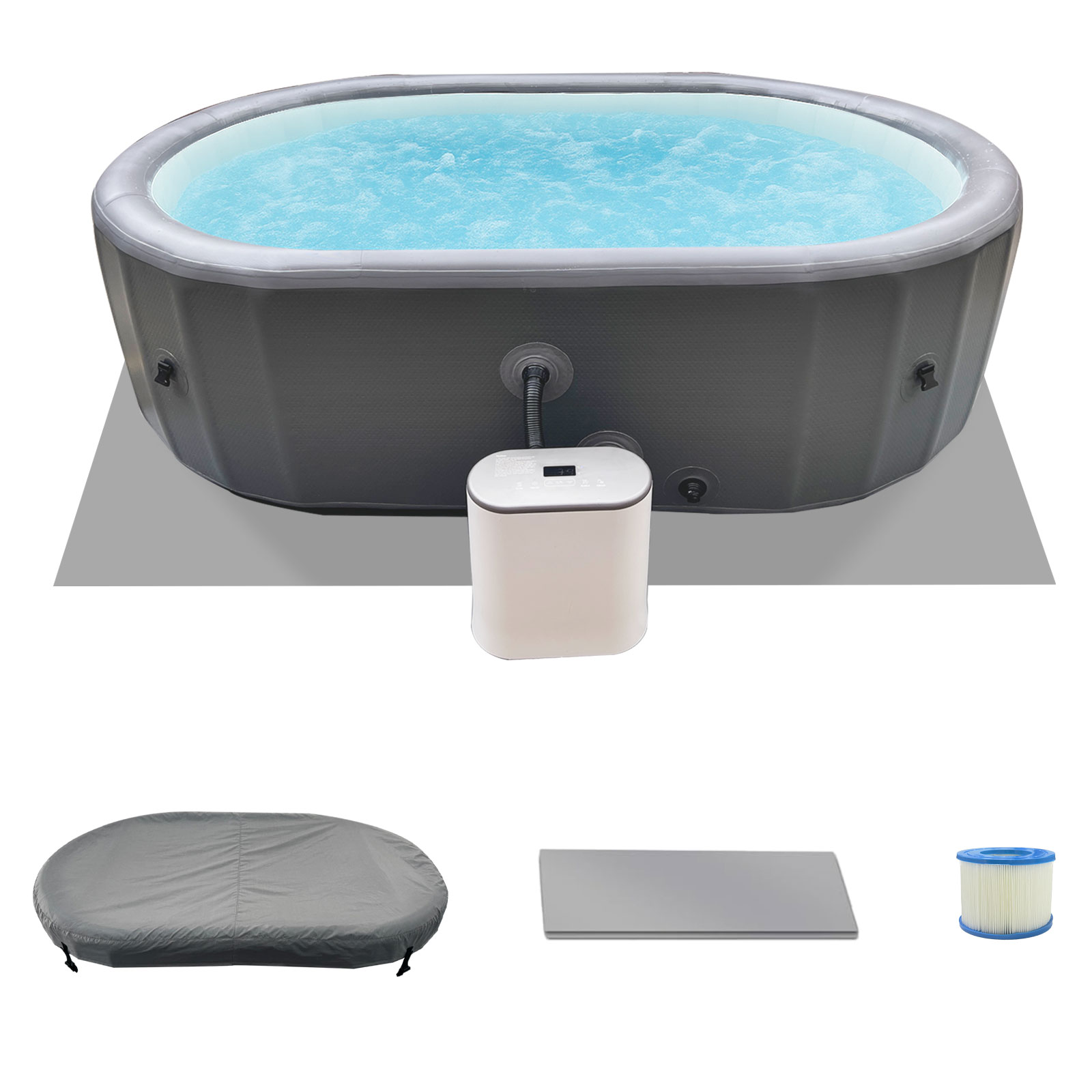 Hot Tub Inflatable Portable Oval Spa 2 Person Hot Tub with 180 Bubble Jets, Cover, Filter Cartridges, Pump$922.99View on Mallflare
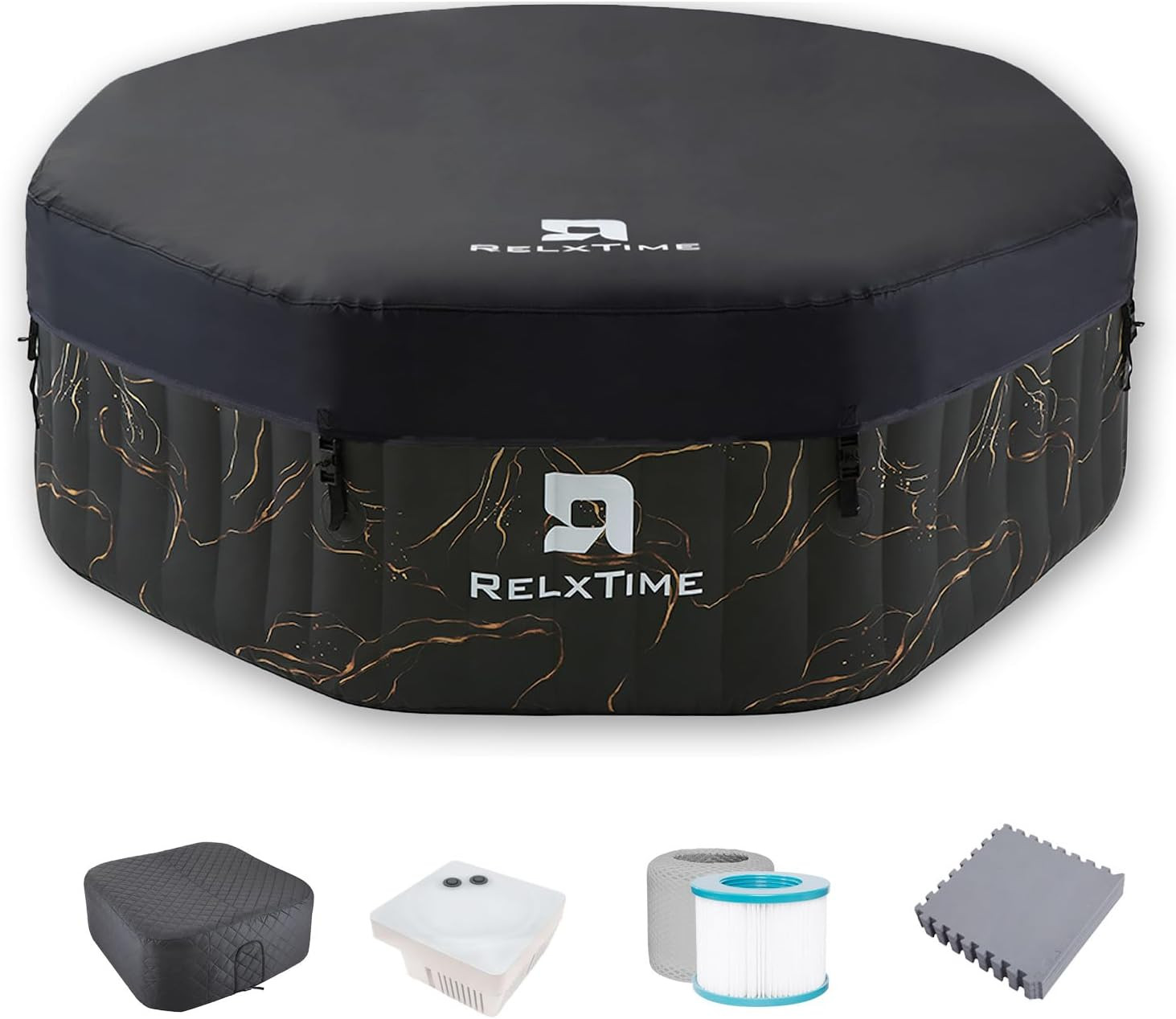 6 Person Inflatable Hot Tub, Outdoor Portable Blow up Spa Backyard$664.99New · Last checked Nov 22, 2026View on eBay
Highlights
- Inflatable spas use a blower that mixes air into the water through hundreds of perforated jet holes; hard-shell spas use a separate water pump with dedicated directional jets, so jet feel and heat retention differ fundamentally.
- Vinyl inflatable tubs run on standard 120V GFCI household outlets and typically heat at roughly 1-2°F per hour, while 240V hard-shell units heat far faster but require an electrician and a dedicated circuit.
- Wall construction determines durability: PVC laminate with internal polyester mesh and vertical I-beam stiffening holds shape better than single-layer PVC, and drop-stitch floors resist punctures from decking and pavers.
- Insulating covers, floor mats, and thermal blankets are the biggest efficiency lever on inflatable spas, because the exposed vinyl wall and open top lose heat quickly in cool or windy conditions.
Best use cases
- Best fit for renters, apartment balconies, and decks without 240V: a 2-4 person inflatable with a 120V pump and included cover, set on a flat pad rated for the filled weight.
- Best fit for permanent backyard soaking with real jet pressure and fast recovery: a 240V hard-shell acrylic or roto-molded spa with a dedicated circuit, poured pad, and locking insulated cover.
- Wrong fit: buying a 6-person inflatable for daily family use on a wooden deck without checking the filled weight per square foot, or expecting inflatable bubble jets to match a hard-shell massage pump.
- Wrong fit: placing any portable spa on grass, bare dirt, or a sloped surface, which stresses the seams, unlevels the water line, and voids the structural integrity of the tub.
Buying tips
- Measure the inflated footprint, not the box dimensions, and add clearance for the pump, cover lifter, and entry steps before committing to a patio or balcony spot.
- Confirm the electrical requirement first: 120V plug-in inflatables work on any GFCI outlet, while 240V hard-shell units need a licensed electrician and a dedicated breaker.
- Prioritize PVC with internal mesh and I-beam wall stiffening over single-layer vinyl, and look for a drop-stitch floor and reinforced jet holes for puncture resistance.
- Choose a seat count one lower than the maximum rating for comfortable soaking, since quoted capacities assume tightly packed adults with legs interlocked.
Specs
| Spa Architecture | Inflatable vinyl vs hard-shell acrylic |
|---|---|
| Power Requirement | 120V plug-in vs 240V hardwired |
| Jet Type | Air blower bubble vs water hydro |
| Seating Capacity | 2 / 4 / 6 person ratings |
What to check before buying
- Measure the exact inflated diameter and height plus pump clearance against your patio, deck, or balcony footprint and railing gaps.
- Verify the structural load: a filled spa weighs roughly 8.3 lb per gallon of water plus occupants, so confirm your deck or slab is rated for that concentrated load.
- Check the outlet: a dedicated 120V GFCI receptacle within cord reach for inflatables, or a 240V circuit installed by an electrician for hard-shell units.
- Confirm a level, solid surface such as concrete, pavers, or a reinforced deck, with a ground mat to protect the vinyl floor from abrasion.
FAQ
Data sources: eBay / Amazon listings and product attribute feeds. Updated Nov 27, 2026.
Some links on this page are affiliate links. If you buy after clicking one, we may earn a commission at no extra cost to you. This does not change which products appear here or their order. Affiliate disclosure.