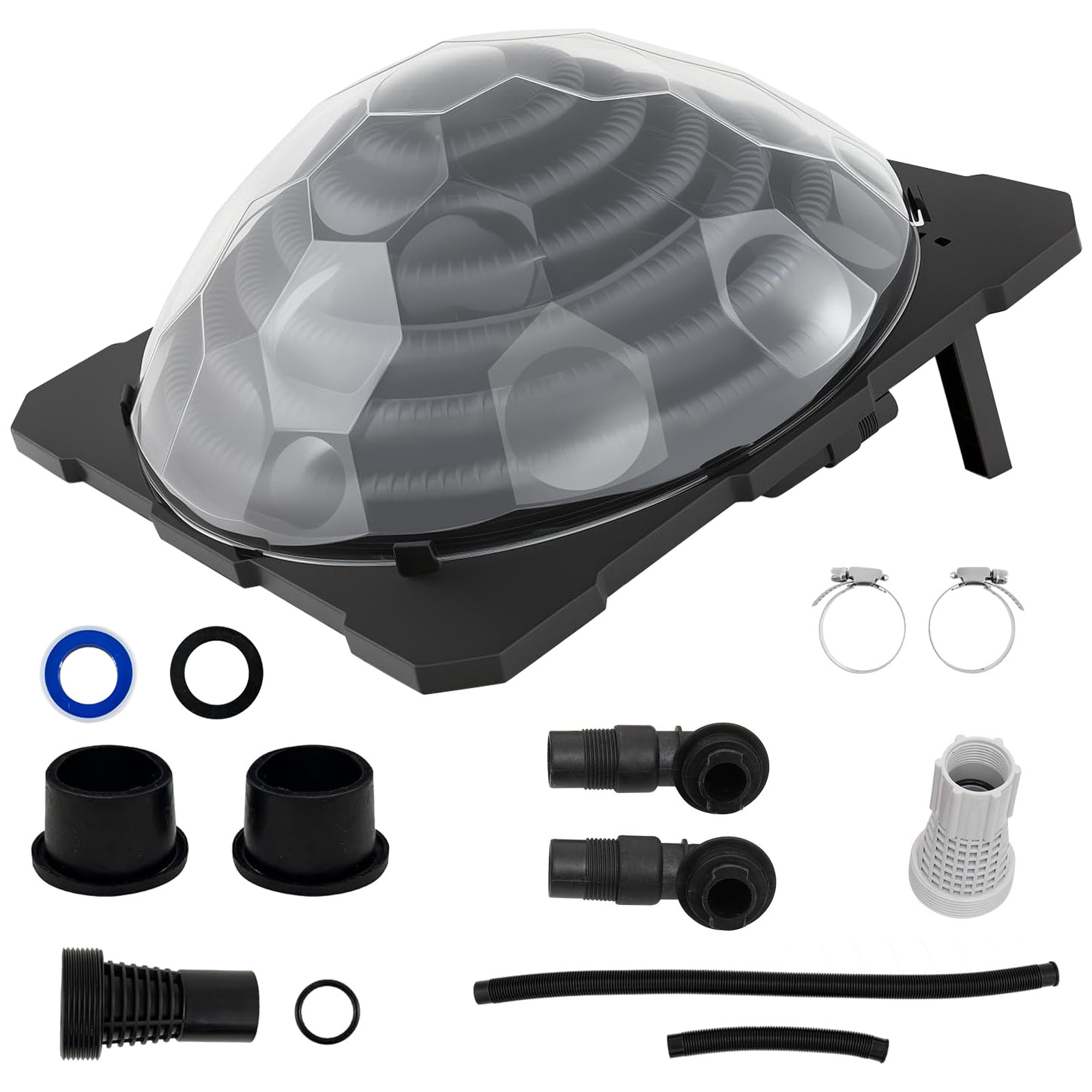

Photos from current listings. Actual item, color, and included accessories may vary.
Inground Pool Heater Buying Guide
Inground pool heaters are split between gas-fired units (natural gas or propane) that deliver fast, on-demand heat and electric heat pumps that move existing heat for high efficiency in milder climates. The core trade-off is upfront cost and electrical service versus operating cost and recovery speed: gas heats any air temperature quickly but burns fuel; heat pumps cost more to install and need 200-240V power yet run at roughly one-third the energy cost. Choose gas for rapid recovery and cold-climate shoulder seasons, heat pumps for efficient steady heating in mild regions, and solar for free daytime heat where a roof or rack space exists.
Key takeaways
- Gas heaters use copper heat exchangers with millivolt or electronic ignition; heat pumps use titanium tube-in-shelf exchangers rated for chlorinated and salt water.
- Heat pump output falls with air temperature — most models are rated at 80°F air/80°F water and lose roughly 40-50% capacity near 50°F, so they suit climates with mild winters.
- Heat pumps require a dedicated 200-240V circuit at 30-60 amps; gas units need a 3/4-inch gas line, sediment trap, and proper venting per local code.
At a glance
- Category
- Pools & Spas
- Last updated
- Nov 28, 2026
Current offers
Highlights
- Gas heaters use copper heat exchangers with millivolt or electronic ignition; heat pumps use titanium tube-in-shelf exchangers rated for chlorinated and salt water.
- Heat pump output falls with air temperature — most models are rated at 80°F air/80°F water and lose roughly 40-50% capacity near 50°F, so they suit climates with mild winters.
- Heat pumps require a dedicated 200-240V circuit at 30-60 amps; gas units need a 3/4-inch gas line, sediment trap, and proper venting per local code.
- Btu sizing rule: roughly 1 Btu per gallon of pool water plus 10-20% for uncovered or windy sites; a 20,000-gallon pool needs about 75,000-100,000 Btu gas input.
Best use cases
- Pick a gas heater if you want fast recovery after a cold night, entertain on short notice, or live where air drops below 50°F — it heats regardless of air temperature.
- Pick a heat pump if your climate stays mild year-round and you run the pump daily; it delivers the lowest operating cost per degree but needs 200-240V service and slow, steady heating.
- Pick solar if you have unshaded roof or rack space and want zero fuel cost; skip it if you need heat on demand or your pool is heavily shaded.
- Skip undersized units: a heater rated below the 1 Btu-per-gallon rule will run continuously and never reach setpoint in cool weather.
Buying tips
- Size gas input at about 1 Btu per gallon of pool volume, then add 10-20% for uncovered pools or windy exposure; a 15,000-gallon pool needs roughly 60,000-75,000 Btu.
- Match heat pump output to pool volume and climate: in mild zones a unit near 1 Btu per gallon works, but cold-climate buyers should oversize by 25-50% to offset capacity fade.
- Confirm electrical service: most inground heat pumps need a 200-240V circuit at 30-60 amps; verify panel capacity before purchase to avoid a service upgrade.
- Check heat exchanger material against your sanitizer: titanium tube-in-shelf for salt or chlorinated water; cupro-nickel or copper for gas units, with proper bypass if flow exceeds rated limits.
Specs
| Heater Type | Gas / Heat Pump / Solar |
|---|---|
| Btu Sizing | ~1 Btu per gallon + 10-20% |
| Heat Exchanger | Titanium (HP) / Cupro-nickel (gas) |
| Power / Fuel | 200-240V 30-60A or 3/4-in gas line |
Related searches
What to check before buying
- Measure pool volume (length × width × average depth × 7.5 for rectangular) to set the Btu or heat pump tonnage target.
- Verify available fuel and power at the equipment pad: gas line size and meter capacity, or a 200-240V circuit with correct amperage.
- Check pad space and clearances: heat pumps need airflow clearance around the fan, gas units need venting per code and a sediment trap.
- Confirm plumbing compatibility: 1.5-inch or 2-inch unions, bypass valve for high-flow pumps, and check-valve placement to prevent backflow.
FAQ
Data sources: eBay / Amazon listings and product attribute feeds. Updated Nov 28, 2026.
Some links on this page are affiliate links. If you buy after clicking one, we may earn a commission at no extra cost to you. This does not change which products appear here or their order. Affiliate disclosure.