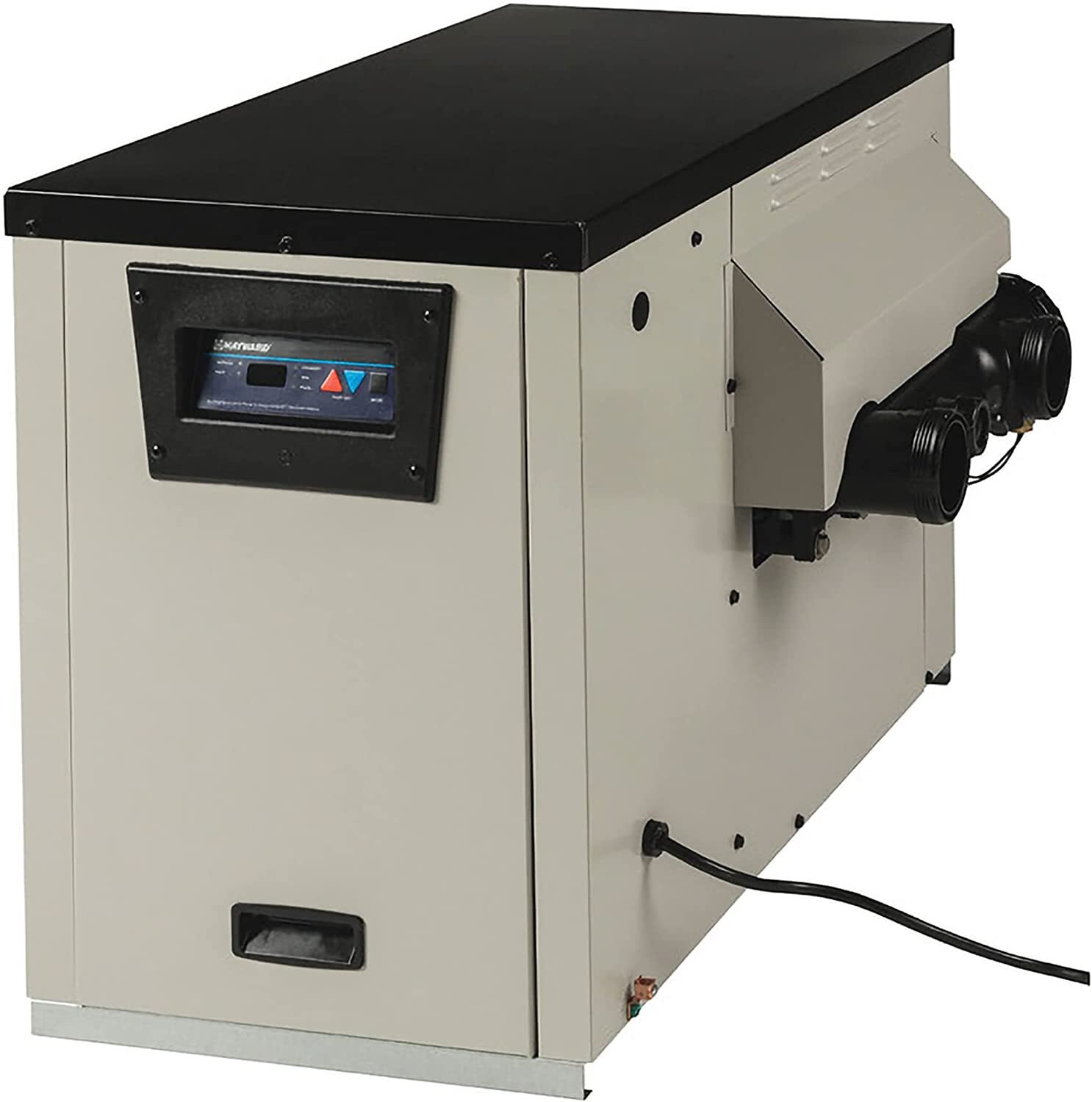

Photos from current listings. Actual item, color, and included accessories may vary.
Hayward Pool Heater Buying Guide
Hayward pool heaters are gas-fired and heat-pump units that raise and hold water temperature; the primary trade-off is upfront cost versus operating efficiency, with gas models offering fast recovery and heat pumps delivering lower long-term energy use. Choose a correctly sized, low-NOx gas heater (H-Series or Universal H) if you want rapid heat and have natural gas or propane; choose a heat pump if your climate stays above 50°F and you prioritize efficiency. Skip undersized or high-NOx units only if you have a small spa or strict emissions rules.
Median $3,049.00
Key takeaways
- Universal H-Series gas heaters come in 150k, 200k, 250k, 300k, and 400k BTU inputs; low-NOx versions meet SCAQMD rule 1146.2 for California installs, standard versions suit other states.
- HeatPro heat pumps use a scroll compressor with COP around 5.0–6.0 at 80°F air/80°F water; output drops sharply below 50°F ambient, so gas is required for year-round cold-climate use.
- ASME-certified heat exchangers use cupronickel or titanium tubes for saltwater and chemically treated pools; standard copper tubes are for fresh water only, and improper chemistry voids warranties.
At a glance
- Category
- Pools & Spas
- Last updated
- Nov 28, 2026
Current offers
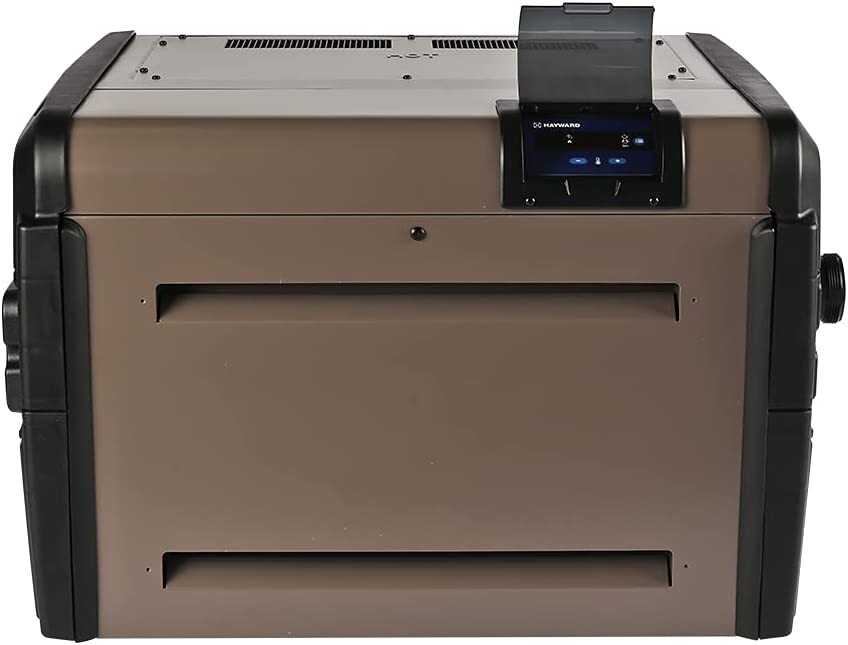
Highlights
- Universal H-Series gas heaters come in 150k, 200k, 250k, 300k, and 400k BTU inputs; low-NOx versions meet SCAQMD rule 1146.2 for California installs, standard versions suit other states.
- HeatPro heat pumps use a scroll compressor with COP around 5.0–6.0 at 80°F air/80°F water; output drops sharply below 50°F ambient, so gas is required for year-round cold-climate use.
- ASME-certified heat exchangers use cupronickel or titanium tubes for saltwater and chemically treated pools; standard copper tubes are for fresh water only, and improper chemistry voids warranties.
- Electronic ignition replaces standing pilots on all current Hayward gas heaters; millivolt standing-pilot models are legacy and should be avoided for new installs because they lack modern safety controls.
Best use cases
- Best fit: in-ground pool with natural gas available and cold winters — pick the Universal H-Series low-NOx gas heater sized at 200k–400k BTU; skip heat pumps if you swim below 50°F ambient.
- Best fit: above-ground pool or spa with propane — choose the Universal H-Series above-ground model with a propane conversion kit; skip in-ground-only units that require permanent hard-piping and high-flow pumps.
- Best fit: warm-climate pool (air stays above 50°F) with no gas line — select a HeatPro heat pump at 50k–140k BTU; skip gas heaters if you lack a gas line and want the lowest operating cost.
Buying tips
- Size gas heaters at roughly 100k–150k BTU per 10,000 gallons for a 20–30°F temperature rise; undersizing a 20,000-gallon pool below 200k BTU makes recovery times impractically long.
- For heat pumps, match BTU output to surface area: about 50k BTU per 500 sq ft of pool surface; a 16x32 ft pool (512 sq ft) needs at least 50k–70k BTU to hold temperature overnight.
- Check the gas supply: 400k BTU heaters require a 1-inch or larger gas line at 7–10.5 in. w.c. natural gas; a 3/4-inch line starves the unit and causes sooting and short cycling.
- Confirm the heat exchanger material: cupronickel or titanium is mandatory for saltwater pools (3,000–5,000 ppm salt); copper tubes corrode within 1–2 seasons in salt systems.
Specs
| Heater Type | Gas-fired vs heat pump |
|---|---|
| Gas Input Range | 150k–400k BTU |
| Heat Pump Output | 50k–140k BTU (COP ~5–6) |
| Heat Exchanger | Cupronickel / titanium vs copper |
Related searches
What to check before buying
- Measure pool volume (length x width x average depth x 7.5 gallons per cubic foot) and surface area; gas sizing uses volume, heat-pump sizing uses surface area plus ambient temperature.
- Verify electrical service at the pad: heat pumps need a dedicated 240V circuit (typically 30–60A depending on model); gas heaters need 120V for ignition and controls.
- Check gas line diameter and meter capacity at the house; a 400k BTU heater plus a pool pump may exceed a standard residential meter and require an upgraded service.
- Confirm clearance to combustibles: gas heaters need 6–12 inches side and 24–36 inches top clearance, and heat pumps need 24–36 inches of unrestricted airflow on the fan discharge side.
FAQ
Data sources: eBay / Amazon listings and product attribute feeds. Updated Nov 28, 2026.
Some links on this page are affiliate links. If you buy after clicking one, we may earn a commission at no extra cost to you. This does not change which products appear here or their order. Affiliate disclosure.