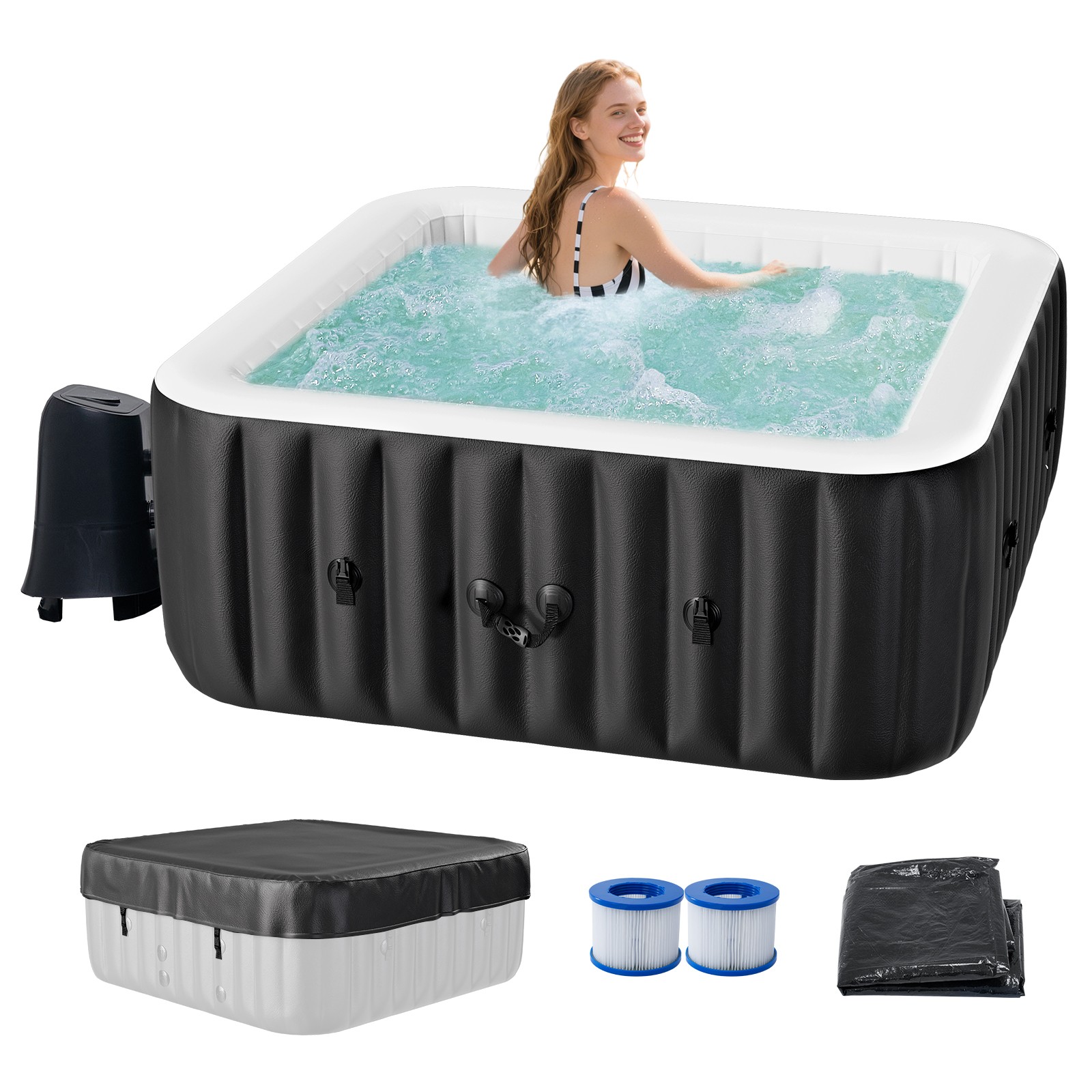

Photos from current listings. Actual item, color, and included accessories may vary.
Airjet Tub Buying Guide
An airjet tub uses a blower to push warm air through floor-mounted jets, creating a gentle, effervescent massage rather than the targeted pressure of water jets. Buyers often mistake airjets for whirlpool jets—they have different plumbing, cleaning needs, and installation requirements. Focus on jet count, blower power, and material compatibility to avoid a tub that feels underpowered or grows mold in unused air lines.
Key takeaways
- Airjet tubs circulate air only, so lines stay dry between uses—reducing stagnant-water mold risk compared to water-jet whirlpools.
- Most airjet blowers run 600–900 watts; higher wattage increases bubble volume but may require a dedicated 20A circuit.
- Jet count typically ranges from 8 to 20; fewer than 8 jets often feels weak in a 60-inch tub, while 12+ suits 72-inch models.
At a glance
- Category
- Pools & Spas
- Last updated
- Nov 28, 2026
Current offers
Highlights
- Airjet tubs circulate air only, so lines stay dry between uses—reducing stagnant-water mold risk compared to water-jet whirlpools.
- Most airjet blowers run 600–900 watts; higher wattage increases bubble volume but may require a dedicated 20A circuit.
- Jet count typically ranges from 8 to 20; fewer than 8 jets often feels weak in a 60-inch tub, while 12+ suits 72-inch models.
- Acrylic shells with fiberglass reinforcement resist flex and blower vibration; thin ABS shells can crack at jet penetrations.
Best use cases
- Best fit: a 60×32-inch alcove with a 20A GFCI circuit and access panel—choose a 10-jet, 700W airjet model for gentle daily relaxation. Skip if you want deep-tissue massage; that requires water jets.
- Best fit: a large 72-inch drop-in tub in a humid bathroom—pick 14+ jets and a heated blower to offset air cooling. Skip unheated blowers in cold climates; they blow room-temperature air that feels chilly.
- Best fit: a remodel where the floor is already framed for a blower access panel—choose a self-draining airjet system to reduce moisture. Skip if no access panel exists; blower service requires reachable clearance.
Buying tips
- Prioritize jet count relative to tub length: 8–10 jets for 60-inch tubs, 12–16 for 66–72-inch tubs, to avoid dead zones.
- Check blower wattage and electrical: 600–900W blowers usually need a dedicated 15–20A GFCI circuit; confirm your panel capacity before ordering.
- Choose acrylic with fiberglass backing over thin ABS—airjet vibration and jet holes stress the shell, and reinforced acrylic resists cracking.
- Inspect drain-down design: self-draining air lines and a heated blower reduce residual moisture and cold-air blasts in humid bathrooms.
Specs
| Jet Type | Air blower (600–900W) vs water pump |
|---|---|
| Jet Count | 8–20 floor/lower-wall air jets |
| Shell Material | Acrylic w/ fiberglass vs ABS |
| Electrical | Dedicated 15–20A GFCI circuit |
Related searches
What to check before buying
- Measure your alcove or drop-in opening precisely—airjet tubs are often 60×32 or 72×36 inches and need 1–2 inches clearance for framing.
- Confirm a dedicated GFCI circuit is within reach; most blowers cannot share a circuit with other bathroom loads.
- Verify a service access panel of at least 12×12 inches is possible near the blower—required for maintenance and winterizing.
- Check floor structure and leveling: a filled airjet tub can weigh 800–1,200 pounds; ensure joist support and a level bed of mortar or foam.
FAQ
Data sources: eBay / Amazon listings and product attribute feeds. Updated Nov 28, 2026.
Some links on this page are affiliate links. If you buy after clicking one, we may earn a commission at no extra cost to you. This does not change which products appear here or their order. Affiliate disclosure.