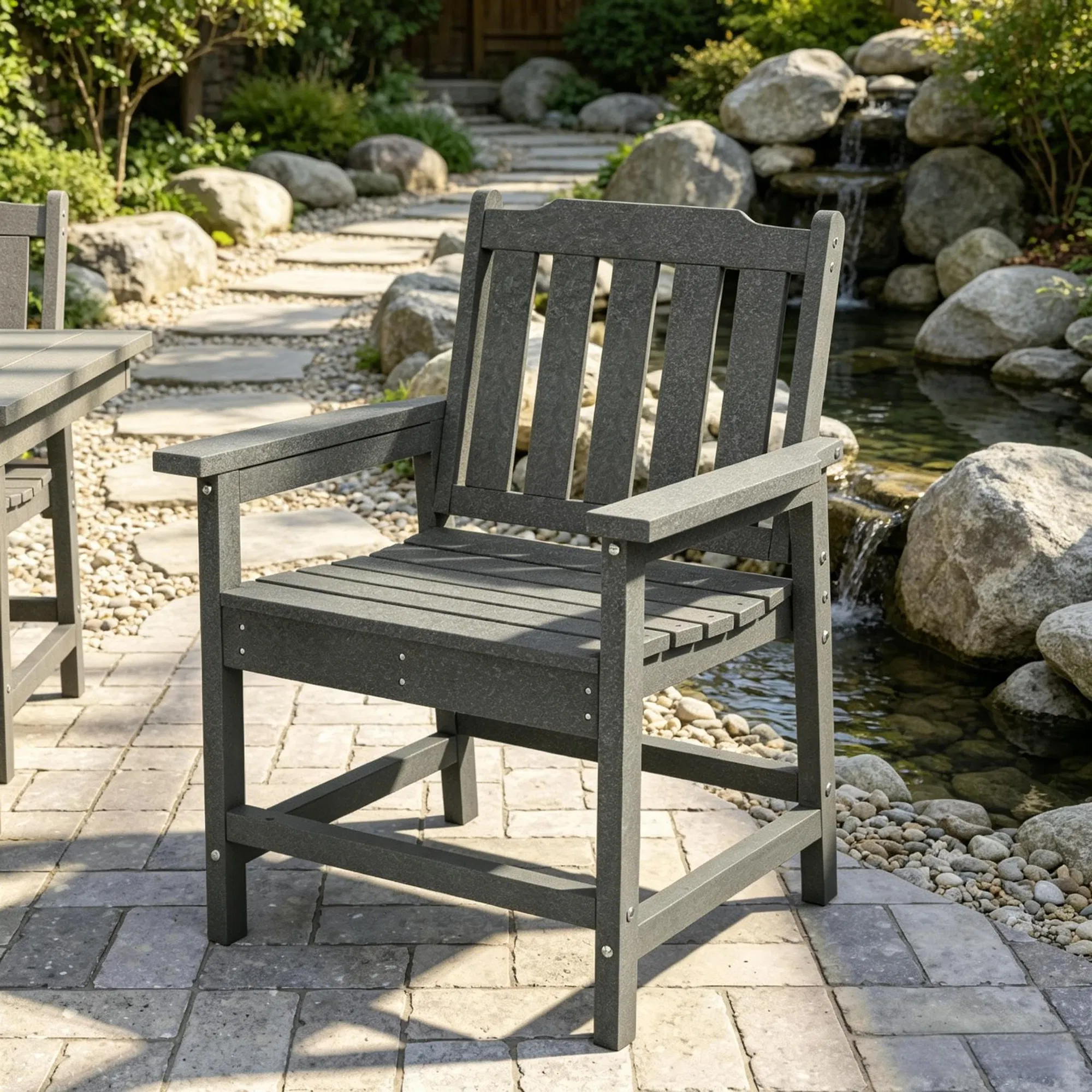

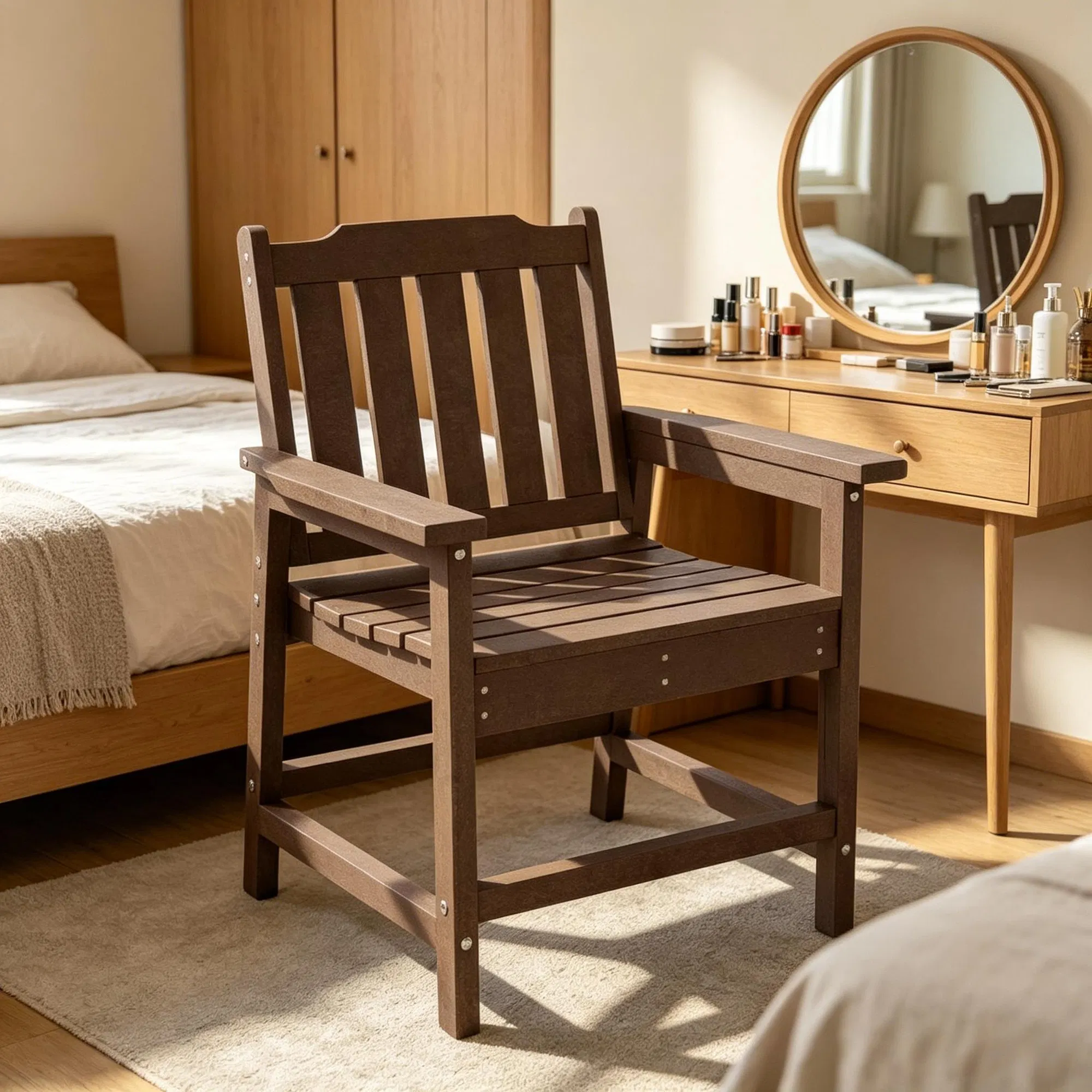
Photos from current listings. Actual item, color, and included accessories may vary.
Plastic Lawn Chair Buying Guide
Plastic lawn chairs are not all disposable party-store commodities—resin and HDPE frames now span stackable event seating to wood-grain patio dining chairs meant to live outdoors year-round. The material grade, UV stabilization, and weight rating separate a chair that fades and cracks in one summer from one that handles a decade of sun and rain. Buy by resin type and load rating first, then match the frame profile to your table height and storage routine.
Median $196.99
Key takeaways
- HDPE (high-density polyethylene) chairs resist moisture, rot, and insects indefinitely and hold color best when UV-stabilized; cheap PP (polypropylene) is lighter but embrittles faster in sun.
- Wood-grain HDPE patio chairs typically carry 250-350 lb load ratings and use stainless or coated hardware—plain folding event chairs often rate only 200-250 lb.
- Dining-height plastic chairs sit near 17-18 in seat height to pair with 28-30 in tables; lower 15-16 in Adirondack-style frames suit lounge use, not dining.
At a glance
- Category
- Patio Furniture
- Last updated
- Nov 28, 2026
Current offers
Highlights
- HDPE (high-density polyethylene) chairs resist moisture, rot, and insects indefinitely and hold color best when UV-stabilized; cheap PP (polypropylene) is lighter but embrittles faster in sun.
- Wood-grain HDPE patio chairs typically carry 250-350 lb load ratings and use stainless or coated hardware—plain folding event chairs often rate only 200-250 lb.
- Dining-height plastic chairs sit near 17-18 in seat height to pair with 28-30 in tables; lower 15-16 in Adirondack-style frames suit lounge use, not dining.
- Stackable resin chairs save floor space but need 3-6 in of clearance per stacked unit; non-stacking HDPE dining chairs take fixed footprints of roughly 22-24 in width.
Best use cases
- Pick UV-stabilized HDPE wood-grain dining chairs for a permanent patio table set exposed to full sun and rain—skip untreated PP or thin resin that chalks and cracks.
- Choose lightweight stackable resin chairs for event, rental, or occasional lawn seating where portability and bulk storage matter more than long-term color hold.
- Avoid open-cell or hollow-seam plastic chairs in freeze-thaw climates; sealed HDPE frames with drain channels prevent water ingress that splits legs after winter.
Buying tips
- Prioritize HDPE over PP for any chair staying outdoors year-round; HDPE tolerates UV and temperature swings without the brittleness PP develops.
- Check seat height against your table: 17-18 in seats fit standard 28-30 in dining tables, while 15-16 in seats belong with low lounge tables.
- Inspect joint construction—stainless-steel or coated fasteners and reinforced leg brackets outlast glued or snap-fit plastic joints under repeated stacking.
- Size the footprint before ordering a set: dining chairs run about 22-24 in wide, so a 60 in table seats three per side with breathing room.
Specs
| Resin Type | HDPE vs PP (UV-stabilized) |
|---|---|
| Load Rating | 200-250 lb event / 250-350 lb HDPE |
| Seat Height | 17-18 in dining / 15-16 in lounge |
| Stacking | Stackable vs fixed-frame |
What to check before buying
- Measure your table height and confirm the chair seat height lands 10-12 in below the tabletop for comfortable leg clearance.
- Check patio or deck depth against the chair footprint plus pull-out space—allow 24-30 in behind each chair for standing and scooting.
- Confirm the chairs are rated for your climate: UV-stabilized resin for sunbelt exposure, sealed drainable frames for freeze-thaw regions.
- Verify stacking height and stored footprint if you plan to pack chairs away seasonally or between events.
FAQ
Data sources: eBay / Amazon listings and product attribute feeds. Updated Nov 28, 2026.
Some links on this page are affiliate links. If you buy after clicking one, we may earn a commission at no extra cost to you. This does not change which products appear here or their order. Affiliate disclosure.