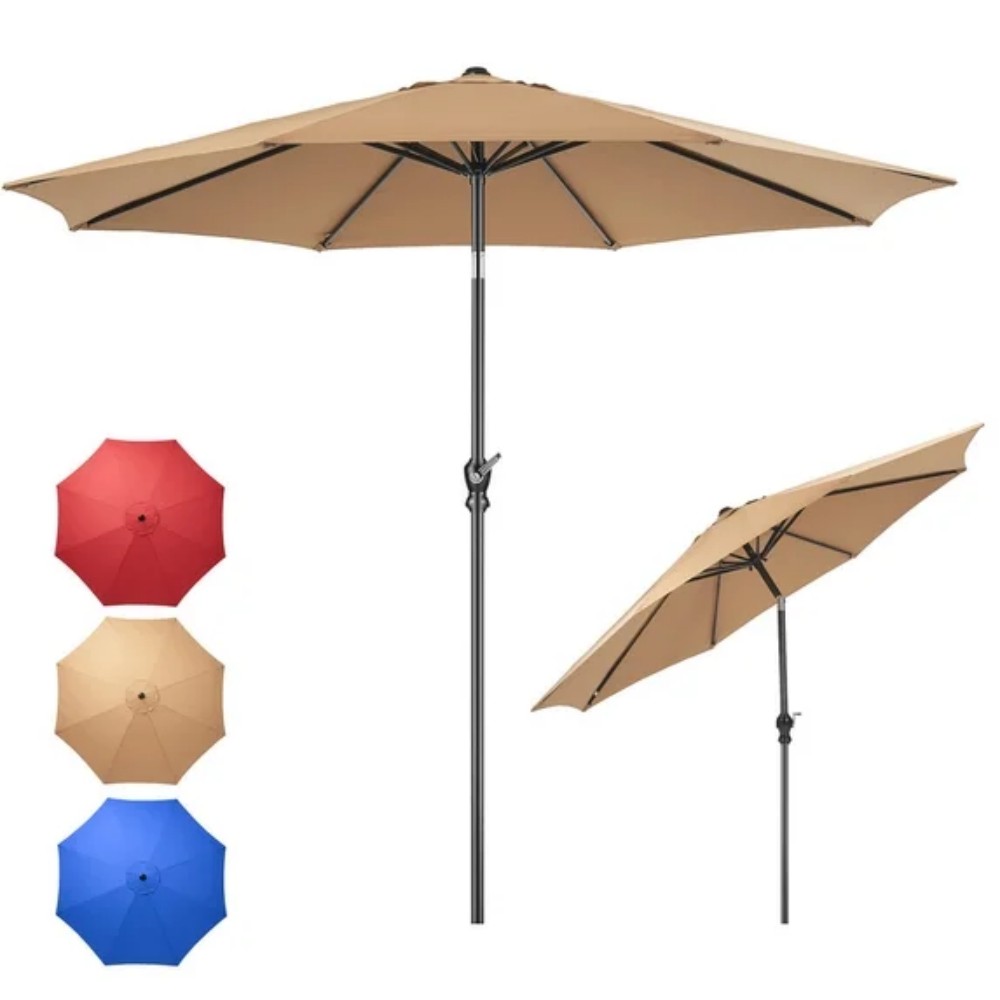

Photos from current listings. Actual item, color, and included accessories may vary.
Patio Table Umbrella Buying Guide
A patio table umbrella is a pole-mounted shade structure that fits through a table's umbrella hole and is stabilized by a base, with performance driven by canopy fabric grade, frame material, and tilt/crank mechanism. The core trade-off is between UV-fade-resistant solution-dyed fabric with a sturdy aluminum or steel frame versus thin polyester and flimsy ribbing that fails within a season or two. The clear rule: buy solution-dyed fabric at 200 GSM or higher on a powder-coated aluminum frame with a weighted base rated for your local wind, and skip any umbrella that lacks a vented canopy or a base weight appropriate to its span.
Key takeaways
- Canopy fabric is the primary durability determinant: solution-dyed polyester or acrylic (200+ GSM) resists UV fading and mildew far longer than piece-dyed 160-180 GSM polyester.
- Frame architecture separates tiers: powder-coated aluminum resists rust and is lighter to tilt, while steel is heavier and cheaper but rusts at welds if coating chips.
- Crank-and-tilt mechanisms vary: collar-tilt moves the canopy at the pole, while push-button or auto-tilt at the ribs offers better side-shade coverage but more failure points.
At a glance
- Category
- Patio Furniture
- Last updated
- Nov 28, 2026
Current offers
Highlights
- Canopy fabric is the primary durability determinant: solution-dyed polyester or acrylic (200+ GSM) resists UV fading and mildew far longer than piece-dyed 160-180 GSM polyester.
- Frame architecture separates tiers: powder-coated aluminum resists rust and is lighter to tilt, while steel is heavier and cheaper but rusts at welds if coating chips.
- Crank-and-tilt mechanisms vary: collar-tilt moves the canopy at the pole, while push-button or auto-tilt at the ribs offers better side-shade coverage but more failure points.
- Vent design matters: a single- or double-wind vent releases updrafts and reduces canopy flip; unvented canopies catch wind and stress ribs and the table hole.
Best use cases
- Best fit: 7.5-9 ft market umbrella over a 4-6 person dining table with a 1.5-2 in umbrella hole and a 50-100 lb base — pick solution-dyed fabric and aluminum frame for daily sun.
- Right fit for small balconies: 6-7.5 ft tilting umbrella with a compact half-base or plate base when space is tight and the table is round or square under 47 in.
- Skip cantilever/offset umbrellas over lightweight bistro tables unless the base is separately weighted to 100+ lb; the offset arm loads the base, not the table hole.
- Skip solar/LED umbrellas if you need all-day shade in high-wind zones — the panel and battery add weight to the canopy but do not improve wind rating or fabric UV resistance.
Buying tips
- Match canopy span to table: 7.5 ft fits tables up to 42 in; 9 ft fits 48-60 in; 10-11 ft fits 60-84 in — overhang of 12-18 in per side maximizes shade without pole strain.
- Measure your table's umbrella hole before buying: standard is 1.5 in, but wood and octagon tables often use 1.97-2 in, so confirm the pole diameter and use a reducing ring if needed.
- Pick frame by climate: powder-coated aluminum for coastal or humid areas, steel only if you accept touch-up painting; stainless hardware is the rust-proof standard.
- Base weight rule: use at least 50 lb for a 7.5-9 ft umbrella in sheltered patios and 100+ lb or a water/sand-filled base for open or windy decks; never rely on the table alone.
Specs
| Canopy Fabric | Solution-dyed 200+ GSM vs piece-dyed |
|---|---|
| Frame Material | Powder-coated aluminum vs steel |
| Canopy Size | 7.5-11 ft span; 6-8 ribs |
| Base Weight | 50-100+ lb; water/sand fill options |
What to check before buying
- Measure table hole diameter (1.5 in or 1.97-2 in) and table height so the pole and crank clear chair backs and the canopy sits 78-84 in above the floor.
- Confirm your patio wind exposure: open decks and coastal sites need a vented canopy, aluminum ribs, and a 100+ lb base; sheltered courtyards can use 50 lb.
- Check base compatibility: cross-base or plate-base footprint must fit under the table and not trip chairs; water/sand-fill bases need a hose or fill port access.
- Verify fabric rating: solution-dyed, 200+ GSM, and a UV/mildew resistance claim; confirm the canopy is removable and machine-washable or hose-cleanable.
FAQ
Data sources: eBay / Amazon listings and product attribute feeds. Updated Nov 28, 2026.
Some links on this page are affiliate links. If you buy after clicking one, we may earn a commission at no extra cost to you. This does not change which products appear here or their order. Affiliate disclosure.