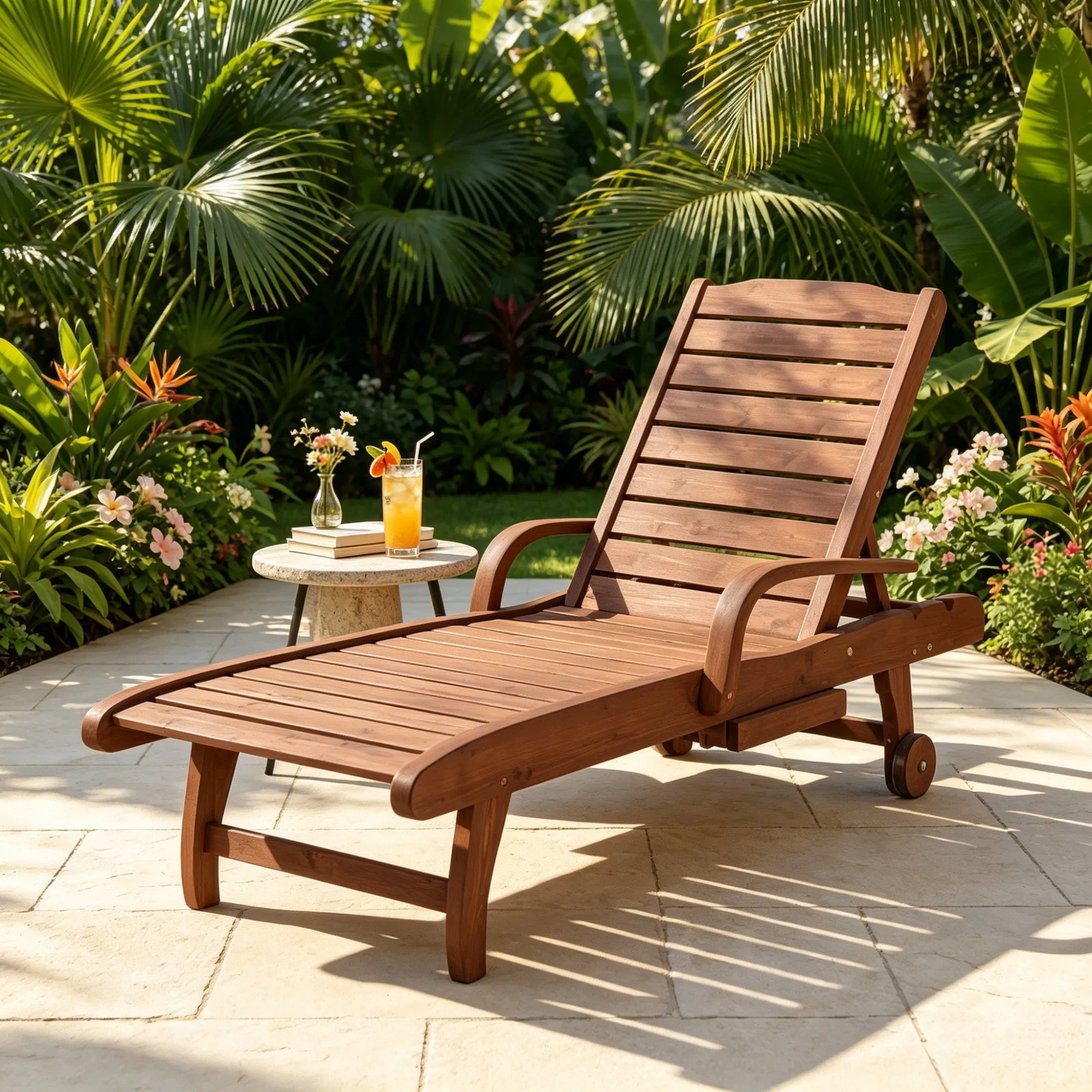

Photos from current listings. Actual item, color, and included accessories may vary.
Outdoor Wood Chaise Lounge Buying Guide
An outdoor wood chaise lounge should be chosen by frame material, recline mechanism, and storage reality, not by the cushion photo. Most buyer regret comes from ignoring wood species durability, hardware corrosion, and the footprint needed for full recline.
Frame Material:Solid acacia/teak vs PE rattan wrapRecline Mechanism:4-gear notched vs continuous hingeWeight Capacity:300–400 lbs per seatHardware Grade:Stainless vs painted steel fasteners
Typical price range$225.99 – $363.99
Median $294.99
Key takeaways
- Solid acacia, teak, and eucalyptus are the three durable hardwood tiers; acacia is dense and affordable but needs annual oiling to prevent checking.
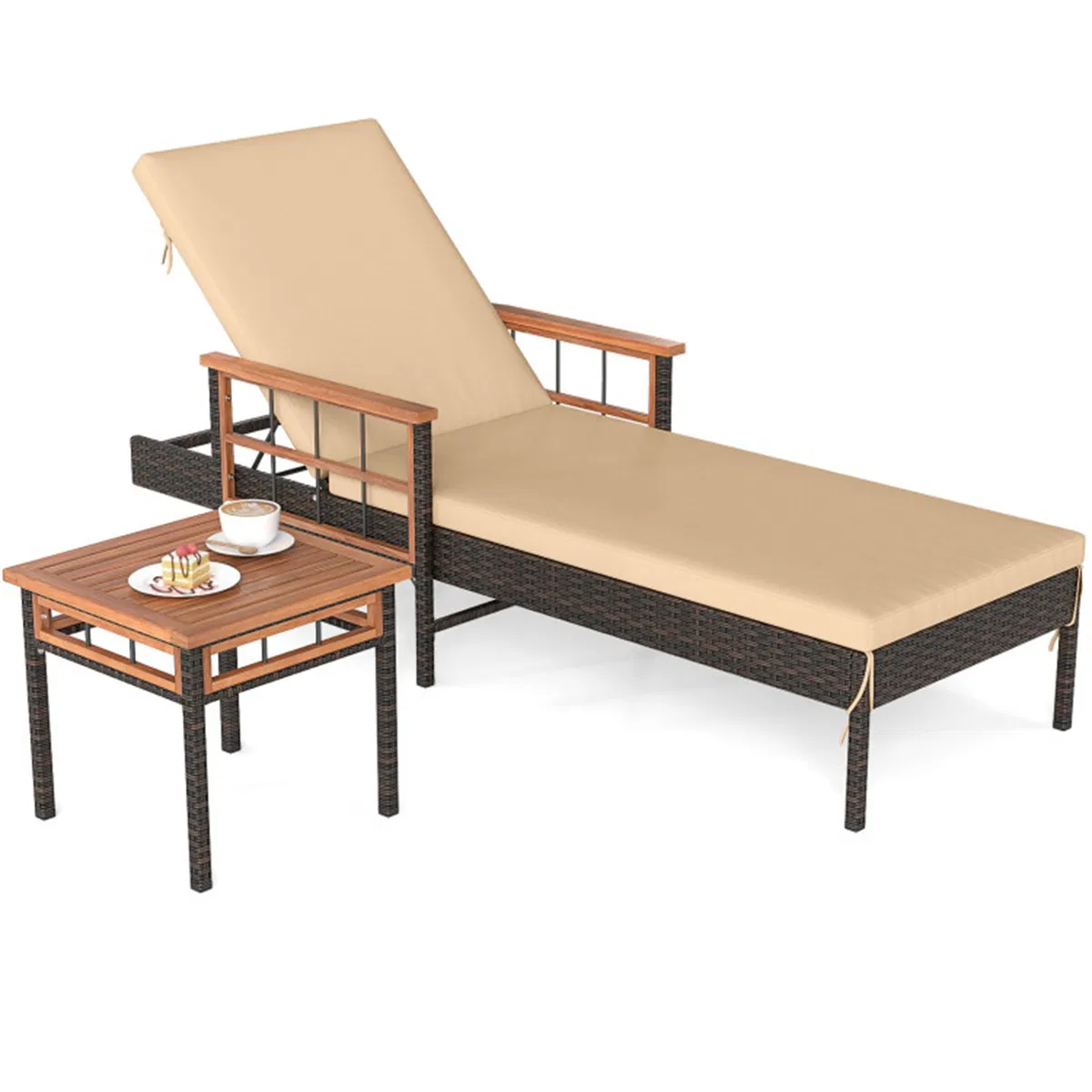
- PE rattan over a powder-coated steel or aluminum frame is a distinct construction from solid wood — it resists moisture but can sag if the frame gauge is thin.
- Recline mechanisms range from a simple 4-gear notched backrest to multi-position gas or ratchet hinges; more positions mean more hardware to inspect for stainless steel.
At a glance
- Category
- Patio Furniture
- Last updated
- Nov 28, 2026
Current offers
Highlights
- Solid acacia, teak, and eucalyptus are the three durable hardwood tiers; acacia is dense and affordable but needs annual oiling to prevent checking.
- PE rattan over a powder-coated steel or aluminum frame is a distinct construction from solid wood — it resists moisture but can sag if the frame gauge is thin.
- Recline mechanisms range from a simple 4-gear notched backrest to multi-position gas or ratchet hinges; more positions mean more hardware to inspect for stainless steel.
- Weight capacity ratings cluster around 300–400 lbs; the number reflects frame joint and fastener quality more than the wood species alone.
Best use cases
- Choose solid teak or acacia with stainless hardware if the lounge stays outside year-round in humid or coastal air; oil twice yearly to stop surface cracking.
- Pick PE rattan over a powder-coated aluminum frame if you want low maintenance and a lighter piece to move, but skip it if you need the structural feel of real wood.
- Avoid a full-recline wooden chaise on a small balcony unless you measure the flat footprint; a 4-gear backrest still needs clearance behind the hinge.
Buying tips
- Inspect the joinery spec: mortise-and-tenon or doweled joints outlast butt joints with visible screws at stress points like the backrest hinge.
- Prioritize stainless steel or galvanized hardware over painted steel; coastal buyers should reject any fastener described only as 'rust-resistant'.
- Check the recline gear count against your use — 4-gear notched backrests are fine for reading, while continuously adjustable hinges suit napping.
- Choose a cushion with a removable, zippered cover and quick-dry foam; open-cell foam drains rain, while closed-cell foam traps water and mildews.
Specs
| Frame Material | Solid acacia/teak vs PE rattan wrap |
|---|---|
| Recline Mechanism | 4-gear notched vs continuous hinge |
| Weight Capacity | 300–400 lbs per seat |
| Hardware Grade | Stainless vs painted steel fasteners |
Related searches
What to check before buying
- Measure the full flat length plus 6–12 inches of rear clearance so the backrest can drop without hitting a wall or railing.
- Confirm the patio surface is level; uneven pavers stress one side of a wooden frame and accelerate joint loosening.
- Check your climate: freeze-thaw winters favor teak or oiled acacia, while arid sun bleaches unstained eucalyptus quickly.
- Verify the cushion thickness and tie-down straps match the frame width so the pad does not slide when reclined.
FAQ
Data sources: eBay / Amazon listings and product attribute feeds. Updated Nov 28, 2026.
Some links on this page are affiliate links. If you buy after clicking one, we may earn a commission at no extra cost to you. This does not change which products appear here or their order. Affiliate disclosure.