
Photos from current listings. Actual item, color, and included accessories may vary.
Heavy Duty Wood Burning Fire Pit Buying Guide
A heavy-duty wood burning fire pit is an outdoor hearth built to contain real logs and repeated hot burns, not just decorative flames. The core trade-off is steel gauge and joint construction versus price: thin 1–2 mm stamped steel warps and burns through in a few seasons, while 3 mm+ plate steel or cast iron with welded seams lasts for decades. The decision rule: buy only pits whose bowl is at least 3 mm (11-gauge) steel or cast iron, with a spark screen, poker, and a screened or lidded top included.
Median $116.49
Key takeaways
- Steel gauge is the durability metric: 11-gauge (3 mm) or thicker plate steel and cast iron resist warping; 14–16-gauge (1.5–2 mm) stamped bowls develop heat cracks and burn-through in 2–4 seasons.
- Welded construction beats riveted or bolted seams: continuous welds handle thermal cycling, while spot welds and rivets loosen and leak embers as the bowl expands and contracts.
- A spark screen or hinged lid is a functional requirement, not an accessory: it blocks ember throw and limits burn rate; pyramid or domed screens shed rain and direct smoke upward.
At a glance
- Category
- Patio Furniture
- Last updated
- Nov 28, 2026
Current offers
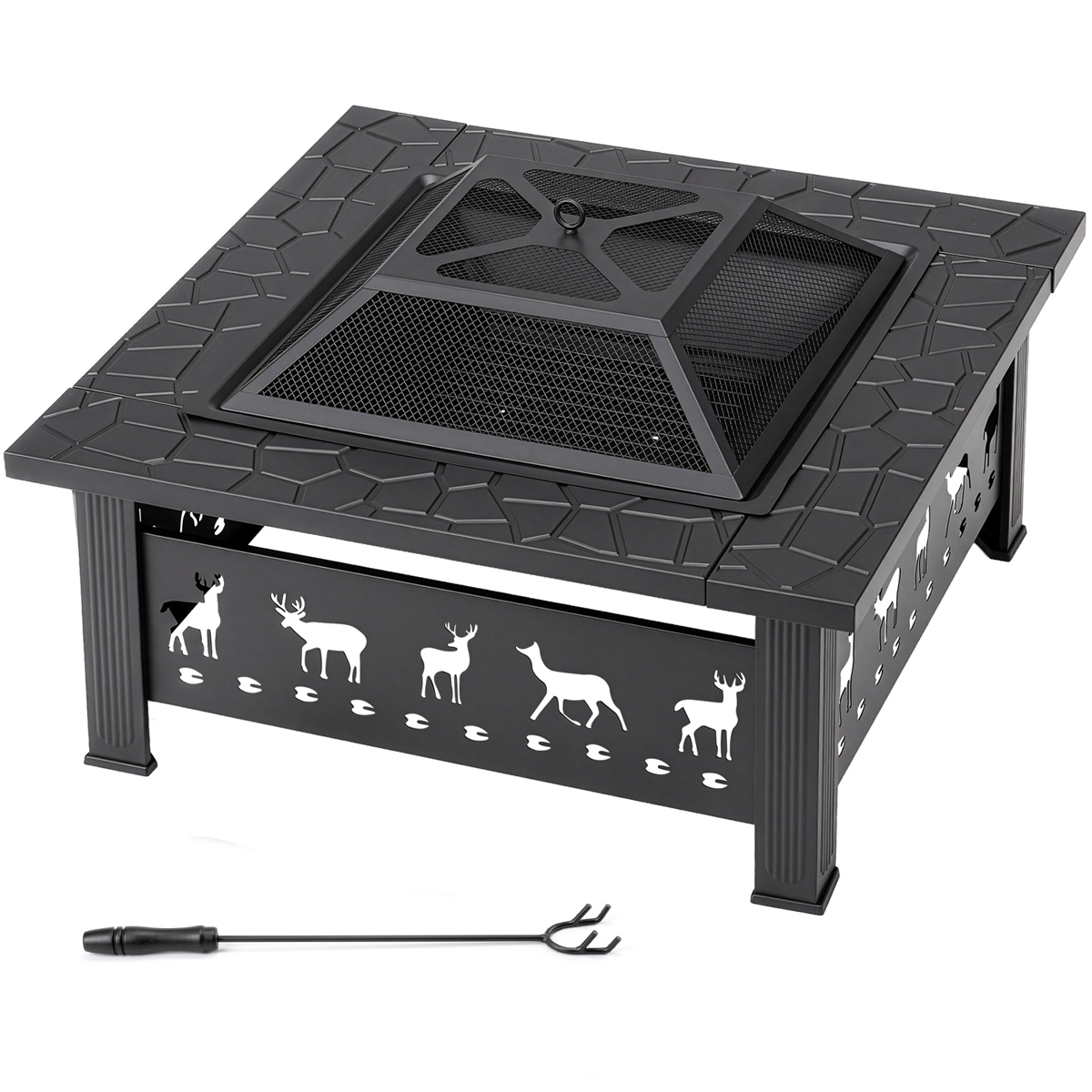 32 Inch Square Outdoor Wood Burning Fire Pit Table, Heavy Duty Wrought Iron Firepit with Pyramid Spark Screen Lid & Poker, Decorative Elk Cutout Patio Pit for Backyard, Garden, Lawn and Camp$111.99View on Mallflare
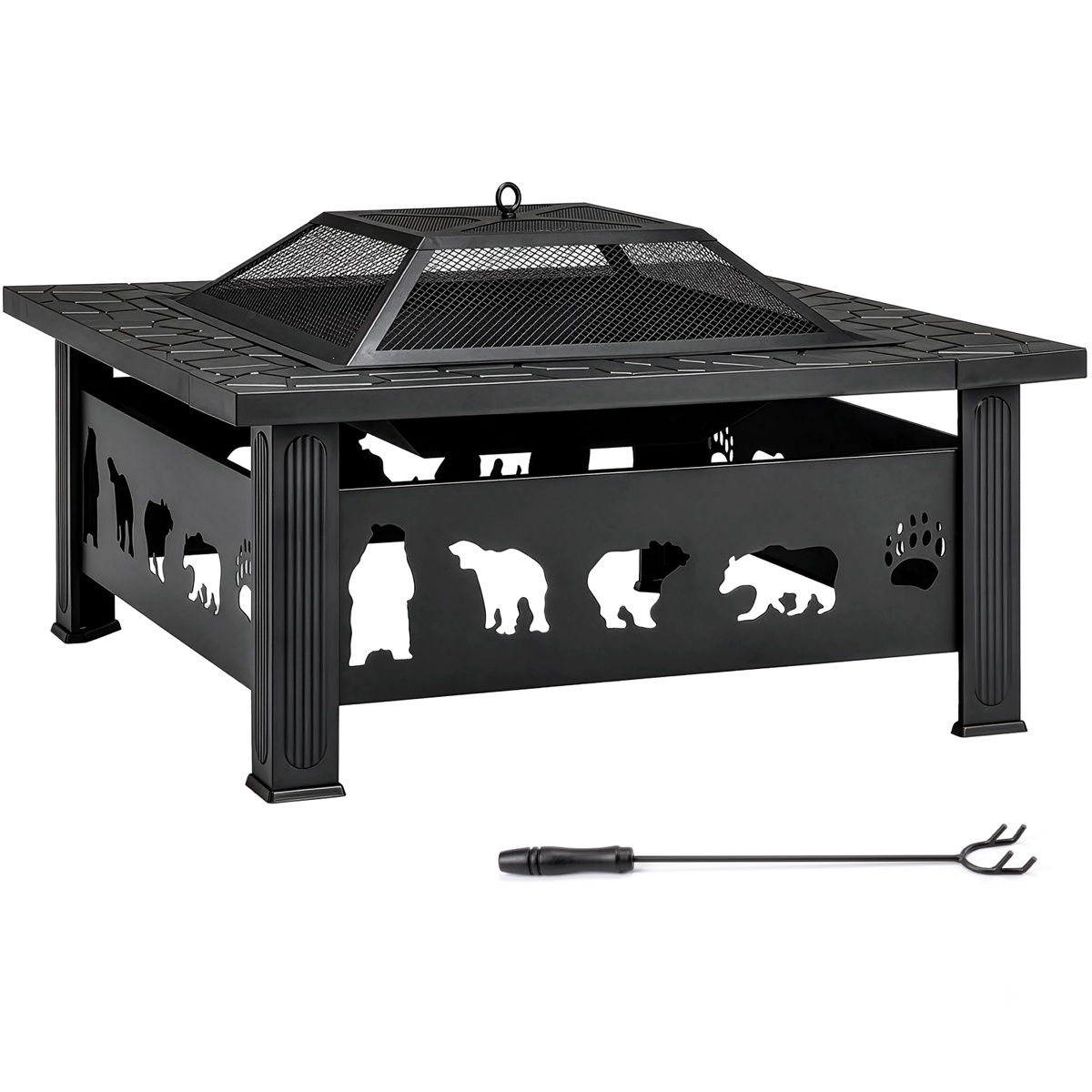 32 Inch Square Outdoor Wood Burning Fire Pit Table, Heavy Duty Wrought Iron Firepit with Pyramid Spark Screen Lid & Poker, Decorative Bear Cutout Patio Pit for Backyard, Garden, Lawn and Cam$111.99View on Mallflare
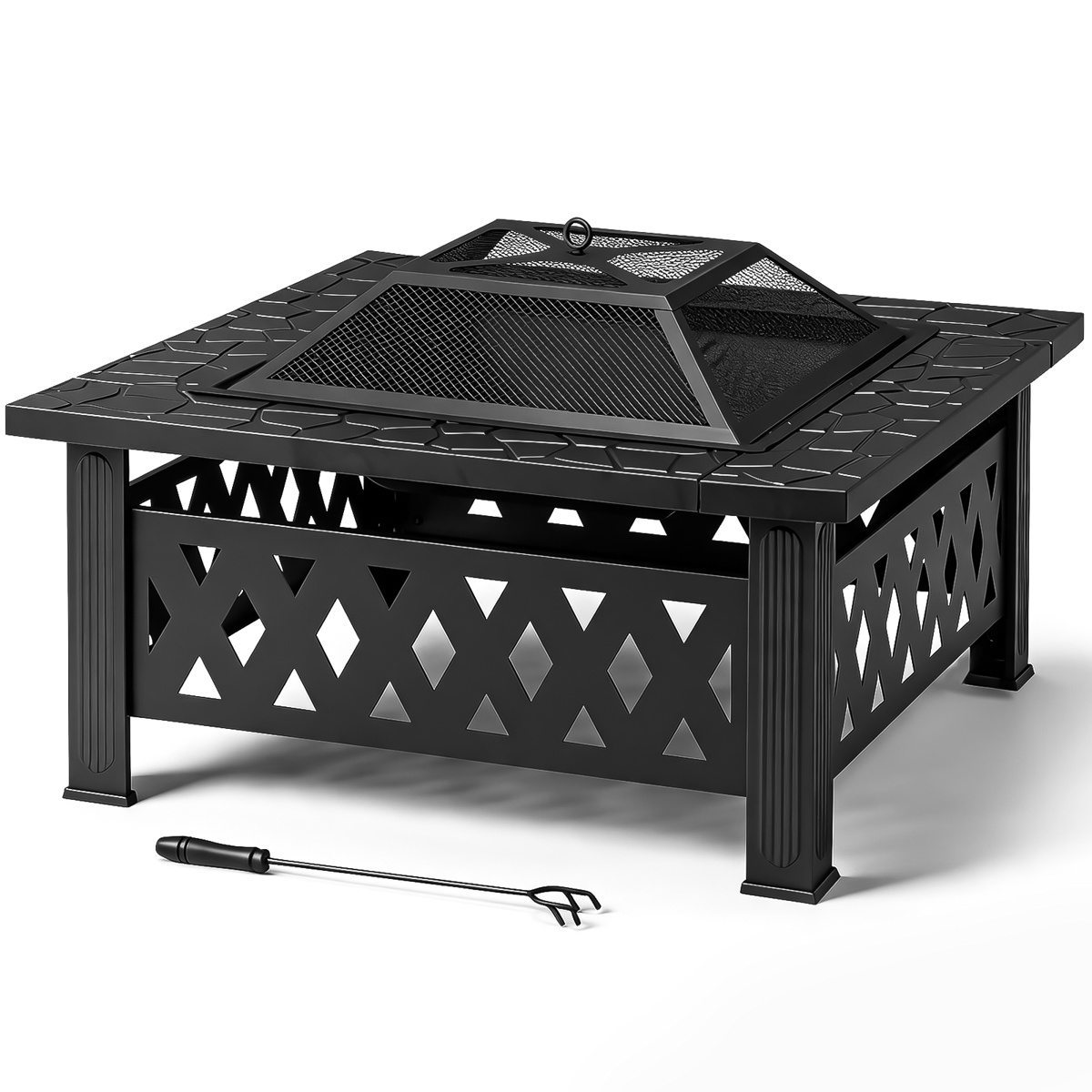 32 Inch Square Outdoor Wood Burning Fire Pit Table, Heavy Duty Wrought Iron Firepit with Pyramid Spark Screen Lid & Poker, Decorative Diamond Cutout Patio Pit for Backyard, Garden, Lawn and$120.99View on Mallflare
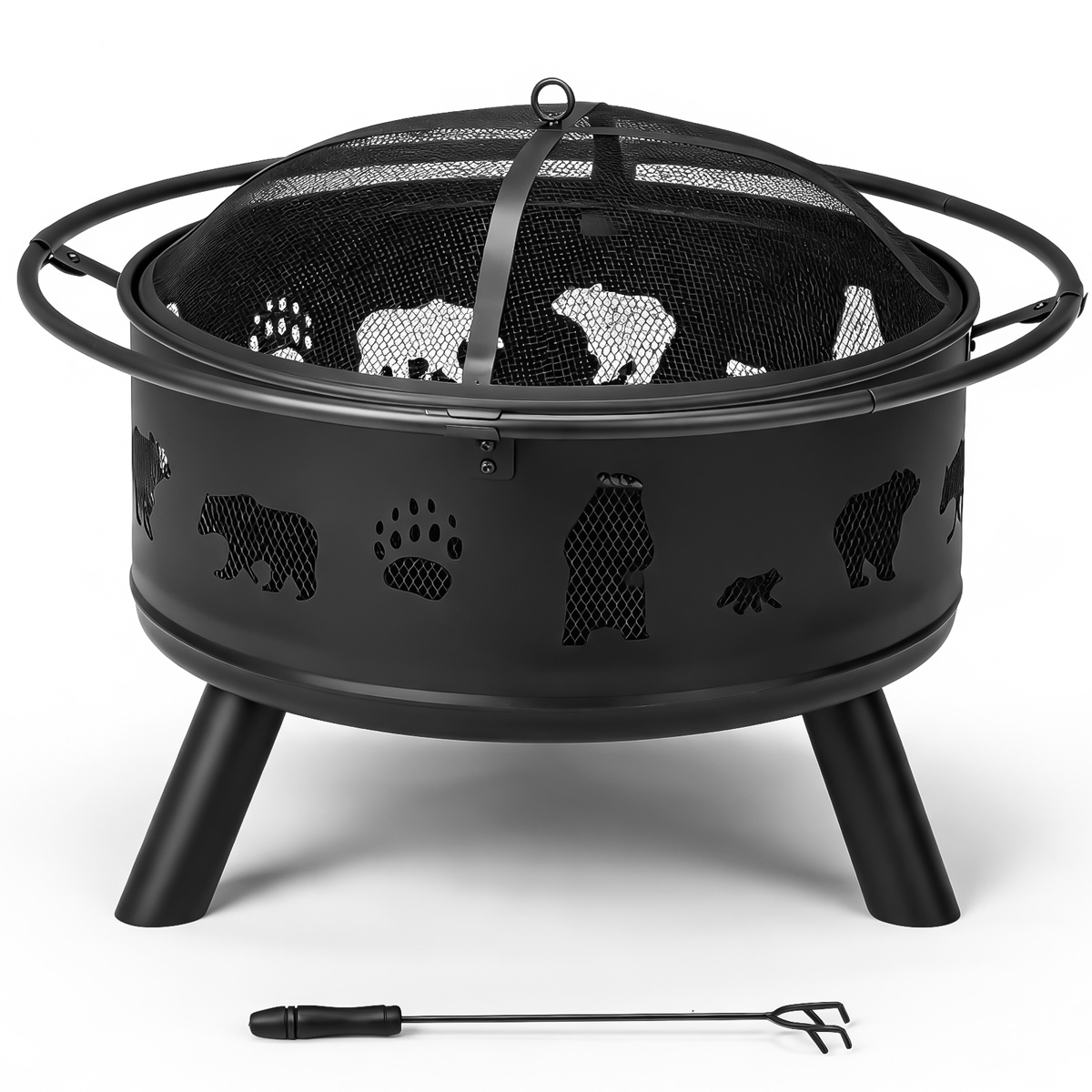 30 Inch Round Outdoor Wood Burning Fire Pit, Heavy Duty Wrought Iron Firepit with Hinged Spark Screen Lid & Lift Ring, Decorative Bear Cutout Patio Pit for Backyard, Garden, Lawn and Camping, Bla$132.99View on Mallflare
Highlights
- Steel gauge is the durability metric: 11-gauge (3 mm) or thicker plate steel and cast iron resist warping; 14–16-gauge (1.5–2 mm) stamped bowls develop heat cracks and burn-through in 2–4 seasons.
- Welded construction beats riveted or bolted seams: continuous welds handle thermal cycling, while spot welds and rivets loosen and leak embers as the bowl expands and contracts.
- A spark screen or hinged lid is a functional requirement, not an accessory: it blocks ember throw and limits burn rate; pyramid or domed screens shed rain and direct smoke upward.
- Bowl depth and airflow design separate clean-burning pits from smoky ones: a 10–15 cm deep bowl with raised grate or bottom vents feeds underfire air and reduces smoke, while flat shallow pans smother the fire.
Best use cases
- Best fit: a permanent backyard patio hearth on a brick, stone, or concrete base — pick a 30–36 inch square or round welded steel pit with a spark screen and poker; it anchors seating for 4–6 people and handles full-size logs.
- Best fit: a cabin, campsite, or rental where the pit must survive moving and rough use — choose cast iron or 3 mm+ steel with a bolt-together or welded bowl and a hinged screen that stays attached; skip thin stamped steel.
- Wrong fit: a wooden deck without a non-combustible pad — no wood-burning pit is deck-safe directly; use a 60–90 cm stone or concrete pad and keep 3 m clearance from walls and overhangs.
- Wrong fit: a small balcony or apartment terrace — open-flame wood pits are typically prohibited and smoke nuisance is high; use a gas or propane pit instead of forcing a wood unit into a tight space.
Buying tips
- Match pit size to seating: a 30–36 inch (76–91 cm) bowl serves 4–6 people; below 26 inches is a portable camp pit, not a patio centerpiece — measure your seating arc before choosing.
- Check the steel specification, not just 'heavy duty' wording: demand 11-gauge (3 mm) or thicker bowl steel or cast iron; 14-gauge and thinner is light-duty regardless of marketing labels.
- Prefer welded bowls with a raised log grate and bottom or side vents; these improve airflow, reduce smoke, and extend bowl life versus flat-bottomed pans with no draft.
- Confirm the package includes a spark screen, poker, and a weather-resistant finish (high-temp powder coat or bare cast iron); missing screens are the most common hidden cost and safety gap.
Specs
| Bowl Steel Gauge | 11-gauge (3 mm)+ / cast iron |
|---|---|
| Pit Size | 30–36 in patio / 26 in- portable |
| Construction | Welded seams vs riveted/bolted |
| Included Safety | Spark screen or hinged lid + poker |
Related searches
What to check before buying
- Measure the footprint and clearance: allow at least 3 m (10 ft) from house walls, fences, and overhanging branches, and place on a non-combustible surface such as stone, concrete, or brick.
- Verify the bowl steel thickness or cast-iron construction and welded seams; thin stamped steel with rivets will fail under repeated hot burns.
- Check that the pit ships with a spark screen or hinged lid and a poker, and that the screen fits securely without gaps at the rim.
- Confirm local open-burn rules and HOA restrictions for wood smoke, and store or cover the pit in wet climates to prevent rust through the bowl.
FAQ
Data sources: eBay / Amazon listings and product attribute feeds. Updated Nov 28, 2026.
Some links on this page are affiliate links. If you buy after clicking one, we may earn a commission at no extra cost to you. This does not change which products appear here or their order. Affiliate disclosure.