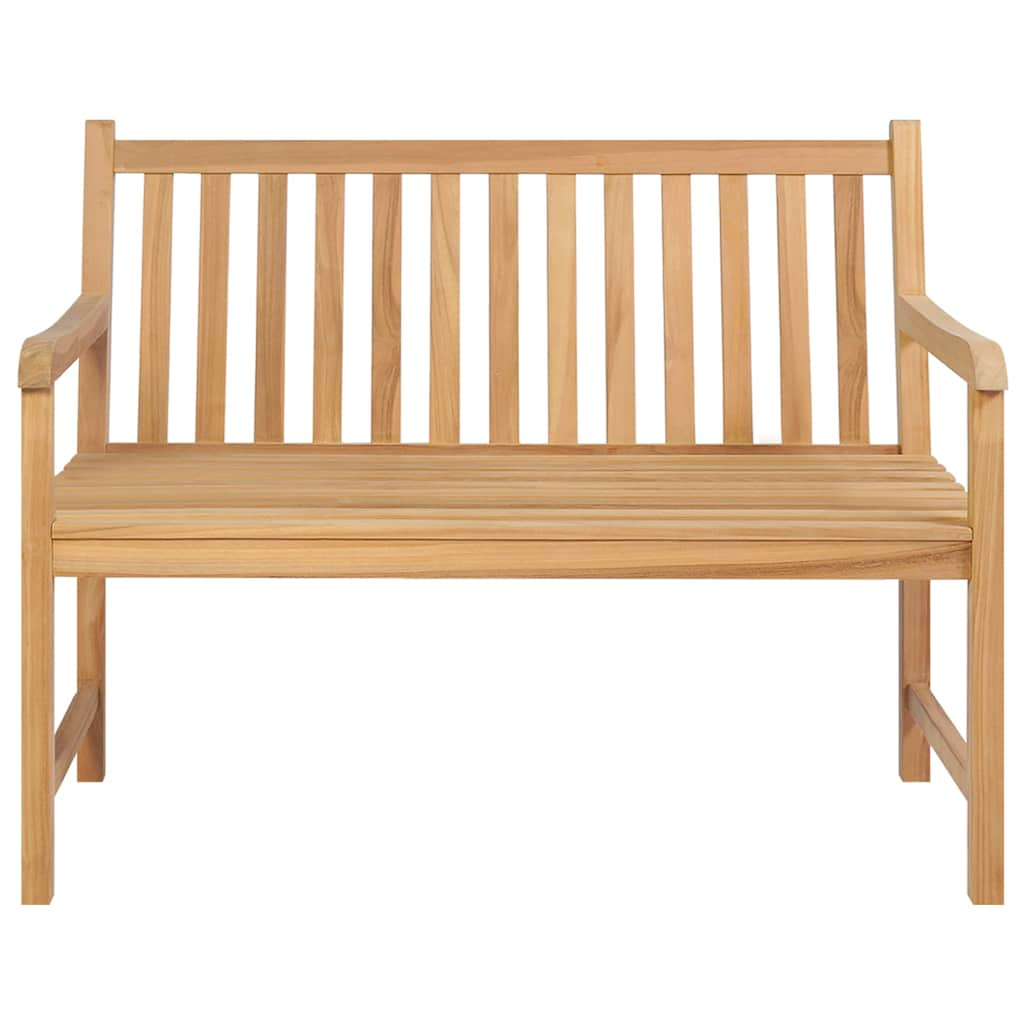

Photos from current listings. Actual item, color, and included accessories may vary.
Front Porch Bench Buying Guide
A front porch bench must survive weather, fit your entryway depth, and suit how you actually sit—most buyers get the material and mounting wrong. Treat the porch as a semi-exposed environment: rain, sun, and humidity dictate whether wood, metal, or composite belongs there. Decide between a freestanding bench and a hanging swing before anything else, because the hardware, clearance, and anchor requirements are completely different.
Key takeaways
- Solid teak (Tectona grandis) is the benchmark outdoor wood: natural oils resist rot and insects, and it weathers to silver-grey without treatment; oiling preserves the warm brown tone.
- Metal benches are usually powder-coated steel or aluminum; aluminum never rusts, while steel needs intact coating to avoid rust at welds and scratch points.
- A hanging porch swing needs overhead structure rated for dynamic loads and roughly 6 ft of clearance in front; a freestanding bench needs only floor space.
At a glance
- Category
- Patio Furniture
- Last updated
- Nov 28, 2026
Current offers
Highlights
- Solid teak (Tectona grandis) is the benchmark outdoor wood: natural oils resist rot and insects, and it weathers to silver-grey without treatment; oiling preserves the warm brown tone.
- Metal benches are usually powder-coated steel or aluminum; aluminum never rusts, while steel needs intact coating to avoid rust at welds and scratch points.
- A hanging porch swing needs overhead structure rated for dynamic loads and roughly 6 ft of clearance in front; a freestanding bench needs only floor space.
- Wood benches ship flat with bolted joints—stainless or galvanized hardware is the difference between decades and a few seasons of service.
Best use cases
- Choose a freestanding solid teak bench if your porch has a floor and wall but no rated overhead beam—teak handles sun and rain with minimal care.
- Choose a hanging wood swing with chains only if you have a structural porch ceiling or a dedicated A-frame; verify beam capacity and 6 ft front clearance first.
- Skip bare steel benches in coastal or humid climates; pick aluminum or teak instead, because salt and persistent moisture attack steel at every chip and weld.
- For a narrow front entry, pick a 2-seat bench around 4 ft wide rather than a 3-seat 5-6 ft model that blocks the door swing.
Buying tips
- Measure porch depth and door swing first: leave at least 36 in of clear walking path in front of the bench.
- Prioritize solid teak or powder-coated aluminum for exposed porches; reserve painted steel and softwoods for covered, dry spots.
- Inspect joinery and hardware: mortise-and-tenon or bolted frames with stainless/galvanized fasteners outlast stapled or glued joints.
- For swings, confirm the ceiling beam is structural and rated for the swing plus occupant load; decorative ceiling panels are not anchors.
Specs
| Bench Type | Freestanding vs hanging swing |
|---|---|
| Frame Material | Solid teak / powder-coated aluminum / steel |
| Seat Capacity | 2-seat (~4 ft) to 3-seat (~5-6 ft) |
| Weather Rating | Full-exposure teak/aluminum vs covered-use wood |
Related searches
What to check before buying
- Bench footprint vs porch depth: a 24-27 in deep bench plus 36 in clear path fits most front porches.
- Overhead structure: for a hanging swing, confirm a structural beam or buy an A-frame stand instead.
- Climate exposure: fully exposed porches favor teak, aluminum, or all-weather composite over painted steel or softwood.
- Assembly and anchoring: check included hardware material and whether wall/floor anchoring is required for wind safety.
FAQ
Data sources: eBay / Amazon listings and product attribute feeds. Updated Nov 28, 2026.
Some links on this page are affiliate links. If you buy after clicking one, we may earn a commission at no extra cost to you. This does not change which products appear here or their order. Affiliate disclosure.