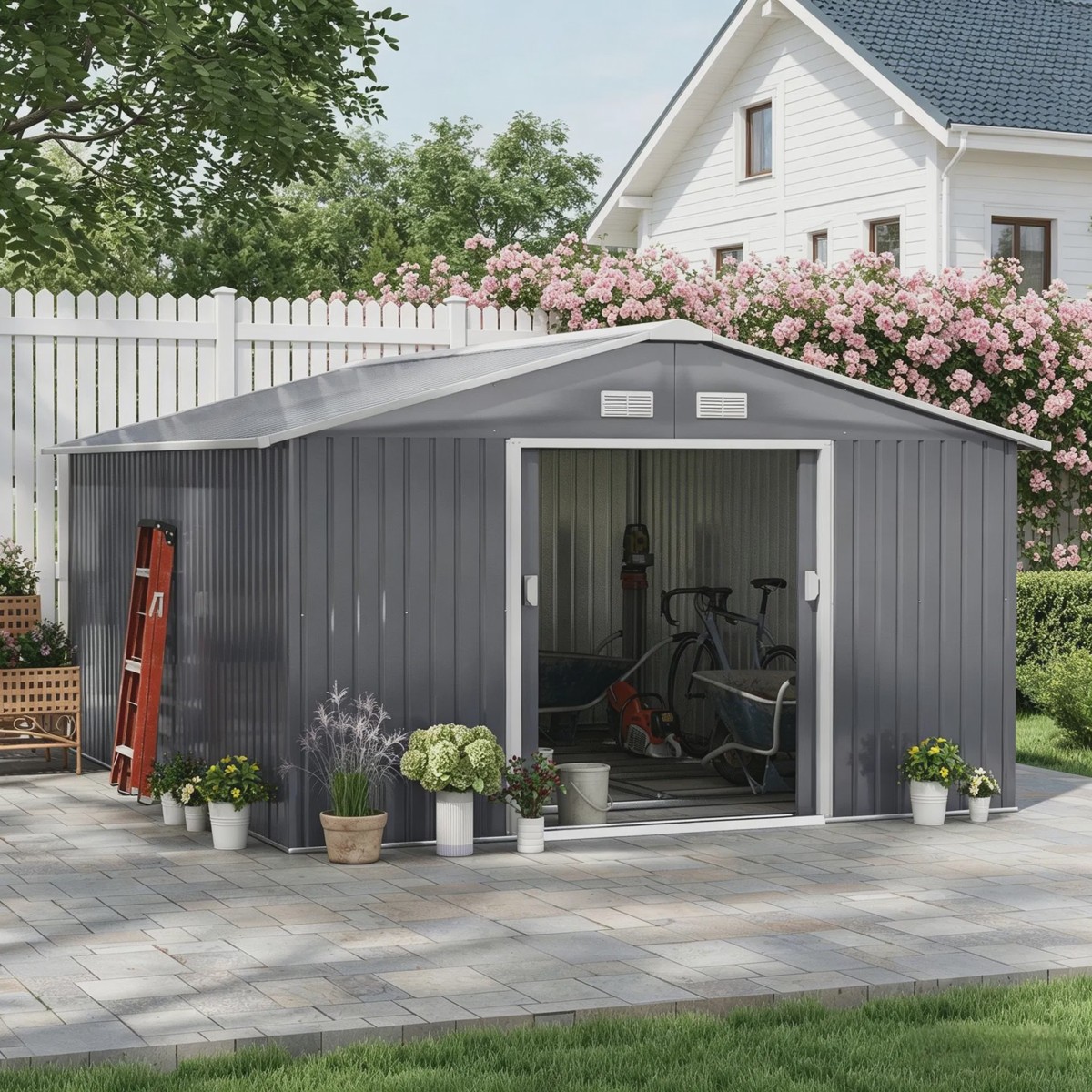

Photos from current listings. Actual item, color, and included accessories may vary.
Portable Storage Building Buying Guide
Portable storage buildings are relocatable, non-permanent structures—fabric carports, resin sheds, and steel container-style units—used to protect equipment, vehicles, and overflow goods where a permanent foundation is impractical. The core trade-off is between fabric-light portability and rigid all-weather durability, with anchoring and snow/wind ratings separating capable units from disposable ones. Buy a steel or resin unit with a published wind/snow load rating if the building stays up year-round; choose fabric only for seasonal or fully removable shelter.
Key takeaways
- Fabric carports use 1.5–2 in powder-coated steel tube frames and 6–9 oz PE or PVC tarps; PVC and ripstop PE outlast standard PE by several seasons under UV.
- Resin sheds are blow-molded HDPE panels with steel or aluminum reinforcement; wall thickness and double-wall construction, not brand, determine dent and wind resistance.
- Steel storage containers are 14–16 gauge corrugated panels over square-tube frames; galvanized or powder-coated finishes resist rust, bare cold-rolled steel does not.
At a glance
- Category
- Outdoor Storage
- Last updated
- Nov 28, 2026
Current offers
Highlights
- Fabric carports use 1.5–2 in powder-coated steel tube frames and 6–9 oz PE or PVC tarps; PVC and ripstop PE outlast standard PE by several seasons under UV.
- Resin sheds are blow-molded HDPE panels with steel or aluminum reinforcement; wall thickness and double-wall construction, not brand, determine dent and wind resistance.
- Steel storage containers are 14–16 gauge corrugated panels over square-tube frames; galvanized or powder-coated finishes resist rust, bare cold-rolled steel does not.
- Wind and snow ratings are the decisive spec: look for engineered ratings (e.g., 60–90 mph wind, 20–40 psf ground snow load) rather than unrated 'heavy duty' claims.
Best use cases
- Best fit: seasonal lawn equipment, bikes, and patio overflow—pick a fabric carport or pop-up shed with a PVC tarp and auger/ratchet anchors; skip resin if you need tool-free teardown twice a year.
- Best fit: year-round garden tools and workshop gear in high-wind or snow regions—pick a double-wall resin or galvanized steel unit with published wind and snow load ratings and a anchor kit rated for the soil type.
- Best fit: vehicle or bulk material protection—pick a steel container-style unit with a lockable door and 14-gauge panels; skip fabric shelters for vehicles where door clearance and condensation control matter.
- Wrong fit: anything left unanchored on open ground or pavement without ballast—even the best frame will lift or rack in gust fronts; skip portable buildings entirely if local code treats them as permanent structures.
Buying tips
- Match footprint to anchor math: a 10×10 ft fabric carport needs at least 4 corner anchors into soil or 4 ballast weights of 50+ lb each on hard surfaces.
- Choose panel gauge over advertised size: 14-gauge steel and double-wall HDPE resist dents and wind racking far better than 16-gauge or single-wall resin at the same footprint.
- Confirm door clearance before buying: peak height minus frame depth must exceed your tallest item by 6 in, and double doors need a clear opening equal to the widest equipment plus 4 in.
- Check UV and snow ratings together: PE tarps degrade in 1–2 years of direct sun, while PVC and galvanized steel last 5+; snow-load ratings below 20 psf are unsuitable for regions with sustained winter accumulation.
Specs
| Frame Material | Powder-coated steel / aluminum / HDPE |
|---|---|
| Panel Gauge | 14–16 ga steel; double-wall resin |
| Wind Rating | 60–90 mph engineered |
| Snow Load | 20–40 psf ground load |
Related searches
What to check before buying
- Measure the pad or ground area and confirm at least 2 ft of clearance on all sides for assembly, anchoring, and airflow.
- Identify your ground type—soil, gravel, concrete, or asphalt—and buy the matching anchor style (auger, spike, sleeve, or ballast) before assembly day.
- Verify local permitting: many jurisdictions treat units over 100–120 sq ft or over 6 ft wall height as permanent structures requiring permits.
- Check wind and snow load ratings against your local climate data and confirm the unit ships with the anchor kit included, not as an add-on.
FAQ
Data sources: eBay / Amazon listings and product attribute feeds. Updated Nov 28, 2026.
Some links on this page are affiliate links. If you buy after clicking one, we may earn a commission at no extra cost to you. This does not change which products appear here or their order. Affiliate disclosure.