
Photos from current listings. Actual item, color, and included accessories may vary.
Outdoor Potting Bench Buying Guide
An outdoor potting bench is a weather-exposed work and storage station combining a soil-prep surface with shelves, drawers, or a cabinet. The core trade-off is material: kiln-dried solid wood and powder-coated steel survive seasons, while MDF, particleboard, and soft fabric-backed panels swell, warp, and delaminate within a year or two of rain exposure. Choose pressure-treated or cedar/fir hardwood joined with corrosion-resistant hardware if it stays outside; choose painted MDF or fabric only for covered porches.
Median $156.99
Key takeaways
- Solid wood construction (cedar, fir, acacia, pressure-treated pine) resists rot and seasonal movement; MDF and particleboard absorb moisture, swell at cut edges, and fail at fasteners.
- Galvanized or stainless-steel screws, bolts, and hinges prevent rust streaks and joint failure; plain steel hardware rusts through within one wet season.
- A work surface at 32-36 in (81-91 cm) keeps potting ergonomic for average adults; lower surfaces force stooping and higher ones block leverage when lifting bags.
At a glance
- Category
- Outdoor Storage
- Last updated
- Nov 27, 2026
Current offers
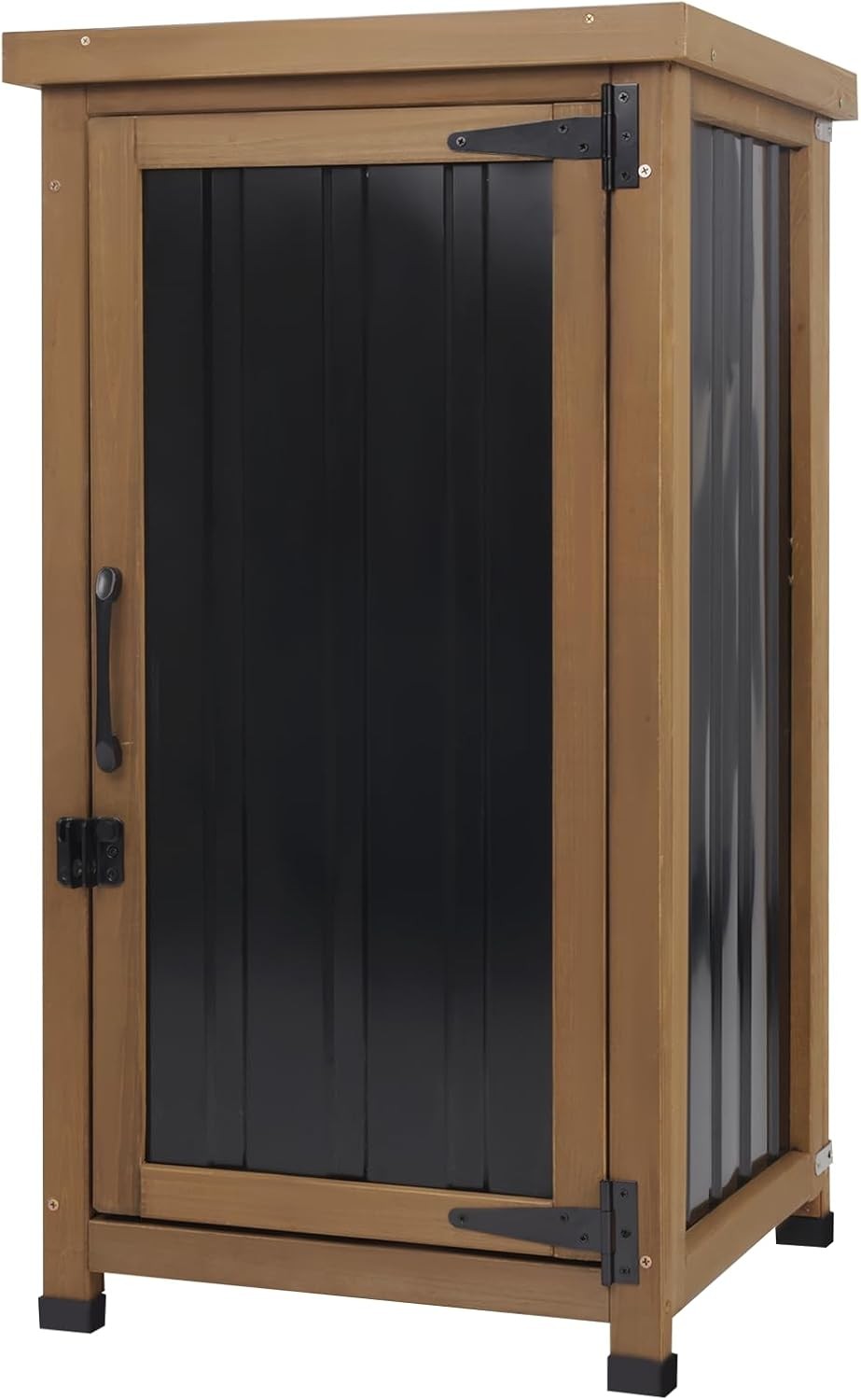 Petscosset Outdoor Storage Cabinet Waterproof , Wooden Potting Bench Table Tool$99.99Last checked Nov 24, 2026View on eBay
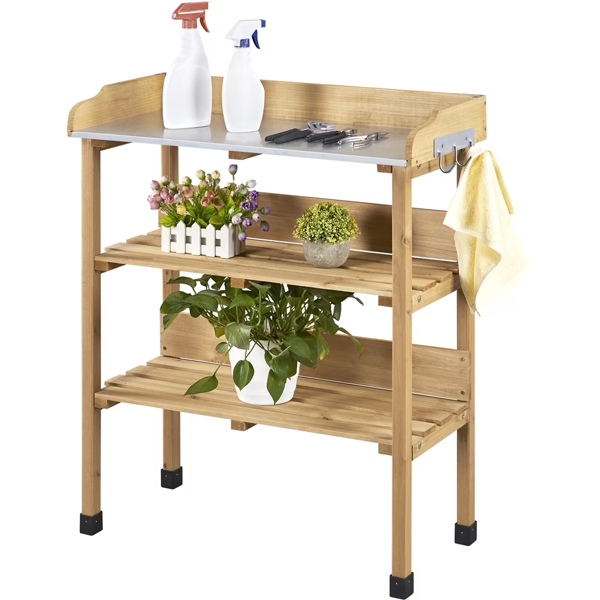 Outdoor Potting Bench Table With Storage Shelf,Natural Wood$156.99View on Mallflare
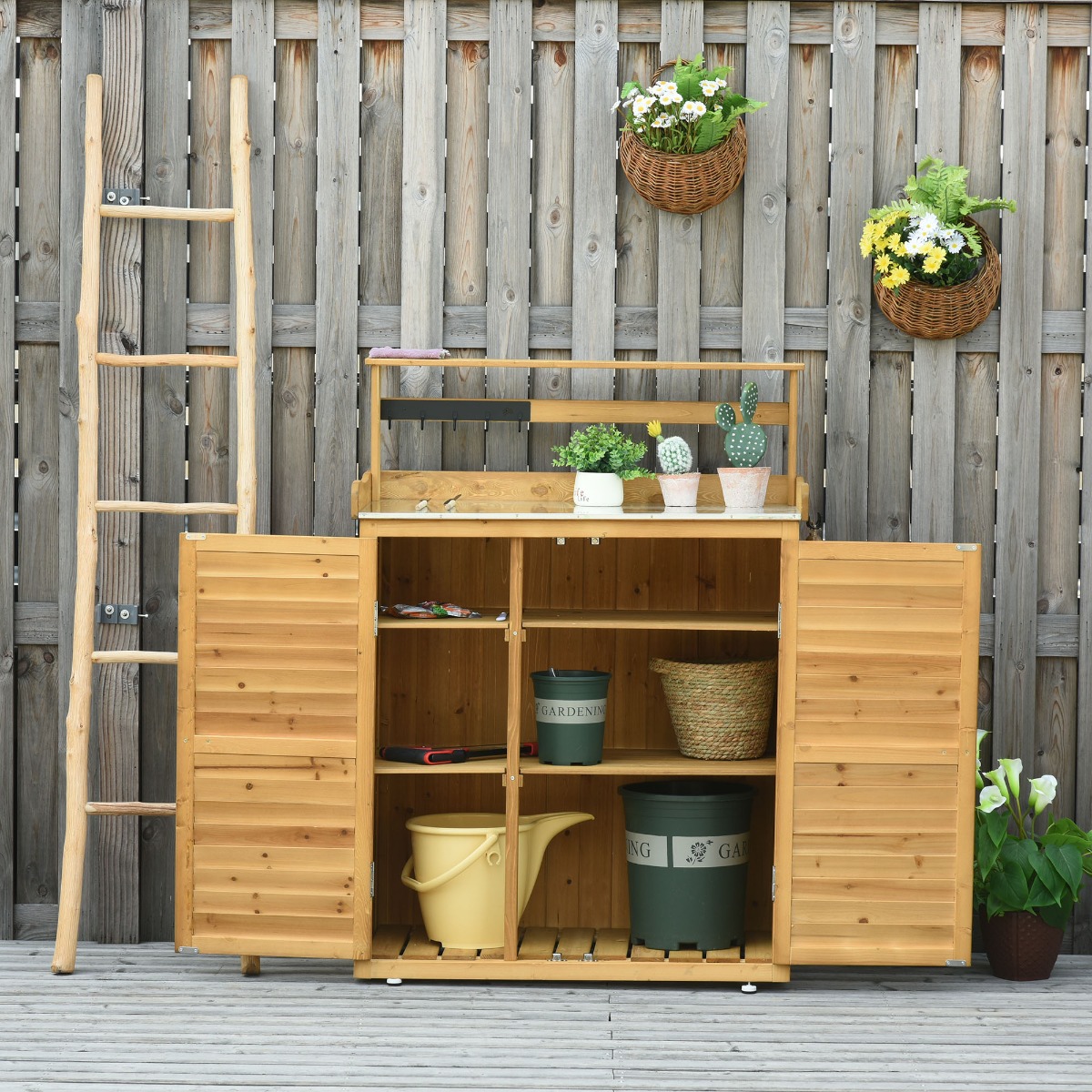 Backyard Garden Tool Storage Shed, Outdoor & Potting Bench with 2 Magnetic Close Doors & Large Interior Space$179.99View on Mallflare
Highlights
- Solid wood construction (cedar, fir, acacia, pressure-treated pine) resists rot and seasonal movement; MDF and particleboard absorb moisture, swell at cut edges, and fail at fasteners.
- Galvanized or stainless-steel screws, bolts, and hinges prevent rust streaks and joint failure; plain steel hardware rusts through within one wet season.
- A work surface at 32-36 in (81-91 cm) keeps potting ergonomic for average adults; lower surfaces force stooping and higher ones block leverage when lifting bags.
- Cabinet-style models with magnetic-close doors and enclosed lower storage protect soil, tools, and pots from rain and UV; open-shelf benches drain faster and dry quicker after storms.
Best use cases
- Best fit: a solid-wood bench with a back rail and lower shelf for gardeners who pot seasonally and want a durable, breathable surface — skip fabric-backed or MDF units for full-sun exposure.
- Best fit: an enclosed cabinet potting bench with magnetic doors for storing bagged soil, hand tools, and pots on an uncovered patio — pick this over open shelving if theft or rain-driven moisture is a concern.
- Wrong fit: a decorative MDF or particleboard bench left in direct rain or on bare soil — use it only under a roof overhang; for exposed sites, choose cedar, acacia, or pressure-treated pine.
- Best fit: a compact bench for balcony or small patio use with a 24-36 in wide footprint and fold-down or shelf-only design — skip full cabinet models if floor space is under 4 sq ft.
Buying tips
- Measure the footprint plus 24 in of clear working space in front; a bench 48 in wide and 20 in deep needs roughly a 6 ft x 4 ft patio zone to use comfortably.
- Match the material to exposure: cedar/acacia/pressure-treated wood for open sky; painted MDF or fir only under a roof; fabric or canvas panels are storage covers, not structural benches.
- Check the work-surface height against your standing elbow height — aim for 2-4 in below elbow so potting and repotting don't require bending; standard benches sit 32-36 in tall.
- Confirm the lower shelf or cabinet clears your largest bagged soil and pot sizes; a 12-14 in shelf gap fits most 40-50 lb soil bags lying flat, while 18 in+ fits upright pots.
Specs
| Frame Material | Solid wood / metal vs MDF |
|---|---|
| Weather Rating | Uncovered vs covered use |
| Work Height | 32-36 in standing ergonomic |
| Storage Type | Open shelf vs cabinet doors |
Related searches
What to check before buying
- Measure patio or garden footprint and door/gate width — assembled benches 48-60 in wide often ship flat but need clear access to the final spot.
- Confirm ground surface: set on level pavers or gravel, not bare soil, so legs don't sink and the bench stays stable; add shims for slope.
- Check climate exposure: full-sun and rain require solid wood or powder-coated metal with stainless hardware; covered porches tolerate painted MDF.
- Verify companion parts and hardware: anchor kit for windy sites, a weatherproof cover if the bench is open-shelf, and a wall or fence anchor for tall cabinet models.
FAQ
Data sources: eBay / Amazon listings and product attribute feeds. Updated Nov 27, 2026.
Some links on this page are affiliate links. If you buy after clicking one, we may earn a commission at no extra cost to you. This does not change which products appear here or their order. Affiliate disclosure.