
Photos from current listings. Actual item, color, and included accessories may vary.
Outdoor Parcel Box Buying Guide
An outdoor parcel box is a lockable, weather-resistant container that accepts deliveries and holds packages until you retrieve them, replacing the 'porch pirate' risk of an open stoop. The core trade-off is between a lightweight polymer shell that relies on a gravity-drop baffle and a heavier steel or reinforced-composite unit that offers pry resistance and a true locking mechanism. Choose a polymer drop-box only for covered porches and light parcel volume; step up to steel or thick dual-wall composite if the box faces open weather, high theft risk, or repeated carrier use.
Median $233.49
Key takeaways
- Polymer parcel boxes (PP, HDPE, resin) resist rust and are light enough to reposition, but most rely on a one-way gravity flap rather than a keyed lock — theft resistance is 'reach-in' deterrent, not pry-proof.
- Steel and powder-coated galvanized boxes deliver real pry resistance and accept padlocks or cam locks; they weigh several times more and require anchoring to a porch slab or wall to prevent walk-off.
- Drop-chute geometry and internal baffle depth determine whether a carrier can actually deposit a box without propping the lid — shallow chutes reject oversized parcels and force 'signature required' redelivery.
At a glance
- Category
- Outdoor Storage
- Last updated
- Nov 28, 2026
Current offers
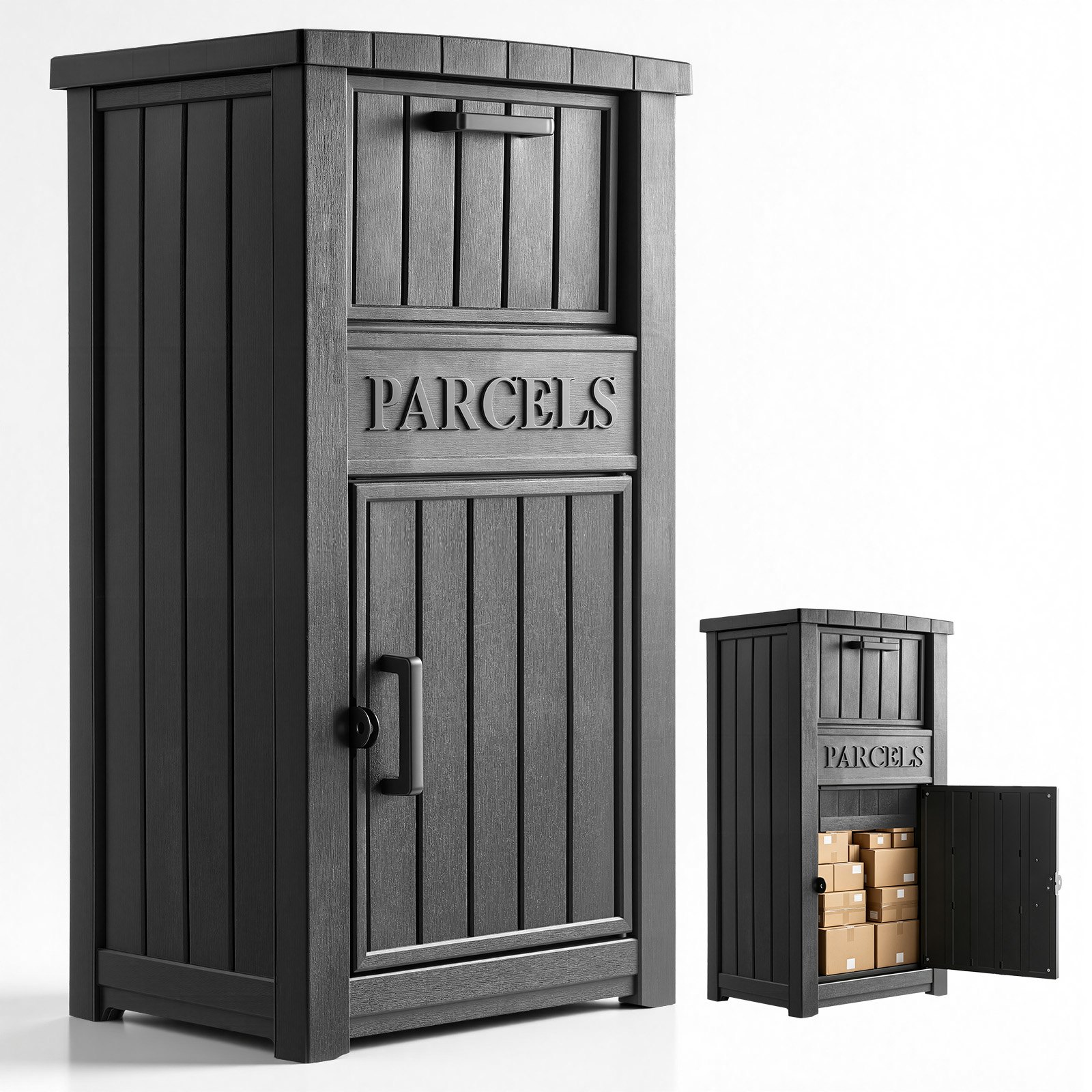 Package Delivery Box for Outside 44.13 in Large Parcel Drop Box Black, for Porch, Curbside & House Storage, Lockable Anti-Theft Waterproof Weatherproof, Thick PP Secure Mailbox for Outdoor Use$199.99View on Mallflare
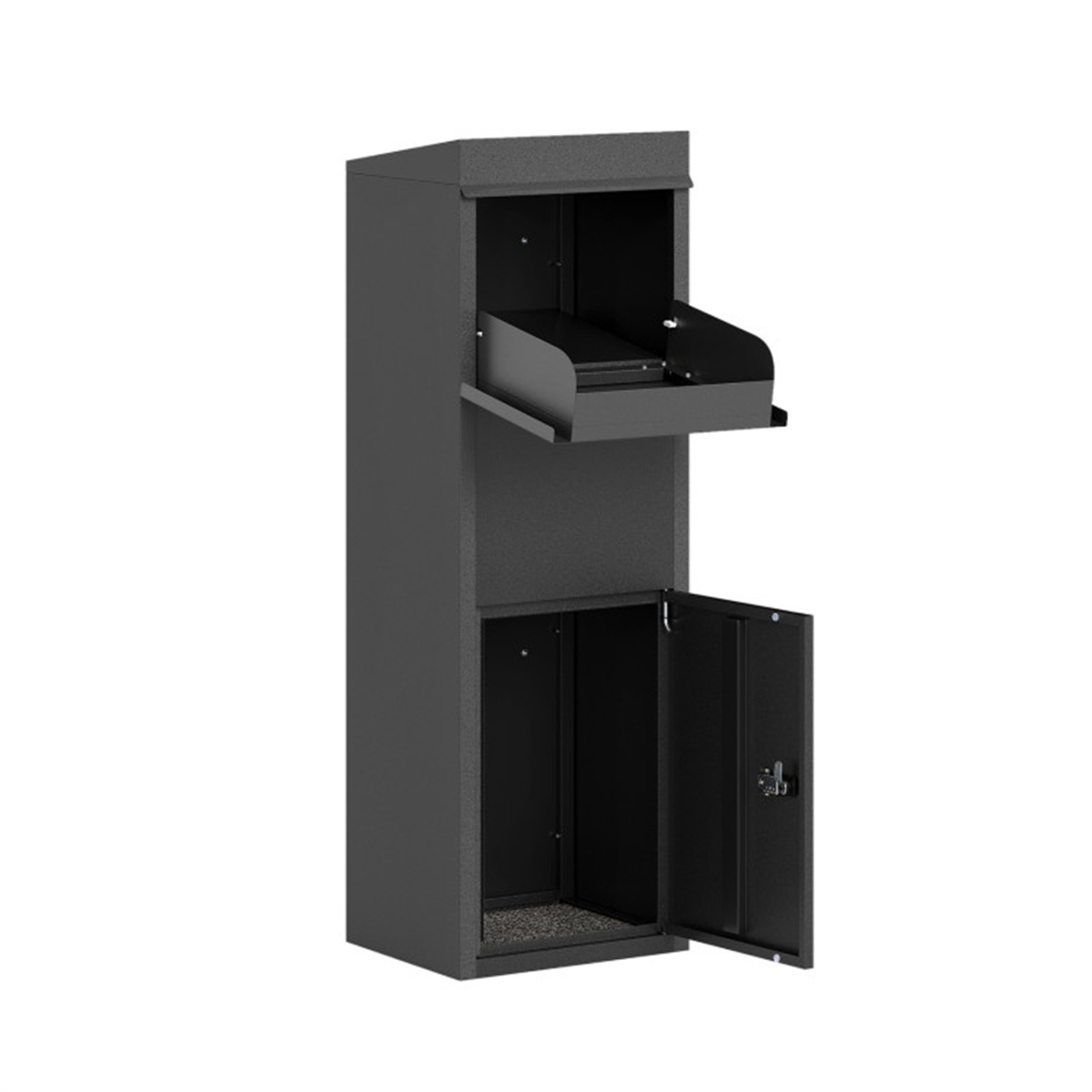 Anti-Theft Package Delivery Box with Code Lock, Galvanized Steel Parcel Drop Box for Outdoor Porch$266.99View on Mallflare
Highlights
- Polymer parcel boxes (PP, HDPE, resin) resist rust and are light enough to reposition, but most rely on a one-way gravity flap rather than a keyed lock — theft resistance is 'reach-in' deterrent, not pry-proof.
- Steel and powder-coated galvanized boxes deliver real pry resistance and accept padlocks or cam locks; they weigh several times more and require anchoring to a porch slab or wall to prevent walk-off.
- Drop-chute geometry and internal baffle depth determine whether a carrier can actually deposit a box without propping the lid — shallow chutes reject oversized parcels and force 'signature required' redelivery.
- Waterproofing hinges on lid overlap, gasket quality, and drainage: a raised lid lip plus bottom drain holes keeps rain out, while flat lids with no gutter pool water and soak cardboard within a season.
Best use cases
- Best fit: a covered front porch with moderate parcel volume — pick a thick-wall PP or resin drop box with a gravity baffle and anchor it to the slab; skip thin single-wall resin that flexes and cracks in freeze-thaw.
- Best fit: an exposed curbside or rural mailbox cluster with theft history — choose a powder-coated steel locking box with a padlock hasp and bolt it down; skip any polymer unit marketed only as 'weatherproof' without a keyed latch.
- Best fit: apartment or shared-entry deliveries where carriers rotate — select a box with a wide top-load opening and clear 'PACKAGES' labeling; skip rear-access or wall-inset models that require mounting through the building envelope.
- Wrong fit: oversized furniture or appliance deliveries — no standard parcel box accepts them; keep a separate signed-delivery arrangement and size the box only for everyday cartons.
Buying tips
- Match interior capacity to your real parcel mix: a 44 in tall drop box handles most e-commerce cartons up to roughly 15-16 in wide, but check the chute mouth — many large-footprint boxes still reject wide flat mailers.
- Pick the material by exposure, not price tier: PP/HDPE for covered porches, powder-coated galvanized steel for open rain and sun, and dual-wall composite where you need steel-like rigidity with no rust.
- Confirm the locking architecture before buying: keyed cam lock and padlock hasp stop casual theft; gravity-flap-only designs deter reach-in but open fully if the box is tipped, so anchoring is mandatory.
- Verify the base and anchoring method: pre-drilled bolt flanges or a weighted base plate suit concrete porches, while wood decks need lag bolts — a heavy steel box left unanchored is a target for removal.
Specs
| Material Grade | PP/HDPE resin vs powder-coated steel |
|---|---|
| Locking Type | Gravity baffle vs keyed/padlock hasp |
| Weather Sealing | Gasketed overhanging lid + drain holes |
| Anchoring | Bolt-down flange vs weighted base |
Related searches
What to check before buying
- Measure the delivery zone: box footprint plus 12-18 in clearance in front for the carrier to open the lid, and confirm the chute mouth exceeds your widest recurring parcel.
- Check ground surface and anchoring: concrete slab accepts sleeve anchors, wood deck needs lag bolts, and gravel or soil requires a poured pad or weighted base.
- Confirm climate fit: freeze-thaw climates favor HDPE or steel over brittle thin resin; coastal salt air demands powder-coated steel or UV-stabilized polymer, not bare metal.
- Verify carrier access and labeling: place the box where drivers already stop, and ensure the lid or front panel supports a house-number plate so carriers recognize it as a delivery box.
FAQ
Data sources: eBay / Amazon listings and product attribute feeds. Updated Nov 28, 2026.
Some links on this page are affiliate links. If you buy after clicking one, we may earn a commission at no extra cost to you. This does not change which products appear here or their order. Affiliate disclosure.