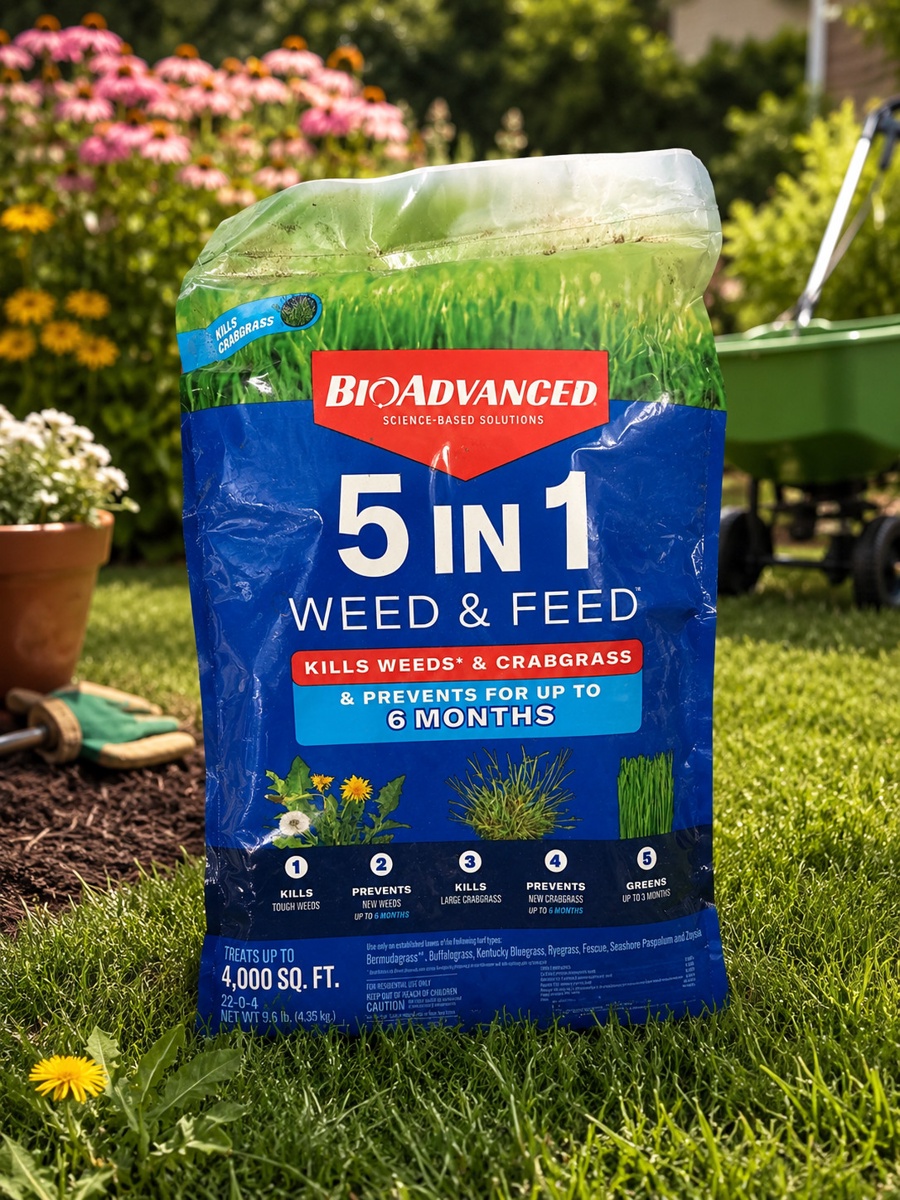

Photos from current listings. Actual item, color, and included accessories may vary.
Weed Control Buying Guide
Weed control for lawns spans two distinct architectures: selective post-emergent herbicides that kill broadleaf and grassy weeds without harming established turf, and physical barrier fabrics that block weed emergence in non-turf zones like beds and driveways. The core trade-off is chemical selectivity versus physical exclusion: herbicides demand correct turf-species matching and temperature timing, while barrier fabrics demand correct weight (GSM/oz) and permeability to avoid suffocating soil. The clear rule: match herbicide actives to your grass type and weed species, or match fabric weight to traffic and sun exposure—never substitute one for the other.
Key takeaways
- Selective herbicides are classified as 2,4-D + dicamba + MCPP (three-way) for broadleaf, or quinclorac for crabgrass and clover; non-selective glyphosate kills everything it contacts.
- Weed barrier fabrics range from 2.4 oz (light beds) to 5.8 oz (driveways and gravel) woven polypropylene; below 3 oz punctures easily and UV-degrades within one to two seasons.
- 5-in-1 weed & feed products combine fertilizer with pre-emergent and post-emergent actives; granular formulations require watering-in to activate the pre-emergent barrier.
At a glance
- Category
- Lawn Care
- Last updated
- Nov 28, 2026
Current offers
Highlights
- Selective herbicides are classified as 2,4-D + dicamba + MCPP (three-way) for broadleaf, or quinclorac for crabgrass and clover; non-selective glyphosate kills everything it contacts.
- Weed barrier fabrics range from 2.4 oz (light beds) to 5.8 oz (driveways and gravel) woven polypropylene; below 3 oz punctures easily and UV-degrades within one to two seasons.
- 5-in-1 weed & feed products combine fertilizer with pre-emergent and post-emergent actives; granular formulations require watering-in to activate the pre-emergent barrier.
- Woven geotextile permeability ratings above 0.1 cm/s allow water and air exchange; non-woven or plastic sheeting starves soil and creates runoff.
Best use cases
- Best fit: established St. Augustine lawn with broadleaf weeds — choose atrazine-based or Celsius WG herbicide; skip three-way 2,4-D blends which can discolor St. Augustine above 85°F.
- Best fit: flower beds and under gravel driveways — choose 4.1–5.8 oz woven PP fabric with high permeability; skip 2.4 oz fabric for driveways because tires and gravel puncture it within a season.
- Best fit: crabgrass and clover in cool-season turf — choose quinclorac or a 5-in-1 weed & feed with pre-emergent; skip post-emergent-only products if you need season-long prevention.
- Wrong fit: using landscape fabric over lawn turf to suppress weeds — fabric kills the grass; use selective herbicide for turf and reserve fabric for beds, paths, and under hardscape.
Buying tips
- Match herbicide to grass type: 2,4-D/dicamba three-way blends for cool-season turf and bermudagrass; atrazine or Celsius WG for St. Augustine and centipedegrass.
- Apply post-emergent herbicides when daytime temperatures are 65–85°F and weeds are actively growing; above 85°F risk of turf injury rises sharply on St. Augustine.
- Choose fabric weight by traffic: 2.4–3.2 oz for low-traffic beds, 4.1 oz for paths and patio underlayment, 5.0–5.8 oz for driveways and gravel where tires and foot traffic occur.
- For weed & feed, calculate coverage from the label rate (typically 1 lb nitrogen per 1,000 sq ft) and apply with a spreader calibrated to the product's granular size, not by eyeballing the bag.
Specs
| Herbicide Type | Selective post-emergent vs non-selective |
|---|---|
| Fabric Weight | 2.4–5.8 oz woven PP geotextile |
| Turf Compatibility | Cool-season vs St. Augustine safe |
| Application Rate | 1 lb N per 1,000 sq ft granular |
Related searches
What to check before buying
- Identify your turf species (St. Augustine, bermudagrass, fescue, zoysia) before choosing an herbicide — grass-type mismatch is the top cause of lawn injury.
- Measure bed and driveway square footage (length × width) and add 10% for overlaps and cuts before ordering fabric rolls.
- Confirm soil drainage and slope: fabric permeability must exceed your soil infiltration rate to avoid ponding and root rot in beds.
- Check sprayer or spreader calibration and water source volume for mixing herbicides; granular weed & feed needs a drop or broadcast spreader with a known setting.
FAQ
Data sources: eBay / Amazon listings and product attribute feeds. Updated Nov 28, 2026.
Some links on this page are affiliate links. If you buy after clicking one, we may earn a commission at no extra cost to you. This does not change which products appear here or their order. Affiliate disclosure.