
Photos from current listings. Actual item, color, and included accessories may vary.
Seed Spreader Lawn Mower Buying Guide
A seed spreader for lawn mowers is a broadcast or drop spreader designed to attach to, tow behind, or be pushed alongside a riding or walk-behind mower for even seed and fertilizer distribution. The core trade-off is hopper capacity and spread width versus maneuverability and gate precision: larger tow-behind units cover more ground per fill but turn wider and demand a stable tow hitch, while push units offer tighter control on small or complex lawns. Buy tow-behind broadcast spreaders with pneumatic tires and a calibrated gate for open lawns over half an acre; choose push broadcast or drop spreaders for sub-quarter-acre, heavily edged, or sloped properties where precise placement matters more than speed.
Median $90.99
Key takeaways
- Broadcast spreaders throw material 8–12 ft wide via a spinning impeller, while drop spreaders meter granules straight down in an 18–24 in band for edge-safe, non-staining application.
- Tow-behind models use a pin or clevis hitch to the mower's rear frame; capacity tiers run roughly 80–130 lbs, and 13 in pneumatic tires roll over turf without scalping.
- Push broadcast spreaders cluster at 15–60 lb hoppers with 8–10 in tires; hopper grates break up clumped fertilizer and salt, and adjustable flow gates set 0–9.8 ft spread widths.
At a glance
- Category
- Lawn Care
- Last updated
- Nov 27, 2026
Current offers
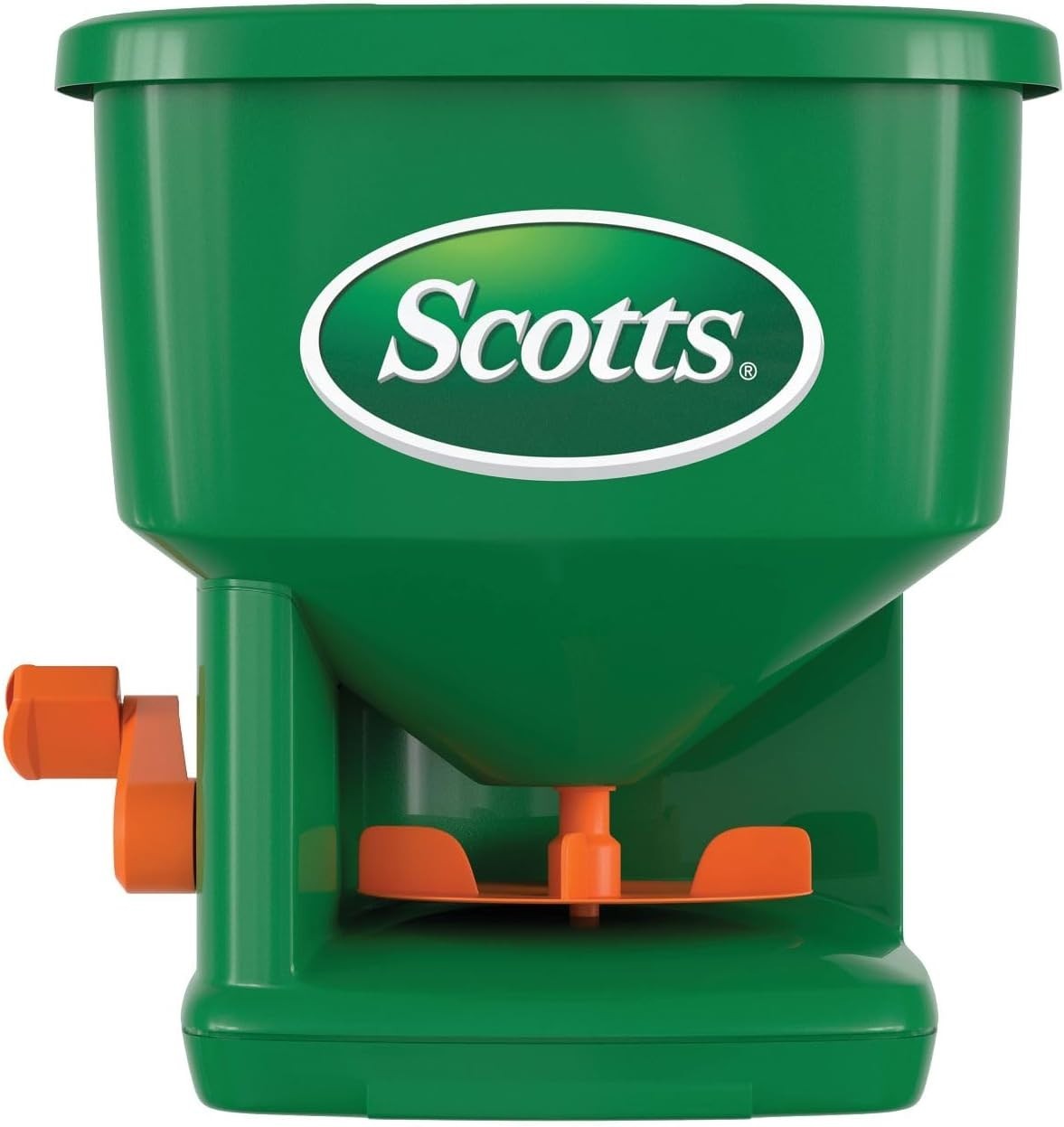 Scotts Whirl Hand-Powered Spreader - for Grass Seed, Lawn Fertilizers, Salt, and$29.49View on eBay
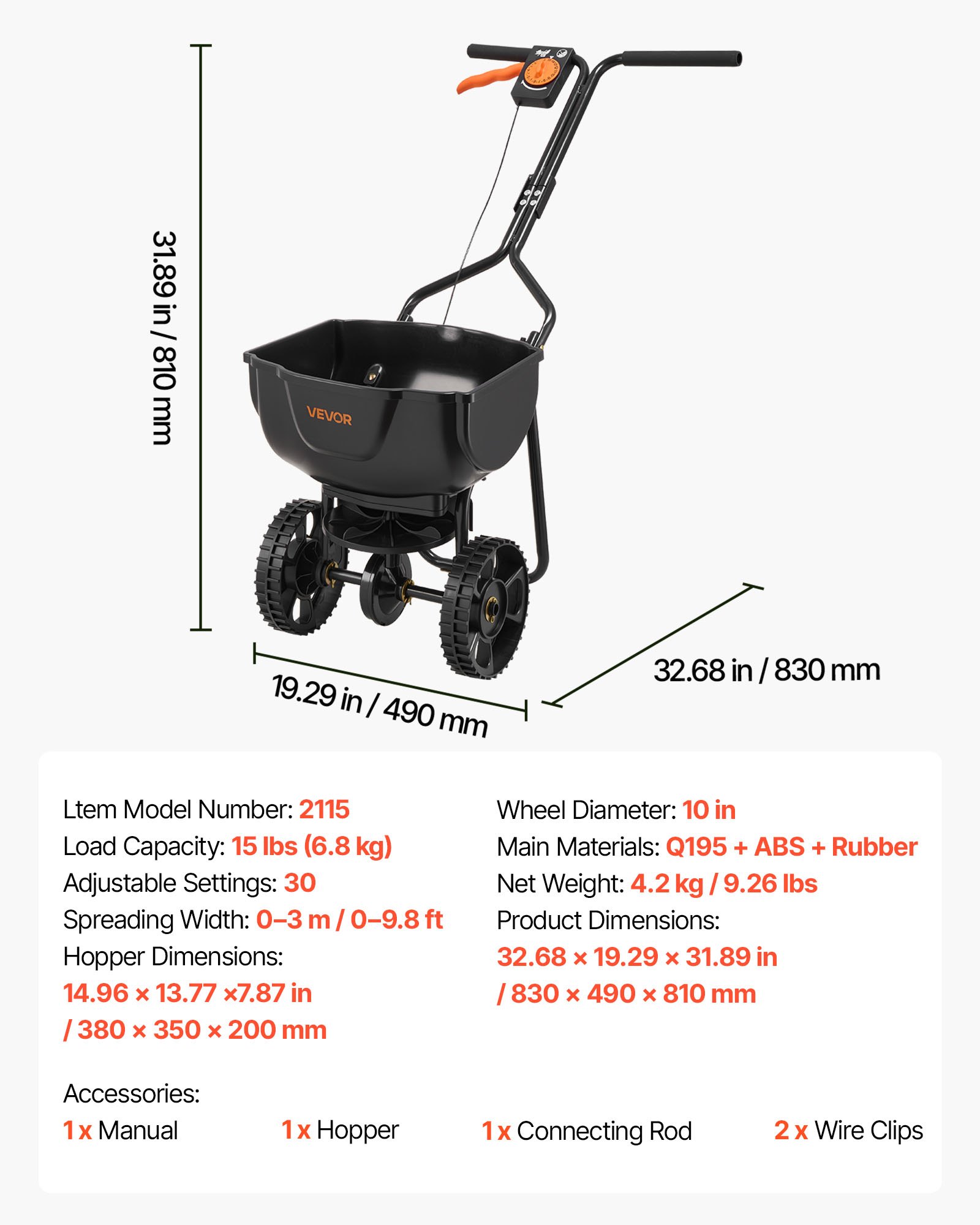 Walk-Behind Spreader, 9.8ft Spreading Width, Push Broadcast With 10" All-Terrain Tires, Adjustable Flow Control, 15lbs Capacity Hopper, Lawn Spreaders For Fertilizer Seed Small Home Use$79.99View on Mallflare
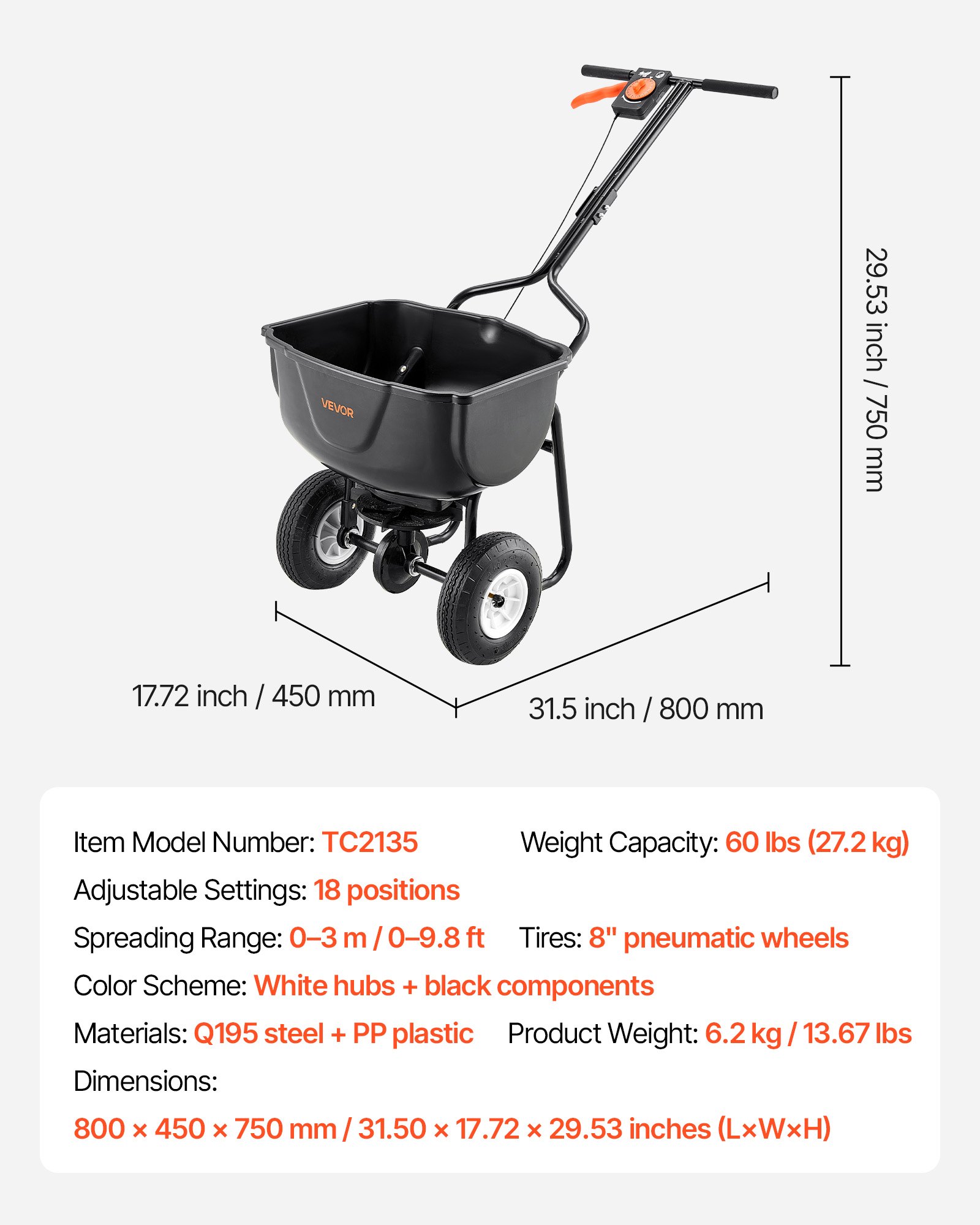 Walk Behind Spreader, 60LBS Capacity, Push With Hopper Grate, 0-9.8 Ft Spreading Width, 8 In All Terrain Pneumatic Tires, Garden & Lawn Broadcast Spreaders, For Seed, Fertilizer$90.99View on Mallflare
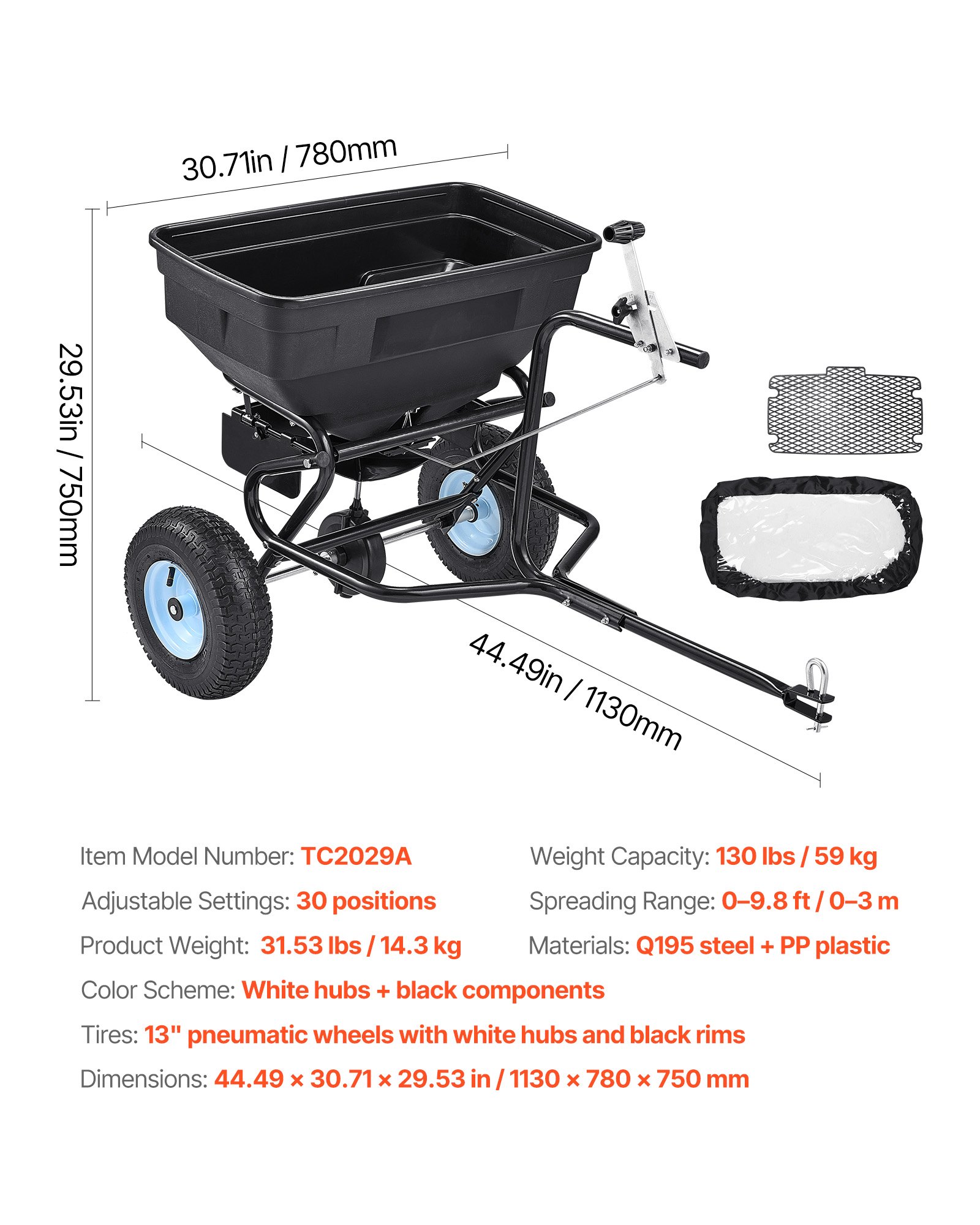 Tow Behind Broadcast Spreader, 130LBS Capacity, Tow/Push Garden With 13 In Tires, 30 Adjustable Setting & 9.8 Ft Spreading Width, Lawn Spreaders For Seed, Fertilizer, Salt, Ice Melt$164.99View on Mallflare
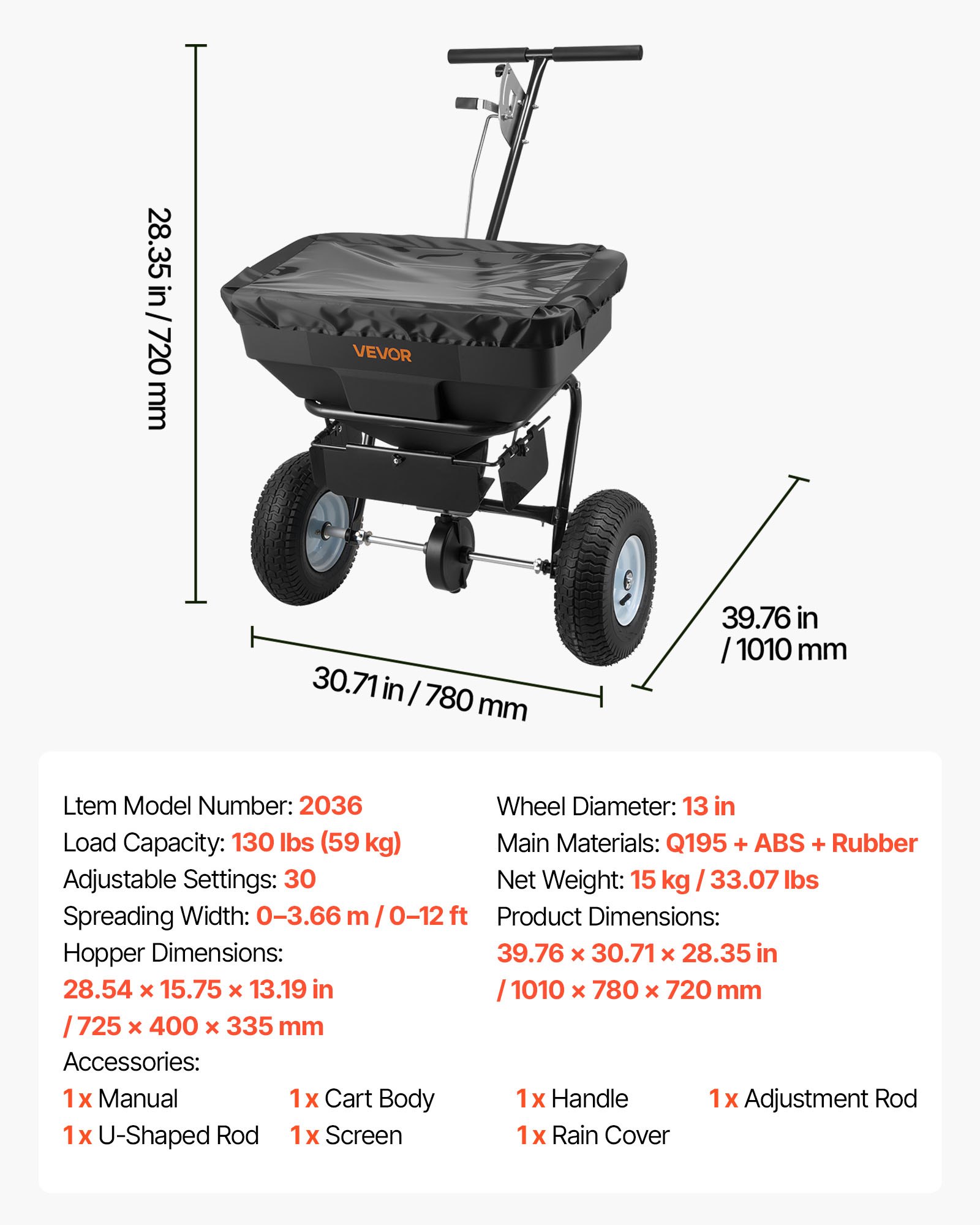 Walk-Behind Spreader, 12ft Spreading Width, Push Broadcast With 13" All-Terrain Tires, Adjustable Flow Control, 130lbs Capacity Hopper, Lawn Spreaders For Fertilizer Seed Ice Melt$164.99View on Mallflare
Highlights
- Broadcast spreaders throw material 8–12 ft wide via a spinning impeller, while drop spreaders meter granules straight down in an 18–24 in band for edge-safe, non-staining application.
- Tow-behind models use a pin or clevis hitch to the mower's rear frame; capacity tiers run roughly 80–130 lbs, and 13 in pneumatic tires roll over turf without scalping.
- Push broadcast spreaders cluster at 15–60 lb hoppers with 8–10 in tires; hopper grates break up clumped fertilizer and salt, and adjustable flow gates set 0–9.8 ft spread widths.
- Gate calibration is the real performance variable: consistent walking or driving speed plus a fixed gate setting determines lbs per 1,000 sq ft, so prefer spreaders with a positive-stop lever and printed rate chart.
Best use cases
- Best fit: tow-behind broadcast spreader (80–130 lb hopper, 13 in pneumatic tires) for lawns over half an acre with few obstacles — hitch to the mower, set the gate once, and cover wide passes fast.
- Best fit: push broadcast spreader (15–50 lb hopper, 8–10 in tires) for quarter-acre or smaller lawns, narrow gates, and mixed beds where you need to stop and start precisely.
- Best fit: drop spreader (18–24 in swath) for spreading along sidewalks, driveways, and property lines without throwing seed or fertilizer onto pavement and into storm drains.
- Wrong fit: a 100–130 lb tow-behind on a heavily landscaped or sloped yard — the wide turn radius and heavy tongue load make it clumsy and can leave skips; step down to a push unit or hand spreader instead.
Buying tips
- Size the hopper to the job: a 1,000 sq ft lawn needs roughly 3–5 lbs of grass seed, so a 20 lb push hopper covers several passes; half an acre or more justifies an 80–130 lb tow-behind to cut refill stops.
- Match spread width to overlap: broadcast spreaders throw 8–12 ft but require 50% overlap between passes for even coverage, so effective swath is about half the rated width.
- Choose pneumatic tires (10–13 in) on uneven or sandy turf for flotation; hard plastic wheels are acceptable only on flat, established lawns.
- Confirm the hitch: tow-behind spreaders need a rear pin or clevis hitch on the mower, and universal pin hitches fit most riding mowers but not zero-turn frames without an adapter.
Specs
| Spreader Type | Broadcast vs Drop |
|---|---|
| Hopper Capacity | 15–130 lbs tiers |
| Spread Width | 8–12 ft broadcast / 18–24 in drop |
| Tire Type | Pneumatic 10–13 in vs hard plastic |
Related searches
What to check before buying
- Measure the lawn's square footage and note obstacles (trees, beds, fences) — this sets whether you need a 20–50 lb push unit or an 80–130 lb tow-behind.
- Check the mower's rear hitch type and ground clearance; a loaded tow-behind spreader needs a level pin hitch and enough clearance for the tongue.
- Verify gate calibration and rate chart match your seed or fertilizer product's lbs-per-1,000-sq-ft label, since application rates vary by product.
- For salt and ice melt use, confirm the hopper and impeller are rated for corrosive material and rinse the spreader after every use.
FAQ
Data sources: eBay / Amazon listings and product attribute feeds. Updated Nov 27, 2026.
Some links on this page are affiliate links. If you buy after clicking one, we may earn a commission at no extra cost to you. This does not change which products appear here or their order. Affiliate disclosure.